
The free annual fee is real. The rest of this card deserves a closer look.
 Available in US

The CoinZoom card is a Visa debit card that spends a crypto wallet balance. It costs nothing a year, charges no foreign transaction fee of its own, and lets you withdraw cash at ATMs without a CoinZoom fee. That is a genuinely unusual set of numbers for this category, and if you already hold ZOOM and want tiered crypto rewards, the structure is built around you. It also scores 5.9 out of 10 overall, which is not a comfortable place to sit. The reason is not the fees. It is that the card’s own public pages leave a lot unsaid — which countries are actually open, what the conversion fee is, who issues the card — while user reviews on Trustpilot are heavily weighted to one star. So: read the fee section first, then the risk section, and only then decide whether the trade is worth it for you.
The conditions described here are current as of October 28, 2026.
Verdict: 5.9 out of 10, and the split tells you why
Here is how the score breaks down, criterion by criterion. The total is 5.9 / 10.
| Criterion | Mark | Why |
|---|---|---|
| Who can get it | 7 / 10 | The company says the service is available in 169 countries but does not name the list; third-party figures differ sharply from that |
| Cost | 5 / 10 | $0 annual fee on every tier and no CoinZoom FX fee, offset by a 3.99% card top-up fee and an unofficial 1.49% liquidation fee |
| Top-up options | 7 / 10 | Any wallet asset is converted to USD on payment; third-party sources name USDT on ERC-20 and TRC-20, and say ZOOM itself cannot be spent |
| Reliability and complaints | 3 / 10 | The issuer is not named on the company’s own pages, Trustpilot sits at 2.5/5 across 66 reviews, and a Washington licence was surrendered in February 2026 |
| Everyday use | 8 / 10 | A virtual card immediately on approval, a physical Visa shipped free from Silver, and ATM withdrawals without a CoinZoom fee |
The lowest mark is the one that matters most. Everyday use is the strongest part of this card, and it is the part you will feel on every purchase. Reliability is the part that decides whether your money is there when you need it, and that is where the evidence is thin and the complaints are heavy. When a card scores 8 and a 3 in the same table, the sensible reading is: the product is well designed, the operation around it is not fully evidenced.
Who this suits. You hold ZOOM and want the tier ladder to matter: five tiers from Non-Prime to Black, rewards from 0.5% to 5% back, higher daily purchase and ATM caps, and a trading fee discount from Silver upward. You also want a card with no annual fee and no CoinZoom foreign transaction fee, and you are comfortable that a card is essentially your route to converting crypto to spendable dollars.
Who it does not suit. You are in the European Union and want an ordinary bank card quickly, or you are in Canada, Australia, the United Kingdom, France or Germany and need the card to be issued to you. You are also the wrong fit if you want published, complete fee tables, a named issuer on the company’s own site, or a support channel you can reach a human on. And if your priority is a card that will not be caught by a merchant’s foreign-BIN check, read that part below before you commit.
Will they give you the card?
The company-level statement on the home page is “Available in 169 countries”. That is the official claim, and it is the only official eligibility statement I could find. The list itself is not published.
Third-party figures tell a much more complicated story, and you should treat them as unofficial because the card does not confirm them. One comparison site lists 123 countries as available and 81 as restricted, including Canada, Australia, the United Kingdom, France and Germany. The same source notes that European Union residents cannot order the card, even though the card itself works in the EU — a distinction that matters a lot if you are reading this from a eurozone country, because being able to *spend* there is not the same as being able to *apply* from there. It also puts the United States at 48 states, excluding New York and Washington.
So the honest answer to “will they give me the card?” is: in a large number of countries, probably; in the specific ones above, likely not. Before you spend any time on the application, check whether your country of residence is one of the 81. And note that third-party summaries of this card disagree with each other — one says “more than 150 applicant countries” against the same 123 figure — which is itself a reason to rely on what the app tells you at signup rather than on a review.
How to get it
The process is straightforward on paper. Identity verification happens in the app before issuance, which means the card arrives after you pass that check rather than by post. What you are not told is the substance: which documents, what proof of address, what age requirement. The card’s public pages do not state documents, proof of address or age. Verification levels, how long review takes, and the reasons a decision might go against you are also not stated.
On unofficial third-party detail, expect to provide your legal name, date of birth, tax or national ID number, phone, a government photo ID, and a liveness or biometric check — and possibly occupation, source of funds, sanctions information, and later re-verification. That is consistent with how this category works generally: in the EU, customer due diligence covers name, address, date of birth, nationality and identity documentation, a sanctions check, the purpose of the relationship, and whether you are a politically exposed person. In the US, the customer identification programme requires name, date of birth, address and an identification number, and electronic KYC systems also check proof-of-address documents against records. Nationality is recorded and screened separately from residence, which is exactly why a card can be open in your country of address and closed to your citizenship.
After approval, what arrives depends on the tier:
- A virtual card is issued immediately on approval, at every level.
- A physical Visa ships free from the Silver tier upward. Below that, standard shipping is listed at $5.
- The card currency is USD. The app converts whatever asset you hold into dollars at the point of sale.
Delivery time and replacement cost are not stated by the card, so plan for the physical card to arrive whenever it arrives. That matters more than it sounds: the virtual card is the one you can use straight away, and if your everyday spending depends on physical card acceptance, the gap between the two is the thing to ask about.
Fees: what it really costs
Start with the good news, because it is genuinely unusual, then work through the parts that are not published. The $0 annual fee applies to all tiers. There is no CoinZoom foreign transaction fee — the company’s wording is that “standard network conversion rates may apply”, which means the cost of crossing currencies is borne by the network rate rather than by a CoinZoom markup. Cash withdrawals are free of any CoinZoom fee at “1 million+ ATM locations”. That is the whole of the fee story on the official pages: $0 annual fee, no CoinZoom FX fee, no CoinZoom ATM fee.
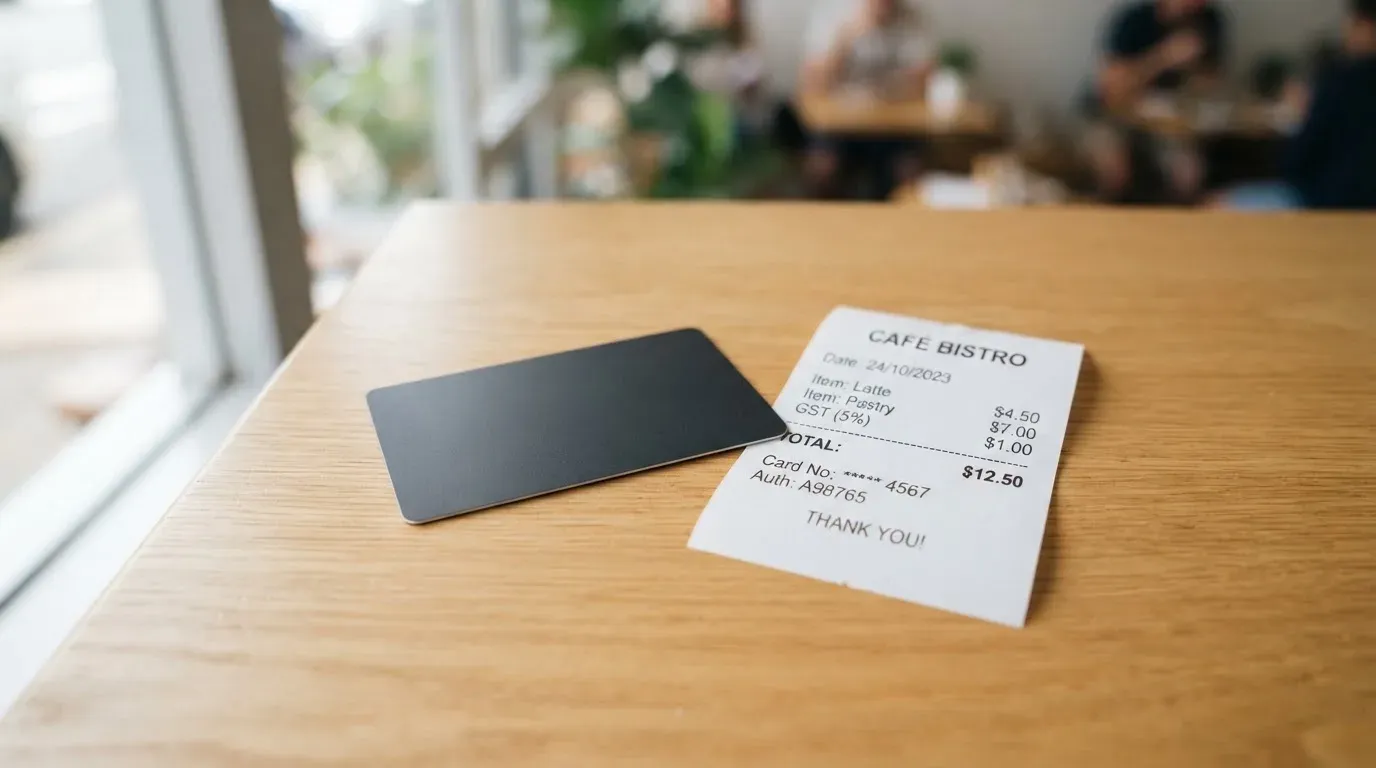
What is not published is at least as important. The crypto conversion fee is not stated. The issuance fee is not stated. ATM limits are not stated. Silver and Diamond daily purchase limits are not stated. Monthly caps are not stated. If you are trying to work out what a small purchase actually costs you on this card, the conversion fee is the number you need, and the card will not give it to you.
| Fee or limit | What the card states |
|---|---|
| Annual fee | $0 on all tiers |
| Issuance fee | Not stated |
| Crypto conversion fee | Not stated |
| CoinZoom foreign transaction fee | None (“standard network conversion rates may apply”) |
| ATM withdrawal fee | No CoinZoom fee, at “1 million+ ATM locations”; ATM limits not stated |
| Card top-up fee | 3.99% on all tiers except Black (2.99%) |
| Wire deposit | $12, free on Black |
| Wire withdrawal | $35 US / $50 international on all tiers except Black (free) |
| Card shipping | $5 standard Non-Prime, free from Silver |
Now the everyday examples, because the distinction between “no fee” and “no cost” only becomes clear when you apply it to a real purchase.
A coffee in a eurozone country. No CoinZoom foreign transaction fee applies. Your asset is converted to USD and then the network’s own rate handles the dollar-to-euro conversion. What you pay is the conversion spread in the crypto-to-USD step plus the network rate. The second part is stated; the first is not.
A card top-up. This is the fee people are most likely to hit without meaning to, because it is a deposit fee rather than a spend fee. 3.99% on all tiers except Black, which pays 2.99%, with a minimum of $1.99 either way. On a $200 top-up, that is $7.98. If you are topping up frequently to cover small gaps, that fee compounds faster than most people expect.
A cash withdrawal. No CoinZoom fee, which is the strong point. But the per-transaction and per-day caps bite: Non-Prime is $200 per transaction and $200 a day, Silver and Gold $250 and $500, Diamond $1,000 and $1,000, Black $2,000 and $2,000. A 200 ATM withdrawals figure is listed for all tiers.
On unofficial figures from third parties, add a 1.49% liquidation fee when crypto is sold to USD by market order, a 1.75% instant transfer to a debit card with a $1.50 minimum, ACH withdrawal free with a $1 minimum and a $40,000 maximum, and an inactivity charge of $4.99 a month after six months rising to $9.99 a month at twelve, with account closure and a $100 fee at 36 months. Physical ordering reportedly needs at least $10 of account value plus ZOOM for shipping, expedited US shipping at $12 and expedited international at $60, virtual reissue at 1,000 ZOOM, and physical replacement listed free. None of that is confirmed by the card. The inactivity fee is the one I would check first if you are not sure you will use the card every month, because it converts an unused card into a monthly bill.
How to Top up the card
There are two routes, and they are very different in cost.
Spend straight from the wallet. The card spends any asset in the CoinZoom wallet, converted to USD at the point of sale. This is the simplest flow and the one the card is built around. Which specific coins and networks are accepted is not stated. Unofficial sources name USDT on ERC-20 and TRC-20, and say the ZOOM token itself cannot be spent — which makes sense structurally, since ZOOM is what sets your tier rather than what funds it, but it is worth confirming in the app rather than taking my word for it.
Deposit first. A debit card top-up costs 3.99% ($1.99 minimum) on every tier except Black at 2.99% ($1.99 minimum). A wire deposit costs $12, free on Black. Minimum top-up amounts and who pays the network fee for a crypto deposit are not stated.
Getting money back out is where the tier ladder becomes visible in the bank statement. Wire withdrawal is $35 US or $50 international on all tiers except Black, which is free; a US wire also requires Gold or above. Cash withdrawal caps are as listed above. ACH fees, crypto-out fees, and the balance handling on account closure are not stated officially.
One general warning about top-ups that is not CoinZoom-specific but applies to every crypto card: blockchain transfers are irreversible. A deposit sent on a network the provider does not support, or to an address belonging to another network, can be lost entirely or need manual support recovery with no guarantee of success. USDC over Tron, for example, is not a native option — Circle stopped supporting that route in February 2024 — and USDT is issued on several chains including Ethereum, Tron, Solana, Polygon and Avalanche, so the network selector on your exchange is a real decision, not a formality. On Ethereum specifically, gas is paid only in ETH, so a wallet holding USDT and no ETH cannot send it at all.
Paying with it every day
This is where the card earns its 8 out of 10, and it earns it on concrete, verifiable things rather than promises.
A virtual card in your hands immediately on approval means you can start spending the same day you are verified. A physical Visa follows, free from Silver, $5 for standard shipping on Non-Prime. Cash at “1 million+ ATM locations” with no CoinZoom fee. And you can lock or unlock, or freeze, the card instantly in the app from the Spend tab — which is the single most useful control in this whole product, and the one to practise before you need it.
Visa Zero Liability Policy applies if you report unauthorized transactions promptly. That word “promptly” is doing real work: it is why you want the freeze button and the support number to hand rather than looking for them.
On digital wallets, third-party sources document Google Pay for active cards but do not clearly confirm Apple Pay. The card itself says nothing about either, nor about which merchants are blocked. If you rely on a phone wallet, that is an open question and you should test it in the app with a small amount first.
Rewards are tier-based crypto back: 0.5% on Non-Prime, 1% on Silver, 2% on Gold, 3% on Diamond and up to 5% on Black. Rewards programme terms apply, and the payout currency and coin are not stated. A third-party user review from November 2025 mentions fees above the advertised 5%, which is worth keeping in mind as a reason to screenshot the rate on the day you rely on it.
App quality matters here more than usual, because the app is how you verify, how you get the virtual card, and how you freeze the card. Unofficial store figures are good on Apple (4.7/5 from about 774 ratings) and middling on Google (about 3.9 from 479 reviews, 100,000+ downloads) — though these are ratings for the whole exchange app, not the card, so read them as a rough signal only.
Two more everyday details to know. First, 3-D Secure: on Visa the brand is Visa Secure, which may challenge you with a one-time code or biometric on online payments, and under 3-D Secure liability for a fraudulent online payment can shift from the merchant to your bank — or, per critics, to you. Second, address verification: AVS compares the numeric parts of the billing address you type with issuer records, is mainly offered in the US, Canada and the UK, and is generally unavailable for foreign-issued cards, which can cause declines. That is the general reason a crypto card can be declined for reasons that have nothing to do with your balance.
What can go wrong
This is the section I would read twice.
The issuer is not named. The company describes itself as CoinZoom, Inc., as a “FinCEN MSB” and as a “Licensed money transmitter in applicable jurisdictions” — but the card issuer and BIN sponsor are not named on its own pages. The BIN is the first six or eight digits of your card number, and merchants can look it up to see which institution and country issued the card, applying extra scrutiny when the issuer country differs from your billing address. So the fact that the issuing bank is not disclosed is not merely administrative: it is the reason a shop may treat your card as foreign. Third-party sources name Zenus Bank as the issuer with CoinZoom Inc. as programme manager, Cross River Bank holding fiat outside money-transmitter-licence states, BitGo providing wallet technology, and NMLS 1735216. None of that is confirmed by the card.
A licence was surrendered in February 2026. On 9 February 2026, CoinZoom surrendered its Washington money-transmitter licence under a consent order with the Washington DFI, and cannot resume Washington money transmission before 9 February 2029, with a fine of $150,000 of which $50,000 was stayed. That is a third-party summary rather than a reading of the DFI order itself, so treat it as reported rather than confirmed — but it is the kind of item a reader should know before applying, and it is a reminder that a licence is something a company can lose.
Support and complaints. Trustpilot shows 2.5/5 from 66 reviews, read on 20 October 2026, with 61% one-star and 29% five-star — a bimodal distribution, which usually means some people have an excellent experience and a large group have none at all. Themes include refunds or funds withheld, or sent to a closed account, reported between June and September 2026 and in some cases unresolved for months; no live support and bot tickets left unanswered from May to August 2026; deposits not arriving between July and August 2026; registration and verification stuck, in May 2026 and as far back as July 2025; and fees above the advertised 5% in November 2025. CoinZoom replies to roughly 70% of negative reviews. A secondary, unverified aggregator also lists bot support loops, multi-day escalations, KYC name mismatches and facial-recognition failures, ACH deposit holds of 7 to 21 days, and card replacement delays. I found no Reddit threads and no official incidents.
There is no dispute process beyond reporting unauthorized or fraudulent charges to support promptly, and no stated time frames for that.
Not a bank deposit. The company’s own wording: “ZoomMe is not an FDIC-insured bank product”. So your balance is not a bank deposit, and general guidance for this category is that safeguarded customer funds — segregated accounts or insurance — are not the same as bank deposits and may not be covered by a deposit guarantee scheme.
Handling fees for inactivity. Unofficial, but the shape of it matters: a fee starting after six months of no activity, rising at twelve, and account closure with a fee at 36 months. That is a slow drain that only affects people who forget the card exists — which is exactly the population least likely to notice.
Custody. CoinZoom’s wallet is custodial: the provider holds the credentials, so you must trust it completely. That is the structural trade-off of this card, and it is not a small one. The alternative — a self-custody-linked card where the funds stay in your own wallet until the moment of payment — shifts phishing, key loss and clipboard-hijacking malware entirely onto you. Custodial platforms have a real record: Mt. Gox (about US$350 million reported stolen, 2011–2014), Coincheck (about US$400 million, 2018), Ronin Network (US$625 million, 2022).
Closed programmes happen. Visa terminated its global agreements with FTX on 13 November 2022 and the FTX US debit card was wound down by its issuer. Visa suspended WaveCrest in Europe in 2018, closing all WaveCrest-issued Visa programmes. Closures typically mean a notice period, then spending and loading stop, then users are asked to withdraw remaining balances. Neither Visa nor Mastercard issues crypto cards to consumers directly — they license issuers and can suspend a programme.
Support contacts, if you need them before deciding: cardholder support 1-866-286-8054, a Help Centre at support.coinzoom.com, and a support page on their website.
What to take instead
I can only compare what each card actually publishes, and here that is uncomfortably thin. CoinZoom is unusual in how much it does publish about its own structure; the alternatives below disclose less on the points that matter for a first-time reader.
| Card | Score | What is published about cost | What is published about fees |
|---|---|---|---|
| CoinZoom | 5.9 | $0 annual fee, all tiers | No CoinZoom FX fee; no CoinZoom ATM fee; conversion fee not stated |
| Young Card | 5.7 | Not stated officially | Not stated; cashback paid in YNG at 0.1% / 1.8% / 3.6% by Club tier (Essential / Gold / Platinum) |
| MSX | 6.4 | Not stated | Not stated |
| Bybit Card | 6.0 | Virtual issuance free in all regions until further notice; “no annual fees”; physical issuance 29.99 USD in Australia, 5 USD/USDT in Argentina, 29.99 USDT in Georgia and Kazakhstan (AIFC), 5 USDT in Asia Pacific, none in Brazil and Mexico | Crypto conversion 0.9% over the One-Click Sell rate (Australia, Asia Pacific, Georgia, Kazakhstan, Brazil, Mexico), 0.5% Argentina; FX fee 2% on top of the network rate in several markets, 7% Argentina, 1% Brazil, 1% Peru |
Bybit is the only one of these that publishes its fee schedule in enough detail to plan around, and it is also the only one with a stated regional eligibility list — Argentina, AIFC (Kazakhstan), Georgia, Kazakhstan, Australia, Mexico, Brazil, Peru and Asia Pacific. Its cards page says plainly: “This product is not meant for European Economic Area customers. All European Economic Area customer participation is strictly prohibited.” That is a narrower but far clearer position than CoinZoom’s “169 countries” with no list. Bybit also runs a much larger rewards ladder — from 2% at Base up to 10% at Infinite, with monthly caps — and since 5 October 2026 only crypto-funded transactions earn points or cashback.
The honest summary: Bybit is more transparent and its fees are knowable in advance; CoinZoom is cheaper on paper for FX and cash, free annually, and built around ZOOM holdings. Neither is a clean choice for an EU resident, which is a gap in the category rather than in either card.
Who I would recommend it to
I would recommend this card to someone who already holds ZOOM in quantity, uses crypto as their actual source of funds, and has checked their own country’s eligibility rather than trusting the 169 figure. If you are on Silver or above and spend through the card regularly, the free annual fee, the free physical card, the cashback ladder and the trading fee discount make the economics unusually good — the tier is the product.
I would not recommend it as a first card for someone who needs reliability above all else, who has been burned by a KYC freeze before, or who is in a restricted country. The 3 out of 10 on reliability is not a rounding error, and the pattern of complaints — funds withheld, bot support, verification stuck — is the kind of thing that matters enormously if this is the card holding your rent money. If you are outside the named restricted list but inside the EU, understand that you may be able to spend the card without being able to order it.
And before you commit, do three concrete things. Ask support, in writing, what the crypto conversion fee is, because it is the number that decides your real cost. Ask whether your country of residence and your citizenship are both accepted. And put a small amount through the card first, testing the virtual card, one ATM withdrawal, and your phone wallet if you rely on one — those three tests will tell you more in an afternoon than any review, including this one.
One thing not to forget: in the US the IRS treats digital assets as property, so exchanging them for goods, services or dollars generally produces a taxable gain or loss. I am not able to advise on your taxes, but if you fund this card with crypto, each payment funded from crypto may be a separate disposal measured at fair market value on the transaction date. Check this with a qualified professional in your own jurisdiction.
Frequently asked questions
What is CoinZoom card?
CoinZoom is a crypto exchange that issues a Visa debit card linked to its wallet. The card is prepaid in effect: instead of a bank account, the balance behind it is crypto, converted to US dollars at the moment of sale. You get a virtual card immediately after verification and a physical Visa once you qualify for a shipping tier. The annual fee is $0 on every tier.
How does the CoinZoom card actually work?
At the point of sale the app converts whatever asset you hold in the CoinZoom wallet into dollars, and the card spends those dollars. Five tiers are set by ZOOM holdings — Non-Prime at 0 ZOOM up to Black at 300,000 — and each tier raises rewards, daily purchase caps, ATM caps and the trading fee discount. The card currency itself is always USD.
Is CoinZoom a bank?
No. The company describes itself as CoinZoom, Inc., registered as a FinCEN money services business and licensed as a money transmitter in applicable jurisdictions, but it does not name the bank that issues the card. It also states that ZoomMe is not an FDIC-insured bank product, so your balance is not a bank deposit and would not be covered by deposit guarantee schemes.
Does CoinZoom card require KYC?
Yes — identity verification in the app is required before the card is issued. The card’s own pages do not state which documents, proof of address or age requirement apply, nor how long review takes. Third-party sources expect legal name, date of birth, tax or national ID, phone, government photo ID and a liveness check, possibly plus occupation and source of funds.
Is CoinZoom card available in my country?
Uncertain, and that uncertainty is itself a finding. The company claims availability in 169 countries without publishing the list. Third-party sources say 123 countries are available and 81 restricted, including Canada, Australia, the UK, France and Germany, and that EU residents cannot order the card even though it works in the EU. The US is listed at 48 states, excluding New York and Washington.
What does it cost to use the CoinZoom card day to day?
The card carries no CoinZoom annual fee, no CoinZoom foreign transaction fee and no CoinZoom ATM fee. What it does charge is 3.99% for a debit card top-up on all tiers except Black, $12 for a wire deposit, $35 US or $50 international for a wire withdrawal, and $5 standard shipping on Non-Prime. The crypto conversion fee is not stated, which is the largest gap in the picture.
Is CoinZoom card free?
The annual fee is genuinely $0 on every tier, and a physical card ships free from Silver upward. But “free” covers only the annual fee. Top-ups cost 3.99%, wires cost $12 in and $35 or $50 out, and unofficial figures add a 1.49% liquidation fee on crypto sold to dollars plus an inactivity charge starting at $4.99 a month after six months.
Can I use CoinZoom card in Apple Wallet?
Unknown from the card’s side. The company’s own pages do not mention Apple Pay or Google Pay, and blocked merchants are not listed either. Third-party documentation covers Google Pay for active cards but does not clearly confirm Apple Pay. If a phone wallet matters to you, test it with a small amount before relying on it.
Is CoinZoom card safe?
It carries real protections — instant freeze from the app’s Spend tab, spending limits, and Visa Zero Liability Policy if you report unauthorized charges promptly. Against that, the wallet is custodial, the balance is not an insured bank deposit, the issuer bank is not named publicly, and Trustpilot shows 2.5/5 from 66 reviews with 61% one-star. Reported themes include withheld refunds, bot-only support and verification stuck.
Is CoinZoom card worth it?
For someone already holding substantial ZOOM and spending through it regularly, the free annual fee, free physical card from Silver, cashback up to 5% and trading fee discounts make it easy to justify. For everyone else, the case rests on claims you cannot verify — an unnamed issuer, an unpublished conversion fee, an unnamed country list — so I would fund it small, test the virtual card and one ATM withdrawal, and only then scale up.
Choosing an exchange card – cryptocardadvisor
Content created by the «cryptocardadvisor» team