
A prepaid card that spends crypto in Australian dollars, with a 1% fee on every purchase and a 2.99% surcharge on top of the network rate abroad
 Available in US

The CoinJar card is a prepaid Mastercard that spends the Australian-dollar balance inside your CoinJar Everyday Account, converting your crypto at CoinJar’s own rate at the moment of payment. The card itself is free, and so is the replacement. What you pay for is the spend: 1% on every in-store and online purchase, plus 2.99% on foreign transactions on top of whatever the Mastercard rate turns out to be that day, plus 1% at the ATM. If you are an Australian resident, over 18, with a verified CoinJar account, and you want to pay ordinary bills from a crypto balance without waiting for a bank to approve a crypto-linked card, this is one of the few cards that does exactly that. If you are anywhere else, or you want a metal card, tiered perks, or a self-custody model where you hold the keys, keep reading — most of what you would want is not here.
The conditions described here are current as of October 28, 2026.
Verdict: 5.5 out of 10
I scored this card 5.5 out of 10. That is not a condemnation — it is a card with one genuinely excellent feature (everyday spending from crypto works, and works well) sitting next to several structural limits that narrow who can use it. The 1% purchase fee is fine; the 2.99% foreign exchange surcharge on top of the network rate is heavy for anyone who travels or buys in another currency. The single-tier structure means there is nothing to climb toward. And the eligibility rule is narrow and stated only in the terms, not on the card’s own page.
Here is the breakdown by criterion, with the reasoning behind each mark.
| Criterion | Mark | Why |
|---|---|---|
| Who can get it | 3 / 10 | 18+, Australian resident, verified account; the card’s own page names no countries |
| Cost | 5 / 10 | Issuance and replacement free; but 1% per purchase, “2.99%+” abroad, 1% at the ATM, 27.50 AUD dispute fee |
| Top-up options | 5 / 10 | A crypto “Spend” account with auto-conversion at CoinJar rates; the coin list is not disclosed |
| Reliability and complaints | 7 / 10 | EML Payment Solutions Limited (AFSL 404131) issues; CoinJar Australia Pty Ltd is the authorised representative; exchange TrustScore 3.3 |
| Everyday use | 9 / 10 | Free physical and digital Mastercard, Apple Pay and Google Pay, 1% ATM fee |
| Total | 5.5 / 10 |
Who this suits: an Australian resident who already holds and uses CoinJar, is comfortable leaving funds with a custodial platform, and wants to pay for groceries, subscriptions, and everyday things from a crypto balance in Australian dollars. The Apple Pay and Google Pay support and the contactless limit under 100 dollars make it work as a genuine everyday card, not just an online one.
Who it does not suit: anyone outside Australia; anyone who wants to hold their own keys; anyone for whom a 2.99% foreign transaction surcharge on top of the network rate is a dealbreaker; anyone who needs tiered perks or a metal card. The eligibility, funding model, and fee structure all point to one audience: Australian residents paying with crypto in Australian dollars.
Will they give you the card?
Short answer: only if you are Australian, over 18, and already have a verified CoinJar account — and the card’s own page will not tell you that. The public card page states no eligibility rules and names no countries. The rules live in the Australian Product Disclosure Statement instead, and they are simple: 18 or older, a resident of Australia, and a verified CoinJar account. There is no tier system, no country list beyond Australia on the card page, and no stated reason a verified account is required (it is presumably the identity check the platform already runs, but the card documents do not say).
If you are reading this outside Australia, the honest answer is that the card is not offered to you. The card’s own marketing page does not list any other market. What that means for you is simple: this is not a card to plan around, and any page suggesting otherwise is either outdated or wrong.
One more thing worth knowing: the fact that eligibility is buried in the PDS rather than on the card page is itself a small warning. You should expect to read the terms rather than the landing page before you commit to anything here.
How to get it
The path is: get a CoinJar account, verify it, then order the card. Both a physical card and a digital card come free; it is a prepaid Mastercard, and you can add the digital one to your phone immediately and have the plastic follow.
What the card page states: the physical card is free, and so is a replacement card — the fee table lists Card Issue Fee Free and Replacement Card Fee Free. Delivery countries and delivery time are not stated on the page, so if you are outside Australia you will not find a shipping answer here, and if you are in Australia but elsewhere in the country, expect to look it up with support rather than on the page.
What is not stated: what documents the verification needs, how long verification takes, what verification levels exist, and what would cause a rejection. The only hard requirement the card documents give is a verified CoinJar account. I would not treat the absence of a published document list as good news or bad news; it just means you will find out at the verification step, not at the reading step.
To add the card to Apple Pay, open the CoinJar app, find the card, and follow the wallet prompt. The card is tokenised when you do this — the real card number never goes into the phone’s payment system in the clear.
Fees: what a CoinJar payment really costs
The card is free. The spending is not. Here is every fee the card’s own documents name, in one place.

| Fee or limit | Value |
|---|---|
| Card issue fee | Free |
| Replacement card fee | Free |
| Monthly or annual keeping fee | Not stated on the card page; no account-keeping fee line is charged in the fee table |
| In-store and online purchase | 1% (returned as Rewards points) |
| Foreign transaction | “2.99%+” — the Mastercard network rate plus a 2.99% foreign exchange fee |
| ATM withdrawal | 1% of the withdrawal, plus the ATM operator’s own fee (physical card only) |
| Disputed transaction (if you lose) | 27.50 AUD per transaction |
| Maximum point-of-sale transaction | 5,000 AUD |
| Daily point-of-sale limit | 5,000 AUD, including ATM withdrawals |
| ATM daily limit | 1,000 AUD; minimum 20 AUD, maximum 1,000 AUD per withdrawal |
| Free ATM allowance | Not stated |
Now let me walk you through three everyday payments, because “1%” and “2.99%+” mean different things depending on where you are.
Buying something in Australia, say a 50 AUD coffee. The card takes the AUD value of your Spendable Balance, converts your crypto at CoinJar’s rate, and charges 1% on the transaction — 50 cents. The 1% comes back to you as Rewards points (more on that below), so the net purchase cost is close to the sticker price, offset slightly by the spread CoinJar takes when it sells your crypto for the purchase. You are paying for the convenience of not having to sell manually.
Buying something online from an overseas merchant, say a 100 AUD subscription billed in USD. The Mastercard network converts at that day’s network rate, and then CoinJar adds a 2.99% foreign exchange fee on top — roughly 3 AUD on a 100 AUD transaction, before the network’s own conversion margin. This is the fee that decides whether the card makes sense for you: if you spend abroad regularly, 2.99% plus the network rate is among the higher surcharges in this category. The card page writes it as “2.99%+”, which is honest about the fact that the network rate floats on top.
Taking cash out, say 200 AUD. The card charges 1% — 2 AUD — plus whatever the ATM operator charges, which the card does not control and which varies by location. The daily ATM limit is 1,000 AUD. Cash out is the most expensive thing you can do with this card, and the reason the physical card exists at all is convenience, not economy.
The dispute fee deserves a separate mention because it is the one number on this list that looks like a trap: 27.50 AUD per transaction, charged on a dispute you lose. That is a real deterrent to filing a chargeback you are not confident about. See the section on disputes for how the process actually works.
Top up: how the balance gets there
There is no separate “top up the card” step, and this is the part that trips people up. The card does not have a balance of its own. It draws on the “Spendable Balance” of your CoinJar Everyday Account — and you fill that balance by choosing a crypto to act as your “Spend” account. When you make a purchase, CoinJar automatically converts that crypto to Australian dollars at CoinJar’s rates and loads the AUD value onto the card.
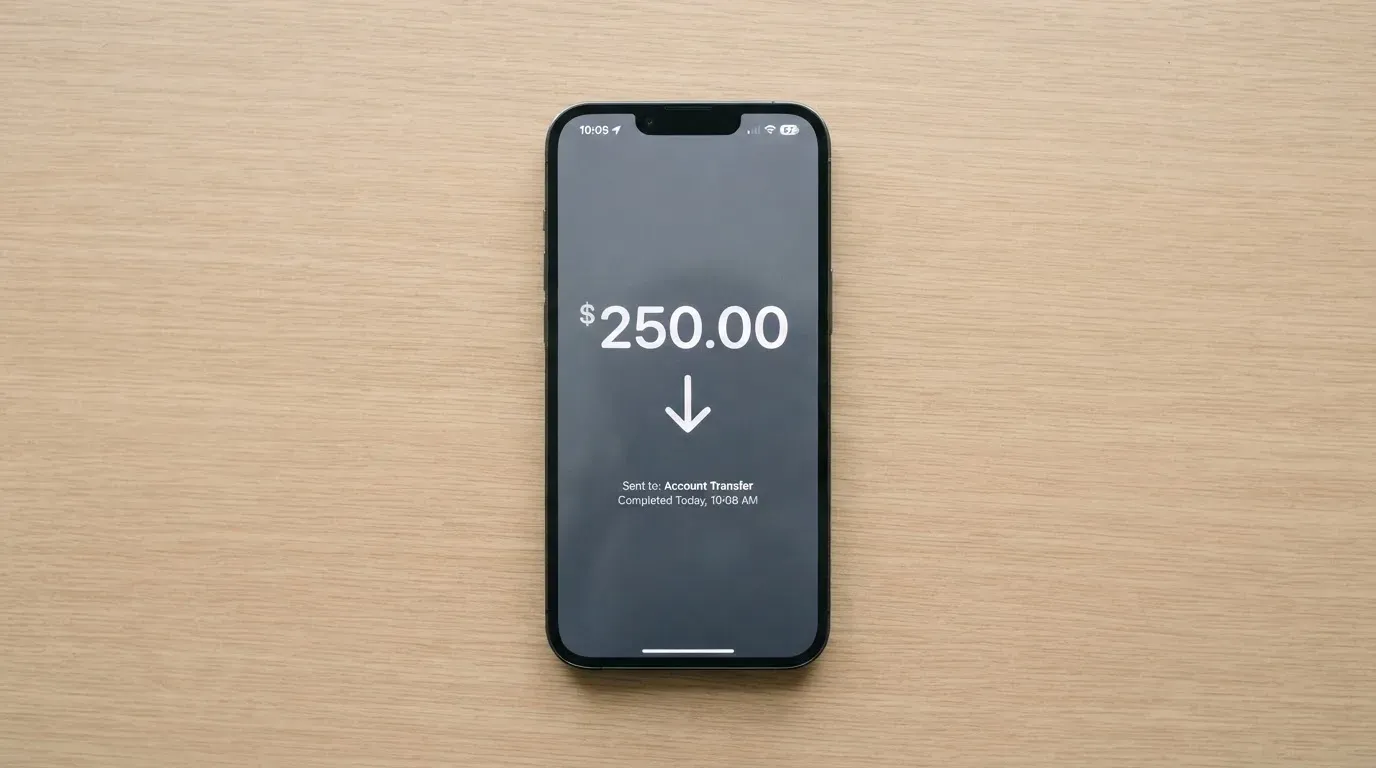
So “topping up the card” really means funding the Spendable Balance, which happens either by converting crypto you already hold into the Spend account, or by holding the right crypto in the first place and letting it convert at the moment of spend.
What is not stated: which specific coins and networks you can choose as your Spend account, the minimum top-up, any top-up fee, and any network fees for depositing crypto in. The card page does not publish the coin list. (A 2021 launch press release mentioned 30 digital currencies and a flat 1% conversion at that time — that is historical context, not a current spec, and I would not rely on it.) What you will do in practice is open the app, look at what it offers you as a Spend account, and see the live rate at that moment.
One consequence of this design worth thinking about before you start: because the card converts at the moment of purchase rather than when you fund it, you are exposed to the crypto price between the moment you decide to spend and the moment the transaction settles. If the market moves against you in that window, the number of dollars that hits your card will not be exactly what you expected. This is inherent to how these cards work, not a fault of this one.
Paying with it every day
Everyday use is where this card is genuinely good, and it is why I gave it 9 out of 10 on that one criterion rather than a middling mark.
The physical and digital cards are both free. Both Mastercard. Both work with Apple Pay and Google Pay, tokenised, so the card number is never exposed to a merchant in the clear. In the app you can hold and unblock the card, change the PIN, and view your transaction history — the three things you actually need day to day. Contactless payments under 100 dollars are supported, which covers most tap-to-pay purchases in a shop.
The rewards are modest but real: 1 CoinJar Rewards point for every 1 dollar spent. You can use points to offset future trades, or redeem them in the Rewards Store. One point per dollar is roughly a 1% back in a points currency whose redemption value depends on what you spend it on; I would not bank a holiday on it, but it does soften the 1% purchase fee somewhat, and if you offset a trade with points you are effectively getting a small discount on your crypto purchases too.
The app is iOS and Android, and the card is managed inside the CoinJar app. On app store ratings, unofficial figures from third-party trackers put the iOS app at 4.1 out of 5 across a few hundred reviews and the Google Play app at around 3.9 out of 5 across a few thousand ratings — these are third-party numbers, not official store listings, and I would treat them as a rough signal of user sentiment rather than a verdict. The CoinJar card, specifically, has drawn very few complaints compared with the exchange itself (more on that under risks).
Where daily use gets awkward is merchant-category blocking: the card documents do not publish a list of blocked merchant categories, so you cannot know in advance whether a given purchase will be declined. Gambling is the usual category that prepaid cards block by policy rather than by law, but I am not going to guess at this card’s list — it is not published.
What can go wrong
Two different risk families here: the card programme risks, and the ordinary risks of leaving your crypto with a custodian.
The card is custodial. Your funds sit in your CoinJar account, and EML issues the card against that balance. This is the standard model for cards in this category — you are trusting the platform to hold your funds and to keep the card working. It also means the usual custodial risks apply: exchanges have failed before with user funds (Mt. Gox, Coincheck, Ronin Network are the standard examples), and transfers being held “under review”, identity re-checks, and account freezes are recurring themes in user reviews of the platform. Those are platform-level risks, not card-specific ones, but you hold crypto either way.
Disputes have a clock and a fee. Chargebacks follow the Mastercard scheme rules. You are expected to notify EML as soon as possible, with a time limit generally running 90 days from the transaction. Crucially, you must supply extra information within 10 days or the chargeback can be lost or reversed — so a chargeback is not a “submit it whenever” process, it is a deadline you have to meet. And if you lose, there is a 27.50 AUD fee per transaction. In other words, this card makes it comparatively expensive to fight a purchase you are unsure about.
Complaints go through a defined path. CoinJar attempts to resolve a complaint within 5 days, otherwise within 30 days, and you can escalate to AFCA (the Australian Financial Complaints Authority) after that. The official complaint address is [email protected]. Support generally lives at [email protected], with the issuer reachable at [email protected] and a help centre at support.coinjar.com.
Foreign transactions are where the money leaks. The 2.99% surcharge plus the network rate is the single largest practical cost on this card, and it is invisible if you only ever spend at home.
Card-specific complaints are rare, and the exchange is not spotless. Officially, I found no card-specific complaints. Informally, on Trustpilot the CoinJar exchange sits at a 3.3 TrustScore across 2,549 reviews with 17% one-star, and the recurring themes are transfers and withdrawals held for review, identity re-checks and freezes, and slow support. That is the exchange, not the card, and CoinJar replies to essentially all negative reviews. I found exactly one card-specific complaint in the lot — a virtual Mastercard with recurring technical issues. For context, the issuer itself (EML Payment Solutions Limited, AFSL 404131) is a regulated Australian institution, which is the strongest stability signal on this page.
One structural note: if the card is cancelled or revoked, the remaining value is returned to CoinJar and paid into your Everyday Account in Australian dollars, but only once no pending authorisations remain and you instruct CoinJar to do it. You can cancel the card yourself at any time; the issuer can cancel it with 14 days’ notice, or immediately if it suspects misuse or false information. So the money is not stranded, but getting it back is not instantaneous either.
What to take instead
If the CoinJar card’s narrow eligibility or its 2.99% foreign surcharge does not work for you, these are the other cards in this category worth looking at. I have pulled their headline features from their own materials; where a detail is not published, I say so rather than guess.
| Card | Score | Issuing/format | Standout terms |
|---|---|---|---|
| CoinJar | 5.5 / 10 | Prepaid Mastercard, AUD, custodial | 1% purchases, “2.99%+” foreign, 1% ATM |
| Young Card | 5.7 / 10 | Not stated officially | Cashback paid in YNG tokens, tier-based (0.1%–3.6% by club tier) |
| MSX | 6.4 / 10 | Not stated officially | Not stated |
| Bybit Card | 6.0 / 10 | Virtual and physical, Mastercard and Visa depending on region, multi-region | 0.9% crypto conversion (some regions), tiered cashback up to 10%, region-dependent issuance fees |
A few honest notes on the comparison. The Young Card’s rewards are paid in its own token, which is a different kind of risk than points redeemable against a purchase — you are taking a price exposure on top of the fee. MSX scores slightly higher but publishes almost none of the details I would want to judge it on. Bybit is the broadest of the three by far — it lists card regions across Latin America, Central Asia, the Asia Pacific and Australia — and it has a genuinely tiered cashback structure, but its fees are regional and more complicated, and the rewards changed recently so that only crypto-funded spending earns them.
If your problem is that you cannot get an ordinary bank card at all, note that these cards are e-money instruments, not bank accounts: CoinJar’s card is issued by EML Payment Solutions Limited, not by a bank. That distinction matters for deposit guarantees — safeguarded e-money funds are not the same as bank deposits.
Who I would recommend it to
I would recommend the CoinJar card to an Australian resident who already uses CoinJar as their exchange, is comfortable with the custodial model, spends mostly at home, and wants a free Mastercard — physical and digital, with Apple Pay and Google Pay — that draws down a crypto balance in Australian dollars without any bank approval. If that is you, the 1% purchase fee and the modest rewards are a fair price for the convenience.
I would not recommend it to anyone outside Australia, anyone who wants to hold their own keys, anyone who travels or buys in foreign currencies often (the 2.99% surcharge plus network rate is high), or anyone who intends to lean on chargebacks as a routine consumer protection (the 10-day information window and the 27.50 AUD fee make it a last resort, not a first one).
The single most important thing to check before you commit is the Spendable Balance and the conversion rate, because the card’s economics live there and not in the free issuance. Everything else — the fees, the limits, the ATMs — is on the published table and easy to predict. What you cannot see on the page is what coins you can actually hold as your Spend account, so go and look at that in the app before you assume it will work for the coin you hold.
Frequently asked questions
What is the CoinJar card?
It is a prepaid Mastercard that spends the Australian-dollar balance in your CoinJar Everyday Account. When you make a purchase, CoinJar converts your chosen crypto at its own rate and loads the AUD value to the card. Both a free physical card and a free digital card are included. The card is issued by EML Payment Solutions Limited, with CoinJar Australia Pty Ltd as the authorised representative.
How does the CoinJar card work day to day?
You pick a crypto as your “Spend” account. The card draws on the AUD value of your Spendable Balance, converting at CoinJar’s rate at the moment of each purchase and charging CoinJar’s normal trading fee when it sells your crypto. In the app you can freeze the card, change the PIN, view transactions, and add the card to Apple Pay or Google Pay as a tokenised payment method.
Who can get the CoinJar card?
You must be 18 or older, a resident of Australia, and hold a verified CoinJar account. Those rules come from the Australian Product Disclosure Statement. The card’s own public page does not list eligibility or countries, so if you are not an Australian resident, assume the card is not available to you. Documents required for verification, and processing times, are not published on the card documents.
Is the CoinJar card free?
The card itself is free: the issue fee and the replacement card fee are both listed as Free, and no monthly or annual keeping fee line is charged in the fee table. The spending is what costs: 1% on every in-store and online purchase, “2.99%+” on foreign transactions, and 1% at ATMs. You also pay CoinJar’s normal trading fee whenever crypto is sold to fund a purchase.
What are the CoinJar card’s fees?
Purchases cost 1%, returned as Rewards points. Foreign transactions cost the Mastercard network rate plus a 2.99% foreign exchange fee, shown on the card page as “2.99%+”. ATM withdrawals on the physical card cost 1% of the withdrawal plus the ATM operator’s own fee. A dispute you lose costs 27.50 AUD per transaction. The maximum point-of-sale transaction is 5,000 AUD, with a 5,000 AUD daily limit that includes ATM withdrawals; the ATM daily limit is 1,000 AUD.
How do I top up the CoinJar card?
There is no separate top-up step, because the card has no balance of its own. You choose a crypto as your “Spend” account, and the card spends the AUD value of your Spendable Balance, converting at CoinJar’s rates. The specific coins and networks available, the minimum top-up, and any deposit or network fees are not published on the card page, so check what the app offers you in your account.
Can I use the CoinJar card in Apple Pay and Google Pay?
Yes. Both Apple Pay and Google Pay are supported, and the card is tokenised when added — the real card number never reaches the merchant, and each payment uses a dynamic code. In the app you can also freeze and unfreeze the card and change the PIN. There is a contactless limit under 100 dollars for tap payments.
Is the CoinJar card safe?
It is custodial, not self-custody: your crypto stays in your CoinJar account and EML issues the card against it. That is the standard model for this category and comes with the usual counterparty risk of holding funds with a platform. The issuer is a regulated Australian institution (EML Payment Solutions Limited, AFSL 404131), and I found no official card-specific complaints — but user reviews of the wider exchange do report held withdrawals, identity re-checks, and slow support. Safeguarding and insurance terms are not stated on the card page.
What happens if I have a dispute with a purchase?
Tell EML as soon as possible; the time limit is generally 90 days from the transaction. You must provide extra information within 10 days or the chargeback may be lost or reversed. CoinJar attempts to resolve complaints within 5 days, otherwise 30 days, after which you can escalate to AFCA. Merchant refunds go back into your Everyday Account in Australian dollars, and a dispute you lose costs 27.50 AUD per transaction.
Is the CoinJar card worth it?
For an Australian who already uses CoinJar and spends mostly at home, yes: a free physical and digital Mastercard with Apple Pay, Google Pay, and a 1% purchase fee offset by Rewards points is a reasonable way to spend a crypto balance. It is not worth it if you travel or buy abroad often (2.99% plus the network rate is high), if you want to hold your own keys, or if you are outside Australia. Check what coins you can hold as your Spend account before you commit, since that list is not published.
Choosing an exchange card – cryptocardadvisor
Content created by the «cryptocardadvisor» team