
A virtual card for spending a crypto balance, scored on the details that decide whether it works for you
 Available in US
The Chocopay card is a virtual Visa card that you issue and top up inside a Telegram bot, spend like an ordinary card online, and throw away when its prepaid lifetime ends. There is no physical card, no bank account behind it, and no monthly fee in the terms. It is aimed squarely at one job: letting international users pay for things a restricted card cannot pay for, and most of its appeal for a given reader will be paying for AI tools and subscriptions. On the evidence I could check, that is exactly what it does, and also exactly where it stops.
My score is 4.5 out of 10. That is not a rounding of something warmer — it is the sum of the marks below, and the two weakest areas are the ones that matter most if you are the person I suspect is reading this: what the card really costs per payment, and who is standing behind it.
The conditions described here are current as of October 28, 2026.
Verdict: 4.5 out of 10, a specialist tool with specialist strings attached
Chocopay does one job and does it cheaply at the point of issue: a Subscriptions and AI card for $6 lasting three months is genuinely inexpensive if it works for you. But it works on a prepaid balance held by a provider, with a fee schedule that is only partly published, an unnamed issuing bank, and per-transaction charges that only third-party sites document. The card’s own documents do not tell you what a decline costs you or what a non-dollar payment costs you. That is not a reason to refuse it; it is the reason to load it with a small amount and test it.
| Criterion | Mark | Why |
|---|---|---|
| Who can get it | 5 / 10 | No citizenship or residency criteria in the terms, but payments to sellers linked to listed restricted countries are forbidden |
| Cost | 3 / 10 | Issue at $6, $10 or $15 depending on the card; crypto top-up commission 3–9% |
| Top-up options | 6 / 10 | Russian bank cards, SBP and more than 100 coins, though the specific coins and networks are not named |
| Reliability and complaints | 4 / 10 | CYPHER GOODS WHOLESALERS LLC, Dubai; issuer and licences not named; rating 3.8 from 25 reviews; no reversal after a completed payment |
| Everyday use | 5 / 10 | Virtual Visa only; Apple Pay and Google Pay on Universal and Travel; unofficial report that ATMs are not supported |
| Total | 4.5 / 10 | A narrow, cheap, workable card for one specific job — and narrow in ways you should decide on deliberately |
Who this suits: you already hold crypto and a way to fund a ruble payment, you pay for services that reject Russian cards, and you are comfortable treating the balance as money you might not get back. Who it does not suit: anyone whose income arrives in rubles from a Russian bank and who wants to treat this as a normal everyday card, because the card freezes at zero balance, expires on a schedule, and will not do a range of things a normal card does.
Will they give you the card?
Yes, on the face of it, and that is the most surprising part for anyone who has been turned away by a bank. The terms set no residency or citizenship criteria at all. What they do require is a set of negative conditions:
- You must be at least 18 years old.
- You must confirm you are not on the UN, OFAC, EU or UAE sanctions lists, and not a politically exposed person.
- You may not pay sellers linked to listed restricted countries — Russia appears in that list in Section 6.3 of the terms.
- Payments in RUB and UAH are prohibited.
- The service “does not guarantee” payments on accounts with a history of Russia linkage.
That last line is the one to sit with. Whatever the card’s paperwork says about who may hold it, the operative constraint is not your passport but the merchant. And the last point is not hypothetical: as a 2026 vc.ru ranking notes, there is no confirmation that paying for a specific subscription with Chocopay works. The card is built for exactly that use, and even that use is not confirmed.
Service and support are in Russian. If that is not a language you are comfortable reading the terms in, that is a factor before anything else.
How to get it
The marketing line is cards “without documents or verification” — no documents, no verification — and issuance happens in the Telegram bot within a couple of minutes. The practical sequence is short: open the bot, read the rules, choose a tariff, issue the card, top it up. There is no application form to fill in and no physical delivery to wait for, because there is no physical card.
What “no verification” does not mean is “no checks ever.” Section 8 of the terms says information must be provided within two calendar days when it is requested. Automated checks are described as taking up to five minutes; complex cases take three to ten working days. Refunds from a web account require KYC. Proof of address is not stated.
There are no published tiers, no stated rejection reasons, and no way to know in advance whether your case will be the five-minute one or the ten-working-day one. Replacement of a blocked, unaccepted or technically faulty card is “possible but not in all cases,” and no price is stated for it.
Fees: what it really costs
This is where the card is weakest, and it is weakest because of what is missing rather than what is high. Here is everything the material actually establishes.
| Fee or limit | Value |
|---|---|
| Issue — Subscriptions and AI | $6 for 3 months |
| Issue — Travel | $10 for 6 months |
| Issue — Universal | $15 for 18 months ($0.83/month) |
| Issue, terms-of-operation page | $2, $6 or $9 depending on tariff; $6 or $9 when paid in crypto |
| Monthly fee | None in the terms |
| Crypto top-up commission | 3–9% |
| Ruble top-up | Calculated in the bot at the service rate |
| Conversion / FX fee on card spending | Not stated officially |
| Declined transaction fee | $0.75 on all tiers (unofficial) |
| Markup on payments not in USD | 2–3% (unofficial) |
| Refund fee | $5 (unofficial) |
| ATM cash withdrawal | Not supported (unofficial) |
| Daily and monthly spending limits | Not stated |
| Card liability cap | Last month’s commission, maximum $100 |
Note the discrepancy in the issue fee before you do anything else. The portal quotes $6, $10 and $15 by card; the terms-of-operation page quotes $2, $6 or $9, with $6 or $9 when paid in crypto. Those two sets of numbers do not agree, and the terms page is lower in one place and higher in another. Which one your bot charges you is the thing to check on screen before you pay.
The $0.75 declined-payment fee and the 2–3% markup on non-dollar payments come from a third-party review site updated in June 2026, not from Chocopay’s own pages. I could not confirm either with the card. That does not make them false — it makes them exactly the kind of charge you should assume exists until shown otherwise, because the official silence is not reassuring.
Three everyday payments, and which fees apply:
- A $20 monthly subscription in dollars. You pay only the 3–9% crypto top-up commission plus whatever the $6 issue fee was spread across three months. No FX fee, because the payment is in dollars. This is the card at its best.
- A €15 online purchase from a European merchant. If the 2–3% markup is real, that is roughly €0.30–€0.45 added silently at the till. The official pages give you no figure to check it against, which is the problem.
- A payment declined at the till. If the $0.75 fee is real (as reported by unofficial sources), you pay it for the privilege of finding out the card was not accepted — and the card’s own refund terms say a successful payment cannot be reversed, so a decline may be the safer outcome.
Top up: how money gets onto the card
Three routes, and one notable absence. You can pay from Russian bank cards, you can pay by SBP in rubles with the amount calculated inside the bot, and you can pay with cryptocurrency — the site advertises more than 100 coins. Card-to-card transfers are not supported. The specific coins and networks are not listed anywhere I could find, which matters more than it sounds: sending on the wrong network is the classic irreversible mistake.
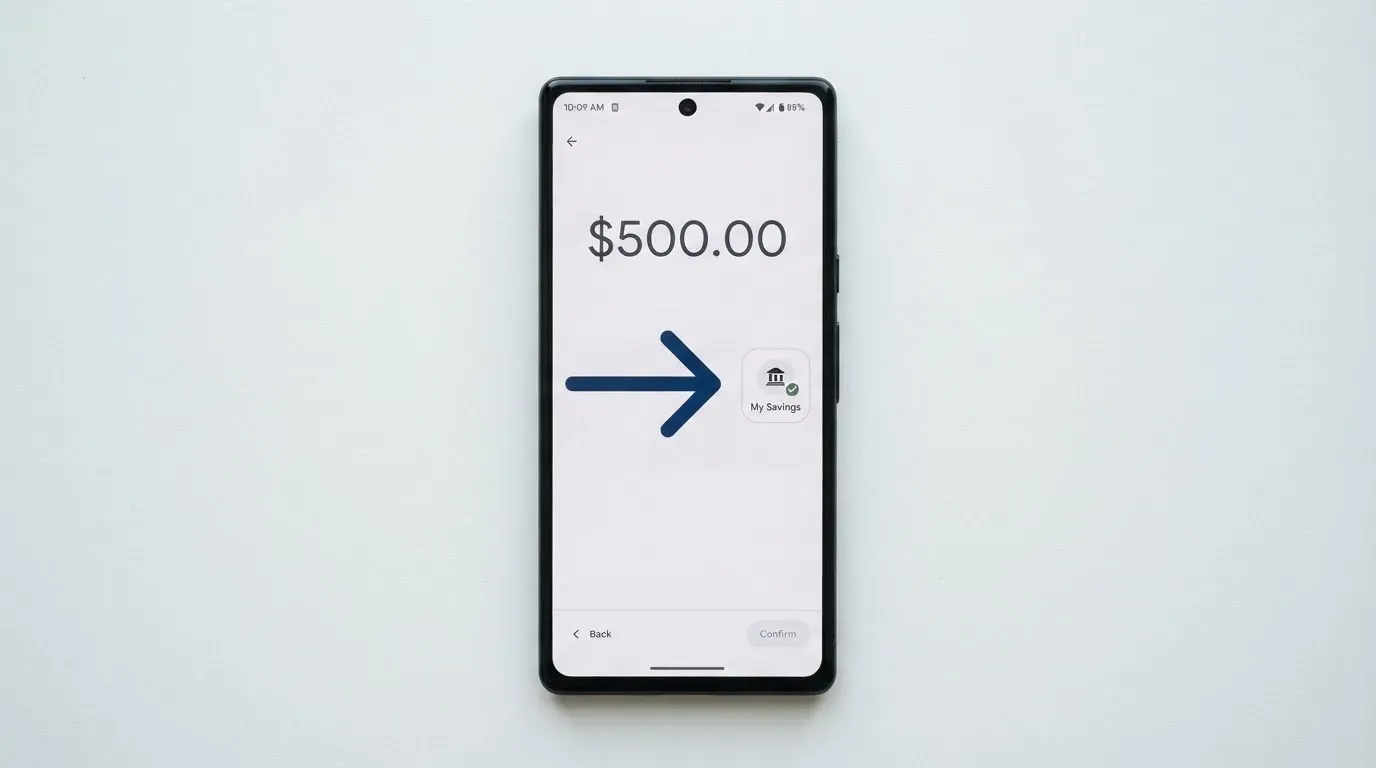
Minimums are published: from $15 by rubles via SBP or Russian cards, from $30 by crypto. The crypto fee is the 3–9% band. Which network fee you pay on a crypto deposit is not stated — that cost is charged by the blockchain, not by the card provider, and it comes out of your wallet regardless of who issued the card.
Only your own funds are accepted: a third-party or company card is reported as not allowed, on an unofficial basis. So a corporate card funding your balance is not a route.
The withdrawal and return rules are the part to read twice, because they are unusually tight:
- Bot users get their balance back only if the card was issued within 30 days, has no completed transactions, and is neither working nor accepted anywhere.
- Any successful payment blocks returns permanently. Once you have bought something, that balance is gone as far as the service is concerned.
- The issuance fee and commissions are excluded from any return.
- There is no refund at all if the card was issued and first topped up with crypto.
- Refunds are paid within 14 working days, and may be held for up to 30 working days if fraud is suspected.
- Web-account users are refunded to the original wallet minus network fees, and need KYC.
Read that third and fourth bullets together and you see the practical trap: if you are unsure, do not top up with crypto first, because that alone removes your right to a return.
Paying with it every day
The card is virtual Visa with a balance and currency in USD. Three cards are offered, each tied to a purpose and a lifetime: Subscriptions and AI, Universal, and Travel. Mastercard is not mentioned. Only Universal and Travel list Apple Pay and Google Pay — binding requires a confirmation code from a manager during working hours, so it is not instant.
What the card will not do is as important as what it will:
- No payments to services linked to Russia, Belarus, Ukraine and other countries restricted by Visa or Mastercard.
- No payments in rubles or hryvnias.
- No adult services rated 18+, no casinos, no betting.
- Violations may lead to the card being blocked “without refund” — without refund.
That last restriction interacts badly with the refund rules above. If a payment trips a rule, the balance is not returned. You are relying on a provider’s judgement about what a merchant is linked to, and you have no chargeback route described if that judgement is wrong. The card’s dispute path is the official Telegram support or [email protected]; a refund may be held up to 30 working days on suspected fraud or bank review, and a completed payment is not refundable. No chargeback process is stated at all. A $5 fee for a refund is reported on an unofficial basis.
There is no cashback stated. The referral bonus advertised on the portal is +$2. The interface is a Telegram bot with no standalone app, so there are no store ratings to read and no mobile app to rate.
What can go wrong
Nobody behind the card is named. The company behind it is CYPHER GOODS WHOLESALERS LLC, registration number 1049902, Office No. 301A, Dubai Investment Properties (LLC), Al Raqqa, Dubai. The cards are described as “of foreign banks”. Neither the issuing bank nor any licence is named. An unofficial source reports that there is no public financial licence. You are not holding a bank deposit here; you are holding a prepaid balance with an unnamed issuer behind a named Dubai company.
The card behaves like a prepaid card, not a bank account. It is explicitly a “virtual card for international purchases for a set period”. It freezes after expiry, and after many declines at a zero balance, and can be unfrozen in the bot. It may be cancelled after 30 days of inactivity. Two-factor authentication and self-custody are not stated. Your liability is capped at the last month’s commission, up to a maximum of $100 — so the worst case is bounded, but the balance itself is exposed.
Complaints are thin and not flattering. I found no official incidents, but a review-site rating is 3.8 out of 5 from 25 reviews, flagged as “not enough data”, with no themes recorded. No Trustpilot page exists. There is no dated news of note.
Custody is the structural risk. Whoever holds the credentials to the balance can spend it, and crypto transfers have no built-in recovery when something goes wrong. The history of custodial platforms is not encouraging: Mt. Gox, Coincheck and Ronin Network all lost funds at scale. That history is about other companies, but it describes the category of risk you are accepting here.
Merchant-side refusals are normal for this kind of card. Merchants can look at the card’s issuer identification number and see which institution and country issued it, and may apply extra scrutiny when that differs from the billing address. Some decline prepaid or foreign cards on that basis, and address verification, which compares parts of your billing address with issuer records, is generally unavailable for foreign-issued cards — which can cause declines you cannot diagnose.
Support hours are narrow for a bot. A manager replies within up to five minutes, but human support runs 09:00–21:00 Moscow time; the bot itself runs at any time. Everything is in Russian.
What to take instead
The alternatives below are here for comparison, not as a ranking. Their marks come from the same scoring exercise.
| Alternative | Score | Card and cost | What it does differently |
|---|---|---|---|
| Azul Card | 5.3 / 10 | Virtual Mastercard; $20 creation, refunded after $2,000 in spending; $5 monthly maintenance; crypto top-up 4%, $0.25 per transaction | Published country list excluding Russia, Belarus, North Korea, Iran, Syria, Cuba, Sudan, Venezuela, Ukraine and specified regions — applied regardless of nationality; no physical card yet |
| Telecard | 6.1 / 10 | Virtual Mastercard; $5 standard one-time, or VIP $49 setup then $19/month; $99 minimum deposit stated as not a fee; 1.5% conversion on non-USD, 0.5 USDT gas per successful transaction | Named networks: USDT on Tron or Ethereum, USDC on Ethereum; no Polygon; over 150 countries; bank transfers “coming soon” |
| OnCards | 4.6 / 10 | Virtual card in Telegram, network not fixed; no fees stated | Funds via USDT BEP20 only; bank transfers not accepted |
Two things stand out when you put them side by side. First, every one of these is also virtual-only and also crypto-funded, so switching does not buy you a physical card — that is the market you are shopping in. Second, they publish different amounts of information: Azul Card publishes a country list and a monthly fee, Telecard publishes its networks and its transaction costs, OnCards publishes almost nothing. Chocopay’s card is not the least transparent on costs alone, but it is the one that leaves its per-transaction behaviour undocumented.
Against that field, Chocopay’s genuine advantages are its ruble routes — Russian bank cards and SBP, which neither alternative lists — and the low $6 entry point for the subscriptions card, which is half of what Telecard’s standard plan costs and a quarter of Azul Card’s monthly maintenance.
Who I would recommend it to
I would recommend Chocopay to exactly one person, in a fairly specific situation: you already hold stablecoins, you are paying for AI tools or subscriptions that refuse a Russian card, you are comfortable paying a 3–9% top-up commission for the privilege, and you can accept that a completed purchase means that money is spent. For that person it is a cheap, fast, functional answer to a real problem — a $6 card that lasts three months is a low price for not having to explain your banking to a merchant.
I would steer everyone else toward one of the alternatives above, or away from crypto cards generally, based on which of two things bothers them more.
If it is cost clarity, take Telecard. It is the highest-scoring of the three, it names the networks it accepts, and it publishes its conversion fee, its gas fee per transaction and its FX and cross-border fees. You can actually calculate what a purchase will cost before you make it, which on Chocopay you cannot.
If it is predictable access, look at the country list rather than the fees. Chocopay’s terms do not exclude you by citizenship but do prohibit payments to sellers linked to restricted countries, and warn that payments on accounts with Russia linkage are not guaranteed. A card whose own terms decline to guarantee your payment will work is a different proposition from one that tells you plainly where it can and cannot be used — and Azul Card’s restrictions at least have the virtue of being written down as geography rather than as a merchant’s judgment.
And if neither of those describes you — if you want cash, a physical card, a bank account, or payment help in a language other than Russian — then the honest answer is that this card was never built for that, and no amount of reading will change that.
Frequently asked questions
What is the Chocopay card?
The Chocopay card is a virtual Visa card issued inside a Telegram bot that draws on a prepaid balance rather than a bank account. You choose one of three cards by purpose and lifetime — Subscriptions and AI, Universal or Travel — top it up with rubles or crypto, and spend the balance online in dollars. There is no physical card, no Mastercard version, and no monthly fee listed in the terms.
How does the Chocopay card work?
It works like a prepaid card: crypto is converted and loaded as a fiat balance in USD, and the card spends only that balance, so it cannot overdraw. Payments are routed through Visa and settle against the balance. Because the card is virtual, there is nothing to insert anywhere — details are used at online checkouts, or tokenised into Apple Pay or Google Pay on the Universal and Travel cards.
Who owns Chocopay?
The service is run by CYPHER GOODS WHOLESALERS LLC, registration number 1049902, Office No. 301A, Dubai Investment Properties (LLC), Al Raqqa, Dubai. The cards are described as cards of foreign banks, but neither the issuing bank nor any licence is named, and an unofficial source reports there is no public financial licence. I could not confirm a banking or e-money authorisation anywhere.
Does Chocopay require KYC?
The card is marketed as requiring no documents and no verification, and issuance usually takes a couple of minutes. But the terms require you to provide information within two calendar days if asked, automated checks are described as taking up to five minutes and complex cases three to ten working days, and refunds from a web account require KYC. So the fast path is the normal path — verification exists, it just is not usually triggered.
Can I use the Chocopay card in my country?
The terms set no citizenship or residency requirement, but they do restrict where the card can be spent. Payments to sellers linked to restricted countries are forbidden, and Russia appears in that list in Section 6.3. Payments in rubles and hryvnias are prohibited outright, and the service does not guarantee payments on accounts with a history of Russia linkage.
How much does the Chocopay card cost?
The portal lists $6 for the Subscriptions and AI card for three months, $10 for Travel for six, and $15 for Universal for eighteen months at $0.83 a month. The terms-of-operation page gives different figures — $2, $6 or $9 depending on tariff, and $6 or $9 when paid in crypto. There is no monthly fee in the terms, and the crypto top-up commission runs from 3% to 9%.
Is the Chocopay card safe?
Safety here is mostly about who holds your money, and that is not public. The balance is custodial rather than a bank account, the issuing bank is not named, and liability is capped at the last month’s commission up to $100. There is no stated chargeback process, and any completed payment cannot be refunded — so the exposure is the balance you have loaded, not your whole account.
Can I get money back from Chocopay?
Only in narrow circumstances. Bot users can return a balance only if the card was issued within 30 days, has no completed transactions, and is not working or accepted anywhere — and not at all if it was first topped up with crypto. Refunds go out within 14 working days but can be held up to 30 working days on suspected fraud, and the issuance fee and commissions are never returned.
Does the Chocopay card work with Apple Pay?
On Universal and Travel, yes — both Apple Pay and Google Pay are listed. The Subscriptions and AI card does not list them. Binding is not instant: you need a confirmation code from a manager during working hours, with support running 09:00–21:00 Moscow time. A $5 fee for a refund is reported on an unofficial basis, so assume it exists.
Is a Chocopay card worth it?
Worth it if you need to pay for AI tools or subscriptions that refuse a Russian card, already hold crypto, and can treat the top-up commission as the price of access. Not worth it if you need cash, a physical card, a bank account, or a clear published fee for every transaction — on daily limits, ATM use and non-dollar markups, the official pages are silent and only third-party sites fill the gaps.
Choosing a virtual card – cryptocardadvisor
Content created by the «cryptocardadvisor» team