
The cheapest Visa in crypto, run by a company that will not name its bank
 Available in US

The Cashi card is a virtual Visa debit card funded from stablecoins, aimed squarely at people who hold USDC or USDT and want to spend them at ordinary shops. On paper it is one of the least expensive crypto cards in this category: spending in US dollars costs nothing, spending in other currencies costs 1%, there is no monthly fee, and the $5 activation fee comes straight back as spending credit. What holds it back is not the price list. It is that Cashi says it “provides technology services only” and does not name the institution that issues the card or the licences it holds, that the card is virtual only with no ATM access, and that the whole product has been in public beta since August 2026 with no user reviews to check. Six and a half out of ten is a fair reading of that: a genuinely cheap card, attached to a company that asks you to take a great deal on faith.
These conditions are current as of October 28, 2026.
Verdict: 6.6 out of 10
The score is not a ranking of how good the card is at spending. It is a judgement about whether you can rely on this thing with money you cannot replace. On that basis the costs look excellent, the funding options look genuinely excellent, and the fundamentals — who issues it, whether it is safe, whether it works where you are — look unfinished.
Who this suits: someone already holding USDC or USDT who wants to spend crypto at ordinary merchants, travels across currencies, and is comfortable with a young product run by a company that has not named its issuer. Who it does not suit: anyone who needs cash from an ATM, anyone who needs a physical card in the post, anyone who cannot freeze and unfreeze their own card because their phone is dead, and anyone who considers an unnamed issuing bank unacceptable at any price. If a card being issued by an institution you can name in a jurisdiction you can check is a condition for you, this is the wrong card, and no 1% fee will change that.
| Criterion | Mark | Why |
|---|---|---|
| Who can get it | 5 / 10 | Countries not listed on the site or in the help articles; the card works “anywhere Visa is accepted”; some merchant types restricted for regulatory reasons |
| Cost | 9 / 10 | $5 activation returned as $5 Spending Credit; USD payments 0%, other currencies 1%; no Cashi fee on crypto deposits, only the network fee; dispute costs $50 |
| Top-up options | 10 / 10 | USDC and USDT on Tron, Solana, Polygon, BNB Chain, Arbitrum, Ethereum, Bitcoin, Base; also BTC, ETH, SOL; cash in 20+ currencies |
| Reliability and complaints | 5 / 10 | Cashi provides technology services only; issuer and licences not named; public beta since August 2026; no reviews found |
| Everyday use | 4 / 10 | Virtual Visa only; Google Pay available; Apple Pay “on the roadmap”; no ATM use with the virtual card |
| Total | 6.6 / 10 | Cheap and flexible, structurally unproven |
One thing the score table hides: the two highest marks belong to the parts you can read off a pricing page. The two lowest belong to the parts that would matter most if something went wrong — eligibility, support, and whether the card keeps working in month three.
Will they give you the card?
They will not say. That is the honest answer, and it is worth sitting with before anything else.
Cashi does not publish a list of eligible countries on its site or in its help articles. Availability is stated to be “subject to local laws”. The sign-up screen shows country options, and those visible in the interface include AR, BD, BR, CO, DO, ES, GH, KE, MY, NG, SA — but those are interface flags, not an eligibility list, and the card does not present them as one. So you cannot read off the site whether your country is open, closed, or open for some people and not others. You would find out by trying, and being refused after uploading your ID is a worse experience than being told no up front.
What the card does commit to is where it will work: it says it works “anywhere Visa is accepted”, and adds that “certain merchant types may be restricted for regulatory reasons”. Read that second half carefully. It means the acceptance network is wide but not perfectly complete, and that some categories of merchant may be switched off without much warning. Which categories are restricted is not stated anywhere on the public pages.
For a reader in the general position — anywhere, any nationality — this is the practical shape of the problem. Cashi is a technology company that plugs into someone else’s banking licence. The country you live in, the country of your citizenship, and the country that bank assumes risk on you are three different inputs, and Cashi’s pages resolve none of them in public. Some card issuers apply screening to citizenship and country of birth as well as address, precisely because sanctions and risk policy attach to the person, not only to the postcode. If your situation is complicated — a country under sanctions, a citizenship that differs from where you live, a recent move — expect that to be a manual, case-by-case question with a support team, not a checkbox.
Before you spend twenty minutes on an application that may not finish, the cheapest test is to read your own country and citizenship against nothing at all and ask [email protected] directly. That is not a trick; it is the only way to get the one fact the site withholds.
How to get it
The flow is short and conventional, which is to Cashi’s credit. Five steps:
- Sign up in the app.
- Verify your identity — the card describes this as “a quick check with your ID and a selfie”.
- Add at least $5 to your balance.
- Tap “Activate card for $5”.
- Receive $5 back as Spending Credit.
Most verification checks finish in minutes; the card’s own wording allows some to take up to 24 hours. There are no tiers or verification levels described, and the public pages do not list rejection reasons — which means if it fails, you will probably only find out that it failed.
What you get is a USD-denominated virtual Visa debit card. Card details go into the app; nothing is posted. Physical cards are described as “will be available in the future”, which is a promise about a roadmap rather than a shipping date. If your card details are exposed, the card’s answer is to email support — there is no self-service replacement flow described.
Two things people usually ask about verification are not answered: whether proof of address is required, and the age threshold. General practice across prepaid cards is 18+, but Cashi’s own pages do not say so, and I will not fill that gap with an assumption. If age is a live question for you, ask support before you start.
The app is on the Apple App Store and Google Play. Store ratings are not shown on the pages I could read, which is itself a small signal: there is not yet a body of public reviews to lean on either way.
What it really costs: Fees and limits
This is the part Cashi does best, and it is why the card scores 9/10 on cost. The structure is simple enough to hold in your head: 0% to spend US dollars, 1% on everything else, no monthly fee, no ATM fees because no ATM use.
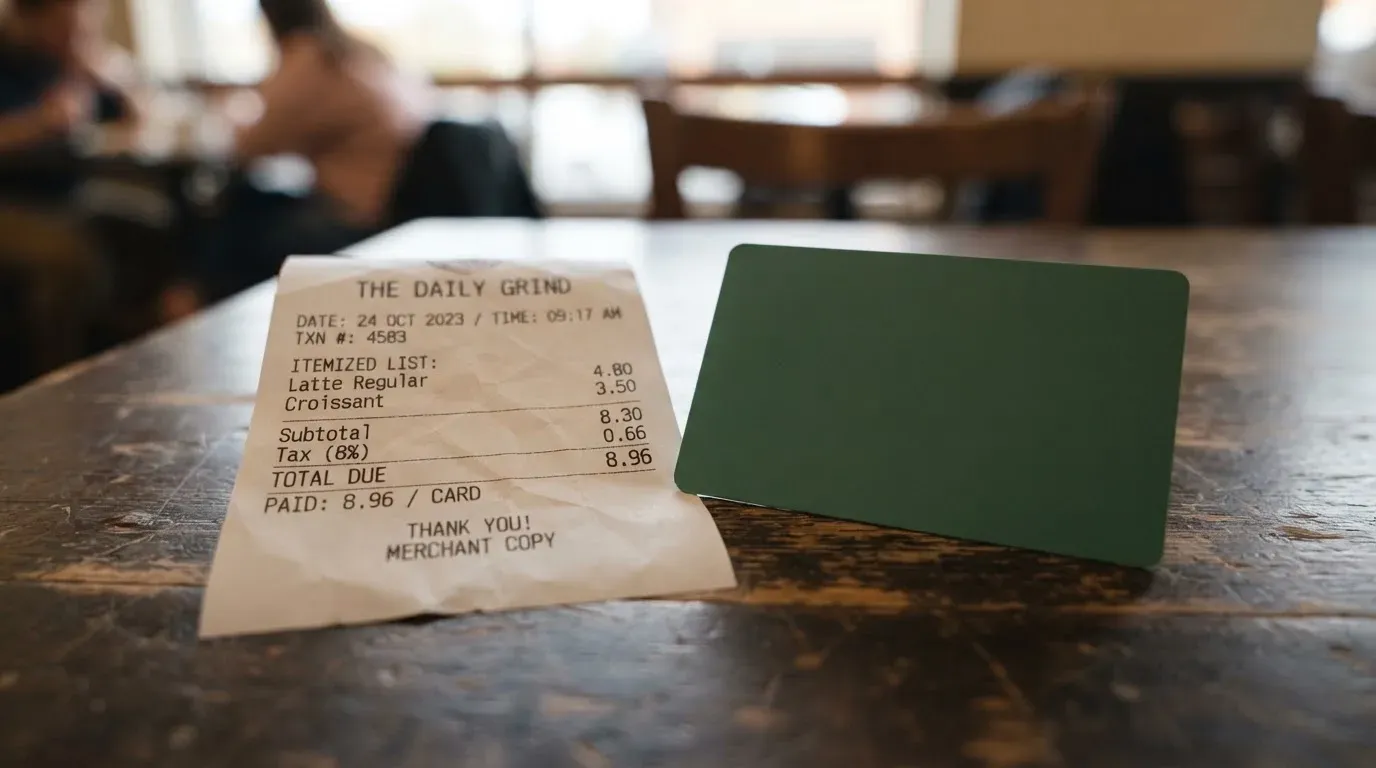
The activation fee is $5, paid from your cash balance, and returned as $5 of Spending Credit — so in practice it is net zero, provided you go on to spend the credit. You cannot spend more than the balance you hold, because the balance is the account. There is no credit, no overdraft, no borrowing.
| Item | What Cashi states |
|---|---|
| Activation | $5, returned as $5 Spending Credit, paid from cash balance |
| Monthly or annual fee | not stated |
| USD merchant payment | 0% Cashi fee |
| Non-USD merchant payment | 1% conversion fee |
| Crypto deposit or send | no Cashi fee; blockchain network fee only |
| Cashi-to-Cashi transfer | free |
| Crypto conversion spread | not stated |
| ATM | not stated; the virtual card cannot be used at ATMs |
| Daily spending limit | set by you in the app, up to $50,000 per day |
| Monthly limit | not specified |
| Cashback category caps | monthly caps apply; amounts not stated |
| Raising a dispute | $50 |
| Asking a merchant for a refund | free |
Notice how many rows say not stated. That is not sloppiness on my part; the card’s public pages simply do not publish a monthly fee figure, an ATM schedule, a monthly spending cap, or the spread it takes when it converts crypto into fiat. That last one matters more than it looks — the 1% is the visible part of conversion, but a spread inside the conversion rate would not necessarily appear anywhere in the app.
Three everyday payments, and which fees bite
Coffee in a US city. Charged in USD, no conversion, Cashi fee 0%. This is the case the card is cheapest for. If the balance is denominated in stablecoins, the underlying stablecoin-to-fiat conversion is where any cost sits — and the spread on that is not stated publicly.
A train ticket, €28, in Europe. Converted to USD automatically, 1% conversion fee — €0.28 on that fare. This is the case the card is designed for: you hold dollars or dollar-pegged tokens, you are elsewhere, and you eat a small, predictable charge instead of a bank’s foreign transaction markup.
A hotel deposit, $340, held for several days. Car rentals and hotels place authorisations that exceed the final bill. Cashi’s own description: holds above the final amount are deducted at authorisation and then adjusted afterwards. Two consequences. You need the money to already be in the balance, because the hold comes first. And a declined authorisation can leave a hold on funds that stays for several days, typically up to seven — which is standard card behaviour, not specific to Cashi, but it means a second authorisation while the first is pending can fail for reasons that have nothing to do with you.
One more category to be aware of, because it belongs in a cost review even though it is not a fee: the $50 to raise a dispute. If you are used to free chargebacks on ordinary cards, treat this as a real change in behaviour. Asking the merchant for a refund first is free, and it should be the reflex — the money is only at risk after that fails.
The card also holds one asymmetry worth naming. It cannot be permanently closed. It can be frozen instantly in the app, but “card cannot be permanently closed yet, only frozen”, so the card details exist for as long as the account does.
How to Top up: nine networks, two stablecoins, and cash
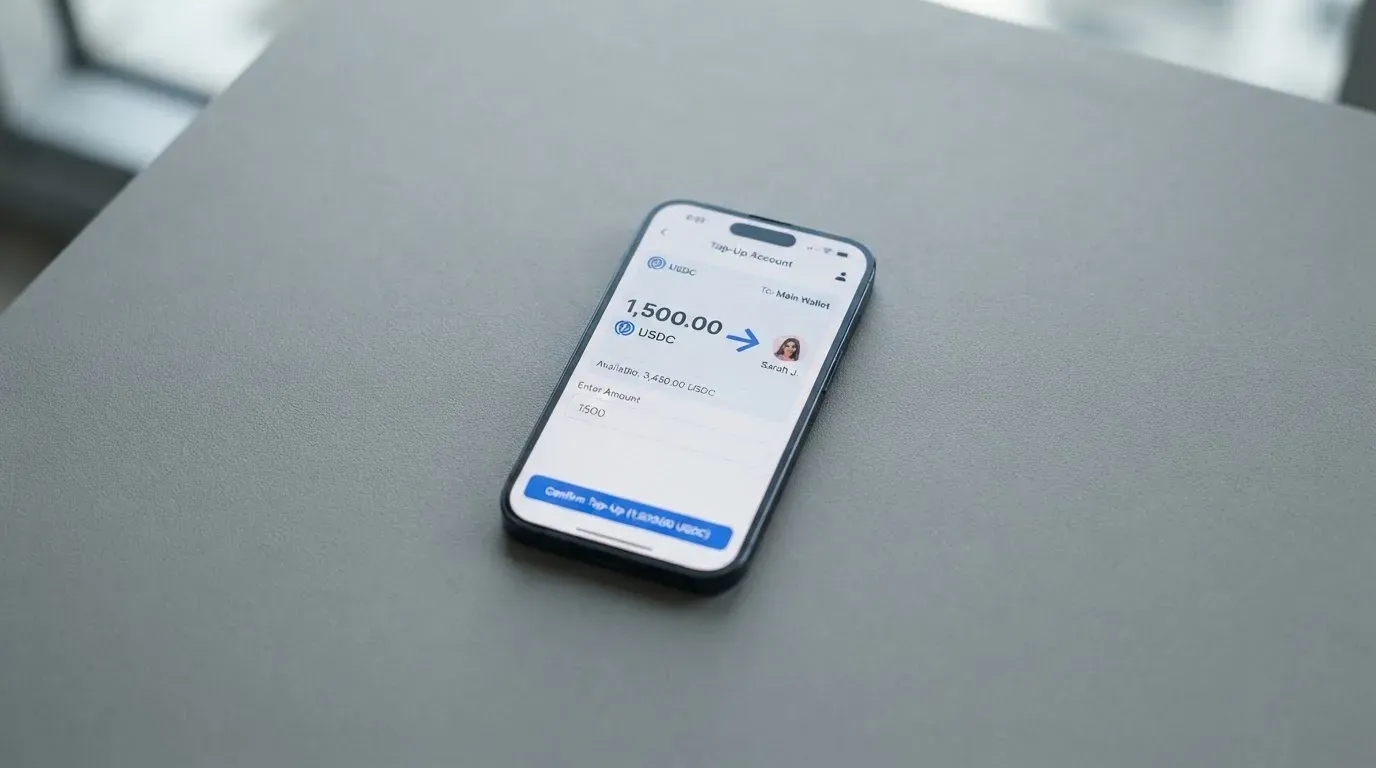
Top-up is where Cashi earns its other 10. It is genuinely the broadest part of the product.
| Route | What Cashi states |
|---|---|
| Digital assets, deposits | USDC and USDT on Tron, Solana, Polygon, BNB Chain, Arbitrum, Ethereum, Bitcoin, Base |
| Digital assets, additional | BTC, ETH, SOL accepted per the activation article |
| Digital assets, fees | no minimum, no Cashi fee, only the blockchain network fee; on deposits it comes out of the sending wallet, on sends from the Cashi balance |
| Digital assets, out | send on the same eight networks, network fee only |
| Cash, in and out | 20+ currencies; Cashi fee on every one, depends on currency, method and amount, quoted in the app before you confirm; minimums vary |
| USD account, receiving | free |
| USD account, sending and receiving | up to 3,000 USD in any 7 days |
| Card activation | $5 required |
That table covers an unusual number of bases. If your crypto sits on Tron, Solana or Base, you can move it directly into the card without bridging anything first — and bridging is where people lose money and time.
The network fee is the one cost on deposit, and it belongs to the blockchain, not to Cashi. On Ethereum that fee can be materially larger than on Solana or Tron, and it comes out of the wallet you send from. Tron prices its transactions with bandwidth and energy, often burning TRX; ERC-20 tokens on Ethereum can only be moved by a wallet holding ETH for gas, so a wallet with USDT and no ETH cannot send at all. These are category facts about crypto networks, not Cashi rules, but they are the reason a “free” deposit is not always free.
The trap here is the one that catches everyone: send on a network or to an address the card does not support, and the transfer is irreversible. Blockchain transfers cannot be reversed by the network, so a mistake typically means a support ticket and no guarantee of recovery. Check the network on both sides before you confirm. Note also that USDC on Tron is not a native option — Circle stopped supporting it in February 2024 — so on that chain the token you want is USDT.
Getting money back out, and closing the account
You can send digital assets out on eight networks for the network fee, and send or withdraw cash in 20+ currencies with the fee quoted in the app before you confirm. USD account sends carry a fixed bank fee plus a small transfer fee.
Deletion is where I would slow down. Cashi’s instruction is to “transfer any remaining balance out of your Cashi account” — and after deletion “you won’t be able to access your funds”. Because the card cannot be permanently closed, only frozen, the account is the thing that holds your balance. Treat closing the account as a withdrawal operation, not a settings toggle: move the money out, confirm it arrived, then close.
Paying with it every day
Here is the weakest section of the card, and the 4/10 is earned. It is a virtual Visa with narrow everyday support, and the gaps are practical rather than theoretical.
Wallets first, because this is the question people search for most:
- Google Pay: supported for in-store tap-to-pay. The card’s own note narrows this — Google Pay in-store only on Android; iPhone users pay online with card details.
- Apple Pay: “not available yet, but it’s on our roadmap”. There is a help-center article on the subject, but the answer on the public pages is that it does not work today.
- ATM: the virtual card cannot be used at ATMs. Full stop. Cash is available through the app’s cash-out function in 20+ currencies, which is not the same thing.
So the realistic daily picture: you spend online with the card number, tap in store on Android, and to get physical cash you go through the app. That is workable, and for someone who prefers spending down a stablecoin balance entirely it may be exactly what they want. It is not workable if you are the kind of person who needs a card at a market stall, or in a country where the merchant takes cash only.
Cashback is the one thing that makes ordinary spending pay back:
| Rate | Category | Cap as stated |
|---|---|---|
| 3% | eligible subscriptions | monthly plans only — Amazon Prime, Google One, Canva, Uber One; one charge per service per month; cap not stated |
| 2% | eligible online shopping | first $500 per store per calendar month, up to $10 cashback per store; other eligible stores share $500 / $10 per month |
| 1% | eligible travel | up to $20 cashback per month, each booking counting up to $2,000 |
Cashback is automatic and paid as Spending Credit. The caps are real: the 2% tier is generous enough to matter for everyday online shopping but runs out at $500 per store, and the 1% travel tier is capped low. There are no card tiers or account tiers — the categories are the only differentiation, so there is nothing to upgrade to.
Two everyday frictions to keep in view. Card acceptance is not identical to ordinary bank cards: prepaid and foreign-issued BINs are declined by some merchants, and address verification — which compares the numeric parts of the billing address you typed with issuer records — is mainly offered in the US, Canada and the UK and is generally unavailable for foreign-issued cards. That is a category fact, not a Cashi bug, but it is the reason a virtual, foreign-issued card can fail at a shop that has never heard of Cashi. And if a payment is declined, an authorisation hold can sit on your funds for several days, typically up to seven.
Disputes have their own shape: $50 to raise one, free to ask the merchant for a refund, and cashback is removed on refund. Time frames for the dispute process are not stated.
What can go wrong
The serious risks are not about fees. They are about structure.
You cannot see who stands behind the card. Cashi says it “provides technology services only”, and that financial products are issued and managed by licensed third parties. The issuer, its registration country and its licences are not stated. That is the single most important fact on this page for anyone with money at stake. In this category the issuer is the institution that actually holds your balance and carries the regulatory obligation; the crypto brand is often only a programme manager and front-end. Without a named issuer, you have no way to check whether a payment institution’s client-money rules apply to your funds, whether it is supervised, or where to complain when something goes wrong. Safeguarding arrangements and insurance are also not stated — the company saying assets are held with licensed third parties is a description, not a segregation notice.
There are no users to ask. No Cashi-specific complaints on Trustpilot, Reddit or in the news were found, and no Trustpilot page or user reviews exist for Cashi at all. That cuts both ways: no complaints is not evidence of safety when there may be no users. The product has been in public beta since August 2026 — press release reprints are dated 11 August 2026 — with a full launch expected before the end of 2026. One report calls Cashi Hong Kong-based, with the release datelined Sharjah, UAE. Both are single-source and unconfirmed.
Card programmes do get shut down. Visa and Mastercard do not issue crypto cards themselves; they license issuers and can suspend a programme. Visa terminated its global agreements with FTX on 13 November 2022 and the FTX US debit card was wound down by its issuer. WaveCrest, a Visa issuer that supplied crypto card brands, was suspended by Visa in Europe in 2018, closing all WaveCrest-issued Visa programmes. Closures follow a pattern: notice, then loading stops, then spending stops, then you withdraw what is left. There is also a now-direct line to your balance — if the issuer goes, the card goes, and the frozen-only card model means you cannot sever the link yourself.
Crypto transfers cannot be undone. Deposits and sends are irreversible at the network level, so a wrong network or a wrong address is a support problem, not a transaction you can reverse. Custody also carries counterparty and hack risk that ordinary banking does not: Mt. Gox (about US$350 million reported stolen 2011-2014), Coincheck (about US$400 million, 2018) and Ronin Network (US$625 million, 2022) are the standard reference points. Stablecoins themselves can depeg — TerraUSD collapsed in May 2022, and USDC temporarily lost its peg in March 2023 during the US banking crisis — and Tether says it disables tokens in wallets on the OFAC sanctions list and has frozen funds tied to illicit activity.
Platform risk sits behind you. Under EU markets rules, e-money tokens may be issued only by a credit institution or an electronic money institution; MiCA’s transitional period let providers already operating under national law continue only until 1 July 2026 or until a MiCA authorisation was granted or refused, whichever came first; and ESMA maintains a public interim register of authorised providers that you can check. None of that is specific to Cashi, and none of it is confirmed here either way — but it is the checklist I would work through before funding an account, and a card that names no issuer gives you nothing to check it against.
The safeguards are real but partial. Cashi offers instant card freeze, per-card daily limits you set yourself, online payment controls, two-factor authentication, PIN and biometrics articles, real-time activity alerts, and what it calls “secure account controls and continuous monitoring”. These are good. They are also app-dependent: freeze and limits both live in your phone.
Expansion cuts both ways. Mexico expansion is planned for late 2026, Apple Pay and a physical card are planned, and the site’s languages include English, Chinese, Arabic, French, Spanish, Portuguese, Japanese and Korean. A card that is adding countries and features quickly is a card whose terms may move while you are reading them.
Support, when you need it: [email protected], the Help Center at help.cashi.com, Telegram, and X.
What to take instead
None of these is a recommendation, and none of them clears the bar Cashi misses in the same way. They are the other things people in this category actually compare, with the information their public pages give.
| Card | Score | Form | Who it says it is for | Cost stated |
|---|---|---|---|---|
| Cashi | 6.6 / 10 | Virtual USD Visa | Not stated by country | $5 activation returned as credit; 0% USD, 1% non-USD; no monthly fee stated |
| Cardex | 5.6 / 10 | Debit card on VERVE, VISA, Mastercard and UnionPay; virtual and physical | “One crypto card, 200+ countries”; no country list or exclusions; App Store listing is Naira-focused | not stated |
| CardFlow | 4.9 / 10 | Virtual USD Mastercard, created in about 3 minutes | “Nigeria’s smartest fintech card platform”, Nigerians and global users | virtual card creation free; monthly fee not stated |
| HyperCard | 4.7 / 10 | Prepaid, balance in USD or EUR | No country list on official pages; App Store says it works in “more than 176 countries” (acceptance, not eligibility) | not stated |
Read that table with care, because it exposes the category’s problem rather than solving it. Cardex converts at the moment of payment and says it picks a rate by scanning global exchanges, but states no fee percentage. CardFlow and HyperCard state no fees at all on the pages I could read. HyperCard does not state its card network on its App Store listing, and none of the three names networks for its crypto deposits. Only Cashi publishes the numbers you need to calculate a cost — which is precisely why it scores highest on cost and why that score should not be mistaken for the other column.
What would actually change my recommendation is a named issuer and a named regulator. If Cashi publishes those, the score moves, and this page’s central reservation goes with it. Until then, the choice is between a card that tells you almost nothing and cards that tell you slightly different almost-nothings.
For context on why the issuer question is the right one to ask: an electronic money institution in the EU can issue e-money, payment cards and e-wallets but cannot lend, and may offer services across the EU/EEA from a licence granted in one member state. EMIs must safeguard customer funds by segregating them in dedicated accounts or insuring them — funds that are not bank deposits and may not sit under a deposit guarantee scheme. And a card is a payment service regulated separately from the crypto side, so a crypto card often depends on two licences at once: one for the money, one for the tokens.
Who I would recommend it to
I would recommend the Cashi card to someone who has stablecoins sitting on one of the nine supported networks, no access to an ordinary card, and a genuine preference for spending a dollar-pegged balance at zero cost rather than paying a bank’s foreign transaction fee. The pricing is not a trap — it is the best in this comparison, the funding options are the broadest, and the 3%/2%/1% cashback on Spending Credit is a reasonable reward for normal spending.
I would not recommend it to you if any of these are true. You need cash from an ATM. You need a card that arrives in the post. You need to know which bank issued your card and under which licence. You need Apple Pay, or you are on iPhone and want to tap in store. You are in a country where you have no way to check the issuer, or your citizenship or country of birth makes you a routine sanctions-screening question. Or you are simply not prepared to be the early user of a beta product with no reviews.
The honest framing is this. Cashi asks for very little money to start — $5 — and gives you a cheap card in return. The price of that deal is not fees; it is that in exchange for being an early user, you carry the whole judgement yourself. That is a reasonable trade at $5 and a bad one at five figures.
If you do proceed, do three things in this order: put in $5, read the app’s fee quote on a cash transaction before you confirm it, and keep the option of cash-out open — because the card is virtual only, and your exit from it is the app, not a piece of plastic.
Frequently asked questions
What is the Cashi card?
The Cashi card is a virtual Visa debit card, denominated in US dollars, funded from crypto and cash rather than a bank account. You add USDC, USDT or cash to a balance, the card spends that balance, and non-dollar payments are converted to dollars automatically. It is a virtual card only — there is no physical version, and Cashi says one will be available later. Your balance cannot go negative, because the balance is the account.
How does the Cashi card work?
You sign up, verify your identity with an ID document and a selfie, add at least $5, and tap “Activate card for $5” — the $5 comes straight back as Spending Credit. From then on the card draws on the stored balance. Spending in US dollars carries no Cashi fee; spending in other currencies adds a 1% conversion fee. Because it behaves like a prepaid card, it cannot overdraw, and payments can be declined if the balance is short.
Is Cashi a bank?
Not on the evidence of its public pages. Cashi says it “provides technology services only”, and that financial products are issued and managed by licensed third parties. It does not name the issuer, the registration country or the licences. So the practical answer is that Cashi looks like the brand and front-end, while a licensed institution you cannot identify holds the card programme and your balance. That is a structural fact about this category, not an accusation.
Who owns Cashi?
Cashi’s public pages do not say, and the ownership structure was not stated in anything I could read. One report calls Cashi Hong Kong-based, while a press release datelined Sharjah, UAE announced the public beta of the app and Visa card in August 2026 — reprint press releases carry that dateline. Treat both as single-source and unconfirmed. What is confirmed is the beta date: press release reprints are dated 11 August 2026.
Which countries can use the Cashi card?
Not stated. There is no published country list on the site or in the help articles; availability is said to be “subject to local laws”. Country flags visible during sign-up include AR, BD, BR, CO, DO, ES, GH, KE, MY, NG and SA, but those are interface choices, not an eligibility list. Where the card can be used is different and better defined: “anywhere Visa is accepted”, with certain merchant types possibly restricted for regulatory reasons.
Does the Cashi card require KYC?
Yes. Cashi describes identity verification as “a quick check with your ID and a selfie”, with most checks finishing in minutes and some taking up to 24 hours. There are no stated verification tiers, no stated rejection reasons, and no mention of whether proof of address or a specific minimum age is required. Because the country rules and screening criteria are not published, ask support before you upload documents if your citizenship or country of birth is not straightforward.
Is the Cashi card free?
Almost. The $5 activation fee is returned as $5 of Spending Credit, so it is net zero if you go on to spend it. Spending in US dollars costs 0%, spending in other currencies costs 1%, Cashi-to-Cashi transfers are free, and no monthly or annual fee is stated. Two things to know: raising a dispute costs $50, and cash deposits and cash-outs carry a Cashi fee quoted in the app before you confirm.
Can I add the Cashi card to Apple Wallet?
Not yet. Cashi says Apple Pay is “not available yet, but it’s on our roadmap”. Google Pay does work for in-store tap-to-pay, but on Android only — iPhone users are directed to pay online with card details. If tap-to-pay in a physical shop is how you would use the card every day, and you are on iPhone, that is a real gap in the product today, not a setting you are missing.
Where can I use the Cashi virtual card?
Anywhere Visa is accepted, with the caveat that certain merchant types may be restricted for regulatory reasons — and which categories is not stated. In practice, expect ordinary acceptance plus the friction that prepaid and foreign-issued cards get: some merchants look up the card’s issuing country and country-of-issue in the card number, and some decline those cards outright. Address verification, which compares the street number and postcode you type with issuer records, is mainly offered in the US, Canada and the UK.
Is the Cashi card safe, and can I delete my account?
Safety is honestly hard to answer. The card itself has the standard protections — instant freeze, limits you set, 2FA, biometrics, real-time alerts — but it is virtual, so it depends on your phone, and Cashi names no issuer or safeguarding arrangement. On deletion: move your balance out first, because after deletion “you won’t be able to access your funds”, and note that the card can be frozen but not permanently closed yet.
Choosing a virtual card – cryptocardadvisor
Content created by the «cryptocardadvisor» team