
A virtual USD card that starts free, with the important numbers left unsaid
 Available in US
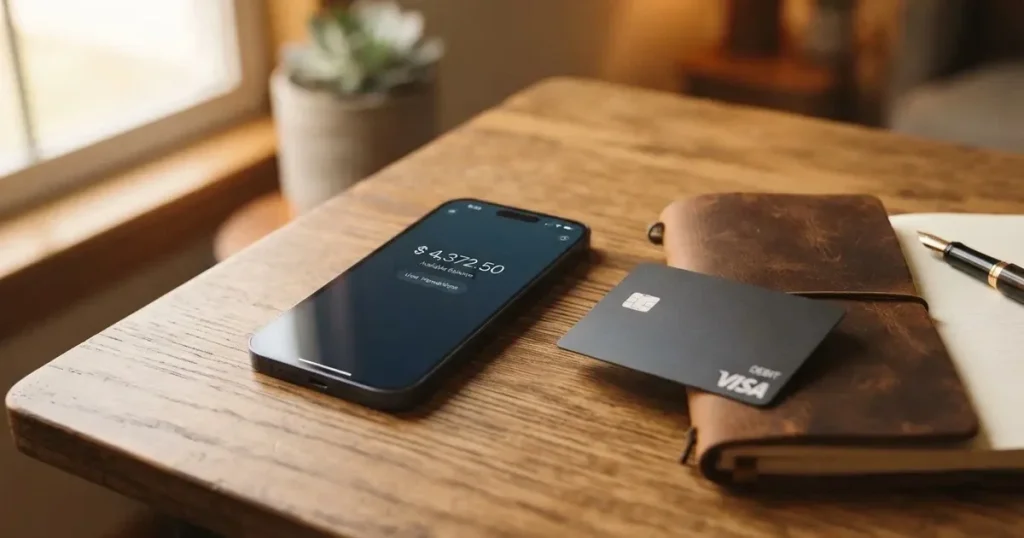
CardFlow is a virtual USD Mastercard aimed at Nigerian users, where you hold naira and USD balances and load the card from crypto or a bank transfer. The virtual card is created in 3 minutes and is free to create. And here is where I land: 4.9 out of 10. This is not a card that fails at anything obvious — it just tells you very little about the things that decide whether a card works for you. Top-up fees, conversion fees, spending limits, monthly fees, the company behind it, and how your money is safeguarded are all not stated on the public pages. For someone who wants an ordinary card to spend from a crypto balance and already has naira to move around, that is a thin basis. For everyone else, the questions are too basic.
The conditions described here are current as of October 28, 2026.
The score, criterion by criterion
Here is how the score breaks down, so you can see where it comes from rather than taking my word for it.
| Criterion | Mark | Why |
|---|---|---|
| Who can get it | 5 / 10 | Aimed at Nigeria (“Nigeria’s smartest fintech card platform”) and “Nigerians and global users”, with no country list and no stated exclusions |
| Cost | 6 / 10 | Creating a virtual card is completely free; top-up fees and FX fees are not disclosed |
| Top-up options | 6 / 10 | Bitcoin, USDT, ETH or a naira transfer; USDT TRC-20 is near-instant, BTC and ETH take 5–30 minutes; the other networks are not named |
| Reliability and complaints | 4 / 10 | The legal entity and issuer are not named; no complaints found, and no independent reviews either |
| Everyday use | 3 / 10 | Virtual USD Mastercard only, in about 3 minutes; Apple Pay and Google Pay not disclosed; no ATM |
| Total | 4.9 / 10 |
The pattern in that table matters more than any single line. There is no line where CardFlow is bad in a way you can see. The problem is the blanks.
Who will they give you the card to
The site describes CardFlow as “Nigeria’s smartest fintech card platform” and addresses “Nigerians and global users”. Those two phrases point in different directions, and the second one is not operationalised anywhere: there is no list of eligible countries, no list of excluded ones, and no stated rules about citizenship versus residence. So if you are in Kenya, or in Europe, or in Brazil, you have nothing on the public pages to check your eligibility against.
You will also notice what is missing about identity. The card’s pages do not say what verification is required — the requirement is not stated, and neither is any tiering of verification levels. That is a deliberate omission rather than a small gap, because in most jurisdictions the law requires a regulated business to verify its customers before opening a relationship for you. It is legal for the card’s own marketing to be silent about it and for the sign-up flow to ask for documents anyway, and often does. But you should not read the silence as “no checks.”
What the card does have is a clear shape of wallet: NGN and USD wallets, plus a virtual naira account, with the card spending in USD and funded either from crypto or from naira. If you were hoping for a card that spends your naira balance directly at a local shop, that is not this — the card is denominated in USD, and the naira side is how you get money in.
The audience this is built for, in my reading, is a Nigerian user who wants a dollar card without a traditional bank willing to open one. That is a real problem with a real solution. It is just not the same problem as everyone else’s.
How to get it
The mechanics are short, which is genuinely the most attractive part of the offer. You create a virtual USD Mastercard, and the card is ready in 3 minutes. There is no physical card here at all — delivery is virtual only, so the question of shipping, of waiting weeks for a plastic card, simply does not apply to you.
Three minutes is not an unusual number for a virtual card, and it should not be read as a quality signal on its own. Speed of issuance says nothing about what your balance costs to load or what happens when you need help. It is simply the part of the experience the card is clear about.
Fees: what it really costs
This is where the review turns, and I want to be precise about the gap rather than guess at what sits inside it.

The one fee-related statement the card makes is clear and positive: “Creating a virtual card is completely free”. That is a real number — zero, to create the virtual card. What I cannot tell you is what it costs to keep it, to fill it, or to spend from it, because the following are all not stated on the card’s public pages:
- the monthly fee;
- the fees charged on funding;
- the fees charged on conversion;
- the FX fee when you spend in a currency other than the card’s;
- ATM fees — and separately, the card has no ATM facility at all;
- daily and monthly spending limits;
- any tiers or plan levels;
- whether there are inactivity or minimum-balance charges.
| Item | What the card’s public pages say |
|---|---|
| Creating a virtual card | Completely free |
| Monthly fee | Not stated |
| Funding (top-up) fees | Not stated |
| Conversion fees | Not stated |
| FX fee | Not stated |
| ATM fees | Not stated (the card is virtual) |
| Daily spending limit | Not stated |
| Monthly spending limit | Not stated |
| Card currency | The card spends in USD; wallets in NGN and USD |
| Tiers or plans | Not stated |
That table is the honest state of things, and you should read it as a prompt rather than as good news. A card with no monthly fee sounds like a bargain until the money costs a percentage to move, and the percentage is exactly what nobody has published.
Let me walk through three everyday payments so you can see which unknowns bite. I am not inventing rates here — I am showing you which line items would be charged and which of them are undisclosed.
A naira transfer into the USD balance. This is the plainest possible use of the product, and you can already see the problem. The site lists a bank transfer as a funding option, but does not publish the fee, the minimum, or the rate you get. If the conversion happens at a marked-up rate rather than the mid-market one, you will find out from the amount that lands, not from a table beforehand. The FX fee here is not stated.
A $20 payment from crypto you already hold. Say you have USDT and you pay a subscription. The card is a USD Mastercard, so the merchant sees dollars and the merchant’s side is uncomplicated. But the movement from USDT to USD is a conversion, and the conversion fee is not stated. The card’s own FAQ describes funding via “Bank Transfer or Crypto (BTC, ETH, USDT)” without pricing it.
A payment in a currency other than USD. Every Visa and Mastercard purchase is converted by the network into the merchant’s currency, and CardFlow’s share of that conversion is the FX fee, which is not stated. This is the fee that quietly appears on all cards and is worth chasing before you commit anything to a service. You cannot compute your effective cost per dollar spent without it.
There is one more layer most people forget. The card’s share is not the whole cost. On-chain network fees — gas or bandwidth for a blockchain transfer — are charged by the blockchain itself, not by the card provider. So a crypto top-up can carry two separate charges: whatever CardFlow takes, and whatever the network takes. CardFlow discloses none of the first.
Top up: how the money gets in
The funding options are the strongest part of the offer, and they are where the 6/10 comes from.
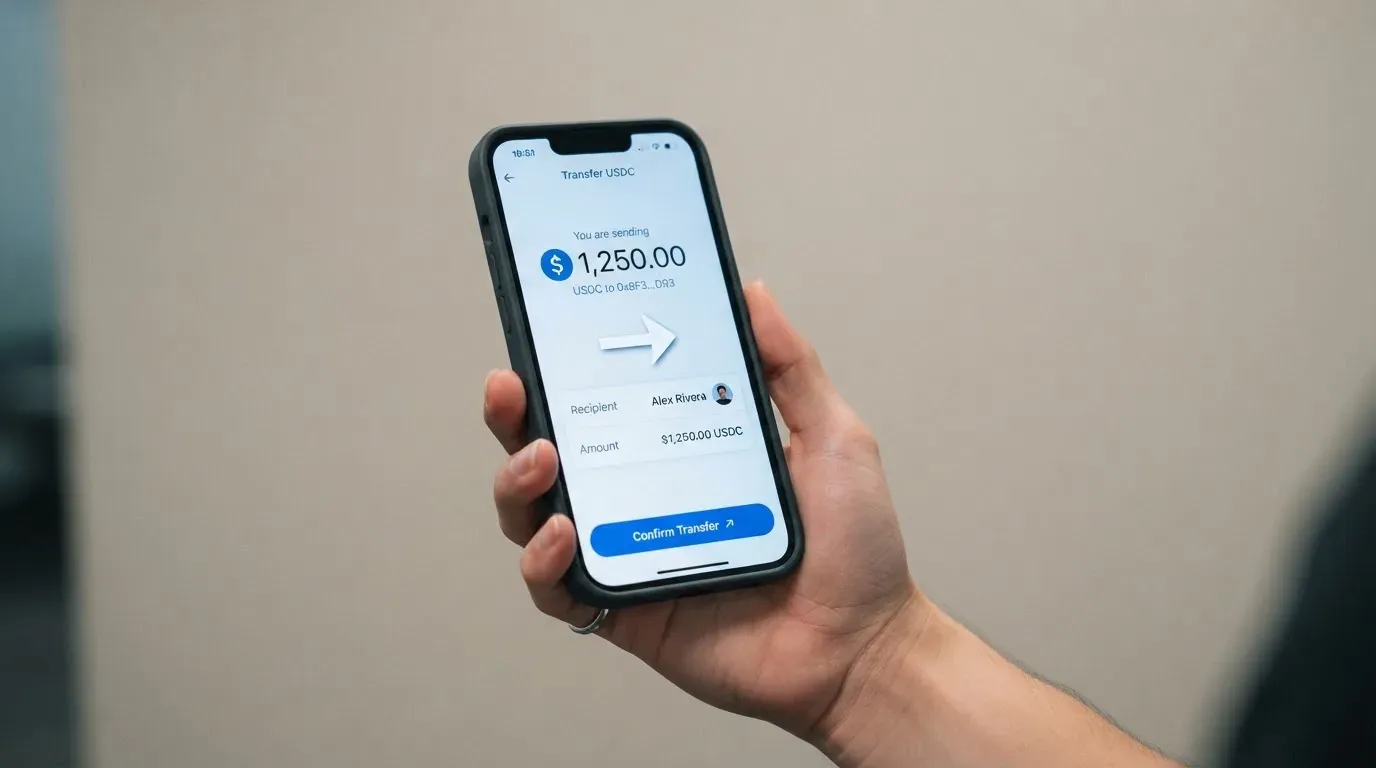
The card’s FAQ names three ways in: by Bank Transfer, or by Crypto — specifically BTC, ETH and USDT. There are no card-linking options described, no Apple Pay top-up, no third-party aggregator.
On timing, the card does give you something usable. USDT over TRC-20 is described as almost instantaneous. BTC and ETH take 5–30 minutes. Those are the numbers to plan around — if you are paying a subscription that renews in ten minutes, the crypto route is not the one, and the bank transfer is.
The gaps are the networks. Beyond TRC-20 being named for USDT, the specific chains are not stated, and neither are the minimum top-up amount or the fees. This is a sharp edge rather than a technicality. A stablecoin sent on a network the provider does not support, or to an address belonging to a different network, can be lost outright — blockchain transfers are irreversible, and recovery then depends on manual support intervention with no guarantee attached. So the practical rule is: send only on a network the card’s own current documentation names, and only to an address copied from your own account page rather than one supplied in a message.
Withdrawal — cashing the balance back out — is not stated. If you are thinking of this as a two-way bridge rather than a spend card, that is a question to ask before you load anything you care about.
Paying with it every day
What the card claims works is a specific and fairly narrow list. Its site says the CardFlow Mastercard works on Amazon, Netflix, Shopify, AWS “and more”. These are the standard large online merchants that accept nearly any card with a valid number, so this tells you the card is technically sound for ordinary digital subscriptions and invoices — which is a genuine use, if not a broad one.
What is not stated is what you cannot do. Apple Pay and Google Pay support is not disclosed, so do not assume you can tap in a shop. Blocked merchant categories are not stated. There is no physical card, so there is no contact, no swipe, no ATM. Rewards or cashback are not stated.
That last set of absences is what drags the everyday-use score to 3. In practice, CardFlow as described is a card for paying online bills and subscriptions from a dollar balance you control, and not a card you live with. If your daily spending is a coffee shop, a supermarket and a taxi, you will need something else.
Two general points about why online-only is not automatically a problem, and where it can bite. Merchant category codes are four-digit numbers that classify a business, and gambling (MCC 7995) is one that many issuers block by policy rather than by law — with the list varying by issuer. CardFlow does not publish its block list, so you cannot know in advance whether a category will be refused. And address verification, which compares the numeric parts of a billing address against issuer records, is mainly offered in the US, Canada and the UK and is generally unavailable for foreign-issued cards, which is a common cause of declines on a card issued for one country and used in another.
There is also the mobile wallet question, and it is worth being straight about it: when you add a card to a phone wallet, the card number is replaced with a device-specific number stored in the Secure Element, and each payment uses a one-time code. But an issuer can still restrict that tokenised number — blocking it on magnetic stripe, on phone, or on website use. Since CardFlow does not disclose Apple Pay or Google Pay support, you have to ask.
What can go wrong
I want to be careful and factual here, because the risk section for a card like this is mostly about what nobody has told you.
The company behind it is not named. The legal entity and the issuer are not stated on the public pages. I searched for complaints and reviews and found nothing: searches for the company’s name with terms like reviews, Trustpilot and Reddit returned only other companies, and no Trustpilot page was located for the card’s domain — the similarly named page that does exist belongs to a different company. No news coverage surfaced either. Let me be precise about what that means, because “no complaints” is often misread. It means the absence of evidence, not evidence of absence. A card with no footprint can mean a young service, or a very small one, or a name shared with several businesses, and the search I ran cannot distinguish between them. It also means you have no independent read on how disputes get handled, because there is nobody whose experience you can read about.
Safeguarding is not stated. You hold a crypto balance. What the card says it offers is practical: you can freeze a card from the Cards page at any time and unfreeze it the same way, and it has one-tap freeze and two-factor authentication. What it does not say is how your funds are held — custody and safeguarding are not stated. That is a separate question from the freeze button, and it is the more important one. If the provider holds your funds as e-money rather than as a bank deposit, they are not the same as a bank deposit and may not sit under a deposit guarantee scheme.
Withdrawals and disputes are not stated. If a payment goes wrong — goods not received, duplicate billing, a fraud attempt — the normal route is a chargeback, a refund ordered by the issuer. Whether CardFlow handles these, and how, is not stated. In the US, debit-card reversal rights come from one regulation and credit-card rights from another, prepaid-card coverage varies and should not be assumed.
Your own transfers can fail permanently. Crypto transfers are typically irreversible, and a stolen or misdirected one has no built-in recovery: the network cannot freeze or return the funds. This is why the unnamed networks in the top-up section are a real problem rather than a documentation gap.
Programmes do close. This is not a prediction for CardFlow; it is the category’s record. Visa terminated its global agreements with FTX on 13 November 2022 and the FTX US debit card was wound down by its issuer. WaveCrest, a Visa card issuer that supplied crypto card brands, was suspended by Visa in Europe in 2018, closing all WaveCrest-issued Visa programmes. A closure typically means a notice period, then loading and spending stop, then you are asked to withdraw remaining balances.
Two smaller operational notes. A declined authorisation can leave a hold on funds for several days, typically up to seven — so a payment that fails at a till may still be tying up money. And some merchants decline prepaid or foreign cards because the issuer lookup reveals the card type and country; that is a property of how card numbers are read, not a fault of yours.
One genuine positive: support exists in the form of an in-site chat widget labelled “CardFlow Support” and marked “Online · Replies in minutes”, alongside an FAQ. Whether support can actually recover a misdirected transfer is the question to test it with, if you choose to go ahead.
Alternatives worth looking at instead
If the missing numbers are what is stopping you, you are not short of options. Below is what the alternatives state about themselves — third-party and unofficial where marked, and not confirmed by CardFlow or by me.
Cardex — score 5.6 / 10. This one markets itself as “One crypto card, 200+ countries” with no country list or exclusions given. Its App Store listing is naira-focused, pay in Naira. It is a debit crypto card on the networks VERSE, VISA, Mastercard and UnionPay, offered as virtual and physical, with the card currency listed as Naira. On cost, it converts crypto to fiat in real time at the moment of payment, and says an “AI-Powered Conversion Rate” scans global exchange rates and picks the best one when you spend — but no fee percentage is stated, so the marketing is a description of mechanism rather than of price. Funding is via USDT, USDC and BTC wallets, networks not stated. Rewards not stated. *App Store details are unofficial listings rather than the card’s own site.*
Card.fi — score 6.6 / 10. The most transparent of the three on price, and the most expensive to enter. Its banner says cards ship to “200+ countries”, while its terms bar residents of, or orders from, “a country subject to sanctions that would prohibit the service” — that is the one alternative here that at least names a rule. It offers Virtual Classic and Virtual Premium, physical Classic and Premium, and a metal stainless-steel option; every physical order includes a virtual card, and cards are issued “under licence from the relevant card schemes”, with the scheme not named. One-time pricing is stated: Virtual Classic $49, Virtual Premium $249; physical and metal prices are not listed, and there is no monthly, annual, inactivity or minimum-balance fee. The fee table is the best published here — top-up Classic 1.5% plus $1.00, Premium 1%; FX fee Classic 3.5%, Premium 2.5% — with the conversion fee shown before each top-up. Funding covers 32 coins across 5 networks (Ethereum, Base, BNB Chain, Solana, Kaanch), with a deposit address per card and conversion at market rate on arrival; wrong-chain transfers risk permanent loss. Rewards are cashback on card spending only: Classic 0.8% capped at 10 USDT per month, Premium 1%, Metal 1.2% capped at 100 USDT per month and 5,000 USDT, or 2% capped at 250 USDT per month and 20,000 USDT; a headline 10% at coffee shops capped at 10 USDT per month; balances “up to 18%” on Metal, variable.
HyperCard — score 4.7 / 10. A prepaid card whose network is not stated on the App Store page, with a balance in USD or EUR. Its official pages give no country list; the App Store says the card works in “more than 176 countries” — note that this describes acceptance, not eligibility for you, a distinction that catches people out. No fees are listed on the page I could read, and neither costs nor rewards are stated. Funding is by depositing crypto such as USDT, BTC or ETH in the app, converted to USD or EUR on the card, networks not stated. *App Store details are unofficial listings.*
Set against those, the trade-offs read like this:
| CardFlow | Cardex | Card.fi | HyperCard | |
|---|---|---|---|---|
| My score | 4.9 / 10 | 5.6 / 10 | 6.6 / 10 | 4.7 / 10 |
| Entry cost | Virtual card free | Not stated | Virtual Classic $49, Virtual Premium $249 | Not stated |
| FX fee | Not stated | Not stated | Classic 3.5%, Premium 2.5% | Not stated |
| Top-up fee | Not stated | Not stated | Classic 1.5% + $1.00, Premium 1% | Not stated |
| Physical card | No (virtual only) | Yes | Yes (physical and metal) | Not stated |
| Named eligibility rule | None | None | Sanctioned countries excluded | None |
Card.fi is the one that publishes its numbers, and if your priority is knowing what a payment costs you, that transparency is worth an entry fee. Cardex is the one that publishes its networks. CardFlow publishes neither, which is why it sits at the bottom of this group rather than in the middle of it.
Who I would recommend it to
I would recommend CardFlow to a specific person, and I would tell everyone else to look elsewhere first.
I would recommend it if you are in Nigeria, you need a dollar card for online subscriptions and invoices you already pay today, you can wait 5–30 minutes for a crypto top-up or use a naira bank transfer, and you are willing to hold a balance at a provider whose legal entity, issuer and safeguarding arrangements its own site does not name. In that situation the free virtual card and the three-minute setup are genuine benefits, and the risk is contained because the money you leave there is money you were going to spend online anyway.
I would not recommend it as your first card, your only card, or the place to park money you cannot afford to have frozen. I would not recommend it to anyone outside Nigeria without first getting a written answer on eligibility, because “Nigerians and global users” is a slogan, not a policy. And I would not recommend it to anyone whose spending is physical, since there is no physical card, no ATM, and no disclosed mobile wallet support.
Before you commit anything, ask three questions in writing and keep the replies: what is the monthly fee, what does a top-up cost, and what does it cost when the merchant’s currency is not USD. Then ask a fourth, which the card says nothing about either way: who the issuer is, and where your funds are held. An answer that takes two minutes to send is worth more than another week of reading. If you get clear numbers back, the score goes up. If you do not, you have your answer too.
I am not a tax adviser and nothing here is tax or legal advice; speak to a professional about your own situation, particularly on how spending from crypto is treated where you live.
Frequently asked questions
What is CardFlow card?
CardFlow is a virtual USD Mastercard offered as a fintech card platform aimed at Nigeria and at “Nigerians and global users”. You hold NGN and USD wallets plus a virtual naira account, and the card spends in USD, funded from crypto or from naira. Its site lists Amazon, Netflix, Shopify and AWS among the merchants it works on.
How does the CardFlow card work?
You create a virtual USD Mastercard in 3 minutes, then fund the wallet by bank transfer or with crypto — BTC, ETH or USDT. USDT over TRC-20 arrives almost instantly; BTC and ETH take 5–30 minutes. The card then spends the USD balance you loaded. Networks beyond TRC-20, minimums and fees are not stated on the public pages.
Is CardFlow a bank?
The card’s public pages do not name the legal entity or the issuer, and do not say whether it is a bank, an e-money institution or something else. I found no complaints and no independent reviews either, so there is no outside read to fall back on. That is different from evidence against it, but it is thin ground for a decision.
Who owns CardFlow?
That is exactly what is not stated, and it was the question I could not answer from the company’s own material. I searched for the company name alongside review platforms and found only unrelated businesses. If ownership matters to you, ask before you load funds — and treat silence as the answer.
Is the CardFlow card free?
Creating a virtual card is completely free; that is the one fee statement the card publishes. The monthly fee, top-up fees, conversion fee and FX fee are all not stated, so the free creation does not tell you what the card costs to use. Read the free part as an entry price, not as a running cost.
Does CardFlow require KYC?
The requirement is not stated on the card’s public pages. Regulated businesses in most jurisdictions are required to verify customers and screen them as part of anti-money-laundering law, so expect to be asked for identification documents during sign-up even though the marketing is quiet about it.
Can I add the CardFlow card to Apple Wallet?
Apple Pay support is not disclosed, and Google Pay support is not disclosed either, so I would not assume either works until the card’s own current documentation says so. There is also no physical card and no ATM, which narrows this to online payments unless a mobile wallet is available.
Where can I use the CardFlow card?
The card’s site names Amazon, Netflix, Shopify and AWS “and more” as working merchants — large online businesses that accept almost any valid card number. Blocked merchant categories are not stated, and prepaid or foreign-issued cards are sometimes declined online because the issuer lookup reveals the card type and country.
How do I withdraw money from CardFlow?
Withdrawal terms are not stated on the card’s public pages, so I cannot tell you the fees, the minimum or the route. That is a question to ask before loading anything you expect to convert back, since a card you can fill but not empty is a one-way street.
Is CardFlow safe?
I would not call it unsafe, and I would not call it verified. It offers one-tap freeze, card freezing and unfreezing from the Cards page, and two-factor authentication, and there is an in-site chat support widget marked as replying in minutes. But custody and safeguarding are not stated, the issuer is not named, and chargeback handling is not stated.
Choosing a virtual card – cryptocardadvisor
Content created by the «cryptocardadvisor» team