
Bringin reads like a Bitcoin spending card, but the balance under it is plain euros
 Available in US
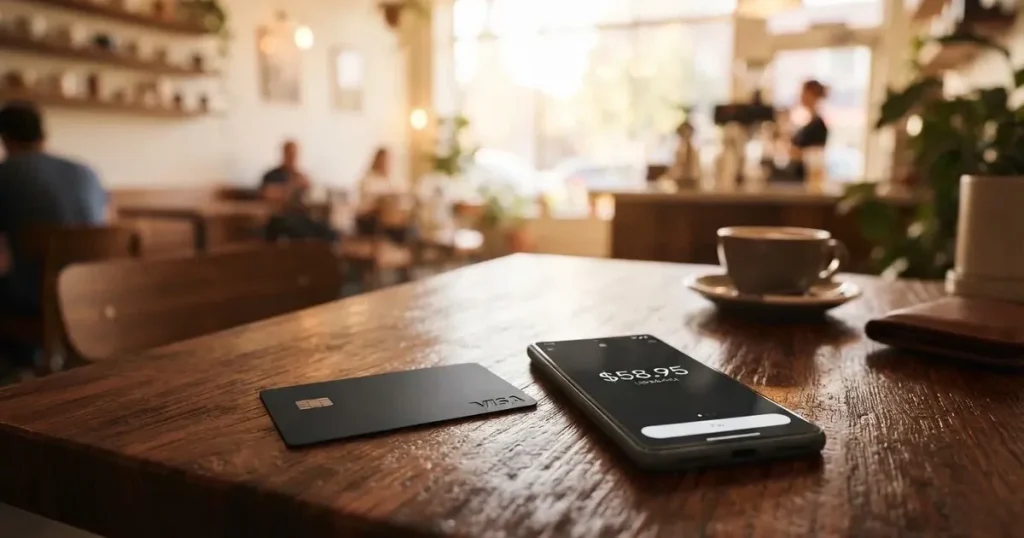
There is a particular kind of disappointment that crypto cards deliver, and I have stopped being surprised by it. You expect to tap a coffee shop with something that still smells like bitcoin, and instead you are spending a euro balance that a conversion fee quietly topped up for you. Bringin is honest about that in a way most of its competitors are not: the card is Visa, the balance is euro, and bitcoin is a way of funding it rather than the thing the card itself holds. Whether that is a feature or an evasion of the question depends entirely on why you came.
For me the score is 5.7 out of 10, and the shape of that number matters more than the number. Bringin is good at being a card and unremarkable at being a crypto product. It scores 8 out of 10 on everyday use, which is the highest mark anywhere in this review, and 4 out of 10 on top-up options, which is the lowest. A card that works beautifully but has almost nothing to put in it is a card for a specific person, not a general answer to “I want a crypto card”.
Who this suits: you live in the EEA, you are 18 or older, you already hold bitcoin and want to spend it without selling it on an exchange in a hurry, and you are content to have the conversion happen at Bringin’s rate rather than your own. Who it does not suit: anyone outside the EEA, anyone who wants stablecoins as a funding rail, anyone who expects a physical card to appear quickly and for free in a specific currency, and anyone whose main worry is who stands behind the balance when something goes wrong — because on that last question the public pages are notably quiet.
The conditions described here are current as of October 28, 2026.
How Bringin scored, criterion by criterion
| Criterion | Mark | Why |
|---|---|---|
| Who can get it | 5 / 10 | 18+ with a valid EEA ID: 30 EU countries plus Liechtenstein, Norway, Iceland |
| Cost | 5 / 10 | Plan €37.69 (€3.49 per month paid annually), “0 fee per usage”; BTC-to-euro conversion 1% plus a 0.5% markup; 0% FX fee |
| Top-up options | 4 / 10 | SEPA or Bitcoin on-chain and Lightning, everything converted to euro; no stablecoins |
| Reliability and complaints | 7 / 10 | UAB Bringin, Lithuania; partner Lightspark Europe holds a MiCA licence; issuer not named; no complaints found |
| Everyday use | 8 / 10 | Visa physical and virtual, Google Pay and Samsung Pay directly, Apple Pay through Curve; €350 cash per day |
| Total | 5.7 / 10 | Strong as a payment card, thin as a crypto product |
The audience note the numbers carry: EU residents who pay with bitcoin and Lightning. That is a narrower thing than it sounds. It is not “EU residents who like crypto”. It is specifically people for whom bitcoin is already the money they hold, and Lightning in particular matters because Bringin is one of the few cards in this category that takes a Lightning payment directly into the card balance.
Will they give you the card
Yes, if you are an adult with a valid EEA identity document. Anyone 18+ with a valid ID from the EEA can apply: the 30 EU member states plus Liechtenstein, Norway and Iceland. Whether the card looks at your citizenship or at where you live is not stated, and that gap matters more than it sounds — sanctions screening and issuer risk policy are usually applied to citizenship and country of birth as well as to your address, so “I live in Dublin on a Polish passport” is a question the public pages do not answer.
There is a second rule about geography in the other direction: the card cannot be used in restricted countries, and that list includes Belarus and Russia, alongside Ukraine, Türkiye, the UAE, Nigeria, Egypt and others. This is a statement about where the card may be used, not about who may hold it, and I would read the whole list before you assume a trip is fine.
Two other things about eligibility are worth knowing before you start. Limits depend on your KYC verification level, and the card’s own pages do not show what the levels are or what the per-level figures would be. That means the limit you end up with is not something you can predict from the marketing page — it is something you find out afterwards. For a card whose whole appeal is that it spends from a balance you control, discovering your daily ceiling after a large purchase has already been declined is an unpleasant surprise.
How to get it
The route is short and conventional: sign up, verify your ID, fund the euro vIBAN, then create a virtual card or order a physical one. The identity check (KYC) happens at sign-up. Proof of address is not stated as a requirement, which is unusual enough that I would not build a plan around it — but it is not something you should assume will stay unnecessary if the compliance team changes its mind about your file.
The card itself is Visa, available as physical and virtual. Virtual cards are unlimited, and you can also create one-time virtual cards, which is genuinely useful for a subscription you are cancelling or a shop you do not trust with a recurring charge. The currency is euro, and only euro — that single word, “only”, turns out to explain several of the silences in this review.
Delivery is where the information runs out. A physical card is delivered to your registered address; how long that takes and what it costs is not stated. The virtual card is instant. In practice that means the virtual card is the product you can evaluate this week and the physical card is a promise with an unknown delivery window.
Fees: what it really costs
The annual cost is €37.69, which the site shows with a “10% Discount” and a note of “€3.49 per month” when paid annually. There is a single offering, with no tiers. Physical and virtual cards are free, and the site says “0 fee per usage”, meaning no per-transaction charge on the card itself.
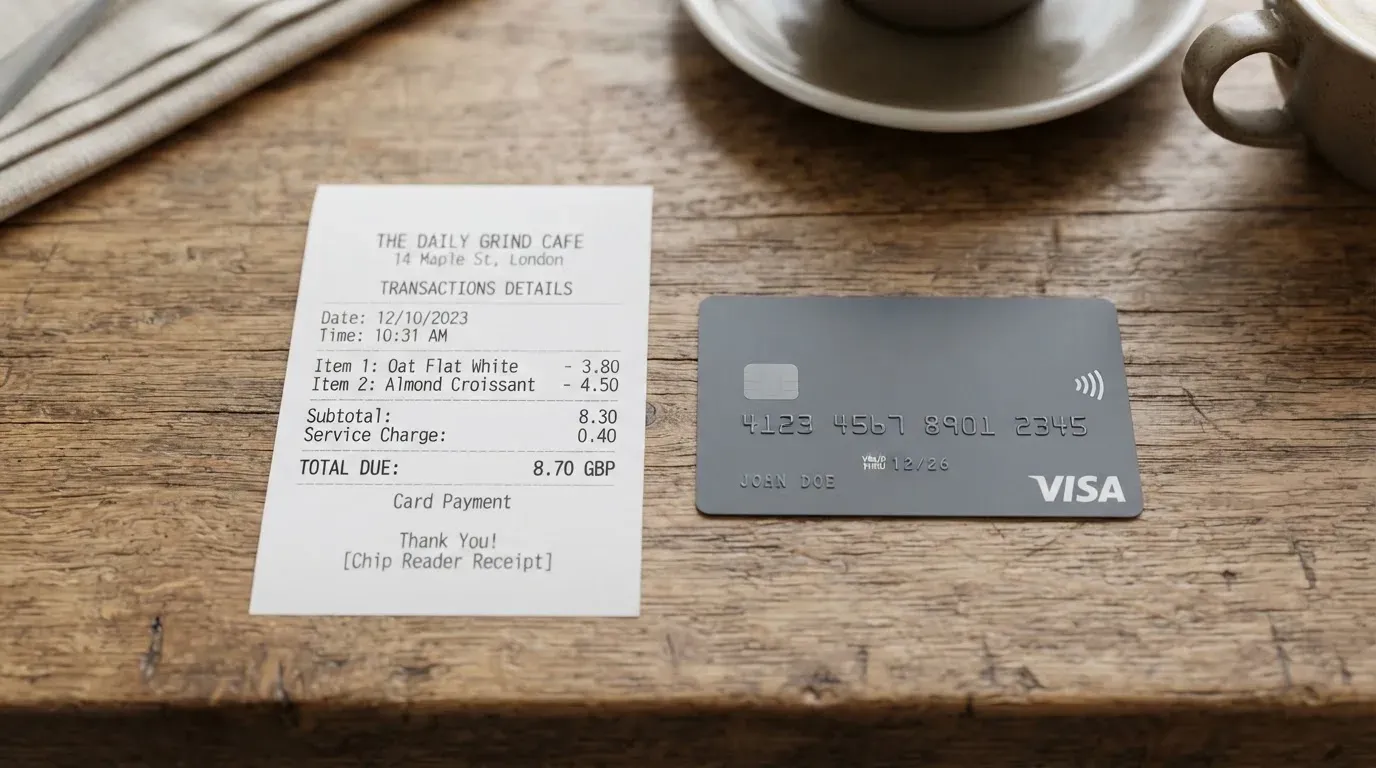
Where the money actually goes is in the conversion. Converting bitcoin to euro costs 1%, plus a Bringin markup of 0.5% applied on partner pricing, according to their FAQ. That is the line to watch, because it is the one that applies whenever you move bitcoin onto the card and it is not a flat administrative fee — it scales with whatever you move. Foreign exchange is the other line, and here the news is genuinely good: “0% FX fee”, with no forex fee online. For a euro card being used on euro rails that is the expected result anyway, but plenty of competitors charge 2% here, so it is worth noting as a positive rather than as a surprise.
| Fee or limit | What the card states |
|---|---|
| Plan price | €37.69 (“10% Discount”), €3.49 per month paid annually |
| Per-usage fee | “0 fee per usage” |
| Physical card | Free |
| Virtual card | Free, unlimited, one-time cards available |
| Bitcoin-to-euro conversion | 1% |
| Bringin markup on partner pricing | 0.5% |
| FX fee | 0% (“no forex fee online”) |
| ATM withdrawal fee | Not stated |
| Cash withdrawal limit | €350 per day, €3,000 per month |
| Card payment limit | €10,000 per day, €15,000 per month |
| Currency | Euro only |
| Limits | Depend on your KYC verification level; per-level figures not shown |
Three everyday payments, so the fees stop being abstract:
- A coffee bought with a card funded from your IBAN balance. No conversion happens, so no 1% conversion fee and no 0.5% markup. The 0% FX fee is doing nothing because the purchase is in euro. This is the cheapest way to use the card and, if you are funded this way, the way you will use it most.
- A €40 dinner paid from a balance topped up with bitcoin. Here the 1% conversion plus the 0.5% markup is the price of having bought your lunch with bitcoin rather than euros. Whether that is acceptable is a personal question about what your bitcoin cost you and what a sale on an exchange would have cost you.
- A €120 cash withdrawal. The fee is not stated, so I cannot tell you what this costs beyond the limit that applies: €350 per day, €3,000 per month. This is the line I would query in support before relying on, because “not stated” on an ATM fee in a card with a €3.49 monthly plan is a real unknown, not a formality.
Top up: SEPA or bitcoin, and nothing else
There are two doors into the balance: a SEPA bank transfer, or bitcoin on-chain or Lightning from any wallet. Either way the result is euros in your personal vIBAN, and the card spends from that IBAN balance. That last clause is the important one — this is a funded account with a card attached, not a card that reads a wallet at the point of sale.
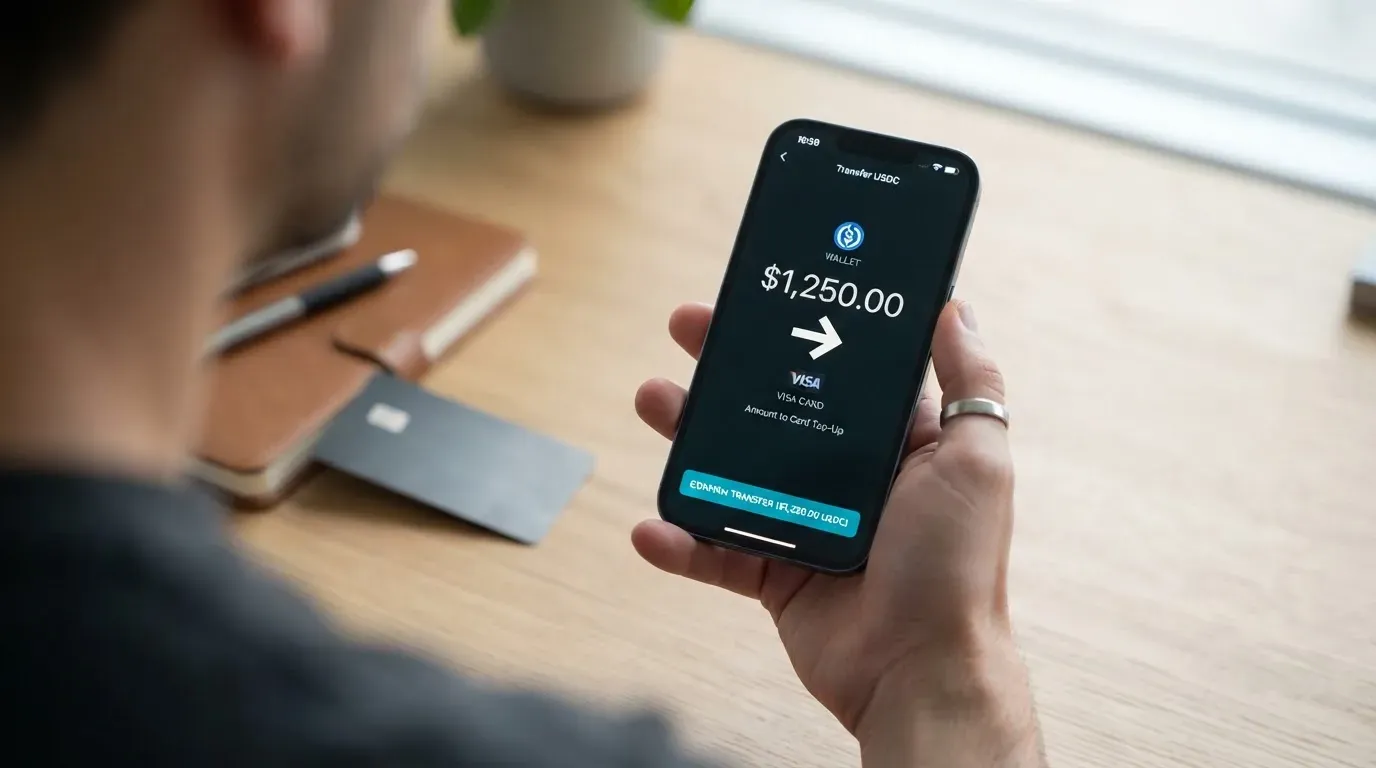
What is missing is stablecoins. No USDC, no USDT, no other tokenised dollar. For someone whose default rail is a dollar stablecoin on a cheap chain, that is not a small gap — it is the whole reason they were looking at a crypto card in the first place. It is also why the top-up score is 4 out of 10 while the everyday-use score is 8: the card is excellent at the spending end and thin at the funding end.
Some practical details, and some silences. Minimum top-up amount and top-up fees are not stated; what is stated is that fees are displayed in the app before you confirm, which is the right place for them and at least means you see the number before it is charged. For euro top-ups, the only route is a bank transfer to the Bringin euro account. On-chain deposits carry their own network cost from the blockchain rather than from Bringin, and the network you pick has to be one the transfer actually travels on — a deposit sent on a network the provider does not support can be lost or need manual recovery with no guarantee.
Money goes back out on your own schedule: withdrawals are described as available “anytime” in euro to your bank, with fees not stated. Closing the account is done by email request, and there is a dated note about that procedure from 24 July 2026; what happens to any remaining balance is not stated. If you are the kind of person who wants to know how to leave, do that email before you fund it.
Paying with it every day
This is where Bringin is genuinely good, and the 8 out of 10 is not generosity. It is a Visa, physical and virtual, which means it works wherever Visa works and inherits Visa’s acceptance. The mobile wallet story is strong: Google Pay, Samsung Pay, Fitbit Pay and Garmin Pay are supported directly, and Apple Pay works through the Curve app — direct Apple Pay support is described as planned. That is a slight awkwardness for iPhone users and a non-issue for everyone else.
Apple Pay deserves a word because the mechanics differ from what you might expect. When you add a card to Apple Pay, the card number is replaced with a device-specific number stored in the Secure Element on the device, never on Apple’s servers, and each payment carries a one-time dynamic security code. That is a real security property, not a marketing line. The issuer can also restrict the tokenised number — blocking it on magnetic-stripe, phone or website use — which is a protection rather than a limitation in most cases.
Every transaction runs through 3-D Secure, which adds an identity check to online payments: the issuer assesses risk and either approves without friction or challenges you with a one-time code or biometric. Bringin also offers instant card freeze and real-time alerts, and describes a self-custody wallet on its card page. Safeguarding of funds is not stated.
What is missing in daily use: no cashback is shown. The perks that exist are 10% off Alby subscriptions and the Koinly tax calculator, which is a niche list aimed at people already inside this corner of the market rather than a rewards programme. The apps are iOS via TestFlight, Android via Google Play and a web app; store ratings I did not read, and dispute handling is not stated.
Two practical warnings that belong in any honest account of day-to-day use. The merchant category code is a four-digit number classifying a business, and many issuers block gambling (MCC 7995) on specific cards by policy rather than by law, with the blocked list varying by issuer — Bringin’s blocked categories are not stated. And address verification, which compares the numeric parts of the billing address a buyer types against issuer records, is mostly a US, Canada and UK service and is generally unavailable for foreign-issued cards, which can cause declines. If you travel, a card that “should work” occasionally not working is usually one of these two mechanisms, not a fault.
What can go wrong
I looked for trouble and found very little, which is unusual and worth stating plainly rather than dressing up. No official incidents found, and no user complaint threads found; there is no Trustpilot page for the brand, so there is no baseline of public grievances to compare against either. Absence of complaints is not evidence of reliability — it is more likely evidence of a young, small customer base.
The company is UAB Bringin, registry code 306317430, in Vilnius, Lithuania, and the platform is built on Lightspark Payments Europe AS, described as a MiCA-authorised crypto-asset service provider. The licence news is dated: in June 2026 Lightspark Europe received its MiCA licence. The card issuer is not named, and that is the single most consequential silence on this page.
Why issuer identity matters more here than usual: a card payment involves several parties. The network — Visa — routes the messages and sets the rules. The issuer is the bank or e-money institution licensed to issue under that network’s licence, and it holds the card programme. The crypto brand is often only a programme manager or front end that markets the card. When you are choosing between a self-custody-linked card and one where the provider holds your balance, “who is the issuer” is not a technicality. The issuer is the party that owes you the money.
What the licensing picture actually means in the EU. Under MiCA — Regulation (EU) 2023/1114, which took legal effect in June 2023 — e-money tokens may be issued only by a credit institution or an electronic money institution. Its stablecoin and asset-referenced-token rules applied from 30 June 2024 and the remaining provisions, including the CASP rules, from 30 December 2024, and the transitional period for providers already operating ran until 1 July 2026 or until they got or were refused an authorisation, whichever came first. ESMA maintains an interim register of authorised CASPs, white papers and non-compliant entities, and you can check a provider there — I would. A CASP authorised in one member state can serve the whole EU. The important structural point is that a card is a payment service regulated separately under e-money and payment-services law, while MiCA covers the crypto side; a crypto card often rests on two licences, and the one behind the card is not the one Lightspark holds.
Then there is the money itself. EMIs must safeguard customer funds, by segregating them in dedicated accounts or insuring them — but such funds are not the same as bank deposits and may not be covered by a deposit guarantee scheme. If Bringin is an e-money arrangement rather than a bank account, your euro balance may not have the protection people assume when they see a vIBAN. That is worth asking about directly in support.
On the crypto side, the risks are the well-known ones and they are not small. Control of crypto belongs to whoever holds the private key; a seed phrase of 12 to 24 words is an unencrypted form of that key, and anyone who obtains it can restore the wallet and spend the funds. Transfers are typically irreversible, and a stolen key has no built-in recovery — the network cannot freeze or return funds. Custodial platforms have a real record: Mt. Gox (about US$350 million reported stolen, 2011-2014), Coincheck (about US$400 million, 2018), and Ronin Network (US$625 million, 2022). With a self-custody-linked card the funds stay in your own wallet until the moment of payment, but you bear sole responsibility for key loss, phishing and clipboard-hijacking malware that swaps copied addresses.
And programmes do close. Visa terminated its global agreements with FTX on 13 November 2022 and the FTX US debit card was wound down by its issuer; WaveCrest, a Visa issuer that supplied several crypto card brands, was suspended by Visa in Europe in 2018, closing all WaveCrest-issued Visa programmes. A closure typically means a notice period, then loading and spending stop, then you are asked to withdraw what is left. One 2026 closure reported by a secondary source had new loads ending 8 July 2026 and spending stopping 8 August 2026 — single source, unconfirmed, and I include it only to show the shape of a shutdown rather than as a prediction.
One smaller but real operational note: a declined authorisation can leave a hold on funds that stays for several days, typically up to 7. Budgeting around a temporary hold is not glamorous, and it is the sort of thing people learn the hard way.
Support, for what it is worth, runs on a Telegram chat, an in-app chat, a help centre at help.bringin.xyz in 15 languages — Russian is not among them — and the email [email protected]. Hours are not stated.
What to take instead
Three alternatives came up in the same comparison, and each fails or wins on a different axis. None of them has Bringin’s Lightning option; that remains the thing Bringin does that the others do not.
International Visa Card — 6.7 / 10. A U.S.-issued Platinum Visa, virtual, paying in USD, with a physical card marked “Coming soon”. Issuance is $5 one-time, no maintenance fee, and plans run Classic free, Pro $9.00/month, Max $19.00/month. Card use in USD is free on all plans; foreign currency costs the Visa exchange rate plus a 2% FX fee; deposits of any kind carry no fee, and you can fund with USDC or USDT at 1:1 as well as USD, EUR, SEPA, SWIFT and FedNow. Its exclusion list is the mirror image of Bringin’s in tone: no account or card for residents or legal registrants of Belarus, mainland China, North Korea, Cuba, India, Iraq, Iran, Israel, Myanmar, Nepal, Nicaragua, Russia, Syria, Turkey, Ukraine, Venezuela or Vietnam, with FATF grey-list countries reviewed case by case. Purchases are blocked in North Korea, Cuba, Iran, Russia, Syria, Ukraine and Venezuela, and the rule follows residence or registration rather than citizenship. If you are an EEA resident holding stablecoins, its funding rail beats Bringin’s and its membership rule is stricter.
UNi Card — 6.1 / 10. A multicurrency card on the Mastercard network, spending from the UNi.Global account balance, with “no annual fee or foreign transaction fee” and assets converted at live OTC rates with “no hidden exchange fees”. Rewards run up to 3% under a Spend-to-Earn scheme, which is a stronger rewards line than Bringin’s subscription discounts. But who can get one is not stated, whether the card is physical or virtual is not stated, and how you fund it is not stated. I cannot recommend it to you on evidence.
Whop Cards — 5.2 / 10. Visa, working anywhere Visa is accepted online and in stores, spending from a Whop balance where pending balance becomes usable as soon as a payment arrives and standard withdrawals use settled funds. 5% cashback at select merchants, currently Uber, with more planned; payout currency and conditions not stated. The page says “no extra fees” without listing issuance or monthly amounts, and conversion and FX figures are not stated either. Its consumer reach is 31 US states (Alabama, Alaska, Arkansas, California, Colorado, Connecticut, Florida, Hawaii, Illinois, Indiana, Iowa, Kansas, Kentucky, Massachusetts, Michigan, Minnesota, Montana, Nebraska, New Hampshire, New Jersey, New York, North Carolina, Oklahoma, Pennsylvania, South Carolina, South Dakota, Texas, Utah, Vermont, Virginia, Washington, West Virginia, Wisconsin and Wyoming), with businesses in 41 states, and unsupported consumer countries include Belarus, China (Mainland), Cuba, Hong Kong, India, Iran, Iraq, Israel, Myanmar, Nepal, Nicaragua, North Korea, Russia, Syria, Turkey, Ukraine, Venezuela and Vietnam. For a European reader this is simply the wrong geography.
| Alternative | Score | Card | Funding | Notable catch |
|---|---|---|---|---|
| Bringin | 5.7 / 10 | Visa, physical and virtual, euro | SEPA, Bitcoin on-chain, Lightning | No stablecoins; issuer not named |
| International Visa Card | 6.7 / 10 | US-issued Platinum Visa, virtual, USD | USDC/USDT at 1:1, USD, EUR, SEPA, SWIFT, FedNow | Physical “Coming soon”; 2% FX fee; strict country exclusion list |
| UNi Card | 6.1 / 10 | Mastercard, multicurrency | Not stated | Eligibility and card type not stated |
| Whop Cards | 5.2 / 10 | Visa, type and currency not stated | Whop balance | 31 US consumer states; fees not itemised |
Who I would recommend it to
If you already hold bitcoin, you live in the EEA, and you would rather not sell it on an exchange every time you want to buy something, Bringin is a reasonable way to do that. The conversion cost is disclosed (1% plus a 0.5% markup), the funding fee is shown in the app before you confirm it, the card is a real Visa that works in real shops, and Lightning deposits are a genuine convenience nobody else in this comparison offers. That is a coherent product for a specific person.
If you are choosing between crypto cards on the strength of this review alone, I would not. The funding side is one rail short — no stablecoins — and the card side rests on an unnamed issuer, with e-money safeguarding that you should ask about rather than assume and no complaints data either way. The alternatives here score higher overall, and at least one of them tells you who issues it.
My own order of operations, if I were signing up: read the Tiers and Safeguarding notes first, then email [email protected] with two questions — who is the card issuer, and what happens to an unspent balance at account closure — then set up the virtual card before ordering plastic. And if you are tax-minded, note that in the US the IRS treats digital assets as property, so each payment funded from crypto can be its own disposal measured at fair market value on the transaction date; I am not giving tax advice here, only flagging that paying with bitcoin-funded euros is a bookkeeping question and not just a banking one.
Frequently asked questions
What is the Bringin card?
Bringin is a Visa payment card, available physical and virtual, that spends from a euro balance held in a personal vIBAN. Bitcoin, whether on-chain or over Lightning, is one of the ways you fund that balance rather than what the card itself holds. The currency is euro only.
How does the Bringin card work?
You top up by SEPA bank transfer or by sending bitcoin from any wallet; whatever arrives is converted to euros in your personal vIBAN, and the card spends from that IBAN balance. Payments then run through Visa’s network, with 3-D Secure on every transaction. Because the balance is funded rather than drawn on credit, the card cannot overdraw.
Is Bringin a bank?
The public pages do not say it is one. The company is UAB Bringin, registry code 306317430, in Vilnius, Lithuania, and the platform is built on Lightspark Payments Europe AS, a MiCA-authorised crypto-asset service provider since June 2026. The card issuer is not named, and whether your balance is safeguarded e-money is not stated — ask before funding it.
Who owns Bringin?
UAB Bringin is the named operator, registered in Lithuania. Its partner and infrastructure provider is Lightspark Payments Europe AS, which holds a MiCA licence granted in June 2026. Beyond those two names the page names no bank or issuer behind the card, so the card programme’s ownership is genuinely unclear from public information.
Who can apply for a Bringin card?
Anyone 18 or older with a valid EEA identity document — the 30 EU member states plus Liechtenstein, Norway and Iceland. Whether the test is citizenship or residence is not stated, which matters if you live in one country and hold a passport from another. Proof of address is also not stated as required.
Is Bringin available in my country?
Only inside the EEA, as far as the sign-up rule goes. Separately, the card cannot be used in restricted countries, a list that includes Belarus and Russia along with Ukraine, Türkiye, the UAE, Nigeria, Egypt and others. Check the full list before planning to use it abroad, since this is a usage restriction rather than an eligibility one.
What does a Bringin card cost?
The single plan is €37.69, shown with a “10% Discount” and payable annually at €3.49 per month. The card says “0 fee per usage”, and physical and virtual cards are free. The charges that actually bite are the 1% bitcoin-to-euro conversion and a 0.5% Bringin markup on partner pricing. The FX fee is 0%.
How do I top up the Bringin card?
By SEPA bank transfer, or by sending bitcoin on-chain or over Lightning from any wallet, in which case it is converted to euros in your vIBAN. Minimum amounts and top-up fees are not stated, but fees are displayed in the app before you confirm. Euro top-ups go only to the Bringin euro account, and no stablecoins are accepted.
Is the Bringin card safe to use?
The card page describes a self-custody wallet, instant card freeze, real-time alerts and 3-D Secure on every transaction, which are sensible safeguards. I found no official incidents and no complaint threads, but there is also no Trustpilot page, so the absence of complaints reflects a small customer base rather than a proven record.
Can I add the Bringin card to Apple Wallet?
Yes, through the Curve app — direct Apple Pay support is described as planned rather than live. Google Pay, Samsung Pay, Fitbit Pay and Garmin Pay work directly, with no detour. Adding a card to Apple Pay replaces the number with a device-specific one stored on the device, with a fresh security code per payment.
Choosing an app or neobank card – cryptocardadvisor
Content created by the «cryptocardadvisor» team