
Bix Card: A Self-Custody Visa for US States, Not a Bank
 Available in US
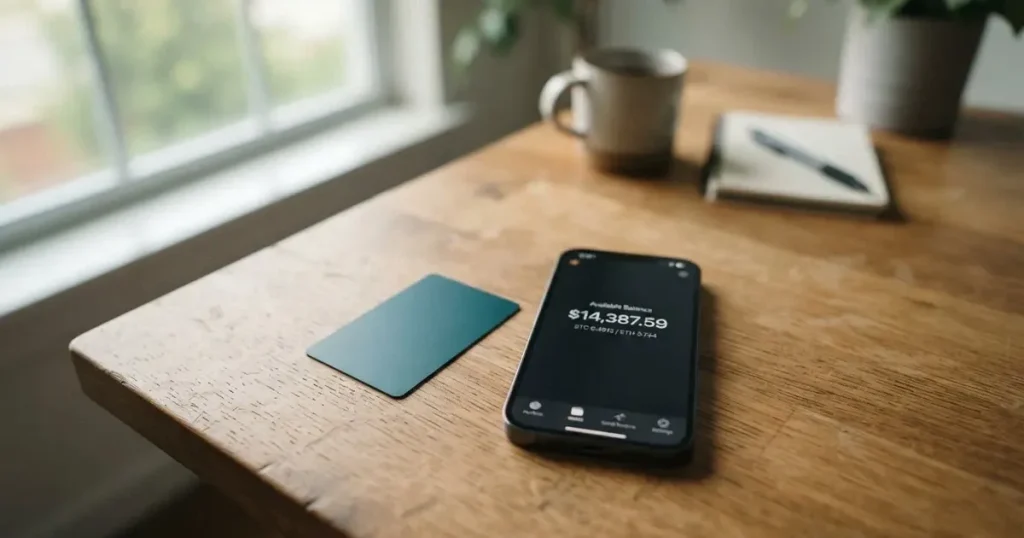
If you have trouble getting an ordinary bank card — because of where you live, what documents you hold, or how long a traditional application takes — the Bix card is interesting for one specific reason: it does not ask a bank to open an account for you. It links a Visa debit card straight to your own self-custody crypto wallet, so the balance you spend is the balance you already control. On paper that is a genuinely different proposition from most crypto cards.
But I have to be honest with you up front: I gave it 5.2 out of 10. Not because the idea is wrong, but because, as of the conditions I checked, a lot of this card is still a promise. The physical card is “coming soon”. The metal card is “coming soon”. The fiat on-ramp is “coming soon”. The rewards programme is “coming soon”. What you can actually use today is a virtual Visa card, funded only with USDT and USDC, in a set of US states, with a fee schedule that the company’s own help centre and its own press release disagree about. That is not a bad card — it is an early one. Whether that is right for you depends entirely on whether the part that already works covers your life.
The conditions described on this page are current as of October 28, 2026.
Let me walk you through what I found, section by section, the way I’d want to read it if I were the one choosing.
The score: 5.2 / 10
Here is my full breakdown, criterion by criterion, with the reason behind each mark.
| Criterion | Mark | Why |
|---|---|---|
| Who can get it | 2 / 10 | The issuer names residents of 29 US states and targets 49; there is no list of countries |
| Cost | 5 / 10 | Virtual Visa $9.99, membership free; 3% purchase, 1% conversion (the press release says no top-up fees and 1% FX) |
| Top-up options | 8 / 10 | USDT and USDC as collateral in a self-custody wallet on Ethereum, BNB Smart Chain, Base, Solana, Optimism; fiat “soon” |
| Reliability and complaints | 6 / 10 | Bix Ltd, Cayman Islands, office in Dubai; issuer not named; no complaints found; iOS 4.4 out of 5 from 7 ratings |
| Everyday use | 7 / 10 | Virtual now, plastic and metal “soon”; Apple Pay and Google Pay present; ATM $1 + 0.6% |
| Total | 5.2 / 10 |
The audience note is worth stating plainly: this is a card for self-custody wallet users in eligible US states. If you do not already hold crypto in your own wallet, or you do not live in one of the states that are live, this card is not for you yet — and no amount of reading will change that.
The single lowest mark, “who can get it,” is doing a lot of work in that total. A card that only a fraction of people can open isn’t a bad card; it’s a narrow one, and narrowness is what drags a 5.2 down when the other columns are respectable.
Will they give you the card?
Short answer: if you live in one of the 29 US states the issuer has named, and you can pass “identity verification and programme requirements,” then probably. If you live anywhere else, the honest answer is that the site doesn’t say.
The company’s site says service availability “depends on your location, eligibility and the relevant provider’s terms,” and there is no country list on the site. That’s the whole of the official position on who qualifies. The more specific claim comes from a sponsored press release dated 25 Sep 2026: eligible residents of 29 US states, with a stated aim of 49 states within six to eight months.
So your first question is not “is this safe” or “is this cheap” — it’s “does the issuer serve my address.” If you’re outside the US, the answer today is no. The aim to widen to 49 states is a future target.
One more thing the card doesn’t tell me: the specific KYC level it requires. It says eligible users go through identity verification and programme requirements, but the required level isn’t stated. Whether that’s a light check or a full document review, I can’t tell you from the public pages — the card’s own pages simply don’t say.
How to get it
The mechanics are simple, because there isn’t much to them. You go through identity verification for eligible users, and once you’re through, you’re issued a Visa debit card linked to the BIX Wallet. The virtual card is available now; the physical card and a metal card are “coming soon.”
Two gaps you should know about before you start. First, the card currency is not stated — I can’t tell you which currency the card is denominated in. Second, delivery is not stated for the physical card. Since the physical card doesn’t exist yet, that’s not a problem today, but it does mean there’s no shipping timeline to plan around.
When the virtual card lands in your app, you add the wallet to Apple Pay or Google Pay — that’s the practical route for most day-to-day spending, and I’ll come back to why below.
So the short version of “how to get it”: verify, receive the virtual card, fund the wallet, add to a phone wallet, spend. The catch is that funding is currently crypto-only. If you don’t hold USDT or USDC in a self-custody wallet already, you’re stuck at step three.
Fees: what it really costs
This is the section where the Bix card needs the most careful reading, because the company tells you two slightly different stories.

Membership itself is free on the standard plan. The virtual Visa card costs $9.99. Two paid tiers are planned but not live: BIX Plus at $119/year and a physical card at $99.
The help centre lists the transaction fees like this: card purchase 3%, currency conversion 1%, a small authorization of $0.75 (charges under $50), and a declined transaction of $0.65. It adds a caveat that “fees may vary depending on the transaction type or payment network.”
Then the press release says something different: no funding fees and 1% FX in the US programme. That 1% FX figure directly disagrees with the help centre’s 3% purchase fee for the same programme.
Which do I trust? I’d lean toward the help-centre table for what you’ll actually be charged per purchase, because that’s the operational document, and treat the press release as the marketing one — but I’m not confident enough to call the conflict resolved. The company hasn’t publicly reconciled a 3% charge against a “no purchase fee” claim, and a 3% purchase fee is high enough that it changes the maths on every single transaction you make.
Let me put the full picture in one place.
| Fee or limit | Value |
|---|---|
| Standard membership | Free |
| Virtual Visa card | $9.99 |
| Card purchase | 3% |
| Currency conversion | 1% |
| Small authorization (under $50) | $0.75 |
| Declined transaction | $0.65 |
| FX | 1% per the press release; the help centre says 1% conversion fee for payments in another currency |
| ATM withdrawal | $1 + 0.6% |
| Monthly spend limit | Configurable, customizable based on deposited collateral; no amounts stated |
| Free ATM allowance | Not stated |
A 3% purchase fee is the number to sit with. If it’s real, every coffee, every bus ticket, every subscription carries a 3% toll on top of the 1% you may pay for currency conversion. That is the single strongest argument against using the card for anything high-frequency, and I’d want to see a clarified fee table before committing a full month of ordinary spending to it.
What a few everyday payments would actually cost
Take a person buying a $30 coffee. At a 3% purchase fee, that’s $0.90 in fees on $30 — roughly a dollar and change for one coffee. The $0.75 small-authorization fee applies to charges under $50, so a card tap like that might carry the $0.75 instead of, or alongside, the percentage; the help centre’s table is clear on the amounts but not on how the two combine. If that same coffee is bought in a currency other than the card’s, add the 1% conversion fee.
Then the ATM. Withdrawing cash costs $1 plus 0.6% per the help centre; the press release describes a planned physical-card ATM fee of 0.6%. There’s no stated free allowance, so I wouldn’t assume any. Cash is the most expensive thing you can do with this card — it’s a bad substitute for paying by tap or card.
And a declined transaction costs $0.65. If a merchant’s system doesn’t like a card it can’t immediately recognize, you’ll pay for the rejection. That’s worth remembering when you’re somewhere with patchy connectivity.
The one genuinely attractive line in this table is the conversion fee — 1% is competitive for a crypto card if it holds. The other lines are not.
How to top up
This is the strongest part of the card, and the reason the “top-up options” column scored 8 out of 10.
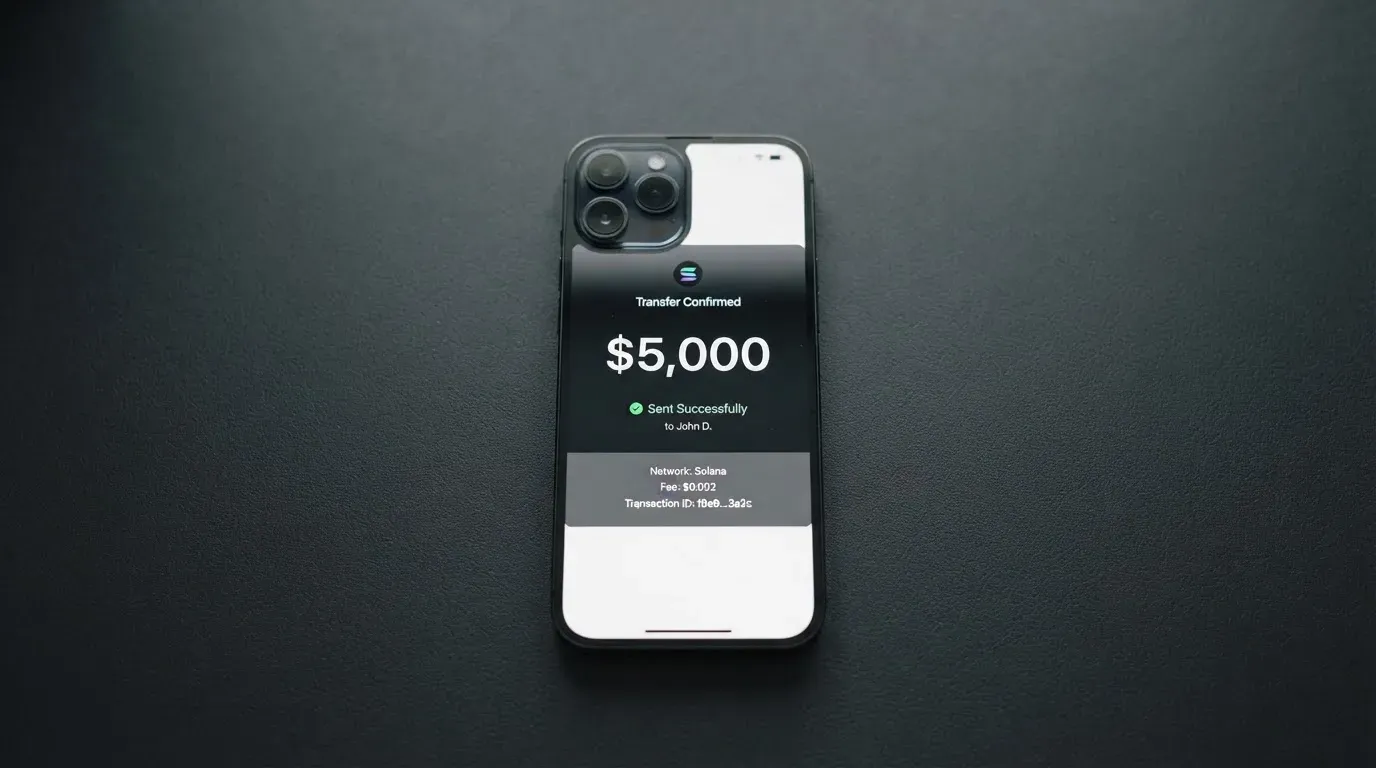
You fund the card by holding USDT and USDC as collateral in a self-custody wallet, on Ethereum, BNB Smart Chain, Base, Solana, and Optimism (in supported combinations). A fiat on-ramp is “coming soon.”
And the company states no funding fees. That’s the part that distinguishes this card: on-chain network fees (gas or bandwidth) for your deposit are charged by the blockchain, not by Bix, and those are a real cost but a transparent one. The minimum deposit and who pays the network fee are both not stated, so you can’t compute the exact cost of a small top-up from the public pages.
I want to flag one thing about self-custody that costs real money in practice, even though it isn’t a Bix fee. On Ethereum, gas is paid only in ETH — so a wallet holding USDT but no ETH literally cannot send. On Tron, fees are paid via bandwidth and energy, often burning TRX. So “no funding fee” is true of Bix and doesn’t mean “free to top up.” If your wallet holds the stablecoin and nothing else, you may need a small amount of the network’s own token first.
Withdrawals are not stated — whether and how you can move money back out of the card balance, and any fee, isn’t something the public pages say.
Paying with it every day
Day-to-day, the card is a virtual Visa in your phone’s wallet. You can add the wallet to Apple Pay or Google Pay. When you tap, Apple Pay replaces your card number with a device-specific number stored in the phone’s secure hardware, and each payment uses a one-time dynamic security code — so the card number itself isn’t floating around.
What’s not stated is the blocked categories. Some issuers restrict gambling (MCC 7995) or other categories by policy, and those lists vary by issuer; Bix doesn’t publish one. That’s worth knowing if you have any habits around betting, adult content, or fuel, because you won’t find out until a payment bounces.
Rewards are the sore spot. BIX Rewards is “coming soon” with no rate stated. What *is* listed are Visa Signature benefits: lounge access, travel and rental car insurance, hotel discounts up to 65%, and a concierge. Those are real Visa Signature perks, but they belong to the physical card, which doesn’t exist yet — so right now you’d be paying a 3% purchase fee for none of them.
The app, when it exists, is the front door. The iOS BixPay app scores 4.4 out of 5 from 7 ratings (I read this on 2026-10-21). Seven ratings is a very thin sample — treat it as a signal, not a verdict. I did not read the Google Play listing.
Two things the card doesn’t tell you, both of which you’d want before relying on it: dispute handling is not stated (who you call if a charge is wrong, and how a chargeback works with this card), and withdrawal terms are not stated.
What can go wrong
Let me separate the things I’ve verified from the things I’m inferring from how this kind of product works.
On complaints: I found none, and I want to be honest about what that means. There was no official incident notice and no user-report source within my search budget, and no Trustpilot page for Bix turned up either. A young product with no complaints could mean it’s fine; it could also mean few people have used it long enough to complain. Absence of complaints is not evidence of safety.
On the company: this is where I’d look hardest. Bix is Bix Ltd, registered in the Cayman Islands, with operating offices in Dubai. It states that “BIX is a technology company, not a bank,” that regulated services are provided by third-party partners, and — importantly — that BIX “does not hold or control assets in your wallet.” The card issuer is not named, and the app is listed under Bit One Ventures Inc.
The non-custody claim is the strongest thing about the security story, and it’s backed by specifics: your keys “are never stored in complete form,” secrets are split using Shamir’s Secret Sharing, computation runs in AWS Nitro trusted execution environments, there’s SOC2 Type II, audits by Cure53, Zellic and Doyensec, and 24/7 monitoring. On paper, that’s a serious setup.
But here’s the tension you should hold onto: a non-custodial wallet means you bear the risk of key loss, and crypto transfers are typically irreversible — the network can’t freeze or return funds. And Tether, which issues USDT (one of your two funding assets), states that it disables tokens in wallets on the OFAC sanctions list and has frozen funds tied to illicit activity. So “self-custody” reduces counterparty risk with Bix, but it does not make the asset censorship-proof.
The issuer being unnamed is the thing I’d resolve before I trusted this with money. In this category, the bank or e-money institution that actually issues your card is the entity that holds your funds when you spend and that handles a dispute when something goes wrong. A card brand that doesn’t name its issuer is asking you to take that on faith. And programmes do close: Visa terminated its agreements with FTX in November 2022 and the FTX US debit card was wound down; WaveCrest, a card issuer that supplied several crypto brands, was suspended by Visa in Europe in 2018, closing all its Visa programmes. Closures follow a pattern — a notice period, then loading and spending stop, then you’re asked to withdraw. If Bix’s unnamed issuer ever had its Visa programme suspended, you would be in that queue holding a balance. I’d want to know who the issuer is before I funded this.
One more practical risk, not Bix-specific: a declined online authorisation can leave a hold on your funds for several days (typically up to 7). On a card where your balance is your own crypto converted at the moment of spend, a lingering hold is genuinely awkward.
Support lives at help.bix.fi, and 24/7 concierge support is listed as a card benefit — though again, tied to a card that doesn’t exist yet. The company news is a single sponsored press release from 25 Sep 2026 announcing US growth, 29 states live, and the 49-state aim.
What to take instead
If the Bix card’s US-state restriction doesn’t cover you, or you’d rather not wait for a physical card, there are three alternatives I looked at closely. Here’s how they compare, and how each stacks up against Bix on the things that matter.
| Bix | TokenPocket | MetaMask | KAST | |
|---|---|---|---|---|
| Score | 5.2 / 10 | 5.8 / 10 | 7.1 / 10 | 6.1 / 10 |
| Card | Visa debit, virtual now | Mastercard/Visa debit, virtual (Fiat24) | Mastercard, virtual now, metal $199/yr | Visa, virtual and physical, metal tiers |
| Who gets it | 29 US states | Europe, plus Australia, Canada, Hong Kong, Japan, UK and more | 45 listed countries/territories | Residence-based, shown at KYC |
| Fee headline | 3% purchase, 1% conversion | 1% on crypto deposit; no other fees stated | “Minimal fee,” amount not stated; no FX fee | Spend 0%; FX 0.5%–1.75%; declined $0.50 |
| Rewards | “Coming soon” | Deposit fee refunded via rewards | 1% (virtual) / up to 3% (metal, capped) cashback | 1.5%–3% cashback by tier |
TokenPocket (5.8/10) is the closest in spirit to Bix — a crypto wallet card with a light footprint. It issues Visa debit cards across a list of European countries and territories (Germany, France, Spain, Switzerland among them) and Mastercard debit cards in Australia, Canada, Hong Kong, Japan, Taiwan, New Zealand, Singapore, South Korea, and the UK, with the Americas “planned for Q2 2025.” Its fees are arguably cleaner than Bix’s: 1% on crypto deposit, and “apart from these, TP Card does not charge any additional fees.” That deposit fee is later refunded through rewards or reduced transaction fees. If you’re in Europe and the 1%-deposit-then-refund model appeals, this scores slightly above Bix.
MetaMask (7.1/10) is the strongest of the four on my scoring, and the most complete product. Sign-up is open in 45 listed countries and territories (Andorra, Argentina, Brazil, Canada, Mexico, Germany, France, Spain, Uruguay among them) with a waitlist elsewhere; proof of residency is required, and note that ineligible regions limit sign-ups, not spending. US and UK sign-ups were temporarily closed per its FAQ, so even this one has availability caveats. The virtual card is free — no annual, no maintenance — and a metal card is $199/year. It spends directly from your connected wallet on Linea, Base, Monad and Solana, and pays cashback in mUSD: 1% on the virtual card, and on metal a headline 3% that drops to 1% after the first $10,000 spent. Its fee disclosure is the weakest part — “minimal fee for each transaction,” amount not stated on the pages I read — but it explicitly charges no foreign transaction fee. Note the trade: one card per user, and the metal card has to be pre-ordered in the app after the virtual is approved.
KAST (6.1/10) has the most elaborate tiering and the most explicit fee table. It offers virtual and physical, up to 10 cards, across Visa Platinum (Standard), Visa Infinite metal (Premium) and Visa Infinite gold (Private), plus themed designs. Fees are unusually clear: stablecoin top-up 0%, USD card spend 0%, transaction fee 0%, Apple/Google Pay 0%, with FX at 0.5%–1.75% depending on your residence, transaction country and card programme, a $0.10 fee on non-USD transactions under $25, and $0.50 for a decline on insufficient balance. Rewards are the best in this group: 1.5% cashback on the first $2,000/month (Standard), 2% on $10,000 (Premium), 3% on $40,000 (Private). The catch is entry cost and eligibility — Standard is $0/year, Premium $1,000/year, Private $10,000/year, billed annually with no monthly option, and KAST gates on residence shown at KYC, where holding an ID from a restricted region can make you ineligible even if you live in a supported country.
If I had to point you at one thing: if you’re in the US and want cashback now, MetaMask scores highest of these four. If you’re in Europe, TokenPocket covers far more countries than Bix does today.
Who I would recommend it to
I would recommend Bix to someone who already keeps USDT or USDC in a self-custody wallet, lives in one of the 29 live US states, and is comfortable treating the card as a small experiment rather than a primary spending account. The self-custody design is the right call — your keys are never stored whole, the audits are real, and “not a bank, doesn’t hold your assets” is exactly the posture I’d want from a crypto card. If you value not handing a third party control of your funds, that part of Bix is genuinely better than most.
I would hold off if any of these are true of you:
- You live outside the US, or outside the 29 live states. There is no country list and no US-outside availability. This is the dealbreaker for most of the world.
- You need a physical card soon. The virtual card is the only thing shipping today; plastic and metal are “coming soon.”
- You spend heavily. At a 3% purchase fee, a normal month of spending gets expensive fast, and the company’s own press release contradicts that number.
- You need cashback or card benefits now. BIX Rewards is “coming soon,” and the Visa Signature perks belong to a card that doesn’t exist yet.
- You want to withdraw or resolve a dispute easily. Withdrawal terms and dispute handling are both not stated.
- You want to top up with fiat. The on-ramp is “coming soon”; funding today is USDT/USDC only.
The thing that tips me from “cautious” to “wait” is simply this: most of the good parts of Bix — the physical card, the rewards, the fiat on-ramp — are the parts that don’t exist yet, and the parts that exist today (a 3% purchase fee, 29 states, crypto-only funding, no named issuer) are the parts that make it a hard sell. For the narrow fit I described, it’s worth a look. For everyone else reading this, one of the alternatives above will serve you better right now.
Frequently asked questions
What is the Bix card?
Bix is a Visa debit card linked to the BIX Wallet, a self-custody crypto wallet. Instead of a bank account, your spending draws on stablecoins you already hold. The virtual card is available now; physical and metal versions are “coming soon.” The company describes itself as a technology company, not a bank.
How does the Bix card work?
You hold USDT or USDC in your own wallet as collateral, and the card spends that balance. It’s closer to a prepaid card than a bank debit card — it draws on a stored balance rather than a linked current account. Because it’s non-custodial, Bix says your keys are never stored in complete form and it doesn’t hold or control your assets.
Is Bix a bank?
No. Bix states plainly that “BIX is a technology company, not a bank.” It’s Bix Ltd, registered in the Cayman Islands, with operating offices in Dubai, and it says regulated services are provided by third-party partners. Notably, the card issuer itself is not named on the public pages.
Who can get the Bix card?
Residents of 29 US states, according to the company’s press release of 25 Sep 2026, with a target of 49 states within six to eight months. The official site doesn’t publish a country list and says availability depends on your location, eligibility and the provider’s terms. There is no stated availability outside the US.
Does the Bix card require KYC?
Yes — eligible users go through “identity verification and programme requirements.” That’s the extent of what’s public: the specific documents needed, whether proof of address is required, and the minimum age beyond the usual 18+ for prepaid cards are all not stated. The KYC level itself isn’t published either.
What are the Bix card’s fees?
Standard membership is free and the virtual Visa card costs $9.99. The help centre lists a 3% card purchase fee, 1% currency conversion, $0.75 small authorization under $50, and $0.65 for a declined transaction. ATM withdrawals cost $1 plus 0.6%. Note the conflict: the press release claims no funding fees and 1% FX, which disagrees with the 3% purchase fee.
How do I top up the Bix card?
By holding USDT and USDC as collateral in your self-custody wallet, on Ethereum, BNB Smart Chain, Base, Solana or Optimism. Bix states there are no funding fees of its own — though blockchain network fees (gas, or TRX on Tron) still apply and aren’t Bix’s to waive. A fiat on-ramp is “coming soon,” so there’s no way to add money with a bank transfer today.
Can I use the Bix card in Apple Pay?
Yes. The wallet can be added to Apple Pay or Google Pay, and this is the practical way to use the virtual card day to day — tap to pay with a device-specific number rather than exposing your card number. The Bix app for iOS (BixPay) scored 4.4 out of 5 from 7 ratings as of 21 October 2026, a small sample worth keeping in mind.
Is the Bix card safe?
The security design is strong on paper: non-custodial keys split with Shamir’s Secret Sharing, AWS Nitro trusted execution environments, SOC2 Type II, audits by Cure53, Zellic and Doyensec, and 24/7 monitoring. But I found no user complaints and no independent track record, and self-custody means you bear the risk of key loss — crypto transfers are typically irreversible. Treat the unnamed issuer as an open question.
Is the Bix card worth it?
For the narrow fit — a US resident in a live state who already holds USDT or USDC in a self-custody wallet and wants a self-controlled card — yes, it’s worth watching. For everyone else, no: the physical card, rewards and fiat top-up are all “coming soon,” and the 3% purchase fee makes it expensive for regular spending. MetaMask scored highest of the alternatives I reviewed at 7.1 out of 10.
Choosing a wallet card – cryptocardadvisor
Content created by the «cryptocardadvisor» team