
A Visa Infinite on a self-custody balance — good numbers, thin paperwork
 Available in US
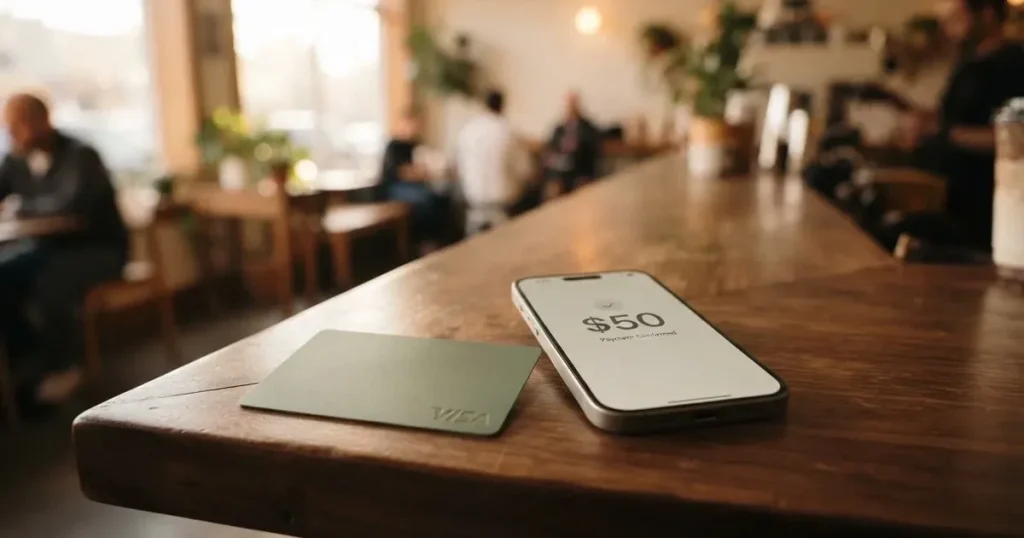
The Bitypay card sits in an unusual spot. On paper it promises the things crypto card buyers actually care about — a real Visa Infinite, virtual and physical, with Apple Pay, Google Pay, contactless payments, no foreign-exchange fee and no ATM fee — while the money itself stays in a wallet you control. That combination is genuinely attractive for someone sitting on USDC who just wants to spend it. My score for it is 7.4 out of 10. But the same picture that makes it appealing is what holds it back: almost nothing about who can get one, what it truly costs, and who stands behind it is stated on the card’s own public pages. The website was unreachable when I checked, and the good numbers I could verify come from a third-party listing, not from Bitypay itself. Treat the strengths below as encouraging and the gaps as real; verify the missing pieces with support before you commit meaningful funds.
The conditions described here are current as of October 28, 2026.
Verdict: 7.4 out of 10, and it depends entirely on what you hold
I scored this card 7.4. The shape of that number matters: the day-to-day experience scores very well, the paperwork scores poorly, and the price looks excellent but only on paper. If you already hold USDC, want a Visa Infinite that spends directly from a wallet you control, and live somewhere the card will issue to you, this is a serious contender. If you need a card tomorrow, want published pricing you can check, or need certainty about the issuer and its licences, it is not.
Let me show the working:
| Criterion | Mark | Why |
|---|---|---|
| Who can get it | 6 / 10 | Issuing countries not disclosed; official site unreachable; unofficial: full Level-4 verification, and one Reddit comment suggests eligibility depends on citizenship |
| Cost | 9 / 10 | Unofficial: issuance and monthly fee free, FX and ATM free, 0% USDC top-up; the same page says transaction and maintenance fees are “not publicly disclosed” |
| Top-up options | 7 / 10 | USDC as collateral in a self-custody wallet on Base or Arbitrum; unofficial: USDC and USDT |
| Reliability and complaints | 6 / 10 | Brand owned by Codego Group, issuer and licences not named, official site returned 403; unofficial: self-custody; no complaints found for this card |
| Everyday use | 9 / 10 | Unofficial: Visa Infinite, virtual and physical, Apple Pay and Google Pay, contactless, ATM with no fee |
| Total | 7.4 / 10 | Strong product, thin disclosure |
Who this suits: you hold USDC, you want to spend it through a premium Visa product without giving up control of the keys, and the fee-free spending picture appeals to you. Who it does not suit: anyone who needs a card in a hurry, who cannot get through Level-4 identity checks, or who treats an unreachable website and unnamed issuer as a reason to walk away. It is built for a USDC holder, and it is honest about being for that person rather than for everyone.
Will they give you the card?
Short answer: I cannot tell you who gets it, because the card’s public pages do not say. The list of issuing countries is not stated, and the eligibility rules — age, residence, nationality — are not stated either. The official site is unreachable. That is the single biggest practical obstacle: without a published country list, you cannot pre-check whether you qualify before spending an hour on an application that might be declined.
What is only unofficial: a third-party listing describes full “Level 4” verification — email, phone, identity document, proof of address and a selfie — and the same source reports that eligibility may turn on citizenship. I am repeating that to give you a shape of what to expect, not as a confirmed rule. Treat “which countries issue this card” and “does citizenship matter” as two questions to put to support directly. Everything else in this section — the country list, the minimum age, the residency test — is not stated by the card.
For context on why citizenship shows up at all in this category: national origin is recorded and screened separately from where you live, because sanctions screening and issuer risk policy often apply to citizenship and country of birth as well as to address. That is industry-wide, not a Bitypay quirk, but it is why the unofficial note about citizenship-dependent usability — an anecdote, not something I read in full — is at least plausible.
How to get it
The application route itself is not described on the card’s public pages: how to apply, what the activation steps are, and how a virtual card differs from the physical one are not stated. What is only unofficial: sign-up appears to run through a “Level 4” flow — email, phone, identity document, proof of address, selfie — and the card you receive is a Visa Infinite available in both virtual and physical form. I could not confirm any of that from Bitypay itself.
So the honest picture is: a deep, document-heavy verification and a Visa Infinite in virtual and physical form is what the third-party description says, and nothing official confirms the steps or the delivery. Before you start, ask support the three questions the site leaves blank — which countries issue, whether a physical card is delivered to your address and how long it takes, and what exactly “Level 4” requires. If a physical card is not something you need urgently, a virtual card that appears instantly would be the low-risk way to test the service, if support confirms you get one.
What it really costs: Fees
The honest headline: the numbers that look great are the numbers I could not confirm from Bitypay, and the numbers that would settle the question are not published. Here is the fee picture as it stands, drawn only from what is available:
| Fee or limit | What is stated |
|---|---|
| Issuance | Not stated; unofficial listing says free |
| Monthly fee | Not stated; unofficial listing says free |
| Conversion | Not stated |
| Foreign-exchange fee | Not stated; unofficial listing says free |
| ATM fee | Not stated; unofficial listing says free |
| Decline fee | Not stated; unofficial listing says free |
| Transaction and maintenance fees | Unofficial listing says “not publicly disclosed” |
| Daily, monthly and ATM limits | Not stated; unofficial listing says unlimited |
Let me walk through three ordinary payments and what would apply, using only these figures.
Buying coffee in your local currency from a balance of USDC. If the figures hold, nothing is deducted beyond the price of the coffee: the listing says no FX fee and no per-transaction charge. But it also says transaction fees are “not publicly disclosed”, which directly contradicts the no-fee claim on the same page. I would not treat a coffee as free until you have seen a real statement.
Paying online in a currency other than your own. The unofficial listing says the FX fee is free. In practice, a foreign purchase still carries whatever the Visa network and the merchant apply, and if the card converts from a stablecoin into fiat, that conversion sits somewhere — this card does not publish a conversion rate or spread. This is the single cost I would most want written down before you rely on it, and it is not stated.
Withdrawing cash from an ATM. The listing says the ATM fee is free and that ATM use is unlimited. Withdrawing is still a fiat conversion out of a stablecoin balance, so the same unstated conversion question applies. Treat “free ATM” as “no surcharge from the card,” not as “the whole withdrawal is costless.”
For this card category, remember that on-chain network fees for your deposit are charged by the blockchain, not by the card provider — so topping up is never truly zero-cost even when the card’s own top-up fee is 0%. The honest summary: this could be one of the cheaper cards to run day to day, but only the listing says so, and only the listing says the detailed fees are unpublished. There are no card tiers or account tiers published, and the card’s settlement currency is not stated.
How to top it up: Top up
This is the part of the card that is actually explained, and it is the part that makes the product make sense. The mechanism is stated: USDC is held as collateral in a self-custody wallet, on either the Base or Arbitrum network, and the card spends over Visa rails with no manual conversion step. In plain terms, you send USDC to the card’s setup in your own wallet, it stays under your control, and when you tap the card it draws against that balance behind the scenes.
What is only unofficial: USDC and USDT are both accepted, on Base and Arbitrum, and the deposit fee on USDC is 0%. So the top-up method is genuinely simple — a transfer on one of two known networks — but the specific list of accepted tokens and the 0% rate are from a third party rather than from Bitypay.
Two cautions belong here because they are the classic way stablecoin deposits go wrong. First, send on the network the card actually supports. A transfer sent on a network the provider does not support, or to an address belonging to a different network, can be lost or need manual support recovery with no guarantee, because blockchain transfers are irreversible. Second, USDC exists on many chains — Circle lists it as natively supported on 38 networks as of 16 September 2026 — and on some chains you cannot move it without also holding the chain’s own gas token. On Ethereum, for example, a wallet holding USDT but no ETH cannot send, because fees are paid only in ETH. So before your first transfer, confirm with support which network and which address to use. How to withdraw money from the card, in the ordinary banking sense, is not stated.
Paying with it every day
Everyday use is where this card scores best, and again the supporting detail is unofficial but coherent. If the description holds, it is a Visa Infinite, in virtual and physical form, and it works with Apple Pay and Google Pay and supports contactless payments. That combination is what makes a card feel normal: you add the virtual card to your phone’s wallet once and then tap. A premium network product with mobile wallets on a self-custody balance is a genuinely pleasant combination for daily spending.
What is not stated: which other wallets the card supports beyond the phone ones, what rewards or cashback the card offers (the unofficial listing mentions no cashback, staking, welcome or referral bonus, alongside free access to over 1,300 airport lounges), how the app handles disputes or chargebacks, and any spending controls. Two card-payment realities to keep in mind regardless of issuer: the issuer can restrict a tokenised mobile-wallet copy of the card for specific channels, and some merchants decline prepaid or foreign-issued cards because the card’s issuing country is visible in its BIN lookup. A foreign BIN can simply look “foreign” to a shop, which is a common, boring reason a payment is declined and not a fault of the card.
What can go wrong
The risks here are of two kinds: what I could not confirm, and the ordinary risks that come with the category.
On disclosure: the card’s public pages do not state who the issuer is, what licences it holds, what the security arrangements are, or how to reach support — and I found no Trustpilot page for Bitypay. I did not find complaints specific to this card either; searches surface the unrelated legacy company BitPay (bitpay.com), a different business. A single Reddit comment reportedly says usability depends on citizenship and regulatory gating, but that is an anecdote, not something I read or verified. What is only unofficial: the setup is self-custody, meaning you keep your private keys and no one can move your funds — a real security strength, but one that also means key loss is on you. Transfers are irreversible, so a mistaken address or wrong network is usually gone.
On category risk: a brand is not an issuer. In this space the crypto name is often just a programme manager or front-end, while a bank or licensed e-money institution actually holds the card programme — which is why “who issues this card” is not a rhetorical question. Separately, a stablecoin balance is not a bank deposit: e-money funds are safeguarded but are not the same as deposits and may not sit under a deposit guarantee scheme. And the stablecoin itself can move: TerraUSD collapsed in May 2022 and USDC briefly lost its peg in March 2023, so “stable” is a goal, not a guarantee. Finally, programme risk is real in this category — a crypto card can be wound down, after which spending and loading stop and you are asked to withdraw what is left.
What to take instead
If the missing issuer and fee information is the sticking point, these are the alternatives I compared, with the same questions in mind.
TokenPocket (5.8/10). A Visa debit for a list of European countries and territories, and a Mastercard debit for Australia, Canada, Hong Kong, Japan, Taiwan, New Zealand, Singapore, South Korea and the UK, among others; the Americas were described as planned. It runs on Arbitrum and its cards are virtual. On fees it is the opposite profile to Bitypay: a 1% fee on depositing crypto into the card, said to be refunded later via rewards and reduced transaction fees, while the NFT creation fee is partly covered by TokenPocket. Less compelling overall, but its eligible-country list is published, which Bitypay’s is not.
MetaMask (7.1/10). A Mastercard, issued by Monovate with Crypto Life as card provider. It is open in 45 listed countries and territories, with a residency requirement, and the US and UK are temporarily closed. The virtual card is free; a metal card is pre-orderable in-app at $199/year. It spends directly from your connected wallet on Linea, Base, Monad and Solana. It also publishes a rewards structure — 1% cashback on Virtual, 3% on Metal up to a spend cap then 1%, plus a dining-app multiplier. The most transparent of the three on both access and pricing.
KAST (6.1/10). A tiered option with residence-based eligibility shown at sign-up, virtual and physical cards, and a choice of Visa Platinum, Visa Infinite metal and gold-plated Visa Infinite. It publishes its fees in detail — 0% on stablecoin top-up, USD spending and transactions, but a 0.5–1.75% foreign-exchange fee depending on your country, a small fixed fee on non-USD transactions under $25, and a fee on a decline for insufficient balance. Membership starts at $0 for Standard and climbs steeply for the premium tiers. If you want a card whose price sheet you can actually read, KAST publishes one.
Against all three, Bitypay’s case is narrower but pointed: USDC held as collateral in your own wallet, spent over Visa rails, with Apple Pay, Google Pay and contactless on an Infinite product — if, and only if, you can get it and if the fee-free spending is real.
| Bitypay | MetaMask | KAST | TokenPocket | |
|---|---|---|---|---|
| Score | 7.4 | 7.1 | 6.1 | 5.8 |
| Network / card | Visa Infinite | Mastercard | Visa Platinum / Infinite | Visa or Mastercard debit |
| Funding | USDC in self-custody, Base or Arbitrum | Connected wallet, several networks | Stablecoins, account in USD | Crypto deposit |
| Fee picture | Free FX/ATM claimed, details unpublished | Minimal per-transaction fee, no FX fee | Published FX fee 0.5–1.75% | 1% on crypto deposit |
| Eligibility list | Not published | 45 countries listed | Residence-based at KYC | Country lists published |
| Rewards | None listed | Cashback + dining multiplier | Cashback by tier | Deposit fee refunded via rewards |
Who I would recommend it to
I would recommend Bitypay to you if you already hold USDC, you want it turned into everyday spending without handing over your keys, and a premium Visa with mobile wallets and contactless is what you are after. If you are in that group, the product design is right and the two highest marks in the table are earned.
I would steer you elsewhere if any of these are true: you need a card this week and cannot risk a long verification; you live somewhere the issuing country list is unclear; you want to read the full fee schedule before committing; or you are uneasy that the issuer and its licences are not named. In those cases MetaMask or KAST, with published eligibility and pricing, are safer bets.
The one thing I would tell anyone regardless: confirm the country list, the conversion spread and the issuer with support before you load significant funds. The card looks good; the paperwork is the gap.
Frequently asked questions
What is the Bitypay card?
Bitypay is presented as a Visa Infinite payment card, in virtual and physical form, that spends USDC held in a self-custody wallet over the Visa network with no manual conversion step. Its public pages do not name the issuing institution or its licences; that information is not stated. Treat the Visa Infinite and self-custody description as what the listing says, and confirm the issuer with support before loading funds.
How does Bitypay work day to day?
You send USDC to the card’s setup in your own wallet, on the Base or Arbitrum network, and it is held as collateral there. When you pay, the card draws against that balance over Visa rails. Because your keys stay with you, a tap does not involve you approving a conversion each time. Make sure the network you send on is one the card supports, since transfers are irreversible.
Is Bitypay a bank?
No — it is not described as a bank, and it does not present itself as one. Cards like this are usually run by a licensed e-money or payment institution under a card network, with the crypto brand as programme manager. Because the issuer and its licences for Bitypay are not stated, I would ask support directly which institution holds your balance and what safeguarding applies to it.
Which countries can get the Bitypay card?
The issuing-country list is not stated on the card’s public pages, and the official site was unreachable when I checked, so I cannot give you a country list. A third-party source suggests eligibility may also depend on citizenship. Before applying, ask support whether your country of residence issues the card — it is the first question to settle, because it decides everything else.
Does getting the card require KYC?
Yes, identity checks are required as a matter of course for cards like this, but the exact Bitypay process is not stated on its public pages. Unofficial information describes a “Level 4” flow — email, phone, identity document, proof of address and a selfie. Expect to gather those documents. If you are in the EU, know that customer due diligence covers identity, address, nationality, sanctions screening and politically-exposed-person status.
Is the Bitypay card free?
Partly, according to third-party information that I could not confirm from Bitypay itself. That listing describes issuance and the monthly fee as free, and the FX and ATM fee as free — but the same page says transaction and maintenance fees are “not publicly disclosed”, which undercuts the free picture. Also remember that the on-chain network fee for your deposit is charged by the blockchain, not the card. Verify current pricing directly before you rely on it.
How do I top up the Bitypay card?
By transferring USDC into your self-custody wallet setup for the card, on the Base or Arbitrum network, per the card’s stated mechanism. Unofficial sources add that USDT is accepted too and that USDC deposits carry a 0% fee. Use only the network and address support confirms, and check that you hold whatever gas token that chain requires — for example, sending on Ethereum needs ETH for fees even if your balance is in USDC.
Can I use it in Apple Pay and Google Pay?
Unofficial information says both Apple Pay and Google Pay are supported, along with contactless payments. I could not confirm this from Bitypay’s own pages, so treat it as likely but unverified. If you plan to live on your phone, ask support to confirm it before you load funds. Remember that a tokenised mobile-wallet copy of the card can be restricted by the issuer for specific channels.
Is the Bitypay card safe?
The self-custody design is the strongest safety argument: your private keys stay with you, so a provider failure cannot move your funds. But there are real trade-offs. Key loss, phishing and wrong-network transfers are your responsibility and largely irreversible. And a stablecoin balance is not a bank deposit — safeguarded e-money is not the same as a deposit guarantee, and stablecoins themselves have depegged before. No safety is absolute here.
Is Bitypay worth it?
For a USDC holder who wants a premium Visa, mobile wallets and contactless spending straight from a wallet they control, the design is compelling and my score is 7.4. It is worth it if you can get the card and you can get the fee and issuer questions answered. If those answers do not come, a card with published eligibility and pricing — MetaMask or KAST — is the safer choice today.
Choosing a wallet card – cryptocardadvisor
Content created by the «cryptocardadvisor» team