
Zoomex Card: honest review of a free virtual Mastercard on crypto rails
 Available in US
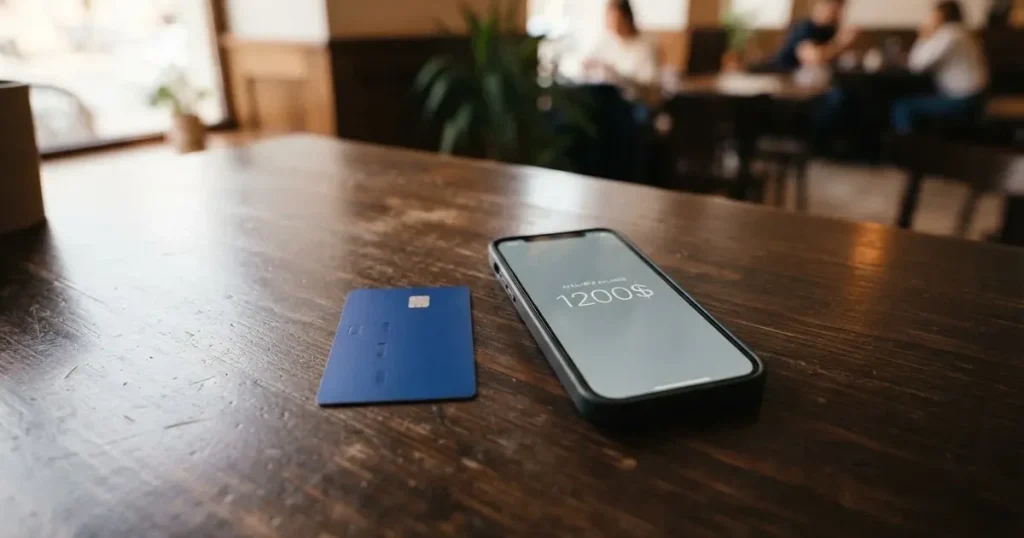
The Zoomex card is a virtual Mastercard that spends directly from a crypto balance, comes with its own IBAN, and costs nothing to open. That last part is what catches attention: no issuance fee, no annual fee, and a 1% fee only when crypto is converted to fiat. But the card is new — it launched on 9 March 2026 — and several of the details you would need to make a real decision, such as ATM fees, blocked merchant categories, and exactly which countries are covered, are not stated on the company’s public pages. This review walks through what is confirmed, what is not, and who should hold off.
The conditions described here are current as of October 28, 2026.
Verdict: 6.8 out of 10
I rate the Zoomex card 6.8 / 10. It is a promising option for crypto-exchange users who want a virtual Mastercard with a dedicated IBAN and no monthly cost, but the information gaps and the newness of the product keep it from a higher mark.
Here is the score broken down by criterion, with the reason behind each mark:
| Criterion | Mark | Reason |
|---|---|---|
| Who can get it | 8 / 10 | Press release gives no country list; earlier check suggested worldwide except USA, Russia, Iran, North Korea |
| Cost | 8 / 10 | No issuance fee and no annual fee; 1% crypto-to-fiat conversion; cross-currency at Mastercard real-time rates |
| Top-up options | 5 / 10 | USDC deposit; USDC transferred from a Zoomex exchange account; networks not named |
| Reliability and complaints | 5 / 10 | Zoomex is in Seychelles and claims Canada MSB, US MSB, NFA, AUSTRAC; the card runs on UR infrastructure with no issuer named; Gridinsoft gives the exchange 1.9/5 from 81 reviews |
| Everyday use | 7 / 10 | Virtual Mastercard with a dedicated IBAN, plus Apple Pay, Google Pay and Samsung Pay; no plastic, ATM terms not disclosed |
Who it suits. If you already keep a balance on the Zoomex exchange and want a card that spends it without a monthly charge, this is worth a look. The virtual form suits people who do most of their spending on a phone and are comfortable with no physical card.
Who it does not suit. If you need a physical card, clear ATM terms, or a well-established complaint record, this is not the card for you yet. It is also a poor fit if you want to hold more than the stated UR Pro ceiling, or if you are sensitive to leaving funds with a Seychelles-based provider.
Will they give you the card?
The company’s press release gives no country list at all — that is the honest headline here. An earlier check suggested a global rollout excluding the USA, Russia, Iran and North Korea, plus some US territories, but that is not confirmed in the current material and I would not treat it as a guarantee for your location.
Citizenship versus residence is also not stated. This matters because card providers screen citizenship, country of birth and country of address separately; a rule that applies to residents of a country does not always apply to citizens of it, and vice versa. If you live somewhere not named in any list, or hold a passport from a restricted country while living elsewhere, the only way to know is to try and read the answer you get.
| What you can rely on | Status |
|---|---|
| Country eligibility list | Not stated in the press release |
| Citizenship vs residence rule | Not stated |
| Earlier indication | Global, excluding USA, Russia, Iran, North Korea and some US territories |
My advice: before you commit any effort, check whether your country of residence appears anywhere on Zoomex’s own site. If the answer is no, stop there. There is no way around identity checks or country rules, and anyone promising otherwise is not offering a card you could keep.
How to get it
The Zoomex card is delivered through a UR account — so the path runs through that platform rather than a standalone Zoomex application. The card itself is a virtual Mastercard; no physical version is mentioned. It settles in USD, EUR, CHF, SGD, HKD, JPY “and more”, and it comes with a dedicated IBAN, which is what makes it behave more like a bank account than a prepaid gift card.
On verification, the release does not state what KYC checks apply (the card is reached via a UR account, so those rules govern). Only two membership levels are mentioned — Basic and UR Pro — and no verification tiers are published.
Because this is virtual only, delivery timelines do not apply: there is no card to wait for in the post. You add the card number to a mobile wallet or use the details directly at checkout.
Fees and what a payment really costs
The headline cost story is genuinely good: there is no card issuance fee and no annual fee. The charges that do apply come from two places — converting crypto to fiat, and spending across currencies.

| Fee or limit | Value |
|---|---|
| Card issuance | No fee |
| Annual fee | No fee |
| Crypto-to-fiat conversion | 1% |
| Cross-currency transactions | Mastercard real-time exchange rates |
| ATM withdrawals | Not stated |
| Monthly limit (upgraded UR Pro members) | Up to 100,000 CHF |
| Other limits | Not stated |
Now let me walk through a few ordinary payments so you can see which of those lines actually touches you.
Paying for a coffee in your local currency from a USDC balance. You spend, the crypto converts to fiat, and the 1% conversion fee applies. That is the single fee you pay for this kind of purchase. There is no per-transaction charge on top of it that the card states.
Paying in a country whose currency you do not hold. The card converts at Mastercard’s real-time exchange rate, and the 1% crypto-to-fiat conversion still applies if the underlying balance is crypto. Multi-currency balances are held in USD, EUR, CHF, SGD, HKD, JPY “and more”, so spending in one of those currencies from a matching balance avoids a currency conversion between them.
Paying online anywhere in the world. Same 1% if crypto is converted. Cross-currency rates kick in if the merchant charges in a currency other than your balance’s.
What I cannot tell you: ATM withdrawal fees, because they are not stated. If you plan to take cash out, that is a real gap, not a detail.
On limits, new cardholders are automatically upgraded from Basic to UR Pro at no cost, and UR Pro gives higher limits and “better withdrawal fees” — though the phrase is vague. The only concrete number is a monthly limit of up to 100,000 CHF for upgraded UR Pro members. Other limits are not stated.
Top up
Funding the card is the area where the card is least forthcoming. The stated methods are:
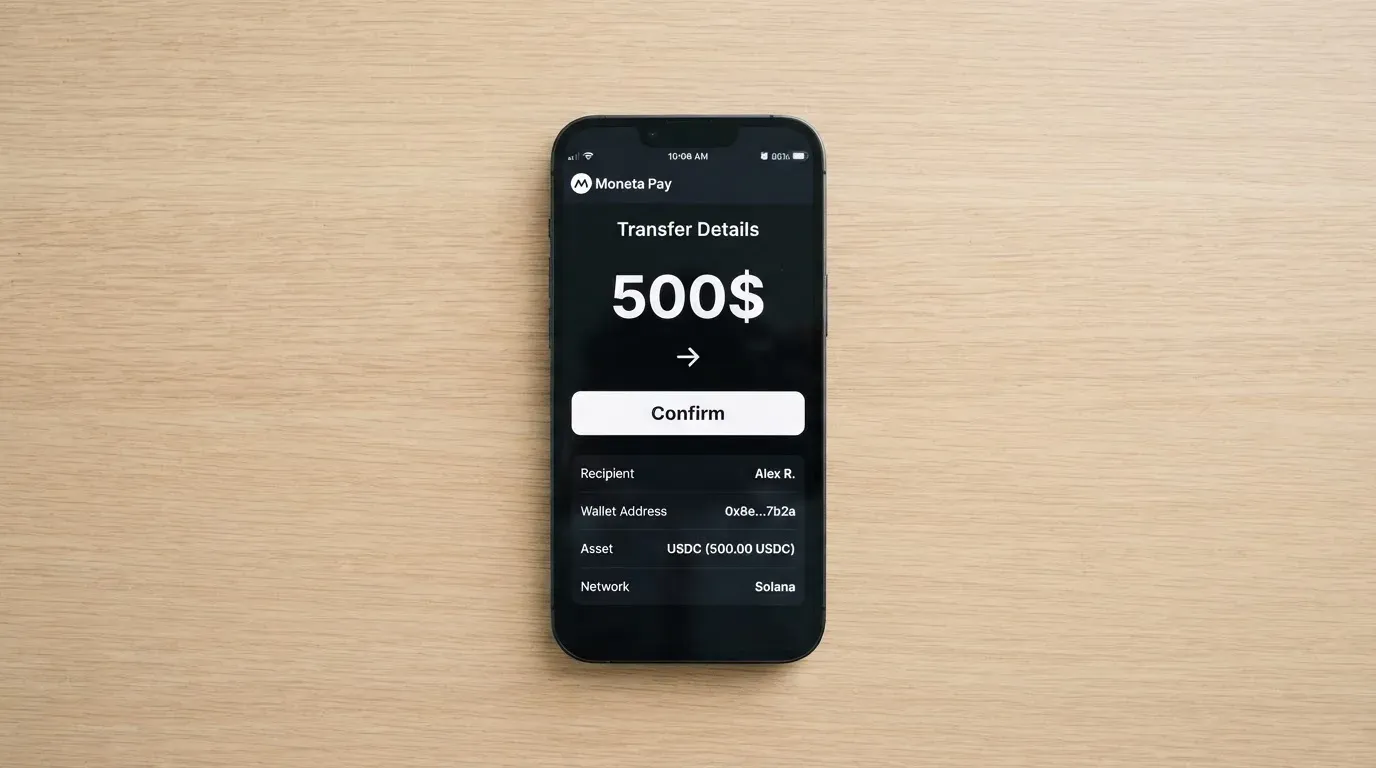
- USDC deposit directly
- USDC transferred from your Zoomex exchange account to a UR account
- “Instant funding with digital assets” as the general description
The networks are not named, and that is the single most important thing to check before you send anything. A stablecoin transfer sent on the wrong network can be lost outright or need manual support recovery with no guarantee — blockchain transfers are irreversible. If Zoomex does not publish which networks it accepts for USDC deposits, confirm it with their support first. Do not assume Ethereum by muscle memory.
| Top-up method | Networks named | Fees |
|---|---|---|
| USDC deposit | Not stated | Not stated |
| USDC from Zoomex exchange account | Not stated | Not stated |
| Minimum amount | Not stated | Not stated |
On the way back out: fiat withdrawals carry no fee, and UR Pro members get better withdrawal fees. The closure balance — what you get if you close your account — is not stated. If you plan to close eventually, ask what the terms are first.
A note on the asset itself: USDC is a US-dollar-pegged stablecoin issued by Circle, which says it is redeemable 1:1 for USD and fully backed by cash and cash equivalents with monthly reserve attestations. Circle lists it on 38 networks. That is reassuring about the asset, but not about whether Zoomex accepts it on the network you send from.
Paying with it every day
For day-to-day spending, the Zoomex card behaves like a standard virtual card. It works with Apple Pay, Google Pay and Samsung Pay, which is the practical way most people will use it — the card number sits in your phone’s secure element as a device-specific token, and each payment uses a one-time code. The issuer can restrict a tokenised number, so in theory it could be locked to phone use.
Blocked merchant categories are not stated. This is worth knowing because categories like gambling (MCC 7995) are often blocked by policy rather than law, and the list varies by issuer — if you expect to use the card anywhere unusual, ask first.
Two everyday-use details the card does not address: the app experience and ratings are not stated (the card runs through the UR app), and how disputes and chargebacks work is not stated. Disputes are the process you care about only when something goes wrong, which is exactly the moment to discover the answer is missing. If you are spending meaningful sums, raise a test purchase and see how a dispute would be handled before you rely on it.
Rewards. There is a promotional 1% cashback on compliant purchases, running through 30 April 2026 at 23:59 UTC, credited in real time. New users also get a $10 reward for a $5+ purchase within 30 days of activation. Note both are time-limited: the rate after the promotion is not stated, so treat the cashback as a bonus now, not a permanent feature.
What can go wrong
Let me be straightforward about the risk profile, because this is a young product from a young company.
The company. Zoomex is based in Victoria, Seychelles, and was founded in 2021. It claims registrations as a Canada MSB, U.S. MSB, U.S. NFA and Australia AUSTRAC. The card is described as “backed by UR’s licensed financial infrastructure”, but UR is not explicitly named as the issuer, and its own country and licences are not publicly stated. So the regulatory picture is one of claims rather than a clearly identified issuing institution — which is not the same thing.
Complaints. I found no official incidents, and no Trustpilot or Reddit card reviews — but that is partly because the card launched in March 2026 and simply has not generated a public track record yet. The absence of complaints is not evidence of a clean record; it is evidence of a short one. Separately, a news and aggregator source, Gridinsoft, rates zoomex.com — the exchange, not the card — at 1.9/5 from 81 reviews. That is an unofficial rating and does not measure the card, but it is the only public signal about the provider behind it, and it is a weak one.
Security. Card-specific security measures (2FA, freeze, spending controls) are not stated. The exchange says it passed a Hacken audit, but that is the company’s own claim, and it applies to the exchange, not necessarily to the card.
Support. Not stated. Who you contact when a USDC deposit goes to the wrong network is not something the public pages answer.
Timeline, for context. Early registration opened in late December 2025 with rollout expected in early 2026; the card launched 9 March 2026. This is a product in its first months.
The honest summary: there is no documented disaster here, but there is also almost no public evidence of one, because there has not been time. The risk is not that something known-bad is happening; it is that you are early to a product whose support and dispute terms are not yet public.
What to take instead
If any of the Zoomex gaps — no physical card, undisclosed networks, no ATM terms — is a dealbreaker for you, here are the cards I would look at instead, with what is actually known about each.
| Card | Score | Notable points |
|---|---|---|
| Zoomex | 6.8 / 10 | The card on review |
| MSX | 6.4 / 10 | Country, card terms, fees and funding all not stated on an official page I could read |
| Bybit Card | 6.0 / 10 | Richest published detail of the three, but regionally limited and strict on eligibility |
| Young Card | 5.7 / 10 | Cashback in YNG tokens by club tier: Essential 0.1%, Gold 1.8%, Platinum 3.6% |
Bybit Card publishes far more than Zoomex does, which is useful for comparison even if it is not your choice. It offers virtual and physical cards in specific regions — Argentina, AIFC (Kazakhstan), Georgia, Kazakhstan, Australia, Mexico, Brazil, Peru and Asia Pacific — and explicitly states it is “not meant for European Economic Area customers”, whose participation is “strictly prohibited”. Its fees are fully listed: 0.9% crypto conversion in most regions, a 2% FX fee on top of the network rate in several, up to 7% in Argentina. It has no balance of its own and draws on the exchange account, selling crypto at the One-Click Sell rate plus the card conversion fee. On the plus side, its rewards are tiered and published (2% to 10% cashback depending on tier), though since 5 October 2026 only crypto-funded transactions earn them.
MSX and Young Card I can tell you less about. On official pages I could read, their country rules, card terms, fees and funding are not stated. Young Card’s one concrete feature is that its cashback is paid in YNG tokens at a rate set by club tier — Essential 0.1%, Gold 1.8%, Platinum 3.6%, with Bronze and Silver not stated. Cashback in the platform’s own token is a different proposition to cashback in dollars, and you should weigh that accordingly.
If you need something with published limits and a named issuer today, Bybit Card’s disclosure is the most complete of the three, at the cost of a stricter regional list.
Who I would recommend it to
I would recommend the Zoomex card if you hold or plan to hold USDC on the Zoomex exchange, you are comfortable with a virtual-only card, you spend mainly through a mobile wallet, and you want no monthly or issuance fee. The free-to-open structure and the 1% conversion are the draw; the dedicated IBAN is what makes it feel like a real account.
I would hold off if any of these are true of you: you need a physical card; you take out cash regularly and cannot accept undisclosed ATM fees; you plan to hold above 100,000 CHF a month; you are sending USDC from your own wallet and need to know exactly which networks are supported before you do; or you would rather deal with a provider whose issuer and regulatory status are clearly stated. The last point is the one I weigh most heavily — Zoomex’s claims about MSB, NFA and AUSTRAC registrations are promising, but the issuing entity behind the card is not named.
Whichever way you go, the two things to confirm in writing before you move money are the supported USDC networks and what happens to your balance if you close the account. Those are the two answers the public pages do not give.
Frequently asked questions
What is the Zoomex card?
The Zoomex card is a virtual Mastercard you spend directly from a crypto balance. It comes with a dedicated IBAN, settles in USD, EUR, CHF, SGD, HKD, JPY and more, and works with Apple Pay, Google Pay and Samsung Pay. There is no physical version mentioned. It launched on 9 March 2026 through a UR account.
How does the Zoomex card work?
You fund the card with USDC, either by depositing it or by transferring USDC from your Zoomex exchange account to a UR account. When you pay, the crypto converts to fiat and a 1% conversion fee applies. Spending across currencies uses Mastercard’s real-time exchange rates, and the card only spends what is in your balance.
Is Zoomex a bank?
No — Zoomex is a Seychelles-based company founded in 2021 that claims registrations as a Canada MSB, U.S. MSB, U.S. NFA and AUSTRAC. The card is described as backed by UR’s licensed financial infrastructure, but UR is not explicitly named as the issuer, and UR’s country and licences are not stated. Treat the regulatory picture as claims, not confirmed issuer status.
Who can get the Zoomex card?
The press release gives no country list at all. An earlier check suggested availability worldwide except the USA, Russia, Iran, North Korea and some US territories, but this is not confirmed. Whether the rule applies to citizenship or residence is also not stated, so check your own country on Zoomex’s site before investing any effort.
Does the Zoomex card require KYC?
What KYC applies is not stated in the Zoomex release, because the card is reached through a UR account — so UR’s rules govern. In general, regulated providers verify identity under anti-money-laundering law, covering name, address, date of birth, nationality and documentation, plus a sanctions check. If those checks cannot be completed, accounts are commonly frozen or closed.
How do I top up the Zoomex card?
Two methods are stated: a USDC deposit, or USDC transferred from your Zoomex exchange account to a UR account. Fees and minimums are not stated, and critically, the supported networks are not named. Always confirm the network with support before sending, since an irreversible transfer on the wrong network can be lost.
What does the Zoomex card cost to open and keep?
There is no card issuance fee and no annual fee. The charge you pay is a 1% fee when crypto is converted to fiat, and Mastercard’s real-time exchange rates apply to cross-currency transactions. ATM fees are not stated. New cardholders are automatically upgraded from Basic to UR Pro at no cost.
Is the Zoomex card safe?
There is no documented public record of problems — but the card launched only in March 2026, so the absence of complaints reflects a short history rather than a proven one. No Trustpilot or Reddit card reviews exist yet, card-specific security measures are not stated, and dispute handling is not stated. Treat it as an early product and keep only what you can afford to have tied up.
What are the Zoomex card’s limits?
Upgraded UR Pro members have a monthly limit of up to 100,000 CHF. Other limits are not stated. UR Pro also promises higher limits and “better withdrawal fees” over Basic, and fiat withdrawals carry no fee, though the exact withdrawal-fee improvement is not quantified.
Is the Zoomex card worth it?
For exchange users who want a free-to-open virtual Mastercard with an IBAN and spend mostly by phone, arguably yes. If you need a physical card, published ATM terms, a named issuer, or dispute rules you can rely on, the value is less clear — those details are not public, and for cards that publish more, Bybit Card is worth comparing even with its stricter regional list.
Choosing an exchange card – cryptocardadvisor
Content created by the «cryptocardadvisor» team