
What ZexoCard actually offers, and what it leaves you to work out yourself
 Available in US

If you have crypto sitting in a wallet and you want to spend it on the internet rather than in a shop, ZexoCard is one of the ways people do that. It is a virtual card — no plastic, no ATM — that you load from crypto and then use through Apple Pay, Google Pay or Samsung Pay. My score for it is 7.3 out of 10. That is a good score for a card aimed at a narrow job, with one large asterisk: the platform does not name the institution that issues the card or the entity behind it, which for a financial product is not a small gap.
The conditions described here are current as of October 28, 2026
Here is who I think it suits, and who I would point elsewhere. ZexoCard is built for people paying for subscriptions and advertising with crypto — the kind of spender whose receipts are software invoices and whose bank has quietly closed their account, or never had one. If your money comes in as salary, if you need a physical card for a market stall, or if you want to know exactly which legal entity holds your balance, this is not the card for you. There is no plastic, there is no ATM, and the Everyday card does not do recurring payments, which by itself rules out most monthly subscriptions on that particular product. Two of its three cards — Subscriptions and Campaigns — are Visa, and those are the ones that actually fit the product’s own pitch.
Will they give you the card?
Yes, from almost anywhere, and that openness is the card’s strongest feature.
Registration is by email, from any location outside a listed set of restricted jurisdictions. Those are North Korea, Iran, Syria, Cuba, Belarus, Afghanistan, Myanmar, and the Crimea, Donetsk and Luhansk regions of Ukraine. Inside those jurisdictions, the card states there is no account opening, no card issuance and no loading.
The important detail for you to hold onto: this restriction is location-based. Citizenship is not mentioned. The card’s own wording is that you should not use false location details to bypass the restrictions — I am not going to explain how anyone might do that, and the sensible reading is that where you actually are is what matters. If you live in a restricted jurisdiction, the answer is that you cannot use this, not that you need to find a workaround.
On documents: the card states that no routine identity-document submission is required for standard onboarding. That is unusually light for anything that touches money, and it is the reason many people find the card in the first place. Age is 18+, the same floor that prepaid cards generally carry, with some issuers setting higher limits.
What I cannot tell you is whether onboarding always works smoothly, because the card’s public pages do not say. There are no described verification levels, no stated processing time and no listed rejection reasons. Nothing in that paragraph is a warning — it is simply the absence of information, and for a financial product that absence is worth weighing on its own.
How to get it
Four steps, and none of them is a paper application.
- Register with your email address.
- Fund your wallet in crypto.
- Create the card.
- Load it.
What comes into existence is a virtual only, reloadable card. There are three: Everyday (network not stated), Subscriptions (Visa), and Campaigns (Visa). No physical cards are issued at all — the card’s own pages describe delivery as not applicable — so if you were hoping for something in the post, stop here and pick a different card.
One detail you will notice when you look at prices: amounts are shown in dollars, but the card currency itself is not specified. Whether you are spending dollars, euros or something else is not something the public pages settle.
Fees
The headline is a $10 one-time issuance fee per card, and then no monthly maintenance. That part is genuinely cheap. The cost shows up in the places the card describes more briefly, so read this section as a list of what you know and what you are inferring.

| Item | What the card states |
|---|---|
| Issuance | $10 one-time, per card (all three types) |
| Registration | Free |
| Monthly maintenance | Free |
| Balance checks | Free |
| Support | Free |
| Merchant transaction — Everyday | $0.25 per transaction |
| Merchant transaction — Subscriptions | No merchant transaction fee |
| Merchant transaction — Campaigns | No merchant transaction fee |
| Funding fee | Shown in the final quote |
| Network and conversion costs | May apply |
| FX (foreign exchange) | Not stated |
| ATM | Not stated |
| Purchase limit | Up to $100,000 per purchase |
| Monthly limit | $500,000 per calendar month, per card |
| Daily limit | No separate daily cap |
Now the arithmetic that matters. The Everyday card costs $0.25 per merchant transaction. Pay a $20 monthly tool subscription with it and the fee is a little over one percent — fine, ignorable. Pay $4 on a coffee with it and the fee is over six percent, which is the case where you should be reaching for a different method. The Subscriptions and Campaigns cards carry no merchant transaction fee at all, and that is exactly why they exist: the products are built for the transactions where a per-payment charge would be felt.
The limit that surprises people is $100,000 per purchase and $500,000 per calendar month per card, with no separate daily cap. For a person paying for ads and software, those are not constraints. They are, however, published numbers with no explanation attached of how they are enforced, and that is the sort of thing where a reader should be careful about drawing conclusions.
What I cannot compute for you: the total cost of a purchase. The funding fee appears only “in the final quote”, conversion costs “may apply”, and the FX treatment is not stated at all. So if you are converting a non-dollar coin at the moment of payment, I cannot tell you what lands with the merchant, and neither can anyone who has not seen your quote.
On account groups: pricing is arranged in Free, Silver and Gold groups. Benefits attached to them are not detailed, and it is specifically not a rolling 30-day spending tier — so there is no spend-threshold reward to plan around. And to be plain about it: there are no card tiers as such, and no cashback is listed.
Top up
Topping up is a crypto transfer, and it is the part of the process where care pays.
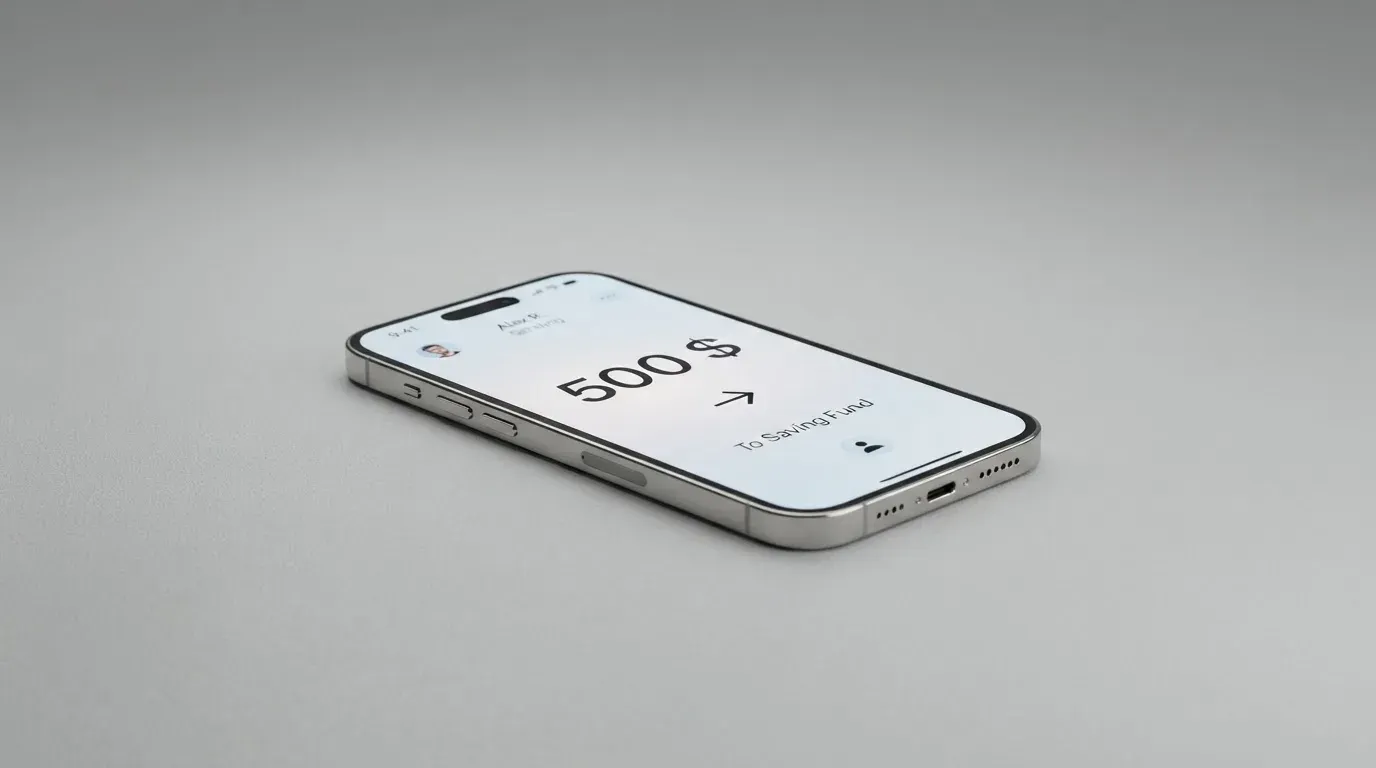
The card accepts Bitcoin, Ethereum, USDT, USDC, Solana and other supported cryptocurrencies; an earlier check of the card listed LTC and roughly 95 tokens. Payment can come from a wallet through MetaMask, Phantom or TronLink where those are available. The order of operations is fixed: deposit first, then load the card.
The rule that catches people out is not the coin, it is the network. The network must match the deposit instructions. A blockchain transfer is irreversible — the network cannot freeze or return funds — so a deposit sent on a network the card provider does not support, or to an address belonging to a different network, can be lost, or need manual support recovery with no guarantee of the outcome. Take this more seriously than any convenience the transfer offers.
On costs, there are three separate things and it is worth keeping them apart. The funding fee is shown in the final quote. Network and conversion costs may apply. The charges for sending on the sending-network are separate again, and they are charged by the blockchain rather than by the card. There is no stated fiat top-up, and no minimum.
Withdrawing is where the card’s public pages go quiet. No withdrawal procedure is described. If an account is closed, remaining funds “depend on applicable law and account circumstances”. Sending funds to other users is not offered. If you are considering this card, treat “I can get crypto in” as established and “I can get money out” as unestablished, and plan around that.
Paying with it every day
Apple Pay, Google Pay and Samsung Pay, on supported devices. That is the whole daily mechanism, and it works well enough — the card number is tokenised into the wallet, each payment carries a one-time security code, and the card issuer can restrict the tokenised number by channel if it wants to.
Two limits on everyday use, one structural and one specific. The structural one is already covered: virtual only, no plastic, no ATM. The specific one is that the Everyday card does not support subscriptions or recurring payments. So for the card whose name suggests general spending, recurring payments are out; that is what the other two Visa cards are for.
For day-to-day friction, keep in mind the generic reasons a payment gets declined rather than anything specific to this card. A prepaid or foreign-issued card can be declined because the merchant’s system reads the issuer country from the card’s identification number and treats it as foreign. Address verification is mostly offered in the US, Canada and the UK and is generally unavailable for foreign-issued cards. A merchant category code marks the type of business — gambling sits under 7995 — and many issuers block specific categories by policy rather than law, with the blocked list differing per issuer. And a declined authorisation can leave a hold on your balance for days, typically up to seven.
One more routine: the card lists no mobile app. What there is a web panel and a Telegram bot. The security side is two-factor authentication through an authenticator app, with an account PIN otherwise; passwords and PINs are hashed, login is rate-limited, card details show only the last four digits and the full number is behind the PIN. Who holds the funds in custody is not detailed, and whether you can freeze the card instantly is not stated.
What can go wrong
Start with the thing I would not be able to stop thinking about: the card describes itself as “a card platform connecting customers with financial and digital asset services”. Licensed external partners provide the cards, the custody and the conversion. The issuer, the registered entity and the licences are not named. You are therefore trusting a structure whose shape you cannot see, on top of a partner you cannot inspect.
The good news is narrow but real. The card’s site lists no official incidents. No Trustpilot or Reddit results were found for “zexocard”. There is no public complaint history to weigh — which, depending on how you read it, is either reassuring or simply a sign that not many people use it. A card nobody complains about and nobody has heard of is a card with a thin track record in both directions.
That thinness runs through the whole picture. How funds are held in custody is not described. Card freezing is not described. Reversing a transaction is not described: for goods or service problems the card says to contact the merchant first, no chargeback process is set out, and “chargeback abuse” is prohibited outright. Support is a Telegram channel, an email address and a knowledge base, open 7 days a week and usually replying within 24 hours — which is a reasonable promise from people who do not tell you who they are.
For context on why that matters, the category has a history. A crypto card issuer’s backing can vanish: an issuer that supplied crypto card programmes was suspended in Europe in 2018, closing all of the Visa programmes it had issued. In November 2022 a network operator terminated its global agreements with a crypto exchange and the associated US debit card was wound down by its issuer. Programme closures tend to follow a pattern — a notice period, then loading stops, then spending stops, then users are asked to withdraw what is left. One closure reported in 2026 from a secondary source ended new loads on 8 July 2026 and spending on 8 August 2026; that is a single unconfirmed report and I give it to you as the shape of the risk, not as a prediction.
The underlying category risks are worth naming plainly too. Crypto transfers are typically irreversible and a stolen key has no built-in recovery. Custodial platforms have a real record of large failures — reported losses of roughly US$350 million at one exchange in 2011–2014, about US$400 million at another in 2018, and US$625 million at a bridge exploit in 2022 — so holding funds with a custodian carries both counterparty and hack risk. Stablecoins can lose their peg: one collapsed in May 2022, and a US dollar coin briefly lost its peg in March 2023 during the US banking crisis.
I am not going to give you tax or legal advice, and you should take your own professional advice on this. What I will say is the shape of the question, because it is easy to miss: in the US the tax authority treats digital assets as property, so exchanging them for goods, services or dollars generally produces a taxable gain or loss, measured in your local currency at the value on the date of the transaction. Each card payment funded from crypto may therefore be a separate disposal.
What to take instead
I looked at three alternatives in the same space. None of them scored higher — but they are better documented, which is itself a reason to pick one, and they differ in what they actually give you.
| ZexoCard | Cardex | CardFlow | HyperCard | |
|---|---|---|---|---|
| My score | 7.3 / 10 | 5.6 / 10 | 4.9 / 10 | 4.7 / 10 |
| Card type | Virtual only; two Visa, one network not stated | Debit crypto card on VERVE, Visa, Mastercard, UnionPay; virtual and physical | Virtual USD Mastercard, created in about 3 minutes | Prepaid; network not stated on the app page |
| Where it is aimed | Almost anywhere except restricted jurisdictions | “One crypto card, 200+ countries”; app listing is Naira-focused | Nigeria — “Nigerians and global users” | No country list; app says accepted in more than 176 countries |
| Costs | $10 issuance, free maintenance; $0.25 per merchant transaction on Everyday | Not stated | Card creation free; monthly fee not stated | Not stated; no fees listed on the app page |
| Funding | BTC, ETH, USDT, USDC, Solana and others; MetaMask, Phantom, TronLink | USDT, USDC and BTC wallets; networks not stated | Bitcoin, USDT, ETH or Naira bank transfer; networks not stated | Crypto such as USDT, BTC, ETH in the app; networks not stated |
| Cashback | Not stated | Not stated | Not stated | Not stated |
Cardex scores 5.6 with me. Its appeal is that it gives you a physical card as well as a virtual one, and it runs on four networks. Its weakness is disclosure: no country list, no exclusions, no stated fee percentage — though the site describes an “AI-Powered Conversion Rate” that scans global exchange rates and picks the best one when you spend, which is a claim you should price as the claim it is. Its app listing is Naira-focused.
CardFlow scores 4.9. It is explicit about who it is for — Nigeria — and it is fast: a virtual USD Mastercard in 3 minutes. Creating a virtual card is free, per its own FAQ. Monthly fee and transaction fees are not stated.
HyperCard scores 4.7. You deposit crypto in the app and the balance is converted to USD or EUR. Its app page says the card works in more than 176 countries, which is a statement about acceptance, not about eligibility — worth keeping those apart.
Pros and cons, side by side
ZexoCard:
- Broadest stated availability of the four.
- Cheapest and clearest published pricing.
- Two cards designed for recurring payments.
- No named issuer, entity or licence.
- No cashback, no tiers, no mobile app.
The alternatives:
- Cardex gives you a physical card, and names no country list or fees.
- CardFlow is aimed clearly at one market and creates cards in minutes.
- HyperCard converts to USD or EUR, but states no fees and no eligibility list.
If your priority is simply *a card I can see the company behind*, keep looking. If your priority is *spend a crypto balance on subscriptions today, without handing over identity documents*, ZexoCard does that job more openly and more cheaply than the three above.
Who I would recommend it to
I would recommend it to someone in this position: you hold crypto, you spend on software and ad platforms, you would rather not send identity documents, and you can afford to treat the balance as money you might not get back. That is a real category of person and the card serves them well.
I would not recommend it to you if any of these apply. You need a physical card or ATM access. You need to know that Everyday card recurring payments will not work. You are planning to hold a meaningful balance long-term, or you need a documented withdrawal route. You want cashback or tier benefits. Or you want to know, in plain terms, which regulated company stands behind your money — because the card does not tell you.
The decision I would make as a reader: keep the balance small enough that its disappearance would be annoying rather than serious, and check the funding fee in a real quote before you commit to a large one. The scoring here is 7.3 out of 10 across six criteria, and I have set out how each was assessed.
| Criterion | Mark | Why |
|---|---|---|
| Who can get it | 9 / 10 | Open from anywhere outside North Korea, Iran, Syria, Cuba, Belarus, Afghanistan, Myanmar and Crimea/Donetsk/Luhansk |
| Cost | 7 / 10 | $10 one-time issuance, free maintenance; $0.25 per transaction on Everyday, none on Subscriptions and Campaigns; funding fee in the final quote |
| Top-up options | 9 / 10 | Bitcoin, Ethereum, USDT, USDC, Solana and others; paid via MetaMask, Phantom, TronLink |
| Reliability and complaints | 5 / 10 | Issuer, entity and licences not named although partners are licensed; no complaints found; 2FA via authenticator app |
| Everyday use | 6 / 10 | Virtual only through Apple Pay, Google Pay, Samsung Pay; no plastic, no ATM |
| Total | 7.3 / 10 | Weighted across the five criteria above |
Frequently asked questions
What is ZexoCard card?
ZexoCard is a platform for spending crypto through ordinary payment channels. It issues virtual, reloadable cards that you top up from a crypto balance and then use through Apple Pay, Google Pay or Samsung Pay. Three products exist: Everyday, Subscriptions and Campaigns. Two of them are Visa. There is no physical card and no ATM access.
How does ZexoCard card work?
You register with an email address, fund a wallet in crypto, create a card, and load it. The crypto is converted and held as a spendable balance, so the card behaves more like a prepaid card than a bank debit card. You then pay through your phone’s wallet or online, on supported devices.
Is ZexoCard a bank?
The card describes itself as “a card platform connecting customers with financial and digital asset services”, with licensed external partners providing the cards, custody and conversion. It does not name the issuer, the registered entity or the licences. So no — it is not a bank as far as its public pages show, and it does not present itself as one.
Who owns ZexoCard?
That is precisely what the card’s public pages do not say. No owning company, no registered entity and no licence numbers are given. What it does say is that partners are licensed. If ownership matters to your decision, this is the first question to put to their support channel.
Does ZexoCard card require KYC?
For standard onboarding, the card states that no routine identity-document submission is required, and registration is by email. Age 18+ applies and the country restrictions apply. No verification levels, processing times or rejection reasons are described. Light onboarding is the reason many people are drawn to it.
How to get ZexoCard card
Four steps: register by email, fund your wallet in crypto, create the card, then load it. There is no application form and no delivery to wait for, because the card is virtual only. You can start spending once the load has landed.
How to top up ZexoCard card
Send Bitcoin, Ethereum, USDT, USDC, Solana or another supported cryptocurrency, through MetaMask, Phantom or TronLink where available, and the network must match the deposit instructions exactly. Deposit first, load second. Blockchain transfers are irreversible, so a wrong-network deposit can be lost.
Is ZexoCard card free?
Partly. Issuance is $10 once per card and monthly maintenance is free, as are registration, balance checks and support. But the Everyday card charges $0.25 per merchant transaction, and funding, network and conversion costs may apply on top.
Is ZexoCard card safe?
It lists sensible safeguards — two-factor authentication through an authenticator app, hashed passwords and PINs, rate-limited login, last-four-digits display. But no incidents are reported and no complaints were found anywhere, which means no track record either way. No issuer is named and custody arrangements are not detailed. I would keep balances small.
Can I withdraw money from ZexoCard?
The public pages describe no withdrawal procedure, do not offer transfers to other users, and say that any remaining funds on closure “depend on applicable law and account circumstances”. No minimum is stated and there is no stated fiat top-up. Treat getting money out as unestablished.
Choosing a virtual card – cryptocardadvisor
Content created by the «cryptocardadvisor» team