
A crypto card with a cheap core and an unfinished edge
 Available in US
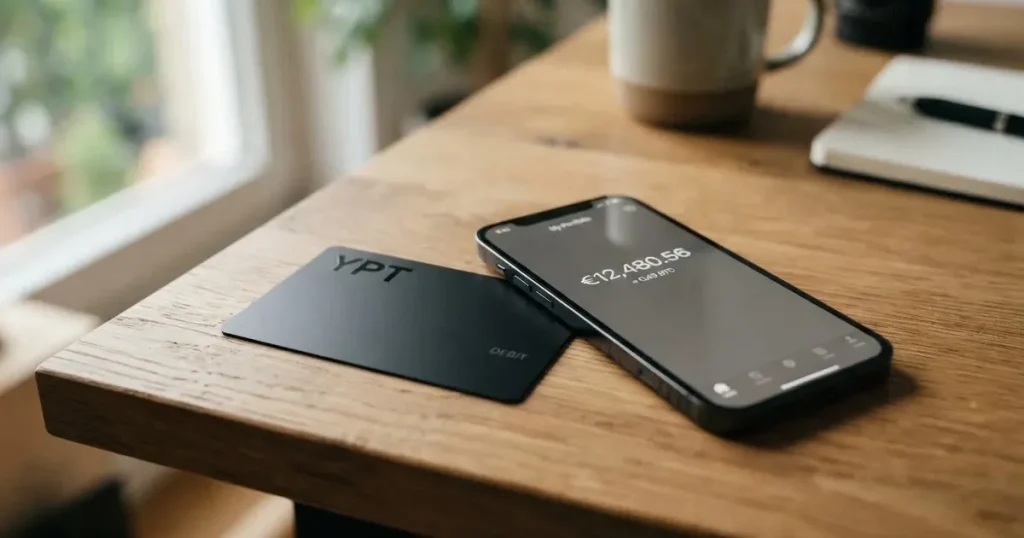
The YPT card is a virtual payment card that turns crypto into everyday spending power. You load it with USDT, USDC, BTC or ETH, the balance converts to dollars, and you pay with the card number in shops, online or through Apple Pay and Google Pay. On the whole I find YPT a competent, well-priced option for someone who wants a card that spends a crypto balance directly, rather than a crypto account bolted onto a bank. I scored it 7.4 out of 10. That is a good score, not a perfect one, and the gap between “good” and “excellent” here comes down to a handful of unfinished edges and gaps in the public information that I could not resolve. I want to walk you through exactly what I checked, what I found, and where I would personally hesitate before loading real money.
The conditions described on this page are current as of October 28, 2026.
The verdict: who YPT suits, and who it does not
I rate YPT 7.4 out of 10. It is a good card for you if you already hold crypto, you want to spend it directly at merchants without first converting through a bank, you are comfortable with a card that converts at the moment of payment, and you mostly pay in the card’s home currency or accept the fee when you do not. It is probably not for you if you need a physical card you can pull out of a cash machine today, if you plan to lean heavily on ATM withdrawals, or if you are in one of the few places the card’s own help centre flags as unsupported for delivery. Let me be concrete about who sits on which side of that line.
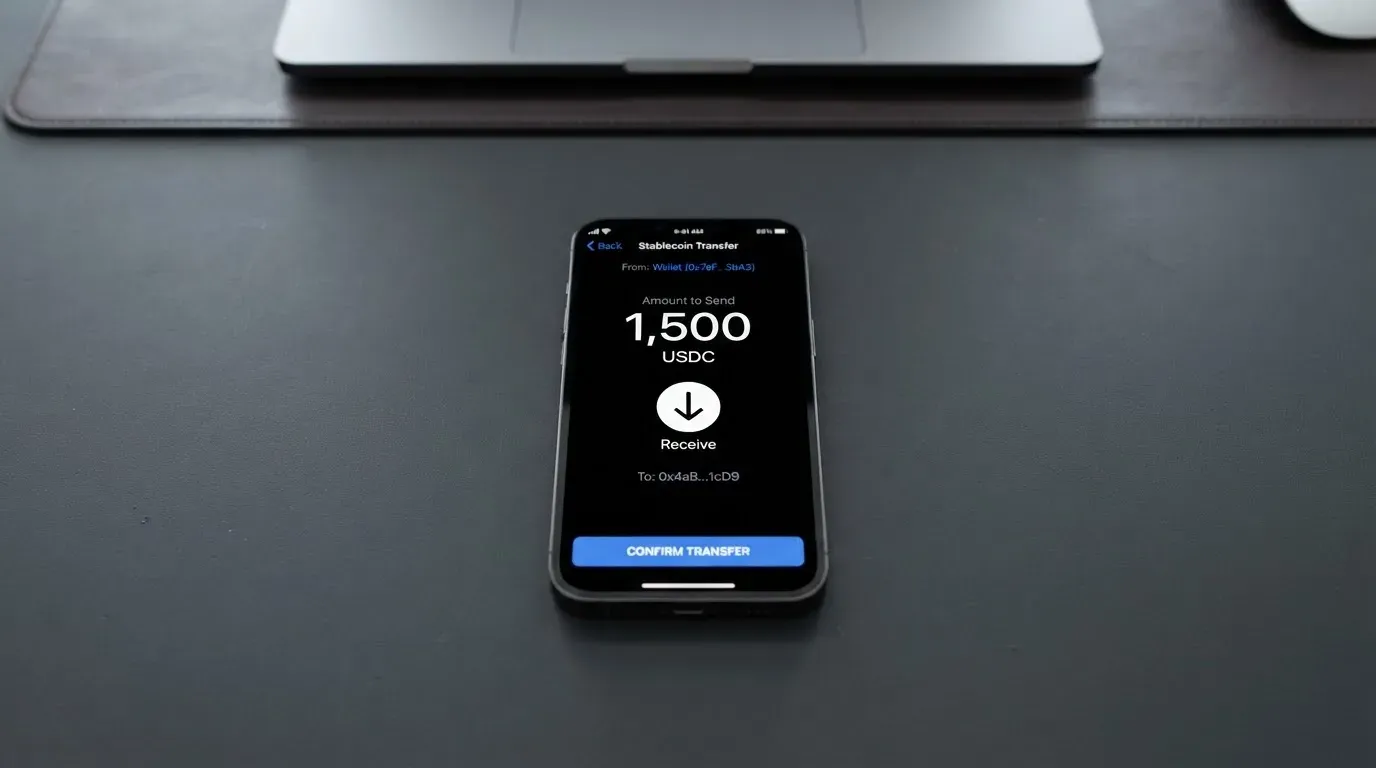
Who it suits: someone spending BTC, ETH and stablecoins via a virtual card. You are the kind of person who keeps money in USDT or USDC, wants it usable at ordinary shops, and does not want a brokerage account or a traditional banking relationship in the middle. If that is you, YPT does the job cleanly.
Who it does not suit: if your priority is physical cash or a card in your wallet that works at a cash machine, YPT is not ready for that today — its physical card is still marked as coming. If you are careful about custody, understand that YPT holds your crypto with a third party, not with you. And if you live in one of the specific regions listed as unsupported for mailing, the card is not a fit.
Here is how I broke the overall score down, criterion by criterion:
| Criterion | Mark | Why |
|---|---|---|
| Who can get it | 9 / 10 | Very few hard exclusions — only Egypt, Tunisia, Palestine, Puerto Rico and Tanzania are unsupported as a mailing address, and a billing address is supported |
| Cost | 7 / 10 | 1% in the card’s own currency (USD), 2.2% in another currency; $0.20 for a small authorisation and $0.5 for a declined one; the issuance price is not disclosed |
| Top-up options | 7 / 10 | USDT, USDC, BTC and ETH, converted at the moment of payment; networks not stated; top-ups must be above 1U |
| Reliability and complaints | 7 / 10 | Launched by YPT and RedotPay; assets held by a licensed trust company with $50 million of insurance; issuer not named; no complaints found |
| Everyday use | 6 / 10 | A virtual card with Apple Pay and Google Pay; the physical card and its ATM function are marked “IT WILL BE PUT INTO USE SOON” |
| Total | 7.4 / 10 |
The pattern in that table is easy to read. YPT is strongest where the card is strongest — eligibility is wide and the core cost is competitive. It is weakest exactly where the product is least finished, in everyday use, because the physical side of the card has not shipped. That is not a disqualification, but it is the thing you are trading for the good price and the wide eligibility.
Will they give you the card?
Eligibility is YPT’s strongest suit, and I think it is genuinely strong. The card’s help centre lists a small, specific set of countries and regions that are not supported as a mailing address: Egypt, Tunisia, Palestine, Puerto Rico and Tanzania. That is the entire exclusion list I found on the public pages. Notably, a billing address is supported, which means the restriction is about where the card is physically delivered rather than about your legal address — that distinction matters and is worth knowing.
Beyond those five, the card’s own public pages do not state further country or citizenship conditions, so I will not invent any. What that absence means in practice is this: if you are outside those five regions for delivery, you are likely within the intended audience, but “likely” is doing real work in that sentence. The card still runs identity checks (covered in the next section), and those checks can be refused for reasons the public pages do not spell out.
For the general question of who crypto cards reach, prepaid and debit cards are generally aimed at adults aged 18 and over, and some issuers set higher limits. Nationality is recorded and screened separately from residence, because sanctions screening and issuer risk policy often apply to citizenship and country of birth as well as to country of address. So the country you hold a passport from can matter even if you live elsewhere — that is true across this category, not something specific to YPT.
I mark “who can get it” 9 out of 10 because a five-country exclusion list with billing-address flexibility is about as open as these cards get. I take one point off only because the pages leave the citizenship and review conditions largely to the checks rather than stating them.
How to get it
Applying is an identity-checked process, not an anonymous one. The card runs KYC through Sumsub, its eKYC provider. You provide your full legal name, your date of birth, and an identity document — an identity card, a passport or a driver’s licence. The card may also ask for more information beyond that. (Separately, and as an unofficial source rather than the card’s own statement, iq.wiki reported in May 2025 that identity verification is required for compliance — consistent with what Sumsub KYC already tells you.)
That identity check is not an unusual extra; it is the category baseline. KYC rules require regulated businesses to verify customers and assess risk as part of anti-money-laundering and counter-terrorism-financing law, including ongoing monitoring and suspicious-activity reporting. In the EU, customer due diligence covers name, address, date of birth, nationality and identity documentation, a sanctions check, the purpose of the relationship, and whether you are a politically exposed person. If due diligence cannot be completed, EU rules require the institution to hold off on the transaction or relationship and, where necessary, end it — which is why accounts get closed or frozen pending documents. In the US the customer identification programme requires name, date of birth, address and an identification number, and electronic KYC systems also validate proof-of-address documents. All of that is context for why a card like this asks for your documents: it is the legal floor, not a trick.
On the card itself: what is described in detail is a virtual card. A physical card is named in the navigation, but no details are given for it, and it is marked “IT WILL BE PUT INTO USE SOON”. The card’s network (Visa or Mastercard) and its currency are not stated on the public pages. Delivery timing and cost for the physical card are not stated. Verification tiers, if any, are not stated. I would rather tell you these are open questions than guess at them.
Activation is not something the public pages describe step by step, so I will not invent a process. What I can say is that the app-based flow described in the top-up section (choosing currency and network, sending to a shown address or QR) is the concrete part of the product that is documented.
What it really costs: Fees and limits
This is the part I care most about, because it is where “cheap” can quietly become “not cheap.” YPT’s headline rate is genuinely competitive, and then there are the smaller fees that most people discover only when they see them on a statement.

The card’s default settlement currency is USD. Transactions in that default currency cost 1%. Transactions in any other currency cost 2.2% — that is the number to watch, because if you are spending abroad or in a non-dollar currency most of the time, you are paying more than double. There are also two small-amount or failure fees: a $0.20 fee for a small-amount authorisation, applied per transaction between $0 and $1 (with the first 5 per card per month waived), and a $0.5 fee for a declined transaction (with the first 3 per card per month waived). The issuance price is not disclosed on the public pages.
What the card does not yet tell you is just as important as what it does. There is no stated monthly fee that I found. The ATM side is the clearest gap: “ATM offline withdrawal” is listed among features, but with a note that “It will be put into use soon” — the note is a little ambiguous about exactly which feature it applies to — and the ATM fee is not stated. The physical card, for ATM withdrawals, is marked “IT WILL BE PUT INTO USE SOON”. Tiers are not stated either. On limits: for a USD card, the per-transaction limit is $100,000 and the daily limit is unlimited. Separately, an unofficial source (iq.wiki, May 2025) reports that spending limits are customisable, though without giving amounts — worth treating as unconfirmed.
Here is the fee and limit picture as the card states it:
| Item | Value |
|---|---|
| Transaction in default currency (USD) | 1% |
| Transaction in a non-default currency | 2.2% |
| Small-amount authorisation ($0–$1) | $0.20 per transaction (first 5 per card per month waived) |
| Declined transaction | $0.5 (first 3 per card per month waived) |
| Card issuance price | not stated |
| Monthly fee | not stated |
| ATM withdrawal fee | not stated |
| Per-transaction limit (USD card) | $100,000 |
| Daily limit (USD card) | unlimited |
Now let me make those percentages real, because percentages alone can mislead. Three everyday payments, and which fees actually bite:
- A $20 subscription in dollars. At 1%, that is $0.20. This is the card’s best case: your home currency, a normal amount, no small-transaction fee. You feel the 1% and nothing else.
- A $60 dinner in euros while travelling. At 2.2%, that is $1.32 on top of whatever the merchant and your network charge. This is the case the 2.2% rate exists for, and it is the one that turns a “cheap” card into an ordinary-cost one.
- A stream of tiny purchases, say five $0.50 items. Each sits in the $0–$1 band and attracts the $0.20 small-amount fee, on top of the 1%. The first 5 per card per month are waived, but a micro-spending habit will run past that quickly, and here the small-amount fee can rival the percentage fee.
One more cost sits outside the card but lands on you: the on-chain network fee (gas or bandwidth) for a deposit is charged by the blockchain, not by YPT. When you top up, you are paying the network as well as the card’s conversion rate. That is a category fact, not a YPT-specific surcharge, but it belongs in your mental model of the real cost.
I score cost 7 out of 10. The 1% core rate is competitive and the small fees are capped with free allowances, which deserves credit. I take points off for the undisclosed issuance price, the undisclosed monthly fee, and — the real reason — the 2.2% penalty for non-default currency, which punishes exactly the people most likely to use a travel card in a non-dollar currency.
How to Top it up
Topping up YPT is a crypto transfer, not a bank transfer, and understanding that shapes everything about how you should do it. The card accepts USDT, USDC, BTC and ETH. You deposit, and the amount is converted to fiat for spending at the moment of payment.
The mechanics in the app: you choose the currency and the network, and then you send to the shown address or via the shown QR. That is the flow the card documents.
There are two rules here that matter more than anything else, because getting them wrong can cost you the money:
- The top-up must be above 1U. A recharge of 1U or less is not credited, and — the sharp edge — it cannot be retrieved. So there is a hard floor below which funds effectively disappear.
- Unsupported coins or networks are lost. If you send a coin or on a network the card does not support, the funds are gone. The page warns about this directly.
The page does not specify which networks are supported for each coin, so I cannot give you a definitive list. This is one of the areas where I would be most cautious as a user, because the risk is not abstract. Blockchain transfers are irreversible, so a deposit sent on a network the provider does not support, or to an address of another network, can be lost or need manual support recovery with no guarantee. Choosing the wrong network is the single most common and most expensive mistake in this category.
Stablecoins carry their own category-level cautions that bear on your choice of coin. USDT and USDC are US-dollar-pegged and together make up about 90% of stablecoin market capitalisation (BIS, July 2025), but stablecoins are not necessarily stable — TerraUSD collapsed in May 2022 and USDC temporarily lost its peg in March 2023 during the US banking crisis. On networks: ERC-20 is the Ethereum token standard and its gas is paid only in ETH, so a wallet holding USDT but no ETH cannot send on Ethereum. Tron prices fees via bandwidth and energy, often burning TRX. And Circle stopped supporting USDC on Tron in February 2024, so “USDC over TRC20” is not a native option — another reason to confirm the network in-app rather than assuming.
Withdrawal of a fiat balance is not stated on the public pages, so I will not describe a cash-out process I cannot verify. I rate top-up options 7 out of 10: a good spread of common coins and a clear in-app flow, held back by the unstated networks and the unforgiving 1U floor and lost-funds warnings.
Paying with it every day
Day-to-day, YPT is a virtual card first. That is the honest headline. The virtual card is real and usable; the physical one is not here yet.
You can bind the card to Apple Pay, Google Pay and “multiple payment platforms”. The blocked merchant categories, if any, are not stated on the public pages, so I cannot tell you whether gambling, for example, is blocked — and the category is worth knowing about generally: the four-digit merchant category code MCC 7995 covers gambling, and many issuers block it on specific cards by policy rather than by law, with the blocked list varying by issuer. A merchant category code classifies a business by goods or services under ISO 18245.
Adding the card to a mobile wallet is the smoothest path for daily use, and it is worth understanding why it is also the safest. Apple Pay replaces the card number with a device-specific Device Account Number stored in the Secure Element, never on Apple’s servers, and each payment uses a one-time dynamic security code. The issuer can also restrict a tokenised number — for example block it on magnetic-stripe, phone or website use. Online payments may additionally involve 3-D Secure, an identity check where the issuer either approves frictionlessly or challenges you with, say, a one-time code; Visa’s brand is Visa Secure and Mastercard’s is Identity Check.
Refunds are where patience is required: they usually take 2–15 days, sometimes longer than a month, and YPT credits you after it receives the refund from the merchant. So a refund is not instant to your balance.
Rewards are not stated on the public pages, so I will not promise cashback or points. On the app: officially I could not find a description of it; unofficially, iq.wiki reported in May 2025 that there is a mobile app on iOS and Android for card applications, deposits and tracking — I did not read any app-store ratings, so treat that as unconfirmed and check the store yourself.
I score everyday use 6 out of 10, the lowest mark on the card. Not because the virtual experience is poor — wallets and online spending work — but because the physical half of a physical card does not exist yet, and a lot of daily life (paying at a till that wants a card, handing someone a card, a cash machine) still depends on it. That 6 is a statement about readiness, not quality.
What can go wrong
The specific risks of this card, honestly stated, fall into a few buckets.
The unfinished physical product. The clearest risk is simply that the part you might most want is not shipped. The physical card and the ATM withdrawal function are both marked as coming soon, and the ATM fee is not even stated yet. If your plan depends on cash or on a physical card, this is a hard stop today.
Custody risk, which is the real one. Your digital assets are held by a licensed trust company with $50 million in insurance, and you get a unique blockchain address per user, Sumsub KYC, a PIN code, and anti-misuse fees and negative-balance rules. That is a real set of safeguards — but note the structure: a third party holds the assets. Control of crypto belongs to whoever holds the private key or seed phrase, and with a custodial arrangement the provider holds the credentials, so you must trust the provider completely. The trade-off is deliberate: insurance and oversight in exchange for custody. A seed phrase is typically 12 to 24 words and is an unencrypted form of the private key — anyone who obtains it can restore the wallet and spend the funds, and because transfers are irreversible and a stolen key has no built-in recovery, the network cannot freeze or return the money. Custodial platforms have a real history of failure: Mt. Gox (about US$350 million reported stolen, 2011–2014), Coincheck (about US$400 million, 2018) and Ronin Network (US$625 million, 2022).
Who is actually behind the card. YPT was jointly launched by YPT and RedotPay, but the issuer is not named on the public pages. This matters because of how the category is built: a card payment involves the card network (Visa/Mastercard) routing messages and setting rules, the issuer (a bank or e-money institution licensed to issue under that licence) holding the card programme, and the crypto brand often being only a programme manager or front end. Knowing that a licence sits somewhere behind the card — and who holds it — is what separates a regulated product from a marketing wrapper. As a category example of why issuer risk is not theoretical: Visa said in November 2022 it had “terminated our global agreements with FTX” and the FTX US debit card was being wound down by its issuer; and WaveCrest, a Visa issuer that supplied crypto card brands, was suspended by Visa in Europe in 2018, closing all WaveCrest-issued Visa programmes. Programme closures typically give notice, then stop spending and loading, then ask users to withdraw remaining balances. None of that is a prediction about YPT — it is why “who is the issuer” is a fair question to ask of any card in this category.
Merchant-side declines. This is a category tax, not a YPT fault, but you will feel it. A merchant category code lookup can reveal the card type and issuer country, and some merchants decline prepaid or foreign-issued cards for that reason; Address Verification Service, which compares numeric parts of the billing address, is generally unavailable for foreign-issued cards, which can cause declines; and 3-D Secure can add friction. Also, a declined authorisation may leave a hold on your funds that can remain for several days (typically up to 7). A foreign BIN can simply look “foreign” to a shop. If you travel or shop across borders, expect occasional friction.
The refund and chargeback path. Refunds run 2–15 days and sometimes beyond a month, and you are credited only after the merchant’s refund lands. A chargeback is a refund the issuer orders to settle a dispute, with reason codes like fraud, duplicate billing or goods not received; US debit card reversal rights come from Regulation E and credit card rights from Regulation Z, while prepaid-card coverage varies and should not be assumed to apply. So if something goes wrong with a purchase, the remedy is real but slower and less certain than on a normal bank card.
Sanctions and geography, honestly. Tether says it disables tokens in wallets on the OFAC sanctions list and has frozen funds tied to illicit activity — so stablecoins are not censorship-proof. Nationality and country of birth are screened. This is not advice on how to get around any of it; it is simply the environment the card operates in, and it is part of why “is this safe for me” depends on your circumstances and should be judged with the card’s own rules and your local ones in view.
On the more reassuring side, I found no complaints for YPT — no complaints surfaced, and no Trustpilot page for YPT Group. That is mild positive evidence, not proof. Support is reachable at [email protected], Telegram and X at @ypt_official, with a GitBook help centre in English. A typical safeguard set for this category includes app-based 2FA, instant card freeze, spending limits, 3-D Secure confirmation and tokenised mobile wallets; PIN protection is also reported unofficially (iq.wiki, May 2025).
What to take instead
If YPT’s gaps give you pause, there are alternatives. I want to be honest that I rate all of them lower than YPT, so this section is really “if a specific YPT weakness is your dealbreaker, these might not have it,” not “these are better.” I have not used any of them; the comparison is from their published information.
One thing worth understanding about this category before the list: YPT is a prepaid-style model. A prepaid card draws on a stored balance, while a standard debit card asks your bank to withdraw funds from a linked account at purchase time, and many crypto cards behave like prepaid cards — crypto is converted and loaded as fiat balance. In the pre-loaded balance model you convert or top up a fiat (or stablecoin) balance first, and the card spends only that, so it cannot overdraw. That design is the source of both YPT’s low cost and its custody dependency.
Here is the comparison, card by card:
| Card | Score | Card type | Cost notes | Funding | Catch |
|---|---|---|---|---|---|
| YPT | 7.4 / 10 | Virtual (physical coming) | 1% USD, 2.2% other currency; issuance price not stated | USDT, USDC, BTC, ETH | Physical card and ATM still “soon”; issuer not named |
| Cardex | 5.6 / 10 | Debit crypto card on VERVE, Visa, Mastercard, UnionPay; virtual and physical | Real-time crypto-to-fiat conversion at payment, “AI-Powered Conversion Rate”; no fee percentage stated | USDT, USDC, BTC | App Store listing is Naira-focused; one card, 200+ countries, no exclusions listed |
| CardFlow | 4.9 / 10 | Virtual USD Mastercard, created in about 3 minutes | Creating a virtual card is free (site FAQ); fees not stated | Bitcoin, USDT, ETH or Naira bank transfer | Aimed at Nigeria (“Nigeria’s smartest fintech card platform”) and “Nigerians and global users” |
| HyperCard | 4.7 / 10 | Prepaid; balance in USD or EUR | No fees listed on the App Store page | Crypto such as USDT, BTC, ETH, converted to USD or EUR | No country list on official pages; “more than 176 countries” is acceptance, not eligibility |
Let me read across that table with you. Cardex is the broadest on paper (“one crypto card, 200+ countries”, virtual and physical, on four networks including Visa and Mastercard) and the only alternative with a stated conversion mechanism, though no fee percentage is published. Its catch is that its App Store listing is Naira-focused, so the day-to-day experience may not match the global pitch. CardFlow is the simplest to explain and free to create, but it is clearly built for Nigeria and Nigerian users, with a Naira bank transfer option, so it is only interesting to you if you are in or connected to that market. HyperCard is the most open-ended on fees (it lists none) and works in USD or EUR, but it tells you the least about who can actually get one.
None of the three states its fees as clearly as YPT does, which is why YPT still comes out ahead on transparency and value. But if your blocker is, say, “I need a physical card today,” Cardex is the one whose listing explicitly includes a physical card. If your blocker is “I do not want a percentage I cannot see,” HyperCard is the one whose pages list no fees at all — though silence is not the same as zero.
Who I would recommend it to
Here is my honest, personal read after working through the whole card.
I would recommend YPT to someone who already sits in crypto, wants a card that spends a USDT, USDC, BTC or ETH balance directly, and is comfortable with a virtual-first product that converts at the point of payment and holds your assets with an insured trust company. If that is you, the wide eligibility (only five regions excluded for delivery), the 1% core rate, and the Apple Pay / Google Pay support make YPT a genuinely good everyday spend card, and 7.4 out of 10 reflects that.
I would hold back if any of these are true of you:
- You need cash or a physical card you can hand over today. The physical card and ATM are not here yet.
- You spend mostly in a currency other than USD. The 2.2% rate will quietly become your real cost.
- You cannot accept a third party holding your crypto. YPT’s custodial model is a deliberate, insured trade-off, but it is a trade-off.
- You are in Egypt, Tunisia, Palestine, Puerto Rico or Tanzania for delivery.
- You want to see the issuer, the issuance price, or the monthly fee. None of those are stated publicly, and their absence is, for me, a reason to proceed carefully rather than a dealbreaker.
The pattern is clear: YPT is a strong virtual spend card with an honest price and wide reach, held back by an unfinished physical side and some public-information gaps. For the person it is built for, those gaps do not bite. For someone who needs the physical card, or who is uneasy about a named issuer not being disclosed, they do. That is the honest shape of this card, and it is why it is a 7.4 and not a 9.
Frequently asked questions
What is the YPT card?
The YPT card is a virtual payment card that lets you spend crypto as if it were cash. You load it with USDT, USDC, BTC or ETH, the balance converts to dollars, and you pay with the card number in shops, online, or through Apple Pay and Google Pay. It was jointly launched by YPT and RedotPay. The physical version of the card is still marked as coming soon.
How does the YPT card work?
You top the card up by depositing crypto — USDT, USDC, BTC or ETH — through the app, choosing a currency and network and sending to the shown address or QR. When you pay, the crypto balance converts to a fiat balance in USD and the card spends it, at 1% for USD transactions or 2.2% for other currencies. Your crypto is held by a licensed trust company with $50 million in insurance, not by you directly.
Is YPT a bank?
No, YPT is not a bank. It is a card programme from a crypto platform, jointly launched by YPT and RedotPay, and the actual card issuer is not named on the public pages. In this category the issuer is usually a bank or licensed e-money institution that holds the programme, while the crypto brand is the front end. Card payments are regulated as payment services, separately from crypto rules.
Who owns YPT?
YPT was jointly launched by YPT and RedotPay, according to the card’s own materials. Beyond that, the public pages do not name the card issuer — the licensed institution that actually holds the card programme. That gap is worth asking the support team about before you load significant funds, since the issuer is the entity responsible for the card.
Is the YPT card available in my country?
The card’s help centre lists only five places as not supported as a mailing address: Egypt, Tunisia, Palestine, Puerto Rico and Tanzania. A billing address is supported, so the restriction is about delivery rather than your legal address. Beyond those five, the public pages do not state further country or citizenship conditions, but identity screening can still apply.
Does the YPT card require KYC?
Yes. The card runs identity verification through Sumsub, requiring your full legal name, date of birth, and an identity card, passport or driver’s licence, and it may request more information. This is standard for regulated cards, since anti-money-laundering rules require customer due diligence, sanctions screening and ongoing monitoring.
How do I top up the YPT card?
In the app, choose your currency and network, then send USDT, USDC, BTC or ETH to the address or QR shown, converting at the moment of payment. Two rules are strict: the top-up must be more than 1U or it is not credited and cannot be retrieved, and sending an unsupported coin or network means the funds are lost. Check the network carefully — transfers are irreversible.
What are the YPT card’s fees?
The card charges 1% for transactions in its default currency, USD, and 2.2% for transactions in any other currency. There is a $0.20 fee for a small-amount authorisation between $0 and $1 (first 5 per card per month waived) and a $0.5 fee for a declined transaction (first 3 per card per month waived). The issuance price, monthly fee and ATM fee are not stated on the public pages.
Can I use YPT in Apple Pay and Google Pay?
Yes, the virtual card can be bound to Apple Pay, Google Pay and “multiple payment platforms”. Using it through a mobile wallet is also the safer route, since the card number is replaced by a device-specific number and each payment uses a one-time code. The card also supports online payments, which may involve a 3-D Secure identity check.
Is the YPT card safe and worth it?
Safety is mixed and depends on your tolerance. Your crypto is held by a licensed trust company with $50 million in insurance, with Sumsub KYC, PIN protection and anti-misuse safeguards — but a third party holds your assets, and custodial platforms have a history of large failures. I found no complaints for YPT. On value, the 1% USD rate is good, but the physical card is not shipped yet and the issuer is not named.
Choosing a virtual card – cryptocardadvisor
Content created by the «cryptocardadvisor» team