
A prepaid Mastercard built on Elrond money, with cheap euros and sharp edges
 Available in US
If you have tried to open an ordinary bank card and could not — because of where you live, what documents you hold, or a bank that will not look at your application — then the xPortal card is worth an hour of your time. It is a Mastercard Debit card that spends whatever balance you load into it, and you can load that balance from EGLD, BTC, ETH and a handful of other coins, or straight from a debit or credit card. Issuing is free. A physical card in your hand costs money, but a limited amount. The card works in Apple Wallet and Google Wallet. If all you need is something that will pay for a supermarket in a country where a bank said no, this is a serious option.
It is not, however, a bank account, it is not a full exchange, and there are areas where the card’s own pages contradict each other in ways I would want answered before I trusted it with a large balance. I give it 6.4 out of 10. That is not a bad score. It is a card with a real job done well on the payment side and an unusually thin information page on the account side.
Everything below reflects the card’s public pages and documents as they stood when I checked them, and the conditions here are current as of October 28, 2026.
Verdict: 6.4 out of 10, and who that suits
Here is the whole picture on one screen, criterion by criterion, with the marks exactly as I scored them.
| Criterion | Mark | Why |
|---|---|---|
| Who can get it | 5 / 10 | No official country list at all; the terms only say access “may not be available to you … in certain regions”. Unofficial sources say 29 EEA countries, with Canada, Iran, North Korea, Switzerland, the UK and the US closed. |
| Cost | 6 / 10 | Issuing is free; delivery EUR 5.99 (Romania) or EUR 9.99 (international). Buying crypto costs 1.49%, and the currency fee is capped at Maximum 2.5%. |
| Top-up options | 6 / 10 | BTC, ETH, EGLD, POL, BNB, SOL, DOGE, BERA, SUI. Stablecoins are not named, and no networks are listed. You can also top up by debit or credit card. |
| Reliability and complaints | 7 / 10 | Operator xPortal Equity A.G. Unofficial: issuer Capital Financial Services S.A. (Twispay), EMI licence IEME-RO-0001. No complaints found; App Store 4.8 out of 5 on 1.8K ratings. |
| Everyday use | 9 / 10 | Virtual cards plus a physical Mastercard Debit, Apple Wallet and Google Wallet, ATM withdrawals up to EUR 500 per month. |
| Total | 6.4 / 10 | The payment half of this card is strong; the information about who can hold one and what the tiers are is where it loses points. |
Who this suits: residents of the European Economic Area who already hold Elrond’s EGLD, or who intend to, and who want to spend crypto as ordinary euro payments without touching an exchange every time. The audience this card is built for is people paying with EGLD and other coins.
Who this does not suit: anyone treating the card as a bank account, anyone who needs a large credit line, anyone who lives outside the EEA and is hoping the answer is yes, and anyone who needs predictable currency conversion. Also: if your fallback is “I will just convert to euros somewhere else”, you are adding a step, not removing one.
Will they give you the card?
Honestly? The card does not say, and that is the problem. The eligibility conditions and the country list are not stated on the card page or in the terms. The terms contain a standard escape hatch — access “may not be available to you … in certain regions” — and the delivery pricing itself only names two zones, “RO” and “INT”. Romania is clearly treated as home ground. Everything else is guesswork.
What third-party sites say, and I want to be clear that none of this is confirmed by the card itself: an unofficial source lists availability in 29 EEA countries, with these restricted — Canada, Iran, North Korea, Switzerland, UK, US. That same page is internally inconsistent about Germany, which is exactly the kind of detail that should make you check in the app rather than trust a comparison site. If Germany is a coin flip on someone’s spreadsheet, treat every line of that spreadsheet as provisional.
There is a second layer beyond geography, and this one catches people out. The full identity checks the card requires are also not stated on the card page or in the terms. An unofficial source describes full KYC before issuance — ID verification and proof of address. Whether that is exactly what xPortal does, I cannot confirm from the card.
One general point worth holding onto. Sanctions and country rules are not paperwork trivia: card issuing is heavily policed, and nationality is screened separately from residence because issuer risk policy is applied to citizenship and country of birth as well as your address. “I live in a supported country” is not always the same question as “I can pass verification”. If you hold an ID from a restricted region while living elsewhere, some issuers will decline you outright. I am not going to explain how to work around that, and you should not go looking for a way — a provider that lets you through that screen is a provider your money can vanish from.
How to get it
The application runs through the xPortal app. The card itself comes in more than one form, which is more choice than most crypto cards offer: virtual cards — branded xPortal, MultiversX or Sui — and a physical card. The physical one is a “Mastercard Debit”. The card currency is euro, implied by the page graphic rather than stated outright.
Here is the cost of the physical card as two different parts of the card tell it, and the difference is worth your attention because it is not small:
- The card page prices delivery at EUR 5.99 (RO) and EUR 9.99 (international).
- The fees PDF prices the first physical card at EUR 9.99 plus delivery of EUR 5.99 (Romania) or EUR 12.99 (international).
Same product, two documents, two answers. Before you order, work out which total you are actually looking at, because on the PDF reading a card outside Romania could cost noticeably more than the card page suggests. In the fees PDF the first three virtual cards are free; after that it is EUR 3 per virtual card. Opening and maintaining the account is free.
Delivery time is not stated, and neither is the cost of a replacement card. The help centre has articles on those two topics — titles only, no figures I could confirm.
On verification: the levels, the processing time and the reasons a check might be refused are all not stated. What the help centre does tell you is practical — if you cannot finish KYC, contact support by chat or at [email protected]. Two article titles hint at what trips people up: “Source of funds check” (five articles under it) and “Why do I have to provide my tax identification number?”. That second title is the one to sit with. Asking why you need a tax number is a normal question, and the fact that it needs its own help article suggests it is a common sticking point.
There is no magic bypass and I will not pretend otherwise. Verification exists because the issuing institution is legally obliged to complete due diligence — name, address, date of birth, nationality and identity documents, a sanctions check, the purpose of the relationship, and whether you are a politically exposed person. If it cannot be completed, the rules require the institution to withhold the transaction and, where necessary, close the relationship. That is not a quirk of this card; it is the law the issuer is operating under.
What it really costs: the Fees picture
Here is every fee and limit I could confirm, gathered in one table so you can see the shape of the thing.
| Fee or limit | Value |
|---|---|
| Issuing fee | Free |
| Monthly or annual fee | Not stated |
| Delivery, Romania | EUR 5.99 |
| Delivery, international | EUR 9.99 |
| First physical card (fees PDF) | EUR 9.99 plus delivery |
| Virtual cards (fees PDF) | First three free, then EUR 3 per card |
| Crypto purchase fee, via xMoney | 1.49% |
| Card payments | Free |
| Foreign exchange fee | Maximum 2.5% |
| Payment to high-risk merchants | Maximum 3%, minimum EUR 1 |
| Cash withdrawal | Free up to EUR 200 per month; above that 2% plus EUR 1 per withdrawal |
| ATM balance check | EUR 1 in Romania, EUR 2 outside |
| ATM limits | EUR 500 per day, EUR 2,500 per month |
| Unjustified chargeback | EUR 20 |
| Minimum top-up | EUR 10 |
| Adding fiat | Free |
| Daily top-up (card page) | EUR 2,500 |
| Monthly top-up (card page) | EUR 10,000 |
| Daily top-up (fees PDF) | EUR 5,000 |
| Monthly top-up (fees PDF) | EUR 25,000 |
| Daily card spending | EUR 5,000 on the card page; the fees PDF says “No limit” |
Two things jump out at me in that table.
The first is the cash withdrawal line, and it contradicts itself depending on which page you read. The card page says withdrawals up to EUR 500 per month. The fees PDF says free withdrawals up to EUR 200 per month, then a 2% fee plus EUR 1 per withdrawal above that, and a balance check at the ATM costs EUR 1 in Romania and EUR 2 outside. Both cannot be the current state of the policy. If cash is not your use case, this matters little. If it is, it matters a great deal.
The second is the spending limit contradiction, and it is the one I would raise with support before loading money. The card page states daily spending of EUR 5,000. The fees PDF states daily card spending across point of sale, e-commerce and ATM as “No limit”. Two official pages, two different worlds. Neither is a range you would want to discover at a till.
Now the everyday numbers, so this is not abstract. Take three ordinary payments and walk through what each costs you.
- A EUR 25 grocery shop when your balance is already in euros. The card payment itself is free. The fees PDF is explicit that card payments are free, and there is no FX leg because you are not converting anything. This is the case the card is genuinely good at: crypto in, spendable euro, nothing taken on the side.
- The same EUR 25 shop, paid from a euro balance while you are abroad. Here the currency fee bites, up to a Maximum 2.5%, applied to the exchange rate and varying “depending on transaction type, merchant type, geography or campaigns”. On EUR 25 that is up to about 62 cents — small in absolute terms, and then it repeats on every single purchase. A holiday is where a percentage like this quietly becomes a number you notice.
- A EUR 40 booking at an online merchant considered high-risk. Merchants in categories like gambling carry a fee of Maximum 3%, minimum EUR 1 on the fees PDF. On EUR 40 that is EUR 1.20. Worth knowing before you assume a declined payment was your balance rather than a category rule.
And the conversion you do before any of this: buying crypto through xMoney costs 1.49%. So a round trip — buy crypto, then spend it — carries that 1.49% on entry, plus whatever conversion the payment itself involves. There is also a tier structure somewhere: cashback depends on staking, and “Tier 2” appears only in an image on the card page, with the tier definitions themselves not stated. The help centre names a “Diamond Touch” upgrade and a “Plan & Benefits” collection, titles only, and the fees PDF covers only the Standard Mint Account. Unofficial sources describe a live entry tier at EUR 0 and two paid tiers; treat all of it as unconfirmed.
How to Top up the card
You have more than one way in, and this is a better top-up story than most cards in the category manage.
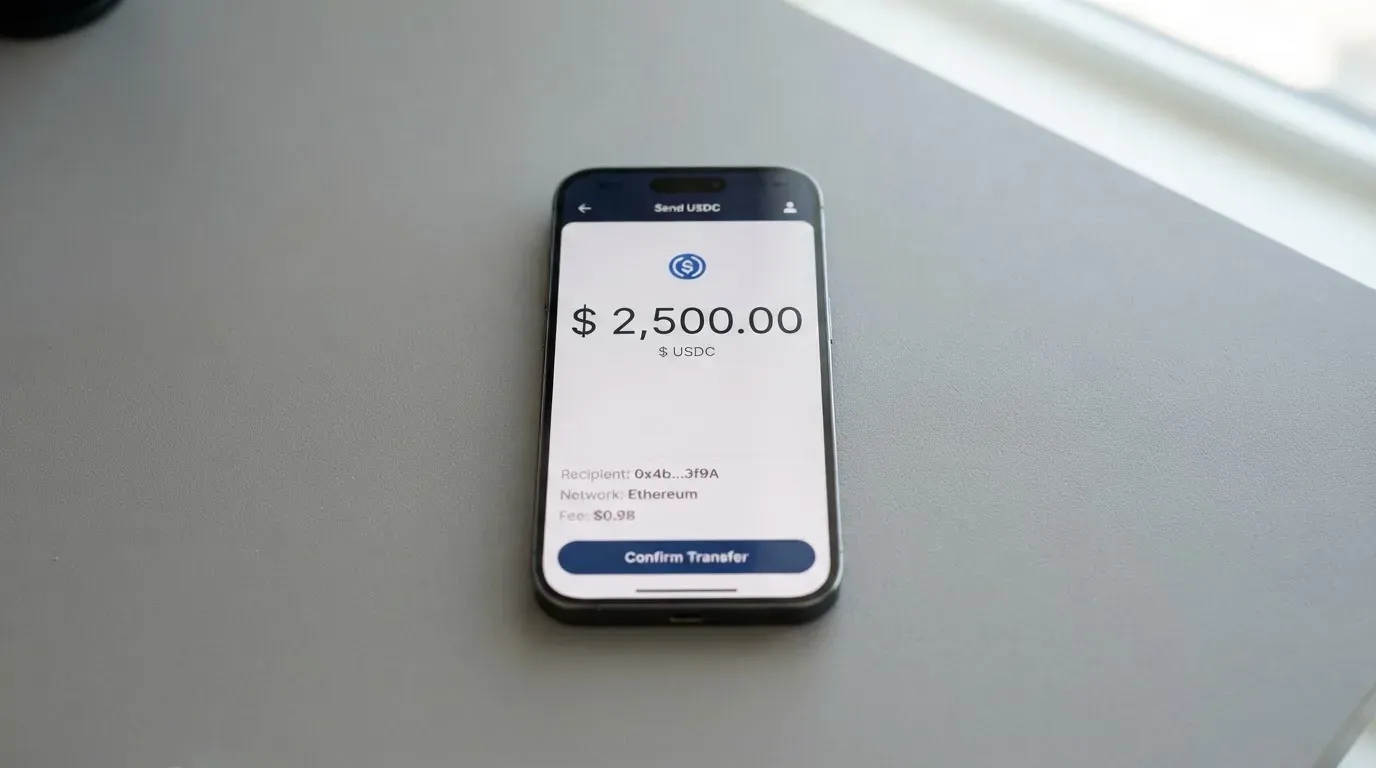
- Crypto. The coins named are BTC, ETH, EGLD, POL, BNB, SOL, DOGE, BERA, SUI. Notably, the networks are not stated, and stablecoins are not named. That second gap is the one to keep in mind if you were planning to fund the card with USDC or USDT.
- A debit or credit card. Straightforward, and it means you do not need to hold crypto at all to use this card.
- Fiat. Adding fiat, for example EUR, is free, with a minimum top-up of EUR 10.
- Buying crypto in-app. Through xMoney at 1.49%.
On limits, once again the two documents disagree. The card page gives a daily top-up of EUR 2,500 and monthly of EUR 10,000. The fees PDF, for the Standard Mint Account effective 02.07.2024, gives EUR 5,000 daily and EUR 25,000 monthly across all methods. Plan on the lower number until someone tells you otherwise. The split of limits between KYC levels is not stated, so do not assume raising your verification tier raises your ceiling in a predictable way.
Getting money back out is where the information thins out completely. Withdrawal terms are not stated. The help centre has “How do I cancel my Debit Card?”, an “xPortal Card Balance” collection, and “Locked or Closed Accounts” — titles only.
Two things about network fees, because this is where crypto card deposits are usually lost. Who pays the on-chain network fee for your deposit is not stated. And a general rule from the wider category, not specific to xPortal: network fees are charged by the blockchain, not by the card provider, and transfers are irreversible. A deposit sent on a network the provider does not support, or to an address belonging to a different network, can be lost outright or need manual recovery with no guarantee attached. Check the network in the app before you confirm a transfer, every time — the amounts involved are usually small enough that a mistake is annoying rather than catastrophic, but not always.
One more thing about stablecoins generally, since people ask: they aim to hold a steady value, but they are not guaranteed to. TerraUSD collapsed in May 2022 and USDC briefly lost its peg in March 2023 during the US banking crisis. Tether also states that it disables tokens in wallets on the OFAC sanctions list and has frozen funds tied to illicit activity. Using one as a bridge between your coins and this card means trusting something that is not a bank.
Paying with it every day
This is the strongest part of the card, and the reason I scored everyday use at 9 out of 10.
The phones and watches. Apple Wallet and Google Wallet are both supported, with the Apple Pay and Google Pay logos shown on the card page. That matters more than it sounds: tokenised mobile payments replace your card number with a device-specific number stored in the phone’s Secure Element, never on Apple’s servers, and each payment carries a one-time dynamic code. It is the single best practical defence against a card number leaking in an online shop.
Online payments. Mastercard’s identity check for online payments is built in, so a payment may ask you to approve with a code or a biometric rather than going through silently.
Rewards. Cashback is paid in $EGLD / $UTK depending on staking. The comparison table says “Up to 0,5%”, elsewhere on the same page “Up to 5% cashback” — the two figures are not compatible, and honestly I would plan on the lower one. Unofficial sources indicate that only the entry tier is live with cashback up to 0.5%, and the 5% figure belongs to tiers that are not running. Cashback in a crypto token rather than euros is worth pricing into your head: it is a bonus that moves with the market.
Merchant categories. The card page does not say which merchant category codes are blocked. The fees PDF does address the flip side — payments to high-risk merchants carry up to 3% with a EUR 1 minimum. If you expect a purchase to be refused, that surcharge is a plausible reason.
Spending currencies. Spending and limits are shown in euros. Multi-currency balances are not stated — you appear to hold one euro balance and convert at the point of use.
The app. On iOS it scores 4.8 out of 5 from 1.8K ratings, requires iPhone or iPod touch on iOS 15.1 or later, runs on Apple Vision, and is offered in 30 languages including Russian. The card page itself shows a “4.9” figure, and also lists Google Play and Huawei AppGallery; I did not read the Google Play rating.
A general expectation to set. Some shops decline prepaid or foreign-issued cards, because the merchant can look up the issuing country from the card number and decide it looks unusual. A small number of refused payments in a trip is normal for this category and is not evidence of anything wrong with your balance.
What can go wrong
Nothing has gone publicly wrong that I could find, and I want to be precise about what that does and does not mean. No complaints were found — searches returned no Trustpilot page for the xPortal card, no Reddit threads, no news reports, only unrelated results. That is genuinely reassuring and it is also thin evidence: a card that few people complain about may be a well-run card or a small one. The unofficial word, and it is only unofficial, is that slow support response times appear as a user complaint on a third-party site, and there are reports of room for improvement in the verification process and in seed phrase visibility.
Who you are actually trusting. The site footer names xPortal Labs; the terms name xPortal Equity A.G. as the operator of xPortal. The issuer, the BIN sponsor and the licences are not stated on official pages. Unofficially, the issuer is said to be Capital Financial Services S.A. (Twispay), an electronic money institution with licence IEME-RO-0001 granted by the National Bank of Romania, and the product is said to have been developed by MultiversX. That is a real, named, regulated institution rather than a shell — but it is third-party information, and the licence number is cheap for you to check against the National Bank of Romania’s own register rather than take from me.
The structural lesson behind it is worth understanding, because it applies far beyond this card. Visa and Mastercard do not issue crypto cards themselves; they license issuers and can suspend a programme. The crypto name you see is often only a programme manager or a front end. In November 2022 Visa said it had terminated its global agreements with FTX, and the FTX US debit card was wound down. In 2018 Visa suspended WaveCrest in Europe, closing all WaveCrest-issued Visa programmes. When programmes close, there is usually a notice period, then loading and spending stop, then you are asked to withdraw what is left — and getting that last step done is the part that can drag.
Custody. Whether xPortal holds your crypto, and how, is not stated. This is the question I would push hardest on, because control of crypto belongs to whoever holds the private key. A seed phrase is typically 12 to 24 words and unencrypted; anyone who gets it can restore the wallet and spend everything. Crypto transfers are also irreversible by design — a stolen key has no recovery path, because the network cannot freeze or return funds. The industry record here is not reassuring: Mt. Gox reported about US$350 million stolen between 2011 and 2014, Coincheck about US$400 million in 2018, and the Ronin Network US$625 million in 2022.
If something goes wrong with the card itself. You can freeze and unfreeze in the app — select the card, then Freeze/Unfreeze — and card settings also offer Terminate or Replace. For a lost or stolen card there is a 24/7 phone line, +40212026944. Support runs through in-app chat (Intercom), with [email protected] for KYC problems, and another help page listing [email protected]. Help centre articles on “Is my money safe?”, on how the account and card issuer keep money secure, and on changing card limits exist as titles I did not read answers to.
Disputes. A chargeback fee of EUR 20 per unjustified chargeback is the one term that will sting if you use the mechanism carelessly. The help centre covers cancelling a transaction, unrecognised transactions and duplicate charges — titles only — and another article says a transaction cannot be cancelled once initiated. Time frames are not stated.
Funds safeguarded but not banked. An electronic money institution in the EU must safeguard customer funds, by segregating them in dedicated accounts or insuring them. Those funds are not the same as bank deposits and may not be covered by a deposit guarantee scheme. Read that as: this is e-money, and the protection is a different kind of protection.
Taxes, briefly. In the US the IRS treats digital assets as property, so exchanging them for goods, services or dollars generally produces a taxable gain or loss, measured in local currency at the value on the date of the transaction — which can make each card payment a separate disposal. I am not giving you tax advice and this is not advice at all; it is a reason to check with someone qualified in your own country before you run volume through this card.
What to take instead
Three alternatives came up repeatedly, and they fail in different ways than xPortal does.
| Alternative | Score | Who it is for | Main catch |
|---|---|---|---|
| MetaMask | 7.1 / 10 | 45 listed countries, spending straight from your own wallet on Linea, Base, Monad or Solana | Metal card costs $199/year; US and UK sign-ups temporarily closed |
| KAST | 6.1 / 10 | Stablecoin balances, USD spending, generous stated cashback | Premium is $1,000/year and Private $10,000/year; country list unpublished |
| TokenPocket | 5.8 / 10 | Simple crypto-to-card spending, virtual cards only | A 1% fee on crypto deposits into the card; Americas “planned for Q2 2025” |
MetaMask is the strongest of the three at 7.1, and it is the one to look at first if your priority is not touching your keys. Sign-up is open in 45 listed countries and territories — Andorra, Argentina, Brazil, Canada, Mexico, Germany, France, Spain, Uruguay among them — with other regions on a waitlist; proof of residency is required, and the useful detail is that “ineligible regions limit sign-ups, not spending”. It is a Mastercard, virtual first and instantly, with metal pre-orderable after approval, one card per user, issued by Monovate with Crypto Life as card provider. Fees are described as a “minimal fee for each transaction” with no amount stated on the pages read, no additional MetaMask fees, and no foreign transaction fee — the Mastercard rate is used. Cashback is 1% on Virtual in mUSD; on Metal the headline is 3%, but the footnote limits 3% to the first $10,000 spent and 1% after that.
KAST is the one with the most interesting fee sheet. It runs Visa Platinum, Infinite metal and Infinite gold, up to 10 cards. Stablecoin top-up 0%, USD card spend 0%, transaction fee 0%, Apple and Google Pay 0%. The non-USD FX fee is 0.5%–1.75% depending on your country of residence, the transaction country and the card programme; non-USD transactions under $25 cost $0.10; a declined transaction costs $0.50. Cashback is 1.5%, 2% or 3% on the first $2,000, $10,000 or $40,000 a month. What stops most people is the membership: Standard is free, but Premium is $1,000 a year and Private $10,000 a year, billed annually upfront. Also worth knowing: its terms say acceptable tokens are “currently USDT and USDC” while the app lists PYUSD and RLUSD too, and its country list is not published — it only says that if your country is not shown at KYC, it is not available there.
TokenPocket is the simplest. A Visa debit for a list of European countries and territories and a Mastercard debit for Australia, Canada, Hong Kong, Japan, Taiwan, New Zealand, Singapore, South Korea and the UK, among others. It runs on Arbitrum, the cards are virtual with no physical card mentioned, and balances are in EUR24 and USD24. Apart from an NFT creation fee of which TokenPocket covers part, “TP Card does not charge any additional fees”. The catch is a 1% fee on depositing cryptocurrency into the card, which is said to be refunded later through rewards or reduced transaction fees — refund later is not the same as not paying now.
Who I would recommend it to
I would recommend this card to three kinds of person, in this order.
If you already hold EGLD and live in the EEA, this is close to the obvious choice. You convert once, you hold euros, you pay. The 1.49% crypto purchase fee and any conversion cost are the price of that convenience, and against 9-out-of-10 everyday usability it is a fair price.
If you are blocked from a normal bank card and you are in the EEA, this is a legitimate tool, not a workaround — issued by a licensed e-money institution under a real licence, with KYC done properly rather than skipped. Just be clear-eyed that it is prepaid, not credit, and that you are banking on an e-money institution rather than a deposit guarantee scheme.
If you want to spend stablecoins day to day, look at KAST first. Its stated zero fees on USD spending are hard to argue with, even though the free tier is the only affordable one and its country list is unpublished.
Who I would steer away: anyone outside the EEA guessing at their eligibility; anyone planning large balances whose comfort depends on deposit-guarantee protection; and anyone who needs to know exactly what currency conversion they will get, because this card’s own pages do not tell you with confidence. The honest summary is that xPortal does the payments part of the job about as well as anything in this category, and does the explaining part noticeably worse.
Frequently asked questions
What is the xPortal card?
The xPortal card is a Mastercard Debit you spend from a balance you load yourself, mostly with crypto such as EGLD, BTC, ETH, SOL or BNB. Issuing is free. You can hold virtual cards in the app or order a physical one, and add either to Apple Wallet or Google Wallet. It is operated by xPortal Equity A.G., and it is a prepaid-style product, not a bank account.
How does the xPortal card actually work?
You convert or top up a euro balance, then the card spends that balance directly. Because it spends only what is loaded, it cannot overdraw. Card payments themselves are free; the costs sit in buying crypto at 1.49%, a currency fee capped at Maximum 2.5% when you spend outside the euro area, and cash withdrawal fees above EUR 200 a month.
Does the xPortal card require KYC?
The card’s own pages do not say what checks apply, and that is a real gap. Unofficial sources describe full KYC before issuance, including ID verification and proof of address. What is clear is that EU rules require name, address, date of birth, nationality, identity documents, a sanctions check and a politically-exposed-person check. If you cannot complete it, the issuer must withhold.
Can I use the xPortal card in my country?
The card does not publish an eligibility list or country list — that is not stated anywhere on its public pages. Unofficially it is said to serve 29 EEA countries, with Canada, Iran, North Korea, Switzerland, the UK and the US restricted. The safest test is to install the app and see what it offers you before reading anything else.
How much does the xPortal card cost?
Issuing is free and card payments are free. Delivery is priced at EUR 5.99 for Romania and EUR 9.99 internationally on the card page, while the fees PDF prices the first physical card at EUR 9.99 plus EUR 5.99 or EUR 12.99 delivery. Free cash withdrawals stop at EUR 200 a month, then 2% plus EUR 1 applies.
What are the xPortal card’s fees and limits?
The card page gives daily spending of EUR 5,000, daily top-up of EUR 2,500 and monthly top-up of EUR 10,000. The fees PDF says daily spending has no limit and daily and monthly top-ups are EUR 5,000 and EUR 25,000. ATM withdrawals cap at EUR 500 per day and EUR 2,500 per month, and the minimum top-up is EUR 10.
How do I top up the xPortal card?
Four ways: send BTC, ETH, EGLD, POL, BNB, SOL, DOGE, BERA or SUI; top up by debit or credit card; add plain fiat such as EUR for free; or buy crypto in-app at 1.49%. Networks and stablecoins are not named on the page, so check which network the app expects before transferring.
Is the xPortal card safe?
No public complaints surfaced in my checking, and the App Store rating was 4.8 out of 5 on 1.8K ratings. But that is thin reassurance. The issuer and licences are not stated officially, unofficial reporting names Capital Financial Services S.A. (Twispay), EMI licence IEME-RO-0001, and how your crypto is custodied is not stated either.
Does the xPortal card have cashback?
Yes, paid in $EGLD or $UTK depending on staking — but the card’s own page contradicts itself, showing both “Up to 0,5%” and “Up to 5% cashback”. Unofficially only the entry tier is live with up to 0.5%, and the 5% belongs to tiers not running. Plan on the lower figure and check what your own tier shows.
Is the xPortal card worth it?
For EEA residents paying with EGLD and other coins, yes: free issuance, free euro spending, good mobile wallet support and a EUR 200 monthly free ATM allowance. Weigh it against the FX cap of 2.5%, the contradictions between the card page and the fees PDF, and the absence of any published country list — and hold it as one card among several, with only an amount you can afford to have tied up.
Choosing a wallet card – cryptocardadvisor
Content created by the «cryptocardadvisor» team