
A self-custody crypto card that lets you spend from your own wallet, with limits and trade-offs you should know in advance
 Available in US

The XHYPE card is a prepaid crypto card that draws on a balance held inside the XHYPE Superwallet, a self-custody web app. The wallet, not a custodial account, holds the crypto; the card is loaded from it. That combination of self-custody and a payment card is unusual in the category and is the single biggest reason to look at XHYPE in the first place, but it also comes with limits, gaps in published information and a few unofficial fee numbers worth understanding before you commit.
Conditions on this page are current as of October 28, 2026.
Verdict
XHYPE earns 7.0 out of 10 in this review. The score reflects a card that scores very well on who can get it, on top-up options and on everyday use, but lands in the middle on cost and pulls down hard on reliability and complaint visibility. Here is how the criteria break down.
| Criterion | Mark | Why it scored that way |
|---|---|---|
| Who can get it | 9 / 10 | Ordered from 203 countries and territories, eligibility depends on residence and nationality |
| Cost | 5 / 10 | Official plans from $10 to $70 a year, top-up fees 2.1% to 1.2%, but FX fee is not published; unofficial sources list much higher prices |
| Top-up options | 9 / 10 | USDT, USDC or the native coin across BNB Smart Chain, Ethereum, Base, Polygon and Arbitrum through the Superwallet |
| Reliability and complaints | 4 / 10 | Cards are issued by an unnamed third party, a 2025 recharge disruption is documented by users, and only a small public review footprint exists |
| Everyday use | 9 / 10 | Virtual card on all plans, physical on Premium and Whale, Apple Pay and Google Pay everywhere, $1,500 ATM daily limit |
The card suits self-custody wallet users who want a virtual and (on higher plans) physical card that can be topped up with stablecoins or native coins. It does not suit someone looking for cashback, someone who needs an FX fee stated in advance, or anyone who is uncomfortable with a card programme where the issuer is not named on the public page.
Who can get the XHYPE card
The card is marketed to be ordered from 203 countries and territories, and eligibility is decided by country of residence and country of citizenship at the time of application. The terms go further and say that use is prohibited “in jurisdictions where such services are restricted”, which is a softer way of saying that a country being on the application list does not by itself guarantee the card will work from inside it.
A third-party profile dated August 2026 lists 184 countries as available, with nine explicitly closed: Afghanistan, Cuba, Iran, North Korea, Somalia, South Sudan, Sudan, Syria and Yemen. That list is not in the XHYPE terms and should be treated as unofficial until XHYPE publishes the same set, but it is consistent with the wider pattern of sanctions-based restrictions in the category and is a useful cross-check if your country of residence is somewhere at the edge of that list. If you live in a country that is technically open but your citizenship is on a restricted list, treat the application as likely to be refused at KYC rather than after.
The Terms also say you must be at least 18. Proof of address is not stated, and the precise document list is not stated either, which I will come back to in the signup section. If you are a dual national, the rule that matters is usually the citizenship you hold, not the one you live under, so plan for the stricter of the two.
Signup and KYC
Sign-up runs through the web app at superwallet.xhype.io. There is nothing to download from an app store, which is a small but real upside if you do not want to install yet another mobile application or cannot install one (some corporate phones block finance apps).
The process itself follows the standard pattern for the category. You create an account in the web app, run through identity verification, choose a plan, deposit crypto into the Superwallet and then load the card. Identity verification is described as “Private KYC” handled by Verinex, with XHYPE itself receiving only the outcome of the check rather than the underlying documents. That design is a privacy plus compared with crypto cards where the brand and the KYC vendor are the same company holding your ID scans, but it does not remove the legal duty to verify you, and a sanctions or PEP hit will still block the account.
The Terms state that identity verification happens and that you must be 18 or over. They do not list the specific documents you will be asked for, do not publish processing times and do not state what counts as grounds for rejection. Two third-party sites give opposite pictures: cryptocards.so (2026) says “No KYC”, while CryptoCardHub (August 2026) says routine ID checks are not advertised at signup but every deposit is screened for AML and flagged funds may be rejected. The most likely reality is somewhere between those, with light checks on sign-up and heavier, transaction-level checks later.
The plan you pick matters at this stage, not later. The Essential plan issues one virtual card and is the cheapest to enter. Premium adds a physical card alongside the virtual one. Whale adds a second virtual card on top of that and is the only plan that lifts the annual load to a level that would suit a heavy spender. There is no public mention of being able to upgrade mid-year with a prorated fee, so treat plan choice as a one-way decision for the year unless support tells you otherwise.
A practical point worth raising because the reader is the one who will sit with it: the virtual card on the Essential plan is delivered instantly. The physical cards, on Premium and Whale, take about 15 days after you enter a correct shipping address. The Terms do not state which countries they ship to, what the shipping cost is or what a replacement costs if the card is lost, so a reader who needs a physical card urgently should write to support first and confirm before paying the plan fee.
Fees and what they actually cost
The plan structure is the headline. The card has three plans and the price, the cards you get and the top-up fee all move with the plan you pick.

| Fee or limit | Essential | Premium | Whale |
|---|---|---|---|
| Annual fee | $10 / year | $58 / year (or $118 for 3 years) | $70 / year (or $148 for 3 years) |
| Cards | 1 virtual | 1 virtual + 1 physical | 2 virtual + 1 physical |
| Annual load limit | $50,000 | $250,000 | $1,000,000 |
| Top-up fee | 2.1% | 1.8% | 1.2% |
| ATM limit | — | $1,500 per transaction, $1,500 per day, 30 ops per day, $15,000 per month | Same as Premium |
| FX fee | Not stated | Not stated | Not stated |
| ATM fee | — | Not stated | Not stated |
A few things from that table deserve more than a glance.
The official plan fees are low compared with most of the category. $10 a year for a virtual card, $58 for Premium and $70 for Whale are entry prices that sit below the metal-tier cards on MetaMask or the mid-tier on KAST. The top-up fees, at 2.1%, 1.8% and 1.2%, are in the middle of the range, neither the 0% you see on stablecoin-only cards nor the higher percentages you see on some custodial programmes. For a moderate spender on the Premium plan, a $1,000 top-up costs $18 and that is the full top-up cost. There is no separate spending fee that I could find in the published materials.
The unofficial numbers, however, are much higher. CryptoCardHub (August 2026) lists Essential at $108 a year, Premium at $228, Whale at $588, with reload fees of 4.5%, 3.5% and 2.3% and auto-renewal as the default. Those numbers conflict directly with the official site and may reflect an older price list or a regional storefront, but they are also the only second source of plan prices and they illustrate how far apart official and unofficial pricing can be in this category. The safe move is to treat the official site as authoritative for what you will pay on day one, write the price into a note, and check the renewal amount in your account on the day renewal runs.
The foreign-exchange fee is the single most important gap. XHYPE’s official page does not publish an FX markup, which is a real problem for any reader who plans to spend in a currency other than USD. If you are paying in euros, pounds or any non-USD currency, the network or the issuer will apply a conversion, but the percentage is not on the page. CryptoCardHub says the FX fee is described only as a “standard fee” with no percentage, so even the third-party sources have not pinned it down. Before you load the card for a trip, write to support and ask for the current FX markup on your currency. If the answer is not a number, treat the card as expensive for FX and compare with a card that publishes the rate.
The ATM fee is the other open item. The card works at ATMs on Premium and Whale, with a $1,500 per-transaction and per-day limit, 30 operations per day and a $15,000 monthly cap. The per-withdrawal fee is not stated. ATM operators also charge their own fee, and that is separate.
For three everyday payments, this is what fees apply:
- Buying coffee in the US with USD loaded from a USDT top-up on Essential: 2.1% top-up fee, no FX fee because the spend is USD. The cost of the top-up, not the spend, is the only fee in the round trip.
- Buying a hotel in Europe on Premium, paying in euros from a USDC top-up: 1.8% top-up fee plus an FX fee that is not published. The FX fee is the variable you cannot size without asking support.
- Withdrawing $300 from an ATM on Whale: a 1.2% top-up fee on the load, the per-withdrawal fee not stated, and the ATM operator’s own fee on top.
The conversion fee is charged when you load the card, not when you spend. That is worth keeping in mind if you load small amounts often: the 2.1% (or 1.8% or 1.2%) compounds with every load.
Top up
Topping up the XHYPE card is a two-step process: you deposit crypto into the Superwallet, and then you load the card from the wallet balance. The wallet itself is self-custody, which means you hold the private key and the funds sit in your own wallet until the moment of loading. The card balance is held by the card issuer, not by the wallet.
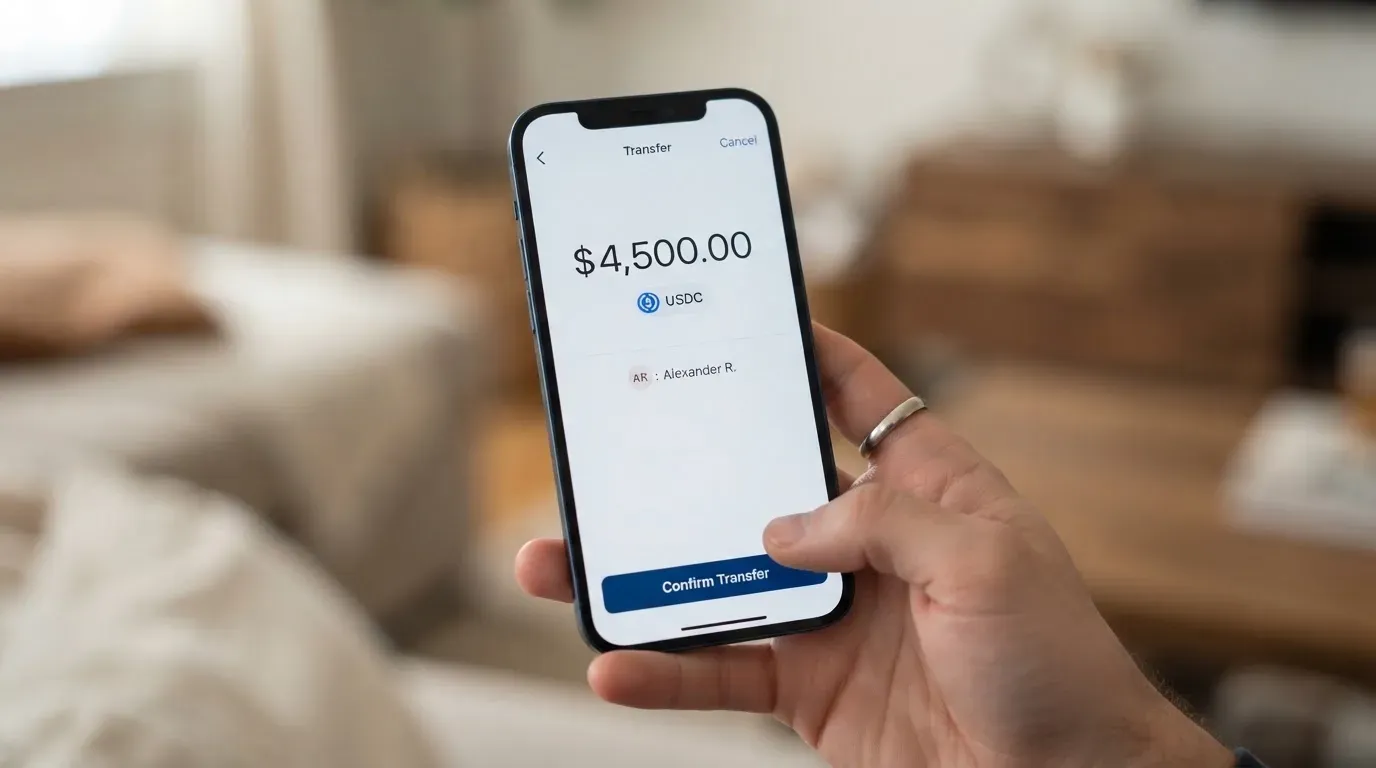
The official page lists the supported tokens as USDT, USDC or the native coin of the network you are depositing on, and the supported networks as BNB Smart Chain, Ethereum, Base, Polygon and Arbitrum. That is a wider network list than most crypto cards, and the inclusion of Base and Arbitrum, both of which are cheap to use, matters because the network fee is on you, not on the card provider, and a reader depositing from those networks will pay cents in gas rather than the dollars you would pay on Ethereum mainnet.
CryptoCardHub (August 2026) gives a much narrower picture, saying only USDT is supported, and only on Tron (TRC20) and BNB Smart Chain (BEP20). That description conflicts with the official list and is also internally inconsistent with the wider crypto-card market, where USDC is widely available. The official list is the safer reference; the unofficial list is useful only as a reminder to check the live app before sending funds, because the supported set is something the provider can change at any time.
A few practical points the reader should check before the first deposit.
The minimum deposit is not published. A user guide cited by CryptoCardHub mentions $15 USDT as a minimum (an unofficial figure not confirmed by the official site), but the official site does not. Send a test amount first and only send the full amount once the test lands.
There is no fiat top-up listed, which is a real constraint if you do not already hold crypto. XHYPE is not a way to spend a bank balance directly; it is a way to spend a crypto balance.
You can also pay for gift cards and eSIMs in crypto through the same Superwallet. Those are not card loads, they are direct crypto payments for non-card products, and the fees for them are not described in the card materials.
Network fees, which is the gas you pay to send USDT or USDC, are paid by you on the source network and on top of the XHYPE top-up fee. On Ethereum that can run several dollars per transaction; on Base, Polygon or Arbitrum it is usually cents. The card does not refund the network fee, so choose a network with a low fee for the size of transfer you are making.
Because transfers are irreversible, an address mistake or a wrong network can lose the funds. Send a test, confirm the wallet shows the balance, then send the rest.
Paying with it every day
Once the card is loaded, day-to-day spending is the strong part of the package.
Every plan, including Essential, gives you a virtual card that you can add to Apple Pay and Google Pay. The Premium and Whale plans add a physical card that also works with both mobile wallets. That means the worst-case scenario, an internet outage, a lost card or a phone dying, is partly covered: you have a card and a wallet backup.
ATM use is supported on the Premium and Whale plans through the physical card. The daily limit is $1,500 per transaction and per day, with a 30-transaction daily cap and a $15,000 monthly cap. A small withdrawal to test the card is a sensible first step because ATM behaviour varies by country and by bank, and the only way to know whether your local ATM accepts the card is to try.
A small set of details is not in the public materials and is worth raising because it is the kind of thing that bites in real use.
There is no published list of blocked merchant categories. Most cards in this category block gambling, and many block crypto-related merchants to stop the card being used to top up another crypto card. XHYPE does not publish its blocked list, so a reader who plans to use the card at a sensitive merchant type should ask support first.
There is no cashback. CryptoCardHub lists “no cashback” and confirms that with welcome credit and XTraveler points as a separate incentive structure, but those are not the same as a percentage back on every purchase. If a published cashback rate matters to you, this card does not currently offer one.
The web app has no App Store or Google Play rating because it is a web app rather than a native app. That is a small plus for portability (you can open it on any browser) and a small minus for the kind of polish a native app usually offers. The interface is what you get.
Refunds, disputes and chargebacks are not described in the Terms. A reader who has a problem with a merchant will not find a published process for resolving it on the XHYPE page. In practice, the card issuer is the only party that can move funds back, and the issuer is unnamed, so write to support early if a problem appears.
A few general points from how cards in this category behave are worth keeping in mind. A small authorisation hold can be placed on the card at the time of payment, and that hold can stay on the balance for several days even if the merchant releases it promptly. Online payments can trigger a 3-D Secure step that asks for a one-time code, and if the card’s phone number is wrong or the messaging fails the payment will decline. Address Verification System checks, which compare the numeric part of the billing address to the card’s records, are mostly a US/Canada/UK thing and can cause declines for cards issued in other countries.
What can go wrong
The reliability story is the weakest part of the package and the reason reliability scores 4/10 in the verdict.
The first issue is structural. XHYPE FZCO is registered in Dubai Silicon Oasis, and the Terms say, in plain language, that XHYPE is “not a card issuer” and that the cards come from an unnamed independent third-party issuer. That means the legal entity that takes your money and the legal entity that issues the card are different, and the issuer’s name, regulator and country of incorporation are not on the public page. CryptoCardHub (August 2026) says the issuer is a licensed provider in jurisdictions including Hong Kong, but that is third-party reporting, not an XHYPE statement, and “including Hong Kong” is a non-specific phrase. If the issuer’s identity matters to you, write to support and ask, then decide.
The second issue is a documented disruption. CryptoCardHub, in a page updated 9 August 2026, reports a June to July 2025 disruption to HKD Visa recharge and spending, later marked resolved with balances reportedly refunded. HKD Visa is the Hong Kong dollar Visa programme the third-party source describes, and the description does not say which XHYPE plan or user segment it affected. XHYPE’s own site has no incident notice I could find. The themes the same source draws from user feedback, high combined costs, AML-related restrictions, refunds missing for months and slow support, are the themes that always show up in the category when a card programme hits trouble, and the small public review footprint of the card means you cannot easily triangulate.
The third issue is the public review footprint itself. KYCnot.me, an independent review site, holds about 2.9 out of 5 from 7 ratings. There is no Trustpilot page for XKard, the search result that does appear is for xkode, which is a different service. There is no Reddit thread that I could find. That is a small number of reviews on a single site, and small samples can be misleading in either direction, but it is also the only number available, and a number that low on a privacy-oriented review site is something to take seriously.
The fourth issue is around custody. The Superwallet is self-custody, which is a real plus for users who want to control their own keys, and you can export the private key to a wallet such as MetaMask or Trust Wallet. The flip side of self-custody is the usual one: lose the key, lose the funds. Phishing, clipboard-hijacking malware that swaps a copied address and seed-phrase theft are all on the user, not on XHYPE. The card balance is held by the card issuer, and that balance is a separate pool from the wallet; if the issuer has problems, the wallet funds are not necessarily at risk, but the funds loaded onto the card are.
The fifth issue is support. Help is offered 24/7 in English and Spanish on Telegram only, at @xhype_support. Telegram is fine for fast questions but is not a regulated support channel; transcripts are not guaranteed, and identity verification through Telegram is not the same as identity verification through a regulated portal. If a dispute ever needs to go formal, the Terms point to UAE law and Dubai courts, which is a long way for most readers.
A few other open items: 2FA, card freeze, spending controls and proof-of-address handling are not described in the public materials. AML and sanctions screening are real, and a flagged deposit can be rejected. The Terms were last updated on 4 June 2025, and the gap between that date and any future application is the kind of detail that a regulator would notice and a customer should.
What to take instead
Three cards are useful comparisons. None of them is a perfect substitute for XHYPE, because the self-custody-plus-card combination is rare, but each one trades XHYPE’s strengths for a different set of strengths.
| Card | Score | Best for | Big trade-off versus XHYPE |
|---|---|---|---|
| TokenPocket (TP Card) | 5.8 / 10 | European and Asia-Pacific users who already use the TokenPocket wallet on Arbitrum | Limited country list, fiat24 cards are virtual only, no physical card, NFT creation fee on top of usage |
| MetaMask Card | 7.1 / 10 | Readers inside the 45 supported countries who want cashback and Metal design | Closed waitlist outside the listed countries, US/UK sign-ups paused, $199 a year for Metal, one card per user |
| KAST | 6.1 / 10 | Heavy stablecoin spenders who want 0% stablecoin top-up and up to 10 cards | High annual fees on Premium ($1,000) and Private ($10,000), residency-based KYC that is closed in unlisted countries, monthly inactivity fee |
TokenPocket’s TP Card runs on Arbitrum, offers a Visa debit card in a list of European countries and a Mastercard debit card across Australia, Canada, Hong Kong, Japan, Taiwan, New Zealand, Singapore, South Korea and the UK, with the Americas “planned for Q2 2025”. The card is virtual only, balances sit in EUR24 and USD24 stablecoins, and the published fees are a 1% crypto deposit fee (the page says it is later refunded through rewards) and no other additional fees. The trade-off is that TokenPocket does not publish the NFT creation fee amount and the country list is narrower than XHYPE’s.
MetaMask Card is the closest in spirit, because it spends directly from a connected wallet rather than from a custodial balance. The card is Mastercard, virtual is free, Metal is $199 a year, and cashback is paid in mUSD: 1% on Virtual and a headline 3% on Metal, with the fine print reducing Metal to 1% after the first $10,000 spent. MetaMask is open in 45 listed countries and territories, others join a waitlist, and US/UK sign-ups are temporarily closed per the FAQ. Networks supported for spending are Linea, Base, Monad and Solana, with mUSD, wETH, EURe, GBPe, USDC and USDT among the named tokens. The trade-off is the country list and the fact that there is only one card per user.
KAST is the heaviest of the three by spend capacity and the most expensive. The plan structure is Standard at $0 a year, Premium at $1,000 a year and Private at $10,000 a year, all billed annually upfront. Top-up in stablecoins is 0%, spending in USD is 0%, and non-USD FX is 0.5% to 1.75% depending on country and card. The blocked-list and fee transparency story is much better than XHYPE’s, but the residency-based KYC and the high-end annual fees put it in a different bracket.
For a reader who cannot get a bank card, the realistic decision is between staying with XHYPE for the self-custody angle, switching to MetaMask Card if their country is on the supported list and they want cashback, or going to KAST if they will spend enough to amortise the annual fee and want a published FX number.
Who I would recommend it to
I would recommend XHYPE to a reader who already lives inside a self-custody wallet, who wants to spend stablecoins or native coins through a card, and who is comfortable with a few unknowns: an unnamed card issuer, a published top-up fee, an unpublished FX fee, an app that is a web app rather than a native one, and a small public review footprint.
I would not recommend it to a reader who needs a published FX fee before they apply, who needs cashback, who needs a large and visible review base, or who needs the card issuer to be named on the front page of the issuer’s site. I would also pause before recommending it to a reader whose country of residence is at the edge of the unofficial 184-country list: confirm with support that your specific combination of residence and citizenship is accepted before you pay the plan fee.
If you do decide to apply, the practical steps are: confirm your country is open, sign up at superwallet.xhype.io, run through KYC, pick the smallest plan that meets your need, send a small test deposit on a cheap network (Base, Polygon or Arbitrum), confirm the wallet balance, then send the rest. Load the card, add it to Apple Pay or Google Pay on day one, and make a small real-world payment to confirm the round trip before you rely on it for larger amounts.
Frequently asked questions
What is the XHYPE card?
The XHYPE card is a prepaid payment card that draws on a balance inside the XHYPE Superwallet, a self-custody web app. Crypto is deposited into the wallet, the card is loaded from the wallet and the card is then used like any other prepaid card at merchants, online, in mobile wallets and at ATMs on Premium and Whale.
How does the XHYPE card work?
You create an account at superwallet.xhype.io, complete KYC through Verinex, pick a plan, deposit USDT, USDC or a native coin on BNB Smart Chain, Ethereum, Base, Polygon or Arbitrum, then load the card from the wallet. Spending is from the loaded balance; the card is prepaid, not credit, and cannot overdraw.
Is XHYPE a bank?
No. XHYPE FZCO is a Dubai-registered company that operates the wallet and the card programme, and the Terms explicitly say “We are not a card issuer”. The cards are issued by an unnamed independent third-party issuer, so the licensed entity that issues the card is different from the company whose brand is on the front.
Is the XHYPE card available in my country?
The card is marketed to be ordered from 203 countries and territories, with eligibility decided by country of residence and country of citizenship. A third-party profile lists 184 countries as available and 9 as restricted (Afghanistan, Cuba, Iran, North Korea, Somalia, South Sudan, Sudan, Syria, Yemen), but that list is not in the XHYPE Terms and should be treated as unofficial.
How do I apply for the XHYPE card?
Sign up in the web app at superwallet.xhype.io, complete identity verification, choose a plan, deposit crypto and load the card. The virtual card is delivered instantly, and the physical card on Premium and Whale takes about 15 days from a correct shipping address.
Does the XHYPE card require KYC?
Yes. KYC is described as “Private KYC” and is run by Verinex, with XHYPE receiving only the outcome. A third-party source says routine ID checks are not advertised at signup but every deposit is screened for AML and flagged funds may be rejected, which is the most likely description of how the process actually works.
How do I top up the XHYPE card?
Deposit USDT, USDC or the native coin into the Superwallet on BNB Smart Chain, Ethereum, Base, Polygon or Arbitrum, then load the card from the wallet. Network fees are paid by you on the source chain, and the top-up fee (2.1% on Essential, 1.8% on Premium, 1.2% on Whale) is charged when you load.
How do I add the XHYPE card to Apple Wallet or Google Pay?
Add the virtual or physical card to Apple Pay or Google Pay from the wallet app on your phone. Both mobile wallets are supported on all plans and on all card types, virtual and physical, and the device-specific token means the real card number is not stored on Apple’s or Google’s servers.
Is the XHYPE card safe?
The wallet is self-custody, with 2FA, freeze and spending controls not described in the public materials. The card balance is held by the unnamed third-party issuer and is a separate pool from the wallet funds. A third-party review site holds about 2.9 out of 5 from 7 ratings, the Terms do not describe a dispute or chargeback process, and a 2025 recharge disruption has been reported by users; these are the factors to weigh against the self-custody upside.
Is the XHYPE card worth it?
Worth depends on what you are comparing it with. If self-custody and a low entry price are your priorities and you can live with an unnamed card issuer, an unpublished FX fee and a small public review base, the card is competitive at $10 to $70 a year with mid-range top-up fees. If cashback, a published FX number or a large public review base matters to you, MetaMask Card or KAST will be a better fit.
Choosing a wallet card – cryptocardadvisor
Content created by the «cryptocardadvisor» team