
The Whop card is a payout tool for sellers, not a general bank card
 Available in US
The Whop card is a Visa card that spends from your balance on the Whop platform. That single sentence explains most of what you need to know before you sign up for anything: this is not a general-purpose bank card you can load from your own bank account and use anywhere for years. It is a Visa card attached to a marketplace where people sell things — courses, memberships, digital products — and get paid. The card exists so that a seller whose earnings sit on Whop can spend those earnings without waiting for a bank transfer to arrive. If that is your situation, this card was built for you. If it is not, you are reading a page about a tool you will use maybe twice.
I scored it 5.2 out of 10. That is a middling score, and it reflects a specific pattern: the card’s mechanics are simple and modern, and the things that are hard to judge — who issues it, what it costs, what currencies it holds, how the backing works — are not published on the card’s own pages. I did not find figures I could not use. Where the card’s public documentation stays silent, I say so below rather than filling the gap.
The conditions described here are current as of October 28, 2026.
Verdict: 5.2 / 10, built for sellers and almost nobody else
The score is not a punishment for the card being bad. It is a judgement that a card you cannot price is a card you cannot decide about. Whop’s own page says “No extra fees” and then does not list a single number — no issuance cost, no monthly cost, no conversion or foreign-exchange fee. A card that declines to state its prices may genuinely be cheap, or it may simply not have published them yet. You cannot tell which from the public pages, and that uncertainty is what costs it points.
The other thing that shapes the score is who the card is for. Eligibility is US-only: 31 states for consumers, 41 for businesses. The list of states is not the whole US, which matters more than it might sound — if you are in one of the missing states, the card is simply not for you, and no amount of wanting it changes that. A further 18 countries are listed as unsupported for consumers, and Russia and Belarus are named among the unsupported corporate countries. The card’s documentation does not state whether eligibility runs on citizenship or on residence, so I cannot tell you whether a US citizen living in Lisbon qualifies. Ask.
Here is the score broken down.
| Criterion | Mark | Why |
|---|---|---|
| Who can get it | 7 / 10 | Consumers in 31 US states, businesses in 41; 18 named countries unsupported, including Russia, Belarus, China, India, Turkey, Ukraine, Vietnam; other countries not named as unsupported |
| Cost | 5 / 10 | Page says “No extra fees” — no issuance, maintenance or conversion amounts given |
| Top-up options | 4 / 10 | Spending comes from the Whop balance; starting data points to stablecoin collateral from a linked wallet; coins and networks not disclosed |
| Reliability and complaints | 4 / 10 | Whop Inc. named; the card programme runs on Rain; issuing bank and licences not named; unofficial: 3,052 platform reviews on Trustpilot, with complaints about frozen payouts, account blocks and unreturned money |
| Everyday use | 5 / 10 | Visa, adds to Apple Wallet and Google Wallet; no ATM by default, $250 per transaction when enabled; virtual or physical not disclosed |
Total: 5.2 / 10.
Who this suits: a seller based in the United States, in a covered state, earning on Whop, who wants to turn a balance into everyday spending without a bank transfer in between. Who it does not suit: anyone outside the US, anyone in an unsupported country, anyone who needs an ATM, anyone who needs to know what a payment costs before they make it, and anyone who plans to load the card with savings.
Will they give you the card?
Consumers: yes, in 31 US states. Businesses: yes, in 41. The consumer list is Alabama, Alaska, Arkansas, California, Colorado, Connecticut, Florida, Hawaii, Illinois, Indiana, Iowa, Kansas, Kentucky, Maine, Massachusetts, Michigan, Minnesota, Montana, Nebraska, New Hampshire, New Jersey, New York, North Carolina, Oklahoma, Pennsylvania, South Carolina, Texas, Utah, Virginia, West Virginia, Wyoming. Business adds ten states to that list. That asymmetry is the first hint of the card’s real audience — a larger business presence, which is consistent with the card existing for working sellers.
Countries where consumers are not supported: Belarus, China (Mainland), Cuba, Hong Kong, India, Iran, Iraq, Israel, Myanmar, Nepal, Nicaragua, North Korea, Russia, Syria, Turkey, Ukraine, Venezuela, Vietnam. Unsupported corporate countries include Russia and Belarus.
Two things are not stated and matter. First, whether the test is citizenship or residence. Second, whether other countries are simply unlisted rather than refused — the documentation names the countries it blocks and does not describe a default position for everyone else. If you are reading this outside the United States, the honest answer is that the card’s own pages do not tell you whether you qualify, and you should ask Whop directly rather than reading anything into silence.
There is also a KYC question people search for constantly, and here the answer is genuinely not stated: the card’s documentation does not mention identity checks at all. That is unusual. Nearly every card described in this category works under a KYC regime, and nearly every provider publishes something about it. Here the answer to “does Whop card require KYC” is that the public card documentation does not say. Practically, you should expect to be asked for identification at some point and not treat its absence from a webpage as an absence in practice.
How to get it
The signup path is the shortest part of this. Cards are created from a Whop account in seconds — there is no application form to fill out, no waiting list, no branch. That is a real advantage over cards that take a week to arrive, and it is the reason the card can plausibly be used the same day a payout lands.
What you get is a Visa card that works anywhere Visa is accepted, online and in stores. That is the entire promise, and it is a useful one: no need to think about which network, no need to check whether a particular shop takes it.
Several things are not stated. Whether the card is virtual or physical is not stated, and neither is the currency the card is denominated in. Delivery timelines are not stated. Whether there are different verification levels is not stated. Cards can also be issued to team members, which matters if you run a business account and want colleagues to spend from it — but the mechanics of that are not documented in the way you would want.
So the honest summary of getting this card is: fast, easy, and thin on detail. If you need to know when a physical card will arrive in your mailbox, or what currency your balance sits in, you will not find it here.
Fees: what a payment really costs
The costs table is where this card is weakest. Whop’s page says “No extra fees”. Beyond that sentence, there are no numbers. No issuance amount, no monthly amount, no conversion fee, no foreign-exchange fee. I am not going to invent any.
| Item | What the card publishes |
|---|---|
| Card issuance | Not stated — page says “No extra fees” only |
| Monthly fee | Not stated |
| Conversion fee | Not stated |
| Foreign exchange fee | Not stated |
| ATM fee | Not stated; ATM withdrawals unavailable by default |
| ATM per-transaction cap | $250 when enabled; more than 3 attempts in 24 hours blocked |
| Custom spending limit | Per-card, adjustable |
| Per-transaction cap, gaming | $2,000 |
| Per-transaction cap, advertising services | $10,000 |
| Per-transaction cap, adult content | $200 |
| Daily and monthly totals | Not stated |
There is one tier only. Consumer cards and business cards exist, but no graded tiers with different pricing are described. Limits are quoted in US dollars.
Now let me walk you through three ordinary payments, because that is where an unpriced card either shows up as free or shows up as not.
A coffee. Say the coffee costs $5. You spend from your Whop balance. If the balance is already in dollars, the only costs are whatever the card does not state — no amount is published for the conversion or any fee on the way through. The honest answer is that the coffee is the cheapest kind of transaction on this card and the one where a missing fee hurts you least, because a percentage on $5 is a few cents either way.
A subscription you already pay for. Say $15 a month. Same structure, and here the per-transaction caps finally become relevant: spending caps apply by category, with gaming at $2,000, advertising services at $10,000 and adult content at $200 per transaction. Those caps sit far above ordinary subscriptions, so a monthly service is not going to hit them. What you should notice instead is the velocity rule — an example given is more than 11 card-not-present transactions in 24 hours being capped. If you run ad spend or a busy shop with many online charges in a day, that limit is the one that will actually stop you, and it is far lower than the dollar caps suggest.
A purchase abroad. This is where a card with no published FX fee worries me. If the card converts a balance into a foreign currency and the rate or fee is not stated, you are spending real money on a number you cannot see in advance. For a card aimed at sellers who mostly sell and spend in one currency, that may never come up. For you, if it does, it is the first thing to ask about before you rely on it.
The blocked-category list also shapes everyday use, and it is longer than you would expect. Blocked merchant categories include wire transfers and money orders (4829), ATM and cash (6010–6011), quasi-cash (6051), securities (6211), gambling (7995 and the related 7800–7802 and 9754 ranges), adult and dating (7273), and direct marketing (5960–5969). Alongside those, a list of named merchants is blocked — among them Wise, Skrill, Neteller, MoonPay, eToro, Blockchain.com Europe, CEX.IO and Fortnite. If you were planning to move money through this card rather than spend it, that door is closed.
Top up: the balance is the point
You do not “top up” this card the way you top up a prepaid card from a bank. Spending comes from your Whop balance. That is the whole mechanism, and it is the card’s single most important design decision: it is not a card with a balance, it is a card onto a marketplace balance.
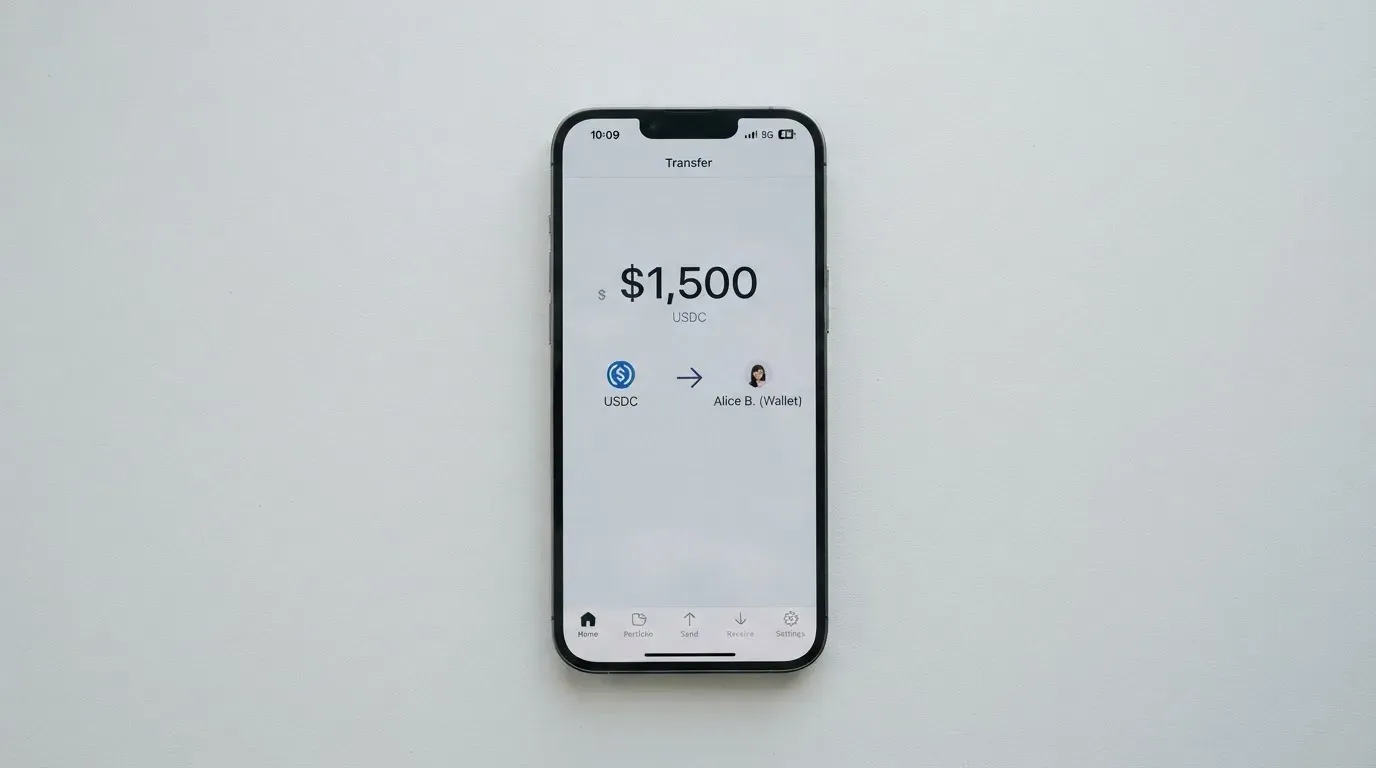
How that balance behaves matters. A pending balance becomes usable as soon as a payment arrives on it. Standard bank withdrawals and transfers use only settled funds — that is, money that has finished its journey — not money still in flight. You do not need a bank withdrawal in order to spend. What happens to a remaining balance if you close the account is not stated, which is worth asking about if you ever plan to stop.
Underneath, the launch data describes the balance as backed by stablecoin collateral from a linked wallet. The coins and the networks are not stated. That single omission cascades: you cannot know which chain to send on, so you cannot know what an incorrect send would cost you, and blockchain transfers do not reverse. In this category that is the difference between a routine top-up and a support ticket with an uncertain outcome. Ask which networks are supported before you send anything, and check the address character by character.
Deposit fees and minimums are not stated either. On-chain network fees for a deposit are charged by the blockchain, not by the card provider — that part is a property of the chain rather than of Whop, and it is the one cost here I can tell you exists.
A card with one funding source scores 4 out of 10 here for a simple reason: there is nothing to choose from. No bank transfer route, no debit card, no second network named. You spend what you have earned, or you do not spend.
Paying with it every day
Everyday use is the card’s better half, and this is where the Visa name earns its place. The card works wherever Visa works, and you can add it to Apple Wallet or Google Wallet. Mobile wallet support matters more than it sounds: tokenised numbers in a phone wallet are the practical way most people will actually use a card like this, and the card supports it.
What is missing on the everyday side is cash. ATM withdrawals are unavailable by default. If you enable them, there is a $250 per-transaction cap and more than three attempts in 24 hours are blocked. The fee for an ATM withdrawal is not stated. For a seller who spends online, that is an inconvenience. For anyone who needs cash in hand, it is a dealbreaker.
Rewards are thin but real: 5% cashback at select merchants, currently Uber, with more planned. The payout currency and the conditions are not stated, so I cannot tell you whether it lands in dollars, in balance, or as something else. Five percent at one merchant is a nice touch, not a reason to pick a card.
There is a user report — not from the card’s documentation — of an unexplained $29 dispute fee and refunds that never arrived, from a Trustpilot snapshot in October 2026. How disputes are handled is not stated in the card docs, so treat this as one report rather than a pattern.
One thing I could not check: the app. The App Store listing could not be fetched, so I cannot tell you what the app looks like, whether it is well rated, or what it is like on a bad day. For a card where most of the interaction happens in an app, that is a real gap in this review.
What can go wrong
The platform’s complaint history is the heaviest thing on this card, and it is not card-specific — it is about Whop the platform, which is where your balance and your money live.
Whop Inc. runs the platform. The card programme is powered by the stablecoin-card issuer Rain, according to launch coverage. The issuing bank and the licences are not stated. That chain matters: your money sits on a platform run by one company, and the card runs on a programme run by another, and the bank underneath — the entity that actually stands behind the card — is not named. When something goes wrong, you may find yourself moving between three support desks.
On the platform’s public reviews, an unofficial and unconfirmed picture, as of a reading on 2026-10-21 which showed 3.5: 3,052 reviews, 65% five-star and 30% one-star, with the TrustScore itself shown as hidden — described as unavailable due to a breach of guidelines. The recurring themes in reviews up to October 2026 are frozen funds and payouts, account suspensions for alleged “fraudulent activity”, support that is mostly AI-driven and unhelpful, and refunds that never arrive. None of that is official, and I am reporting it as user testimony, not fact. But for a card whose entire purpose is to give you access to a balance, “funds frozen” and “payouts paused” are not abstract complaints — they are the failure mode that matters.
The security controls the card does describe are reasonable ones: per-card spending limits, a PIN lockout after too many wrong PIN attempts, a fraud risk engine, 3-D Secure and address verification checks. What is not stated is how customer funds are safeguarded — whether they are segregated, insured, or held as ordinary balances. That is the first question to put to support.
Support itself: the card’s documentation says to contact support if a decline looks wrong. Channels, languages and hours are not stated. If your card is declined abroad and you cannot reach anyone, you have no fallback.
And there is the category-level risk that applies to every card like this, not just this one. Programmes get wound down. Visa terminated its global agreements with FTX in November 2022 and the FTX US debit card was wound down by its issuer. WaveCrest, a Visa issuer that supplied crypto card brands, was suspended by Visa in Europe in 2018, closing all its Visa programmes. Closures usually follow a pattern: a notice period, then loading stops, then spending stops, then you are asked to withdraw what’s left. A 2026 closure reported by a secondary source — new loads ended 8 July 2026, spending stopped 8 August 2026 — is single-source and unconfirmed, and I include it only as a shape of what can happen, not as a prediction.
Two smaller operational traps: a declined authorisation can leave a hold on your funds for several days, typically up to seven. And because a card number carries a BIN identifying the issuing institution, and merchants can look that up, a card issued in one country can look foreign to a shop in another — which sometimes means extra scrutiny and sometimes a decline.
What to take instead
I looked at three alternatives. Here they are against the same criteria, with their own numbers as published.
| Alternative | Score | Cost position | Funding | Rewards |
|---|---|---|---|---|
| International Visa Card | 6.7 / 10 | Virtual issuance $5 one-time, no maintenance fee; plans Classic free, Pro $9.00/month, Max $19.00/month; USD use free on all plans; foreign currency at “Visa exchange rate + 2% FX fee”; deposits free | USDC or USDT into the USD account free at 1:1, plus USD, EUR, SEPA, SWIFT, FedNow; networks not stated | No cashback stated |
| Stella | 6.5 / 10 | Fees described under the User Agreement and/or in the app; not stated officially | Deposit crypto into the account, which automatically tops up the card (in-app custodial wallet) | No cashback stated on the card page; the Earn product is separate yield |
| UNi Card | 6.1 / 10 | No annual fee; no foreign transaction fee; assets converted at live OTC rates; issuance fee not stated | Not stated | Spend-to-Earn up to 3% |
| Whop (for comparison) | 5.2 / 10 | “No extra fees”; nothing itemised | Whop balance only | 5% cashback at select merchants, currently Uber |
The International Visa Card is the one that prices itself. It tells you what issuance costs, what each plan costs, and what a foreign purchase costs — a 2% FX fee on top of the Visa rate. It is a US-issued Platinum Visa, virtual, paying in USD, with a physical card listed as coming soon. Its country exclusions are broader than Whop’s: residents and legal registrants of Belarus, mainland China, North Korea, Cuba, India, Iraq, Iran, Israel, Myanmar, Nepal, Nicaragua, Russia, Syria, Turkey, Ukraine, Venezuela and Vietnam are excluded, FATF grey-list countries are reviewed case by case, and purchases are blocked in North Korea, Cuba, Iran, Russia, Syria, Ukraine and Venezuela. Its rule runs on residence or registration, not citizenship. If your problem is “I cannot get an ordinary bank card”, that exclusion list is the thing to check first, and for many people it rules this option out too.
Stella offers both virtual and physical Visa, works at what it calls over 40 million Visa merchants globally, and tops up automatically when you deposit crypto into a custodial in-app wallet. It does not state its countries, it bars users under economic sanctions programmes, and it routes US and European users through affiliates. Its fees live in the agreement and the app rather than on a table — which is a softer version of the same problem as Whop’s.
The UNi Card is a multicurrency Mastercard spending from a UNi.Global balance, with no annual fee, no foreign transaction fee, live OTC conversion rates, and up to 3% back. Its eligibility and funding are not stated, and physical versus virtual is not stated either.
What none of these change: every one of them is a balance you load and spend, not a bank account. If your actual problem is that you cannot open a bank account, none of these cards fixes the underlying problem — they route around it, and the routing is the thing to examine.
Who I would recommend it to
I would recommend the Whop card to a US-based Whop seller in one of the 31 covered consumer states — or 41 business states — who earns on the platform, already trusts Whop with their balance, and wants to spend earnings on Visa without a bank transfer in between. For that person it is a good tool: it is instant, it is a real Visa, it works in Apple and Google Wallet, and it comes with 5% back at Uber.
I would not recommend it as your only card, and I would not recommend it to anyone who has not already put money into Whop. The reasons are all in the same place — the disclosure. Not what the card costs. Not which bank issues it. Not whether your funds are safeguarded. Not which coin and network back the balance. For a seller who has already decided Whop is where their business lives, those are acceptable gaps because the balance was going to sit there anyway. For anyone else, they are the whole decision.
The two questions I would put to support before adding anything substantial are simple: which networks and coins back the balance, and what happens to money if the card programme ends. Then: what are the fees, in numbers.
Frequently asked questions
What is the Whop card?
The Whop card is a Visa card that spends directly from your balance on the Whop marketplace, where people sell courses, memberships and digital products. It is not a general bank card you can load from your own account: spending draws on money you have earned on the platform. That design makes it a payout tool for sellers rather than an everyday spending account for everyone.
How does the Whop card work?
You create the card from your Whop account in seconds, and it works anywhere Visa is accepted, online and in stores. Payments draw on your Whop balance. A pending balance becomes spendable as soon as a payment arrives; ordinary bank withdrawals and transfers use only settled funds. Underneath, the balance is described as backed by stablecoin collateral from a linked wallet.
Who can get the Whop card?
Consumers in 31 US states and businesses in 41, with Russia and Belarus named among unsupported corporate countries and 18 countries listed as unsupported for consumers. The card’s documentation does not say whether the test is citizenship or residence, so if you live outside the US, the pages do not tell you whether you qualify — ask directly.
What countries is the Whop card available in?
It is a US card. The consumer list covers Alabama, Alaska, Arkansas, California, Colorado, Connecticut, Florida, Hawaii, Illinois, Indiana, Iowa, Kansas, Kentucky, Maine, Massachusetts, Michigan, Minnesota, Montana, Nebraska, New Hampshire, New Jersey, New York, North Carolina, Oklahoma, Pennsylvania, South Carolina, Texas, Utah, Virginia, West Virginia and Wyoming. Countries named as unsupported include Belarus, China (Mainland), Cuba, Hong Kong, India, Iran, Iraq, Israel, Myanmar, Nepal, Nicaragua, North Korea, Russia, Syria, Turkey, Ukraine, Venezuela and Vietnam.
Is the Whop card free?
Nobody can tell you from the published information. The page says “No extra fees” and lists no issuance amount, no monthly fee, and no conversion or foreign-exchange fee. There is a single tier — consumer and business cards — with no graded pricing described. If cost matters to your decision, that gap is a reason to ask support for figures before you commit.
Does the Whop card require KYC?
The card’s documentation does not mention identity checks at all, so the public pages do not say. That is unusual for a card in this category, where KYC rules generally apply and providers usually describe them. Practically, expect to be asked for identification at some stage and do not read an undocumented process as an absent one.
How do I top up the Whop card?
You do not top it up directly — spending comes from your Whop balance, and that balance is fed by your earnings on the platform. The starting data describes it as backed by stablecoin collateral from a linked wallet, but the coins and networks are not stated. Since blockchain transfers do not reverse, confirm the supported network and check the address before sending anything.
Is the Whop card safe?
It has sensible controls: per-card spending limits, a PIN lockout after too many wrong attempts, a fraud risk engine, 3-D Secure and address verification. What is not stated is how customer funds are safeguarded, and that is the more important question. Separately, unofficial user reports on Whop’s Trustpilot page describe frozen payouts, account suspensions and undelivered refunds on the platform, which is where your balance lives.
Can I use the Whop card in Apple Wallet?
Yes — the card can be added to Apple Wallet or Google Wallet, which is probably how most people will use it day to day. Tokenised numbers in a phone wallet are the practical way to pay with a card like this. Note that ATM and cash are blocked merchant categories, and several named services are blocked outright, so the wallet does not make the card more universal than its restrictions allow.
Is the Whop card worth it?
For a US seller already earning on Whop and already trusting the platform with their balance, yes — it is instant, it is a real Visa, and it adds 5% cashback at select merchants. For anyone else, the unstated fees, the unnamed issuing bank and licences, and the undisbursed backing details are reasons to look at an alternative that publishes its prices.
Choosing an app or neobank card – cryptocardadvisor
Content created by the «cryptocardadvisor» team