
The card that costs nothing to hold and hides the numbers that matter
 Available in US
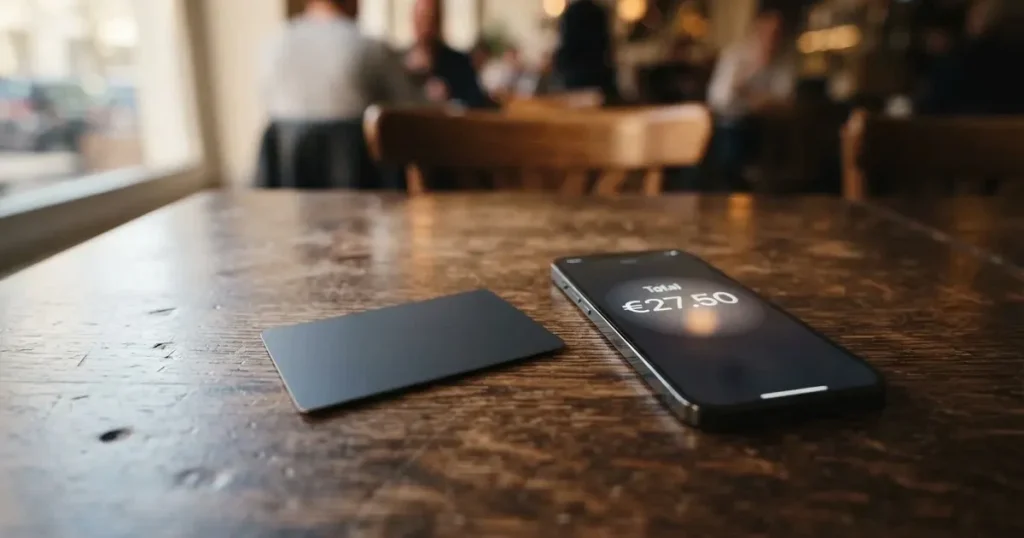
Wayex is a crypto card that behaves less like a bank account than like a reloadable Visa with a wallet attached to it. You hold stablecoins, you load them as spendable balance, and you pay with a Visa Debit that is free to open and free of monthly fees. The card advertises 0% on spending in US dollars, and it takes deposits in DAI, USDT, USDC and PYUSD across what it calls more than ten blockchains, plus plain fiat in USD, EUR and other currencies. That is the good half. The other half is what the public pages leave out: the fee for a physical card, the fee when you convert crypto into the balance you spend, the fee on any currency other than the dollar, and the limit structure of the global card. Not one of those is published on the main site. The footer says only that “Fees may apply.”
I gave it 7.5 out of 10, and I want to be precise about what that number rests on, because a single score can hide more than it explains. It is a strong card for one narrow person and a poor fit for another, and the two deserve to be named before anything else.
Conditions are current as of October 28, 2026
The verdict: 7.5 out of 10, aimed at stablecoin holders
The score is not a shrug. It is a card that does two things unusually well — the cost of holding it and the cost of funding it — and does one thing in a way that should worry you: it publishes less than its competitors do. If you already sit on stablecoins and you spend in dollars, the friction here is close to zero and I understand the appeal. If you spend in euros, pounds or pesos, or you need a physical card in your hand, or you want to know your daily limit before you plan a large purchase, you are being asked to trust rather than to read.
| Criterion | Mark | Why |
|---|---|---|
| Who can get it | 5 / 10 | “Live in 18+ regions today”, expanding to 100+; the regions are not named, and citizens and residents of countries under UN, FATF, EU and US sanctions are excluded |
| Cost | 9 / 10 | Digital card free, account free to open, no monthly fees, “0% on USD spending”; physical card price and non-USD fees not disclosed |
| Top-up options | 9 / 10 | DAI, USDT, USDC, PYUSD across “10+ blockchains”, networks unnamed; also fiat USD, EUR and others |
| Reliability and complaints | 7 / 10 | Issued by Lead Bank under Visa U.S.A. Inc. licensing, programme run by Bridge Ventures LLC; Trustpilot 3.9 of 5 across 61 reviews, complaints about verification blocks and slow payments |
| Everyday use | 8 / 10 | Free digital Visa, physical “where supported”, Apple Pay and Google Pay; ATM provision for the global card not disclosed |
The score is 7.5 out of 10.
So who does this suit? Someone who holds dollar-pegged tokens already, spends mainly in dollars, and is comfortable with a financial product whose inner workings are described in adjectives — “transparent custody”, “instant controls”. The brand imagines its user as a stablecoin holder who wants a free digital Visa and does not want to think about the card part any more than they think about the crypto part.
Who does it not suit? Three groups I would send elsewhere. People who need a physical card in the mail, because “where supported” is the only commitment and the delivery country list is not published. People who spend outside the dollar, because the FX fee is not stated anywhere I could find and this is precisely the number that decides whether a euro-paying user is better off here or on a conventional card. And people who are nervous by nature about custody, which is a longer conversation, but one this card forces early.
Will they give you the card
The eligibility rule is written in the terms and it is a wide exclusion rather than a narrow permission. You cannot be located in, or be a citizen or resident of, any country sanctioned by the UN, FATF, the EU or the United States (OFAC). Nor can you be in a jurisdiction that bars crypto services altogether. That second clause is broader than it looks: it can catch a country that has no formal sanctions against you but has made crypto trading unlawful or heavily restricted, and it leaves the decision to the provider.
Then there is the arithmetic of reach, and it is the part I find soft. The app is downloadable in 160+ countries. The card itself is described as “live in 18+ regions today”, with expansion to 100+ planned. Those two numbers are doing different jobs — one measures where you can download an app, the other where you can actually hold a card — and the gap between them is where your disappointment will live if you live outside the smaller number. The main site does not name those 18 regions. That is not a small omission when the entire question you have is “can I get this where I am”.
One unofficial read, from CoinCodeCap in February 2026, describes the core product as Australia only, with the 160-country card picture shown as an early rollout. I want to be clear that the card itself does not confirm this. But it does explain something I noticed while reading the help centre: several of the most detailed pages I could find are the Australian ones, with Australian dollar amounts and Australian addresses. Take the specificity as evidence of depth in one market, not as confirmation of the global shape.
The Australian help pages are, in fairness, the most useful documents the company publishes. There you will find real numbers — delivery charges, replacement terms, ATM rules — that the main site omits. If you are in Australia, you are reading a better-documented product than most users are.
How to get it
The signup story is short, and short is generous. The company says you can “complete KYC in as little as 2 minutes”. Two minutes is a marketing number, not a promise; treat it as the best case for someone whose documents are clean and whose name matches their address exactly. You must be 18 or older. The pages I read do not specify which documents are required, do not describe any verification tiers, and do not list the reasons an application might be refused. Those three absences are the ones that matter, because the complaint pattern I found later in this review is almost entirely about applications and verifications failing without explanation.
What you are applying for is a Visa Debit, described as a prepaid card. The digital card is free. A physical card exists “where supported”. The balance you spend from is held in USDB, which the company presents as pegged 1:1 to the US dollar. In practice this means the card behaves like a prepaid Visa: crypto comes in, a dollar-denominated balance sits behind the card, and the card spends that balance.
On delivery, the digital card is free and instant. The physical card is where the documentation gets Australia-specific: in the Australian help centre, a physical card and its delivery cost AUD 14.99, while replacement of a lost, stolen or expired card is free. The main site gives no shipping countries, no delivery times and no cost for the global physical card. If a physical card matters to you, treat that as an unanswered question to put to support before you rely on the plan.
One more thing worth carrying into the rest of this review: the terms reserve the right to withhold withdrawals pending further investigation. Almost every custodial platform writes something similar, because almost every platform has to be able to freeze. It is worth knowing it exists before you need it, not after.
Fees and what a payment really costs
This is where I would slow down, because the headline number is the easy one and the interesting ones are missing.
What is published: the digital card is free. Accounts are “free to open. No monthly fees.” And “0% on USD spending” — spend in dollars and the card charges you nothing for the transaction itself.
What is not published, anywhere on the main site: the price of a physical card. The FX fee for spending in a currency other than USD. The fee for converting crypto into your spendable balance. Card limits, daily and monthly. Whether ATM withdrawals work on the global card and what they cost.
The help centre for the Australian product is more forthcoming, and its numbers are worth reading even if you are elsewhere because they show what this company charges when it bothers to say. There, crypto cash-out to a bank costs a 0.40% conversion fee falling to 0.00% depending on 30-day volume, and AUD cash-out carries no fee. That is a trading-fee schedule, not a card-fee schedule, and it should not be read as the price of spending on the Visa.
| Fee or limit | What is published |
|---|---|
| Digital card issuance | Free |
| Physical card | Free “where supported”; help centre (Australia) lists card and delivery at AUD 14.99; price on the main site not stated |
| Account / monthly fee | “Free to open. No monthly fees.” |
| USD spending | “0% on USD spending” |
| Non-USD spending (FX fee) | Not stated |
| Crypto-to-balance conversion | Not stated |
| ATM withdrawal | Not stated for the global card; help centre (Australia) says ATM withdrawals only in Australia, Wayex fee $0, operator fees apply, max AUD 1,000 per day, overseas ATMs not supported |
| Card spend limit | Not stated for the global card; help centre (Australia, page dated 29 Apr 2025) gives max AUD 10,000 per transaction |
| Crypto buy/sell limit | Help centre (Australia) gives AUD 100,000 per transaction and per day, minimum AUD 5 |
| Global top-up minimum | Not stated |
Now let me follow three ordinary payments through those gaps, because a fee you do not know about is the whole problem.
A coffee in dollars. You tap your digital Visa at a counter. The card charges 0% and the coffee costs what the coffee costs. This is the cleanest case on the card and the reason the product is appealing. Nothing about it requires trust.
A coffee in euros, on a euro trip or a euro-priced subscription. The card charges something for currency conversion and I cannot tell you what. The Australian help centre says “No foreign exchange fees on Wayex” — but that page is about the Australian product denominated in AUD, and the global Visa’s FX treatment is explicitly not stated. You are standing in a shop with an unknown percentage. This is the payment I would not make without writing to support first.
Paying for something with crypto behind it. You hold USDT, you want it to become a purchase, and the conversion from token to spendable balance is charged at a rate the main site does not publish. The Australian product publishes its conversion schedule — 0.40% down to 0.00% by 30-day volume — which is reassuring as a shape and useless as a quote for you. Assume a conversion fee exists; ask what it is.
There is no cashback on the card itself. What Wayex advertises instead is yield, and it sits on the balance rather than the spend: “Everyday Yield” of up to 5% on liquid stablecoin balances, live now, and Fixed-Term Deposits of up to 20% through Kasu, coming soon. Read that as a savings feature attached to your holdings, not as a reward for using the card. Fixed-Term Deposits also had a separate “Trading Fee Tiers” article in the Australian help centre, with trading fees by 30-day volume and conversion from 0.40% down to 0.00%.
Top up options
This is the strongest part of the card and the part I would use it for. Deposits are accepted in four stablecoins — DAI, USDT, USDC and PYUSD — across what the company calls “10+ blockchains”, plus fiat deposits in USD, EUR and others, with on/off ramps listed for USD, EUR, GBP, MXN and BRL.
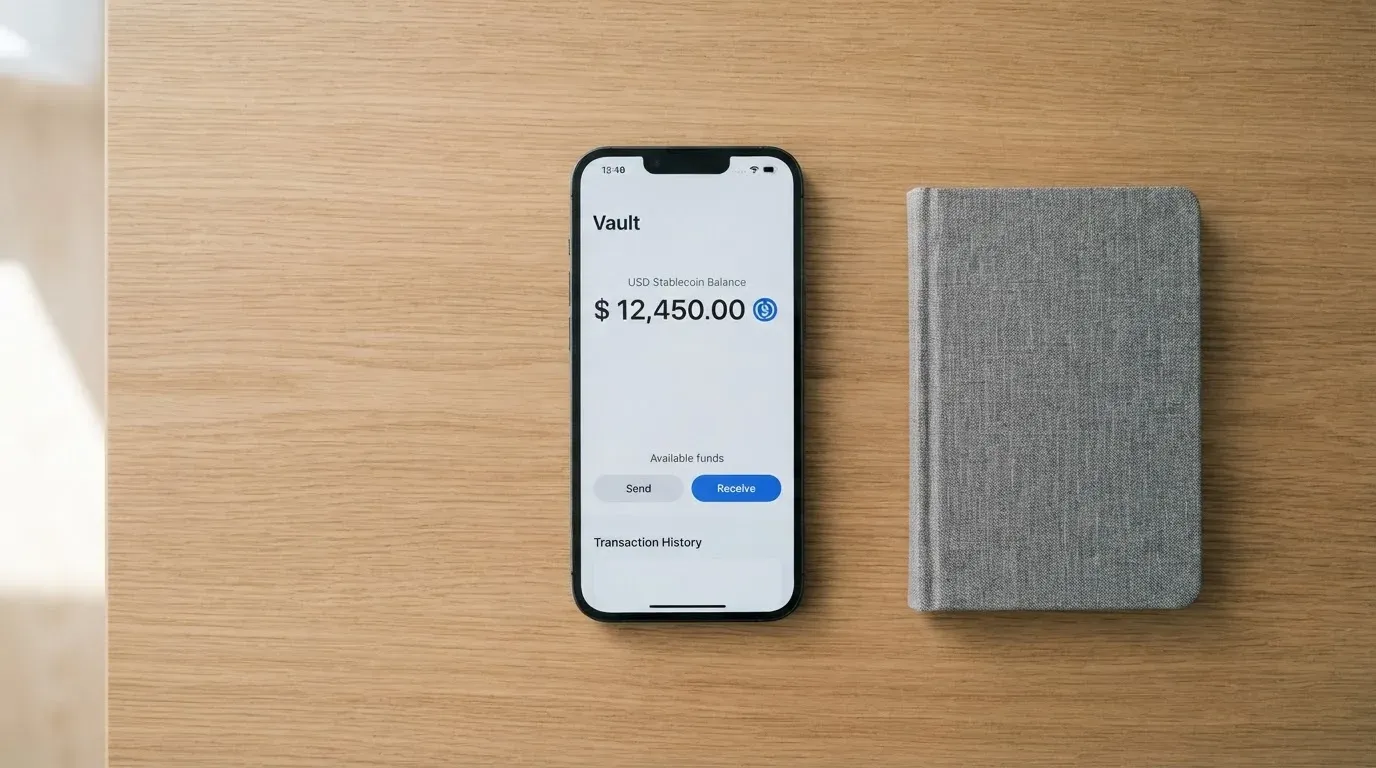
Two caveats sit inside that sentence. The first is that the networks are not named. “10+ blockchains” is a claim about breadth, not a map, and a network name is exactly the thing you need before you send a transfer. Send USDT on the wrong network, or to an address belonging to a different network, and the transfer can be lost or need manual recovery with no guarantee — blockchain transfers are irreversible by design, and the network or gas fees are charged by the blockchain rather than by the card provider. The Australian help centre is more specific about the cost side: crypto deposits are free from Wayex’s side, network and gas fees apply, AUD deposits are zero fee, and there is no limit on deposits. The minimum global top-up is not stated.
The second caveat is cashing out, which matters more than it first appears because it is the exit. The main site says cash-out to fiat “where supported” through PIX, SPEI, Faster Payments, SEPA, Wire and ACH, with ACH and Wire enabled, and publishes no fees or times. The Australian help centre fills in the blanks: crypto cash-out to a bank at 0.40% to 0.00% conversion by 30-day volume, no fee on AUD cash-out, crypto transfers out charged only network fees, a maximum of AUD 100,000 per cash-out and a minimum of AUD 10. And the terms keep the right to withhold a withdrawal pending investigation.
So: topping up is easy, and getting out is documented unevenly. Ask about the exit before you fund the exit-sized amount.
Paying with it every day
Day-to-day spending works the way a prepaid Visa works, with digital issuance, Apple Pay and Google Pay support, and apps on both iOS and Android. The digital card is free, so if you want something in your wallet today, this is a low-friction route to a working card number.
What you will not find on the pages I read: any list of blocked merchant categories. Many issuers block gambling (MCC 7995) and similar categories by policy rather than by law, and the list differs by issuer, so its absence here means you cannot know in advance whether a category you use will simply fail. Also missing: how the card behaves in the situations that make crypto cards awkward in practice.
Those situations are generic to the category, not peculiar to Wayex, and you should expect them. Merchants can look up the card’s issuer identification number and see which institution and country issued it; if that country differs from your billing address they may apply extra scrutiny, which is why a card issued in one country can look foreign in another. Some merchants decline prepaid or foreign-issued cards outright for that reason. Address verification is offered mainly in the US, Canada and the UK and is generally unavailable for foreign-issued cards, which can cause declines. A declined authorisation can leave a hold on your funds for several days, typically up to seven. Online payments may trigger a 3-D Secure check — Visa’s brand is Visa Secure — where the issuer either approves without friction or challenges you with a code or a biometric prompt. Tokenising into Apple Pay replaces your card number with a device-specific number stored in the Secure Element, not on Apple’s servers, and each payment carries a one-time dynamic code; the issuer can also restrict where that tokenised number is allowed to work.
One category of everyday detail is worth naming because people look for it and it is easy to conflate with the card. There is no cashback on spending. There is up to 5% yield on stablecoin balances. Those are different pots and the second is not a reward for spending.
If something goes wrong, the formal position is thin. The FAQ lists “What if I have a problem with a transaction” as a question without publishing an answer. The complaints policy says acknowledgement within three business days and resolution within 30 business days. Disputes go to binding arbitration in Panama City, in English, under the terms. No chargeback time frames are given. Panama City arbitration in English is the part you should weigh carefully: it is a real process with real cost, and it is not the same as a local court or a local ombudsman.
What can go wrong
Three things, in order of how likely they are to affect you.
The structure. The card is issued by Lead Bank under licensing by Visa U.S.A. Inc.; Bridge Ventures LLC is the programme manager; Wayex itself is the platform provider and says plainly that it is not a bank. Its own registration country is not stated. That arrangement is normal for this category — Visa and Mastercard do not issue crypto cards to consumers themselves; they license issuers, and a programme can be suspended — but it means you are holding a prepaid instrument issued by a bank you did not choose, managed by an entity you have never heard of, marketed by a company whose home jurisdiction is unstated, with your disputes in binding arbitration in Panama City.
Custody. The company offers “transparent custody, and optional self-custody”, plus encryption, 24/7 monitoring, and “instant controls & alerts” on the card; the infrastructure partners named are Bridge and Lead Bank. Details on two-factor authentication, card freeze and safeguarding are not stated on the pages I read. This is worth understanding as a category risk rather than a Wayex-specific one: a custodial wallet means the provider holds the credentials and you must trust them completely, and the sector has a documented history of custodial failure — Mt. Gox at roughly US$350 million reported stolen between 2011 and 2014, Coincheck at about US$400 million in 2018, Ronin Network at US$625 million in 2022. Self-custody flips the risk rather than removing it: your funds stay in your own wallet until the moment of payment, but you carry sole responsibility for key loss, for phishing, and for clipboard-hijacking malware that swaps an address after you copy it. A seed phrase is typically twelve to twenty-four words and anyone who obtains it can restore the wallet and spend it; there is no built-in recovery for a stolen key, because the network cannot freeze or return funds.
The user reports. On Trustpilot, read on 2026-10-20, the TrustScore was 3.9 out of 5 across 61 reviews, with 74% five-star and 10% one-star. The recurring themes are account verification and blocks without explanation (May–June 2026), a delayed account closure (requested 12 February 2026, still pending on 26 May 2026), slow payments (a EUR 5 transfer taking over 10 days, March 2026) and app sign-out bugs (October 2025). The praise is for support and for the absence of foreign exchange fees. The company replies to all negative reviews, usually pointing to private channels. I found no official incident record, and I did not find the forum discussion threads that would usually turn up. There is also an unofficial per-transaction and lifetime limit figure from CoinCodeCap that contradicts the official Australian page, which is why I have used the official number and flagged the unofficial one rather than the reverse.
Two smaller risks belong on the list. Stablecoins can depeg — TerraUSD collapsed in May 2022 and USDC temporarily lost its peg in March 2023 during the US banking crisis — so “0% on USD spending” describes the card’s fee, not the value of what funds it. And stablecoins are not censorship-proof: Tether says it disables tokens in wallets on the OFAC sanctions list and has frozen funds tied to illicit activity. Regulation is still settling around this product category too: in the EU, MiCA took legal effect in June 2023, its stablecoin rules applied from 30 June 2024 and the remaining service-provider provisions from 30 December 2024, with a transitional period running until 1 July 2026 or until authorisation is granted or refused. A card is regulated separately from the crypto side, so products like this often rest on two licences at once.
What to take instead
I want to compare against three alternatives on the same axes, using only what each publishes. Scores are my own, and they sit below Wayex’s for reasons that are mostly about disclosure and reach rather than about product quality.
| Wayex | International Visa Card | UNi Card | Whop Cards | |
|---|---|---|---|---|
| Score | 7.5 / 10 | 6.7 / 10 | 6.1 / 10 | 5.2 / 10 |
| Who can get it | 18+ regions live, names unstated; sanctions exclusions | Not available to residents or registrants of a named list of 17 countries; FATF grey list reviewed case by case | Not stated | 31 US states for consumers, 41 for businesses; several countries unsupported |
| Card | Visa Debit, prepaid; digital free, physical where supported | US-issued Platinum Visa, virtual; physical “coming soon” | Multicurrency card on Mastercard | Visa; virtual or physical not stated |
| Cost | Free digital card, no monthly fees | $5 one-time virtual issuance, no maintenance fee; plans Classic free, Pro $9.00/month, Max $19.00/month | No annual fee; issuance fee not stated | “No extra fees”; no amounts listed |
| Spending fees | “0% on USD spending”; FX and conversion not stated | Free in USD on all plans; foreign currency at Visa rate plus 2% FX fee | No annual or foreign transaction fee; live OTC rates, “no hidden exchange fees” | Not stated |
| Funding | DAI, USDT, USDC, PYUSD on “10+ blockchains”, plus fiat | USDC or USDT into the USD account, free; also USD, EUR, SEPA, SWIFT, FedNow | Not stated | Spends from a Whop balance; starting data backed by stablecoin collateral from a linked wallet; coins and networks not stated |
| Rewards | No card cashback; up to 5% yield on stablecoin balances | No cashback stated | Spend-to-Earn up to 3% | 5% cashback at select merchants, currently Uber |
What this comparison actually shows is that Wayex’s problem is silence, not cost. The International Visa Card publishes a 2% foreign-exchange fee and charges $9 or $19 a month for its paid tiers, which is worse on paper for a dollar spender and much better on paper for anyone who wants to know the price of a euro purchase. UNi Card publishes no foreign transaction fee at all and adds up to 3% back. Whop publishes 5% cashback at selected merchants and tells you almost nothing about its fees or its coins. If your problem is “I do not know what this costs me”, any of these three is a step up in legibility. If your problem is “I already hold stablecoins and I do not want to pay to hold a card”, Wayex is ahead of all three.
Who I would recommend it to
I would recommend Wayex to someone in this position, and to nobody adjacent to it. You hold stablecoins already, mainly in one of the four supported tokens. You spend predominantly in US dollars. You are content with a digital card in Apple Pay or Google Pay and do not need plastic in the post. You have read the terms, you accept arbitration in Panama City as the place your disputes go, and you understand that the company handling your money is not a bank and that a withdrawal can be withheld pending investigation. And you have written to support and got answers on the three numbers the site omits — FX fee, conversion fee, and your limits — rather than assuming the best case.
I would not recommend it to you if any of the following is true. You need a physical card and cannot tolerate the phrase “where supported”. You spend in a currency other than the dollar and cannot get the FX fee in writing first. You want to plan around a limit you can read. You are a resident of somewhere outside the 18+ live regions and cannot tolerate finding that out after depositing. Or you intend to hold a meaningful balance long enough for the question of custody, custody terms and withdrawal review to matter — in which case read the terms first, and consider keeping only what you would be willing to have frozen for a week.
The honest summary is this: a card that is genuinely cheap to hold and well funded, attached to a company that publishes its good news and leaves its bad news in the footer. Seven and a half is what I can defend.
Frequently asked questions
What is the Wayex card?
Wayex is a prepaid Visa Debit linked to a crypto platform rather than a conventional current account. You deposit stablecoins or fiat, the balance sits behind the card, and you spend it like any Visa — in store, online, or through Apple Pay and Google Pay. The digital card and the account are free with no monthly fee, and spending in US dollars is advertised at 0%.
How does the Wayex card work?
You top up, and the amount becomes a spendable balance denominated in USDB, which the company presents as 1:1 with the US dollar. The card then behaves like a prepaid Visa: it spends only what is loaded, so it cannot overdraw. Behind it, crypto is converted into fiat balance when needed, and a fee may apply at that point — which is one of the fees the main site does not publish.
Is Wayex a bank?
No, and the company says so itself. The card is issued by Lead Bank under licensing by Visa U.S.A. Inc., Bridge Ventures LLC is the programme manager, and Wayex describes itself as the platform provider and “not a bank”. Wayex’s own registration country is not stated on the pages I read. If it matters to you that a deposit sits with a regulated bank, this is not that arrangement.
Does Wayex require KYC, and what do they check?
The company says you can “complete KYC in as little as 2 minutes” and that applicants must be 18 or older. The documents required are not specified on the pages I read, no verification tiers are described, and rejection reasons are not stated. The terms do bar anyone located in, or a citizen or resident of, a country sanctioned by the UN, FATF, the EU or the US.
Is Wayex card free?
The digital card is free and accounts are free to open with no monthly fees, and spending in USD is advertised at 0%. Beyond that the picture is patchy: the physical card price is not stated on the main site, the FX fee for non-USD spending is not stated, and the crypto conversion fee is not stated. The footer simply says “Fees may apply.”
How do I top up the Wayex card?
With stablecoins — DAI, USDT, USDC or PYUSD — across what Wayex calls “10+ blockchains”, or with fiat in USD, EUR and other currencies, with on/off ramps listed for USD, EUR, GBP, MXN and BRL. The catch is that the networks are not named, so check which network your token must arrive on before sending, because blockchain transfers cannot be reversed. The global minimum top-up is not stated.
Where can I use the Wayex card?
Anywhere a Visa is accepted, online and in stores, and through Apple Pay and Google Pay on mobile. The catch is acceptance in practice, not in theory: merchants can look at the card’s issuer country and decline foreign or prepaid cards, and address verification is mostly unavailable for foreign-issued cards, so a share of payments will fail for reasons that have nothing to do with you.
Is the Wayex card safe to use?
That depends on what you hold on it and for how long. The company describes transparent custody, optional self-custody, encryption, 24/7 monitoring and instant card controls, but details on two-factor authentication, card freeze and safeguarding are not stated. The wider category has a poor record — Mt. Gox, Coincheck and Ronin Network — so I would keep only an amount I could afford to lose and rely on.
Can I withdraw money from Wayex?
Cash-out to fiat works “where supported” through PIX, SPEI, Faster Payments, SEPA, Wire and ACH, with ACH and Wire enabled. The Australian help centre gives crypto cash-out to a bank at 0.40% falling to 0.00% conversion by 30-day volume, no fee on AUD cash-out, a maximum of AUD 100,000 per cash-out and a minimum of AUD 10. Globally, fees and times are not stated, and the terms allow withholding a withdrawal pending investigation.
Is Wayex worth it compared with a normal bank card?
If you spend in dollars and already hold stablecoins, the cost of holding and funding this card is close to zero, and there is nothing ordinary about beating that. If you spend in other currencies, need a physical card, or want published limits, you are trading transparency for that zero — and a card that publishes a 2% FX fee or none at all may serve you better despite charging more.
Choosing an app or neobank card – cryptocardadvisor
Content created by the «cryptocardadvisor» team