
Six points out of ten, and the reason is the company behind it
 Available in US
WaldenPay is a virtual prepaid card that spends a crypto balance. You load it from one of more than 135 cryptocurrencies across more than 35 networks, the crypto is converted into a dollar balance, and that balance is what a Visa or Mastercard number spends. There is no plastic, no branch, and no monthly fee. On paper that is a clean, useful product for someone who cannot get an ordinary bank card, who wants to pay online without exposing a bank account, or who simply holds most of their money in crypto and would rather spend it directly than convert it somewhere else first.
Conditions are current as of October 28, 2026.
My score for it is 6.3 out of 10. That is not a bad product so much as an uneven one. The mechanics are strong: funding is broad, fast and cheap enough at volume, and the card is up in minutes. What holds it back is everything around the mechanics. The company that runs the card says plainly that it is not a bank. It does not name the bank that issues the card or the licences that sit behind it. There is no Trustpilot page, no card in plastic, no stated ATM access, no stated spending limits, and user sentiment on Reddit, such as it is, splits straight down the middle. If you are comfortable holding your balance with a provider that does not name its banking partners, this is a good tool. If you are not, the same tool is a bad idea at any price.
Who it suits: anyone who already holds stablecoins, needs a card number that works at ordinary merchants, and accepts that a non-bank programme manager sits between them and the network. Who it does not suit: people who want a bank card with deposit guarantee, people who need physical plastic, people in the restricted jurisdictions listed below, and people for whom a 5% flat top-up fee on small amounts is too expensive.
Scorecard
Here is how the ten criteria break down. Each mark is out of 10, and the total is the simple sum of what the card actually demonstrates, not a vibe.
| Criterion | Mark | Why |
|---|---|---|
| Who can get it | 9 / 10 | Sign-up and loading are “supported globally” apart from a short list of restricted jurisdictions |
| Cost | 3 / 10 | A one-off $10 issue fee and no monthly fee, but top-up starts at a flat 5% and the card adds no currency markup of its own |
| Top-up options | 10 / 10 | “135+ cryptocurrencies” across “35+ networks”, from $25 minimum, credited instantly |
| Reliability and complaints | 5 / 10 | The issuer organisation is BlueHouse Software B.V. in Rotterdam, it says it “is not a bank”, and no bank or licences are named |
| Everyday use | 5 / 10 | Virtual Visa or Mastercard in ten minutes, Apple Pay and Google Pay, but no plastic, no stated ATM, and no stated limits |
| Total | 6.3 / 10 | A strong top-up engine wrapped in a thin, hard-to-verify shell |
Three of those marks are telling. Who can get it scores highest because almost nobody is excluded beyond a named list. Top-up options scores highest because the range of coins and networks is genuinely unusual. Cost scores lowest, and it is worth being blunt about why: the headline numbers are cheap, but the 5% flat fee on the first dollars of every load is a real cost, and there is no stated reward or cashback to soften it.
Will they give you the card
Yes, for almost everyone. The card’s own pages say sign-up and card loading are “supported globally except in the restricted jurisdictions”, and the list is short and specific: North Korea, Iran, Syria, Cuba, Russia, Belarus, the Crimea, Donetsk and Luhansk regions, Afghanistan, and Myanmar. If you are not in that list, geography on its own is not the obstacle.
Two entries carry a stated reason. The Russia exclusion cites “EU restrictions on providing crypto-asset and payment services (Reg. 833/2014)”. The Belarus exclusion cites “EU sectoral sanctions (Reg. 765/2006)”. In other words, at least part of the restricted list follows from European sanctions rules rather than from the card’s own risk appetite, which is the kind of thing that can change if the rules change.
There is one thing the pages do not settle, and I want to flag it rather than paper over it. They are framed by jurisdiction, and they do not say whether it is your citizenship or your residence that decides. That matters more than it sounds. Nationality is screened separately from address in most compliance setups, because sanctions screening is often applied to citizenship and country of birth as well as to where you live. If your passport and your address sit on different sides of that list, you will not find the answer on the marketing pages. Ask support before you fund anything.
One more boundary before the practical details: prepaid and debit cards are generally available to adults aged 18 and over, and some issuers set higher limits than others. Whether WaldenPay applies an age floor is part of the identity question below.
How to get it
The short version: register, verify whatever the onboarding asks for, load it once, and you have a working card number. The card’s pages describe registration as “instant” and onboarding as fast. The card itself is virtual, prepaid, and sits on Visa or Mastercard rails, with the balance held in USD. The distance from sign-up to a working card is ten minutes.
There is a small contradiction in the card’s own pages that you should know about, because it is the sort of thing that decides whether you are surprised later. Some card pages say no identity documents are needed to get started. At the same time, card purchases are “Subject to AML and regulatory requirements”, and availability depends on “onboarding, eligibility checks”. Read together, the sensible interpretation is that the front door is open and verification may arrive later, at the point where limits or compliance require it. It is not an interpretation the card confirms for you, and I would not treat “no identity documents” as a promise that none will ever be asked for. What documents, and what age threshold, the card’s public pages do not state.
How many tiers of verification exist, if more than one, is also not stated. That is a genuine gap rather than a hidden feature: a card that markets quick onboarding and also markets no documents cannot tell you which regime you are in until it checks you. Plan for the possibility that a verification step lands after you have already loaded money.
The activation sequence, for what it is worth, is short. One card page says the card is issued instantly after the first top-up. So the practical order is: sign up, complete onboarding, make your first load, and the card number appears. There is nothing to ship and nothing to wait for.
Fees: what it really costs
Here is where the marketing and the maths part company. The fixed costs are genuinely good. The variable cost is where the money goes.
| Fee or limit | What it is |
|---|---|
| Card issuance | $10, one time |
| Monthly fee | $0 — “No recurring charges, ever” |
| Top-up fee | 5% base, falling with 30-day card spend |
| Top-up fee tiers | $2,000+ → 4.75%; $5,000+ → 4.5%; $10,000+ → 4.25%; $25,000+ → 4%; $50,000+ → 3.5%; $100,000+ → 3%; $250,000+ → individual |
| Foreign exchange | “no foreign transaction markup” from WaldenPay; the network’s standard rate applies |
| ATM | not stated |
| Card spending limits | not stated |
| Send to Friend | $1–$10,000 per transfer; $20,000 per rolling 24 hours |
| Collect Payments | $1–$10,000 |
| Card balance currency | USD; crypto converts to USD at loading |
| Feature tiers | none — only volume-based top-up tiers |
Three everyday payments, worked through, so you can see which fees actually bite.
A $20 top-up for a $18 online subscription. The $10 issue fee has already been paid, or comes out of the same balance. On the $20 load you pay 5%, so $1. The card converts your crypto to USD at loading and spends the balance. No foreign exchange markup, because there is no conversion by WaldenPay on this purchase at all. This is the case where the flat fee stings, and it stings proportionally: a fifth of a small load is a fifth gone.
A $600 flight, bought while your balance is already in dollars. No top-up happens, so the 5% is not in the transaction. There is no currency markup from WaldenPay. What the network’s standard rate is depends on Visa or Mastercard and on the airline, and that is outside the card’s control. The only costs here are the ones the airline and the network impose.
A $3,000 load that pushes your 30-day spend past $2,000. The fee on that load drops from 5% to 4.75%. If you also cross $5,000 in the same window it is 4.5%, at $10,000 it is 4.25%, and so on up the table toward 3% at $100,000 and a bespoke rate above $250,000. This is the tier ladder doing its job, and it is the honest reason the card makes sense for someone spending in volume rather than topping up pocket change. Note what the ladder is keyed to: it is your card spend over 30 days, not your holdings and not your lifetime volume.
The network fees are a separate line and they are not the card’s. When you send crypto, the blockchain charges for the transfer; on TRON the card’s pages put that typically under $1. That is the chain’s price for the transfer, not WaldenPay’s.
The honest summary of the cost section: cheap to hold, expensive to start small, progressively cheaper the more you move. The absence of a stated ATM fee and stated spending limits is not a claim that they do not exist. It is that the public pages do not say.
Top up: how the money gets in
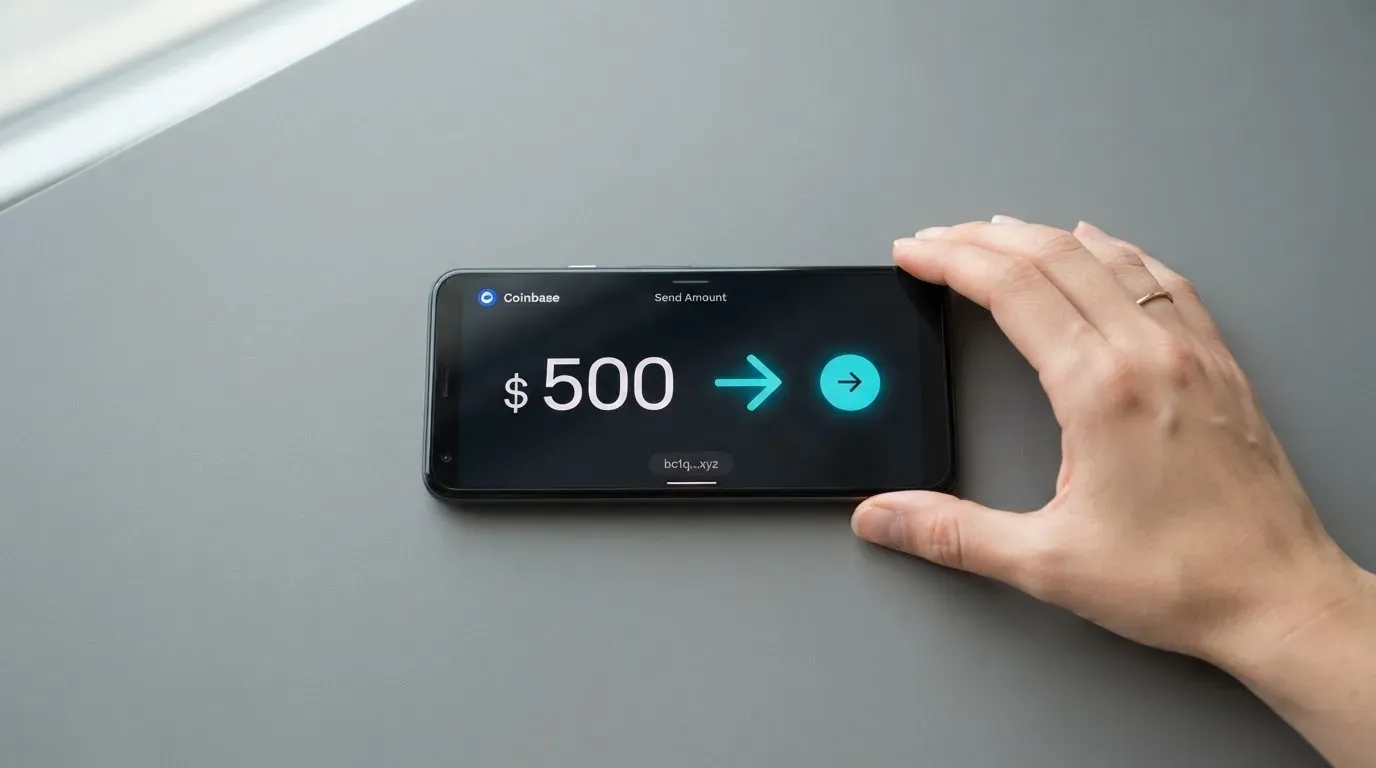
This is the best part of the card, and the reason the top-up criterion scores a full mark. The pages promise “135+ cryptocurrencies” across “35+ networks”, with USDT, USDC, BTC, ETH, SOL, TRX and LTC named as examples. The crypto is converted into your card balance as it loads, and crediting is described as instant. The minimum top-up is $25 USD equivalent.
The reason breadth matters more here than the fee does is that it removes the need for an exchange account in the middle of every payment. If the crypto you hold is on a network the provider supports, you send it and the balance appears. If you hold something exotic on a chain nobody supports, you are back to converting somewhere first, and you are paying that venue’s spread instead. For most people the coins on the examples list cover the holdings, which is why this scores 10.
Two details to get right on your first load. The network matters absolutely. Blockchain transfers are irreversible, and a deposit sent on a network the provider does not support, or to an address belonging to a different network, can be lost outright or need manual recovery with no guarantee attached. Match the network on the sending side to the network the provider shows you on the receiving side, character for character. And if your token needs a chain fee paid in that chain’s own coin, you need a little of the gas asset in the wallet; a USDT balance on Ethereum with no ETH cannot actually move.
Fiat top-up is not stated. So is withdrawal. The card is built in one direction, crypto in and card balance out, and whether you can pull the balance back off the card is something the public pages do not tell you. Given the balance is USD and there is a Convert mechanism implied by the collection features, it is worth asking directly before you rely on it.
Paying with it every day
The daily shape of this card is simple and, in most ways, pleasant. Apple Pay and Google Pay are supported, for contactless and online. Because you add a virtual card to a phone wallet, the card number itself does not sit in the phone’s general storage: mobile wallets replace it with a device-specific number kept in the phone’s secure hardware, and each payment uses a fresh one-time code. That is the ordinary security design of Apple Pay and Google Pay, and it is the reason putting this card in your phone is a reasonable thing to do.
The web dashboard at app.waldenpay.com and a Telegram bot handle cards, balances, deposits and notifications. There is no App Store or Google Play listing that I could find, so the web dashboard and the bot are the front end as things stand. Free support runs through a Contact Support page, an email address, and Telegram @WaldenPay, with hours and languages not stated.
Now the parts you spend money on, and the honest answer is that several of them are blank.
- No plastic. Virtual only. There is no physical card to print your name on, and nothing that works at a terminal that insists on a physical card.
- No stated ATM access. Whether you can withdraw cash, and at what fee, is not said.
- No stated card spending limits. Not a limit of zero; an absence of a published number. Some providers impose them silently and enforce them through declines.
- No stated blocked categories. Which merchant categories are refused is not published.
- No rewards. No cashback is mentioned.
- No stated dispute process for card payments. The one refund rule that is stated is narrow: incomplete Collect Payments are refunded automatically. For a purchase you simply do not want, or that never arrived, no process is described.
None of that means these things do not work. It means the card’s public pages will not tell you, and you would be discovering them at the till rather than at your desk.
What can go wrong
Let me separate three different kinds of risk, because they behave differently and only one of them is about the technology.
Counterparty risk is the big one. The programme runs under BlueHouse Software B.V., registered in Rotterdam, and the site states that WaldenPay “is not a bank” and that partners provide the accounts, the cards and the conversion. The issuing bank is not named and the licences are not named. That means the entity you are dealing with is not a deposit-taker in the ordinary sense, and your balance is not a bank deposit. In Europe, electronic money institutions must safeguard customer funds, by segregating them or insuring them, and even then those funds are not bank deposits and may not sit under a deposit guarantee scheme. Here, even that structure is described only as partners’ doing, in general terms.
The freeze risk, unofficially. An aggregator that reviews crypto cards reports that Reddit sentiment on WaldenPay is split: some users find it works for small-value private spending, others warn about the risk of a freeze by a partner bank. That reading comes from a third-party site and I could not check it against the original threads, so treat it as a rumour with a plausible mechanism behind it rather than as an established pattern. The mechanism is not far-fetched: if a partner bank freezes, your balance is stuck behind it, and the card company is not the bank.
Programme risk. Card programmes end. Visa terminated its global agreements with FTX on 13 November 2022 and the FTX US debit card was wound down. WaveCrest, a Visa issuer that supplied several crypto card brands, was suspended by Visa in Europe in 2018, closing all WaveCrest-issued Visa programmes. The pattern in a closure is a notice period, then loading and spending stop, then users are asked to withdraw. A 2026 closure reported by a secondary source had new loads ending 8 July 2026 and spending stopping 8 August 2026; that one figure is single-source and unconfirmed, but the shape of it is worth recognising in advance, because it means a card you hold is not a promise of permanence.
What is stated as protected. The card cites “256-bit AES encryption”, PCI DSS-compliant partners, and says full card numbers are not stored, with 24/7 monitoring. What is not stated: how custody and safeguarding work in detail, and what the app’s freeze and unfreeze controls actually do. For a balance you are converting from crypto, that gap is worth noting before you size the balance.
The everyday merchant friction. A merchant can look up the issuer on the card number’s first six or eight digits and see which institution and country issued it, and may apply extra scrutiny if that country differs from your billing address. This is why a foreign-issued card can look foreign to a shop. Some merchants decline prepaid or foreign cards outright. Address verification, which compares the numeric parts of the billing address you type with the issuer’s records, is mostly offered in the US, Canada and the UK and is generally unavailable on foreign-issued cards, which causes declines. A declined payment can leave a hold on your funds that stays for several days.
The stablecoin footing. You are spending dollars, but the dollars came from coins whose value is somebody’s promise. USDT and USDC are both pegged to the US dollar and together account for about 90% of stablecoin market capitalisation by the BIS’s July 2025 count, but stablecoins have depegged before: TerraUSD collapsed in May 2022, and USDC briefly lost its peg in March 2023. A card is only as good as the asset behind the balance. And these coins are not censorship-proof in the reassuring direction either: Tether says it disables tokens in wallets on the OFAC sanctions list and has frozen funds tied to illicit activity.
And the tax line. I am not going to advise you here, but I will say what the shape of it is. Digital assets are generally treated as property for tax purposes, so exchanging them for goods, services or dollars generally produces a gain or a loss measured in your local currency at the value on the date of the transaction. For personal holdings that is a capital gain, short-term if held a year or less. A card payment funded from crypto can therefore be its own disposal. Take your own advice on it.
A note on where to check. ESMA maintains an interim register of authorised crypto-asset service providers, white papers and non-compliant entities, and a provider’s presence or absence there is a concrete thing to look up for yourself.
What to take instead
If the reason you are here is that the card works, here are the three alternatives I looked at, and why each one scores lower.
| Alternative | Score | Card type | Stated cost | Funding | Big caveat |
|---|---|---|---|---|---|
| WaldenPay | 6.3 / 10 | Virtual prepaid, Visa/Mastercard | $10 issue, $0 monthly, 5% base top-up | 135+ coins, 35+ networks | Issuing bank and licences not named |
| Cardex | 5.6 / 10 | Debit on VERVE, Visa, Mastercard, UnionPay | not stated | USDT, USDC, BTC wallets | Claims “one crypto card, 200+ countries”; card currency is Naira on the app listing |
| CardFlow | 4.9 / 10 | Virtual USD Mastercard in ~3 minutes | “Creating a virtual card is completely free”; monthly fee not stated | BTC, USDT, ETH or Naira bank transfer | Aimed at Nigeria — “Nigeria’s smartest fintech card platform” |
| HyperCard | 4.7 / 10 | Prepaid, network not stated on the app page | not stated | USDT, BTC, ETH via the app | No country list on official pages; “more than 176 countries” is acceptance, not eligibility |
A few patterns jump out. Cardex is the only one of the four that offers physical cards, and the only one whose conversion is described as happening at the moment of payment rather than at loading — it claims an “AI-Powered Conversion Rate” that scans global exchange rates and picks the best one when you spend, though it publishes no fee percentage. Its problem is focus: the app is built around the Naira, which does not help you unless that is your currency. CardFlow’s free virtual card is a genuine offer, and its three-minute creation is faster than WaldenPay’s ten, but its framing is Nigerian. HyperCard is the least transparent of the four on the pages I could read: no network stated on the app page, no fees stated, and the 176-country figure describes where the card is accepted rather than who can open one.
None of the three fixes WaldenPay’s central problem, and none shares it. The missing bank and licences are not something you shop around; either a provider names them or it does not. What the alternatives do is trade breadth for focus, which is a fair trade if you hold Naira or want physical plastic, and a poor one if your reason for being here is a card that accepts whatever coin you happen to hold.
For completeness, the general background behind all of this: a payment card number starts with a six- or eight-digit issuer identification number, and a merchant lookup on it reveals the issuing institution and country. A prepaid card draws on a stored balance rather than a linked bank account, and most crypto cards behave that way. The card network routes the messages and sets the rules, the licensed issuer holds the programme, and the crypto brand is often only a programme manager and front end. In the EU, an electronic money institution can issue e-money and payment cards but cannot lend. Visa and Mastercard do not themselves issue crypto cards; they license issuers, and they can suspend a programme.
Who I would recommend it to
I would recommend WaldenPay to someone who already holds stablecoins on a supported network, wants to pay ordinary merchants without opening a bank account, and has thought carefully about the fact that the entity behind the card is not a bank and does not name one. For that person, the economics are good: no monthly fee, no currency markup, a top-up fee that falls to 3% at real volume, and instant crediting across 135-plus coins. Ten minutes from sign-up to a card you can drop into Apple Pay is a genuinely nice thing.
I would not recommend it, without hesitation, to several other people. If you need a card that says your name on it, this one has no plastic. If you need to know that your money sits behind a named, licensed institution with safeguarding rules behind it, this one will not tell you which institution it is. If you are a small spender topping up $25 at a time, the flat 5% will cost you more than the card is worth. WaldenPay is unavailable in restricted jurisdictions like Russia, Belarus, and others, so readers there should not expect to open an account.
The honest summary is that this is a good mechanism attached to a thin wrapper. The top-up engine, the fee ladder and the instant mobile-wallet setup are all better than most of what I have looked at. The missing bank name, the missing licences, the missing limits, the missing Trustpilot page and the split user sentiment are all real, and they are exactly the things that decide how a card behaves on the one afternoon you need it most. Read the terms, ask support the awkward questions, and size the balance accordingly.
Frequently asked questions
What is the WaldenPay card?
It is a virtual prepaid payment card that spends a crypto balance. You load it from one of more than 135 cryptocurrencies across over 35 networks, the crypto converts into a USD balance, and a Visa or Mastercard number spends that balance. There is no physical card, and the balance is dollars rather than crypto by the time you pay.
How does the WaldenPay card work?
You register, clear whatever onboarding and eligibility checks apply, and make a first top-up of at least $25. The card is issued, typically within ten minutes of signing up. From then on you deposit crypto from a supported wallet, it credits instantly as a USD balance, and you pay with the card number or through Apple Pay or Google Pay.
Is WaldenPay a bank?
No, and it says so. The site states that WaldenPay “is not a bank” and that partners provide the accounts, cards and conversion. The issuing bank and the licences behind the card are not named. So your balance is not a bank deposit and is not covered by a deposit guarantee scheme.
Who owns WaldenPay?
The issuer entity listed is BlueHouse Software B.V., registration number 000062404148, at Bas Jungeriusstraat 200 A, 3081VP Rotterdam, Netherlands. The card is presented as a programme run with partner banks and processors rather than a bank’s own card.
Is WaldenPay available in my country?
It says sign-up and loading are supported globally except in restricted jurisdictions: North Korea, Iran, Syria, Cuba, Russia, Belarus, the Crimea, Donetsk and Luhansk regions, Afghanistan, and Myanmar. The Russia and Belarus exclusions cite EU restrictions and EU sectoral sanctions. The pages do not say whether citizenship or residence is what counts.
Does WaldenPay require KYC?
Registration is described as instant and some card pages say no identity documents are needed to get started, but purchases are “Subject to AML and regulatory requirements” and availability depends on onboarding and eligibility checks. Documents and age thresholds are not stated. Treat “no documents” as describing the front door, not a guarantee that verification never arrives.
How much does a WaldenPay card cost to set up?
There is a $10 one-time card issue fee and a $0 monthly fee, described as “No recurring charges, ever”. The real cost is the top-up fee, which starts at a flat 5% and falls as your 30-day card spend rises, reaching 3% at $100,000 in spend. WaldenPay adds no foreign exchange markup; the network’s standard rate applies.
Is the WaldenPay card safe?
It is as safe as a non-bank programme manager can be, and you should weigh that honestly. It cites 256-bit AES encryption, PCI DSS-compliant partners, no full card numbers stored, and 24/7 monitoring. But it names no issuing bank, publishes no spending limits, has no Trustpilot page, and third-party reviewers report split Reddit sentiment including warnings about a partner-bank freeze. No card carries a promise of safety.
Can I withdraw money from WaldenPay?
Withdrawal is not stated on the public pages. The card is built to move crypto in and card balance out to merchants, so treat getting funds back off the card as something to confirm with support before you depend on it. Deposits work in the other direction by design.
How do I add WaldenPay to Apple Pay?
Apple Pay is supported, for contactless and online payments. Add the virtual card in the Wallet app the same way you would add any card, and the phone stores a device-specific number in its secure hardware rather than the card number itself. Google Pay is supported too, and the card works for online payments in both wallets.
Choosing a virtual card – cryptocardadvisor
Content created by the «cryptocardadvisor» team