
A crypto Visa delivered in two minutes through a Telegram bot, with most of the fine print still to be filled in
 Available in US

VantaCard promises a real Visa card you can fund with crypto, get in about 2 minutes, and use with Apple Pay, all from a Telegram bot. That is a tidy pitch for anyone who has bounced off traditional banks or simply wants a card that talks to a wallet they already use. The reality, after going through the card’s own pages, is more measured: a small, UK-registered company, an unnamed issuing partner, fees that are partially disclosed, and a customer base that has left almost no trace on review sites. This review walks through who the card suits, what it actually costs, and what is missing from the picture, so you can decide whether it fits how you want to spend.
The conditions described here are current as of October 28, 2026.
Verdict: 5.9 out of 10
VantaCard sits in an awkward middle ground. The setup is genuinely fast, the top-up list is wide, and the card works with Apple Pay on a real Visa rail. But too many basics are simply not stated on the card’s own pages: monthly fees, conversion fees, the FX margin, the ATM fee, the KYC documents required, who actually issues the card, and which licences back the programme. When a card leaves that much blank, you are doing a job the issuer should be doing for you.
The score of 5.9 out of 10 reflects a product that works in the small, but asks for a lot of trust in the large. It is best for a Telegram user who wants a quick USD Visa, who tops up with a stablecoin, who is comfortable with crypto’s irreversibility, and who does not need an ATM tier. It is a poor fit for anyone who wants a fully documented card programme, an independent complaints trail, or a clearly identified European or US issuer.
How the score breaks down
| Criterion | Mark | Why |
|---|---|---|
| Who can get it | 6 / 10 | “Certain countries and territories” are blocked, but the list is only shown inside the app, so you cannot check eligibility before signing up. |
| Cost | 3 / 10 | Issuance and top-up fees are clear, but the monthly fee, conversion fee and FX fee are not stated at all. |
| Top-up options | 9 / 10 | Fourteen cryptocurrencies across 38 networks, with BTC, ETH and USDT named, and balance updates automatically. |
| Reliability and complaints | 6 / 10 | The company is registered in England and Wales, but the card issuer is only named as “card issuing partners”, licences are not disclosed, and no public Trustpilot page was found. |
| Everyday use | 7 / 10 | A real Visa, issued in about 2 minutes, with Apple Wallet and contactless support; ATM access is limited to the higher-priced tier. |
| Total | 5.9 / 10 | Fast and flexible on the surface, under-documented underneath. |
Who will they give you the card
VantaCard is open in principle to anyone who can pass a “quick identity check” through the Telegram bot, except for residents of “certain countries and territories”. The card’s own pages do not publish that list. Instead, the list is “shown inside the app”, which means you only find out whether you qualify after you have already opened the dashboard and started the sign-up flow.
That detail matters. On most regulated card programmes, the restricted countries list is published in the terms of service, so a prospective user can decide before sharing documents whether the card is even worth applying for. VantaCard’s approach forces you to begin the process before you can answer the basic question of eligibility. If you live in a country that may be on the list, you have no way to check in advance.
Beyond the country rule, the card’s own pages do not state which documents the identity check requires, the minimum age, or whether different KYC levels unlock higher spending limits. The phrase “a quick identity check” is the only description given. This is not unusual for Telegram-based crypto products, but it does mean the level of due diligence is something you discover by trying.
In short, the answer to “who will they give you the card” is: probably most adults outside a small, undisclosed set of countries, with a real identity check that you cannot preview in advance.
How to get it
The signup path is one of VantaCard’s most distinctive features. There is no app to download, no web form on a marketing site, and no separate account portal. You start inside Telegram.
You open the bot, the bot opens a dashboard, and the identity check is described as a “quick identity check” run from inside that dashboard. The card itself is described as a “real Visa card” and is issued “in about 2 minutes” once you are approved. There is no shipping, because the card is added to your phone wallet directly, and because one of the two tiers is explicitly “Online & Apple/Google Pay”, which is virtual-only by design.
You pick one of two products at the point of issue:
- Online & Apple/Google Pay, a USD virtual card for online and mobile-wallet spending, with an issuance fee of 20 USDT.
- USD + ATM, a higher-priced tier with an issuance fee of 125 USDT, which is the only one that supports cash withdrawals.
Both tiers are USD-denominated and Visa-branded. The card’s pages mention 16 designs, which is the only cosmetic option offered. Validity is 36 months from issue.
The lack of a separate mobile app is unusual and is worth pausing on. Telegram bots are not as reliable as native apps: bot interfaces change, the bot can be slow during network issues, and the entire sign-up depends on Telegram continuing to host the bot. The card’s own pages refer to Telegram as the operating environment for support, the dashboard and the card, so this is not a temporary measure.
Fees: what it really costs
This is the section where the gap between promise and disclosure is widest. The card’s pages are clear on what they publish and silent on what they do not. The two fees you can read off the site are:
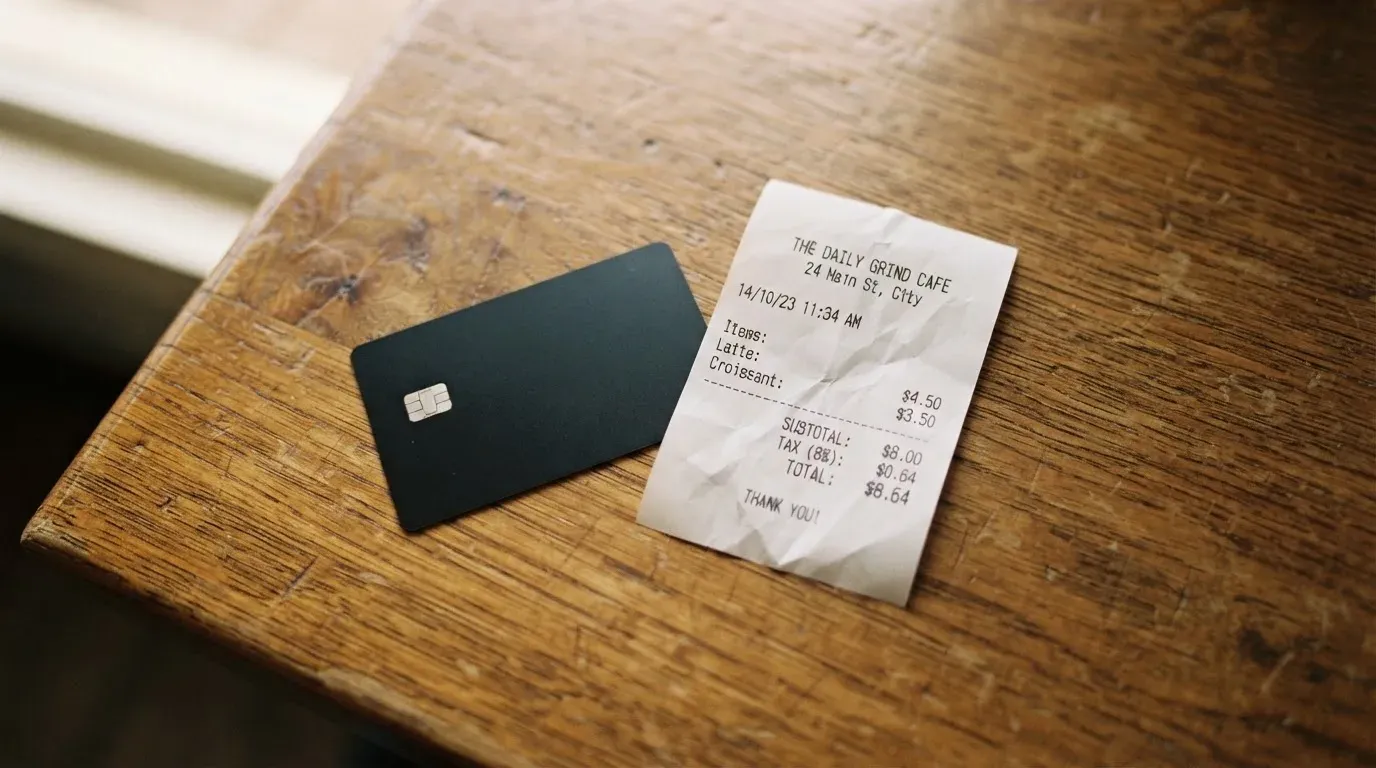
- Issuance: 20 USDT for the Online tier, 125 USDT for the USD + ATM tier.
- Top-up: 1 USD plus 3.8% (Online) or 1 USD plus 4.5% (USD + ATM).
Everything else is either partial or not stated. There is no published monthly fee, no annual fee, no published conversion fee for spending non-USD currencies, no published FX margin, no published ATM fee, and no published inactivity fee.
The practical effect of that is: if you plan to spend mostly in USD with USDT, you can budget the issuance and the top-up fee. If you plan to spend in EUR, GBP or any other currency, you are buying an unknown conversion margin, because the card does not tell you what it is. The same goes for the ATM tier, where you know the daily ceiling ($750) but not the percentage or flat fee that the operator takes from each withdrawal.
VantaCard’s silence on conversion and FX fees is a real gap, and it is the main reason the cost score lands at 3 out of 10: the fees you can see are reasonable, but the fees you cannot see could be anything.
Costs at a glance
| Fee or limit | Online tier | USD + ATM tier |
|---|---|---|
| Issuance | 20 USDT | 125 USDT |
| Monthly fee | Not stated | Not stated |
| Top-up fee | 1 USD + 3.8% | 1 USD + 4.5% |
| Conversion fee (non-USD) | Not stated | Not stated |
| FX margin | Not stated | Not stated |
| ATM withdrawal fee | Not applicable | Not stated |
| ATM daily limit | Not applicable | $750 |
| Per-transaction limit | $10,000 | $50,000 |
| Monthly spend limit | $150,000 | $100,000 |
| Minimum top-up | 20 USD | 5 USD |
| Card currency | USD | USD |
What a few everyday payments look like
To make the published fees more concrete, here is what you would actually pay under common scenarios, using only the fees that VantaCard has stated.
- A $100 online subscription paid from USDT on the Online tier. You top up 100 USDT, the platform takes the 1 USD plus 3.8% top-up fee, so the cost to load the card is about $4.80. The card then pays the $100 subscription; any conversion fee would apply on top if the merchant bills in a non-USD currency. The platform makes no further charge on a USD-to-USD payment, as far as the published fees indicate.
- A $500 in-store contactless payment at a coffee shop, paid in EUR from a USD balance. You fund the card with USDT and the published top-up fee applies at load time. At the point of sale, the Visa network converts USD to EUR, and the percentage that VantaCard adds on top is not stated. The only number the card’s pages give you here is the per-transaction limit ($10,000 on this tier), not the conversion cost.
- A $200 ATM withdrawal on the USD + ATM tier. The card’s pages do not state the ATM operator’s fee. You know the ceiling is $750 per day, you know the issuance was 125 USDT, and you know the load fee was 1 USD plus 4.5%, but the per-withdrawal fee is a blank.
In all three cases, the load-time fee is small and predictable. The conversion, FX and ATM fees are the unknown variables, and for a card that is meant to compete in cross-border online spending, leaving those blank is unusual.
Top up: how to fund the card
Top-up is the strongest part of the product. The card’s pages describe 14 cryptocurrencies across 38 deposit networks, with BTC, ETH and USDT named explicitly. The list is wide enough that a user with holdings spread across chains is likely to find a route without bridging first.
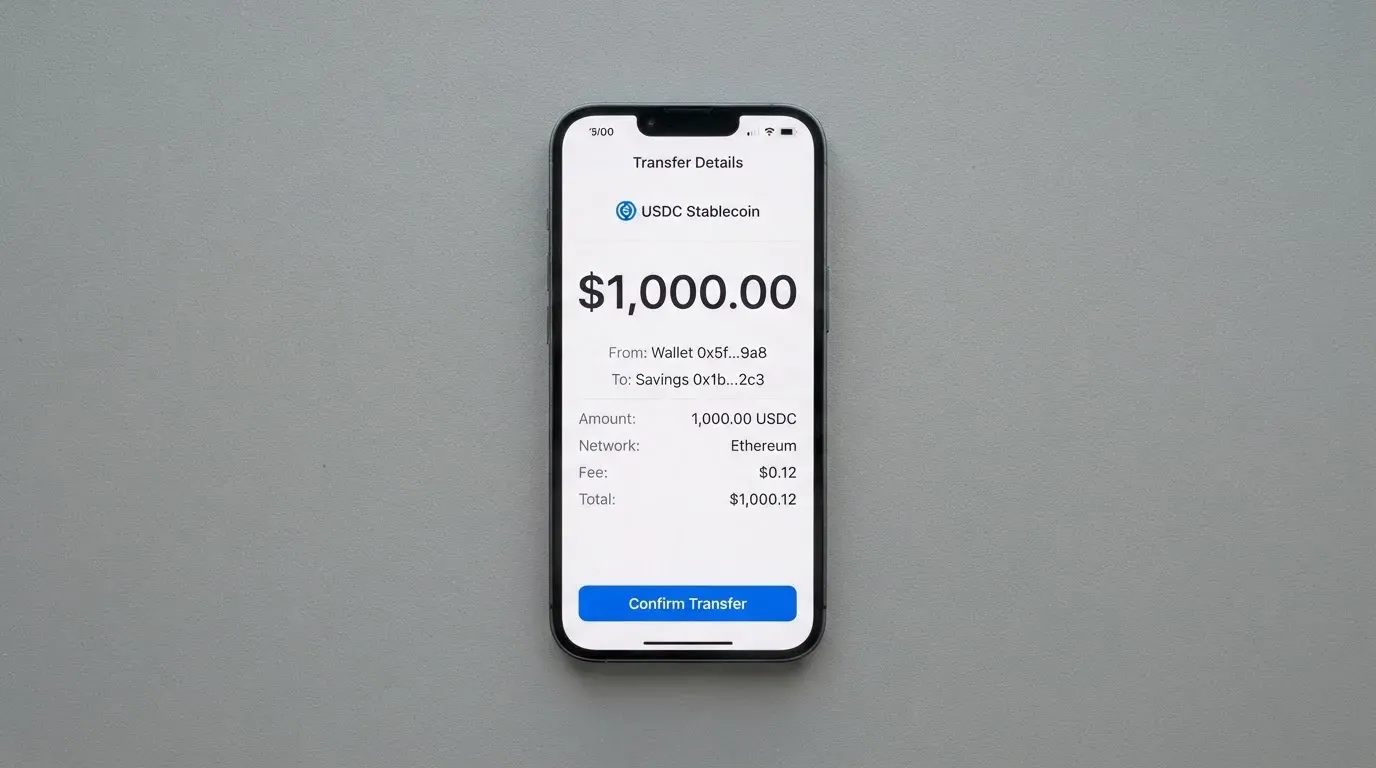
In practice, the flow is straightforward. You send crypto to the deposit address shown inside the bot, on the network the bot specifies, and the card’s balance updates automatically once the transfer confirms. There is no manual claim step, and no need to email support to credit a transfer.
Two minimums are published. The Online tier requires a minimum top-up of 20 USD; the USD + ATM tier requires 5 USD. Combined with the load fees above, the Online tier favours larger, less frequent loads, while the USD + ATM tier is more friendly to small top-ups because the percentage load fee is higher on smaller amounts.
What the card does not publish is whether fiat top-up is supported, for example by bank transfer or card. The “14 cryptocurrencies across 38 networks” wording covers crypto, and there is no mention of a fiat rail in the pages reviewed. If you earn in fiat rather than crypto, that is a real limitation: you would need to convert to a supported token first through an exchange, which adds a second set of fees on top of VantaCard’s load fee.
The card’s terms also note that the operator “may suspend or terminate access”, and they do not describe the fate of any balance held in that case. In a custodial model, that is not a hypothetical risk: if the programme is wound down, the timeline for returning your balance depends entirely on the operator.
A practical note on networks: stablecoin transfers are irreversible on-chain. If you send USDT on a network the card does not support, or to an address that belongs to a different chain, recovery is not guaranteed and typically requires manual support. The same applies to the 38 networks VantaCard does support: pick the exact one the bot shows you for that load, do not infer it from a previous session.
Paying with it every day
For a card that runs entirely out of a Telegram bot, the everyday experience is surprisingly conventional. The Online tier card adds to Apple Wallet or Google Pay, after which you can pay contactless in shops and online, with the card number and the merchant’s authorisation going through the standard Visa rail. Because the card is a real Visa, it works at the vast majority of online merchants that accept Visa, including subscriptions and travel sites.
There is no published list of blocked merchant categories, and no published cashback or rewards programme. Compared with mainstream crypto cards that offer 1% to 5% back in crypto on spending, VantaCard’s positioning is closer to “plain spending” than to a rewards product.
ATM access is the dividing line. Only the USD + ATM tier supports cash withdrawals, with a daily limit of $750. The Online tier is wallet and online only. If you live in a country where most day-to-day spending is still done in cash, that limitation matters. If you live in a country where contactless and online payments dominate, the Online tier is enough.
Support for problems is described as “Ask in the app”, which means inside the Telegram bot. The card’s terms page lists a contact placeholder, and the rest of the dispute process is described in one sentence: “Crypto and card transactions are generally irreversible once confirmed”. That line is true, but it is the only thing the card says about what to do if a payment goes wrong, if a merchant charges the wrong amount, or if a card is used without your permission.
For prepaid-style cards of this type, the practical safety net is the cardholder’s ability to freeze the card, replace it, and dispute specific transactions through the issuer. VantaCard’s own pages do not document 2FA, instant freeze, or the dispute process, so the safeguards you can rely on are the ones built into the Visa rail and your phone’s wallet, not the ones VantaCard publishes.
What can go wrong
The risks around a card like this fall into four buckets, and VantaCard’s own pages leave most of them only partly addressed.
Counterparty risk. The card runs on Vanta Group Ltd, registered in England and Wales under company number 16546788, at 17 Montgomery Road, Newark, NG24 4HA. The actual card issuer is referred to as “card issuing partners” and is not named. The licences the issuer relies on are not stated. In a card programme, the issuer is the entity that holds the BIN and is regulated to issue the card; when that name is not on the card’s own site, it is harder to confirm which regulator oversees the programme and which scheme rules apply in a dispute.
Custodial balance risk. Crypto that has been loaded into the card is held on a custodial balance in your name. The terms reserve the right to suspend or terminate access, without describing what happens to the balance. Custodial platforms have a real history of large failures, including Mt. Gox, Coincheck and Ronin, and even regulated platforms have been caught up in card programme wind-downs after network action, such as Visa terminating its FTX agreement in November 2022. The product pages note that the balance is “held in your name”, which is a positive framing, but the disclosure around what happens on termination is thin.
Irreversibility. Crypto transfers are irreversible on-chain, and the card’s own pages say so. If you send USDT on the wrong network, or to a deposit address that has rotated, support may or may not be able to recover it. The card’s pages do not describe a recovery process, only that you should be careful.
Visibility. A search across common review sites for VantaCard returned no Trustpilot page, no Reddit thread of note, and no third-party incident reporting. The card is new enough, or quiet enough, that there is little public track record to lean on either way. The absence of complaints is not the same as a clean history, and for a card that publishes only some of its fees, the absence of complaints is particularly weak evidence of reliability.
None of these risks are unique to VantaCard, and many apply to any custodial crypto card. What is specific to this product is the combination of partial fee disclosure, an unnamed issuer, and a thin support surface.
What to take instead
VantaCard is one of a growing set of Telegram-based crypto cards. The three closest alternatives are Azul Card, Telecard and OnCards. None of them is a perfect substitute, and each has its own gaps, which is part of why this category is hard to navigate.
Azul Card. Score 5.3 out of 10. Azul is a Telegram-based virtual Mastercard with a published restricted-country list, which is more transparent than VantaCard’s. Azul explicitly excludes Russia, Belarus, North Korea, Iran, Syria, Cuba, Sudan, Venezuela, Ukraine and the Crimea, Donetsk, Luhansk, Zaporizhzhia and Kherson regions, and states that the restrictions apply regardless of the user’s nationality. The card has a $20 one-time creation fee, refunded after $2,000 of spending, and a $5 monthly maintenance fee. Top-up is via crypto with a 4% fee plus $0.25 per transaction. The country list is the main advantage over VantaCard, because it lets you check eligibility before you start. The maintenance fee is the main drawback.
Telecard. Score 6.1 out of 10. Telecard is a virtual Mastercard available wherever Mastercard is accepted, with a stated reach of more than 150 countries, restricted only by US sanctions including OFAC. The basic plan is described as free to sign up, with a $99 minimum deposit that is explicitly stated as “NOT a fee” because it stays in the wallet. The VIP tier is $49 to set up and $19 per month. Currency conversion is 1.5% on non-USD payments, plus a 0.5 USDT gas fee per transaction; FX and cross-border fees are advertised as “up to 3% each”. Funding is USDT on Tron or Ethereum, USDC on Ethereum, with bank transfers listed as “coming soon”. The clearer fee structure and the named networks make Telecard easier to budget than VantaCard, but the VIP plan is expensive if you actually use the card.
OnCards. Score 4.6 out of 10. OnCards is also a Telegram-only product, described as a virtual Mastercard or Visa. The site promises “simple and clear fees” but does not actually state any amounts in the pages reviewed. Funding is listed as USDT on BEP20 only, with bank transfers not accepted. There is no country list, no reward programme and no fee schedule, which makes it hard to compare directly. The narrow top-up route is a real limitation.
Across the three, Telecard is the most fully disclosed, Azul is the most transparent on eligibility, and OnCards is the most under-documented. VantaCard sits between OnCards and Telecard on disclosure, and between Azul and Telecard on fee levels. If a published country list matters to you, Azul wins. If published fees for cross-border spending matter to you, Telecard wins. If you specifically want a USD Visa with Apple Pay, fast issuance and a wide top-up list, VantaCard is competitive.
| Alternative | Type | Score | Published country rules | Published key fees |
|---|---|---|---|---|
| VantaCard | Virtual Visa (Online tier) and USD + ATM | 5.9 / 10 | Inside the app only | Issuance 20/125 USDT, top-up 1 USD + 3.8%/4.5% |
| Azul Card | Virtual Mastercard | 5.3 / 10 | Yes, full list | $20 creation (refundable), $5/month, 4% top-up + $0.25 |
| Telecard | Virtual Mastercard | 6.1 / 10 | Yes, sanctions-based | 1.5% conversion, 0.5 USDT gas, up to 3% FX |
| OnCards | Virtual Mastercard / Visa | 4.6 / 10 | Not stated | Not stated |
Who I would recommend it to
After going through the card’s own pages, the kind of reader VantaCard fits is narrow but real. You are a Telegram user, you already hold a stablecoin like USDT or USDC, you spend mostly online or via Apple Pay, and you are comfortable with a card where the issuer is described only as “card issuing partners” and where the monthly, conversion and FX fees are not stated on the public site. You can absorb the 1 USD plus 3.8% or 4.5% load fee as the cost of convenience, and you do not expect cashback, dispute support beyond the standard Visa rail, or a published list of blocked countries.
The kind of reader who should not pick this card is also clear. If you need a card that explicitly states its monthly fee, its conversion margin and its issuer, VantaCard’s pages will not give you that. If you live in a country that might plausibly be on the unpublished restricted list, the only way to find out is to start the sign-up. If you need ATM access, only the higher-priced tier offers it, and the per-withdrawal fee is not stated. If you want a card with a third-party reviews trail you can read before you sign up, VantaCard has no public Trustpilot or Reddit footprint at the time of writing.
The two practical checks before signing up are: first, look at the bot’s restricted-country list as soon as you open the dashboard, before you load any documents, and confirm your country is not on it. Second, send a small test top-up rather than a large one, so that any mistake in the network or address is cheap to absorb. Both checks are the kind of thing a fully disclosed programme would not require you to do, and both are reasonable given how much the card’s pages leave unsaid.
Frequently asked questions
What is VantaCard?
VantaCard is a crypto-funded payment card issued by a UK-registered company called Vanta Group Ltd and run out of a Telegram bot. The card is a real Visa, USD-denominated, and comes in two tiers: a virtual card for online and Apple/Google Pay spending, and a higher-priced tier that adds ATM access.
How does VantaCard work?
You sign up through a Telegram bot, complete a “quick identity check”, and receive a virtual Visa card in about 2 minutes. You fund the card by sending one of 14 supported cryptocurrencies across 38 networks to a deposit address; once the transfer confirms, the card’s balance updates automatically and you can spend it online or via Apple Pay.
Is VantaCard a bank?
No. VantaCard is operated by Vanta Group Ltd, a company registered in England and Wales, and the card itself is described as issued by “card issuing partners” who are not named on the card’s pages. It is a card programme, not a bank, and the balance is held by the operator, not deposited with a deposit-taking institution.
Who owns VantaCard?
The card is operated by Vanta Group Ltd, registered in England and Wales under company number 16546788, at 17 Montgomery Road, Newark, NG24 4HA. The card’s pages do not name the directors, shareholders or ultimate parent, and do not identify the issuing bank or e-money institution that holds the card programme.
Is VantaCard available in my country?
The card’s own pages say it is “not available to residents of certain countries and territories” and that the list is “shown inside the app”. The list is not published publicly, so the only way to confirm your country is not excluded is to open the bot and check before submitting identity documents.
Does VantaCard require KYC?
Yes. The card is issued “subject to identity verification and eligibility”, and the sign-up flow includes a “quick identity check” run from inside the Telegram bot. The card’s pages do not list the specific documents, age threshold or any tiered KYC levels, so the depth of the check is something you discover by starting the process.
How do I top up VantaCard?
You send one of 14 supported cryptocurrencies across 38 deposit networks to the deposit address shown inside the bot, on the network the bot specifies for that load. Supported tokens explicitly named on the card’s pages include BTC, ETH and USDT. The balance updates automatically once the transfer confirms.
How do I add VantaCard to Apple Wallet?
Once the virtual card is issued, the card’s pages describe it as compatible with Apple Wallet and Google Pay for contactless and online spending. The exact steps depend on the bot’s interface; in practice, the card is provisioned into the wallet through the standard tokenisation flow that Visa supports for Apple Pay.
Is VantaCard safe?
The card’s pages state that the balance is “held in your name”, which is positive, but they do not document two-factor authentication, instant card freeze, or the dispute process. Crypto transfers are described as “generally irreversible once confirmed”. The card issuer is referred to only as “card issuing partners”, and no Trustpilot or third-party reviews were found at the time of writing.
Is VantaCard worth it?
If you are a Telegram user who already holds stablecoins, spends mostly in USD online, and is comfortable with a card that does not publish its monthly, conversion or FX fees, VantaCard is competitive within the Telegram-based crypto card category. If you need a fully disclosed fee schedule, a named issuer, or a published list of restricted countries, the alternatives in this review may suit you better.
Choosing a virtual card – cryptocardadvisor
Content created by the «cryptocardadvisor» team