
A very new crypto card that publishes almost nothing
 Available in US
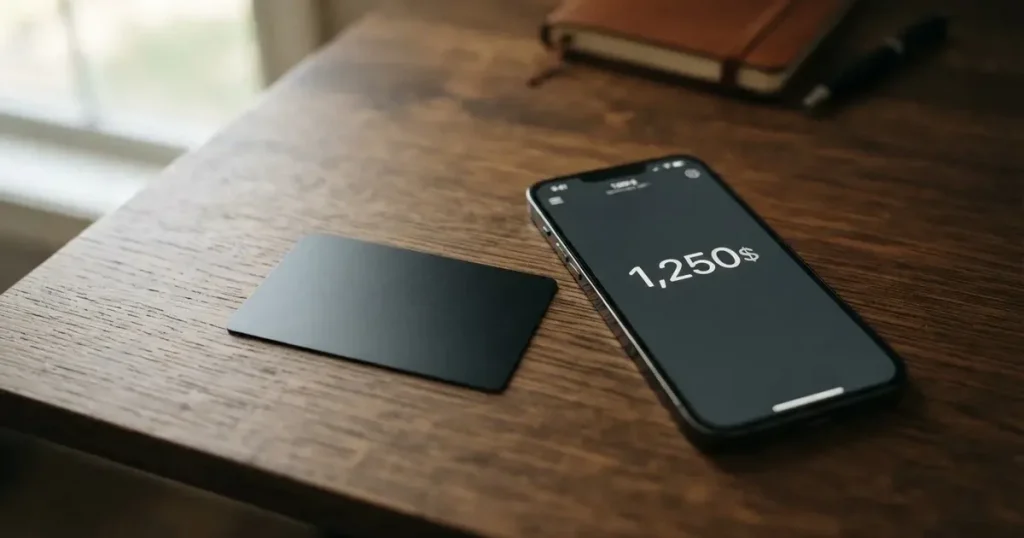
The UstarPay card is a crypto payment card: you load it from a digital-asset balance and then pay with it like an ordinary Visa. On paper that is a simple idea, and the appeal is obvious to anyone who has USDT sitting on an exchange and a shop that refuses to take it. My problem is not the idea. It is how little is written down. When I went through the card’s own pages and the third-party material about it, I found that the essential facts — which countries are served, what the card costs, what the limits are, when the money arrives — are not published. Almost everything circulating about UstarPay comes from a single secondary source and is not confirmed by the card.
So this review is partly a description and partly a warning about the description. Below I tell you what is known, what is only rumoured, and which gaps matter most for you.
Conditions are current as of October 28, 2026.
Verdict: 4.8 / 10
My score for UstarPay is 4.8 out of 10. That is not a verdict on crypto cards as a category — several of those are more transparent. It is a verdict on how early this particular product is, and on how much of it you would have to take on trust.
| Criterion | Mark | Why |
|---|---|---|
| Who can get it | 5 / 10 | Officially undisclosed. Unofficially: no country list published; access depends on KYC approval and your country being on a regulated list |
| Cost | 5 / 10 | Not disclosed. Unofficially: a virtual card issuance fee exists in the base product, amount not published, campaigns have waived it; FX, ATM and replacement fees not published |
| Top-up options | 5 / 10 | Unofficially: the only confirmed route is USDT into the in-app wallet; other assets are swapped into USDT; networks Ethereum, Bitcoin, Solana |
| Reliability and complaints | 4 / 10 | Unofficially: operator USTAR GLOBAL TECH LIMITED, Hong Kong, incorporated 12 January 2026; issuing bank not named; Trustpilot 0 reviews, no complaints found |
| Everyday use | 5 / 10 | Unofficially: the card can be added to Apple Pay or Google Pay depending on device and region; card type, cash machines and delivery not disclosed |
The total is 4.8 / 10.
Who does this suit? In one line: early adopters funding a new Visa card with USDT. If you already hold stablecoins, you are comfortable with a young product, you can tolerate a scenario where a support answer is slow, and you would not be financially hurt by a balance being frozen for a week, then UstarPay is worth a small, deliberate test — never a place to park money you need next month.
Who does it not suit? Almost everyone else. If you need a card for salary, rent, subscriptions you cannot miss, or anything where a declined payment causes a real problem, the missing information here is disqualifying on its own. You cannot price a product whose fees are unpublished, and you cannot plan around limits you have never been told.
Let me be fair about what the card does seem to be. UstarPay is a Visa card, it is funded from crypto, and it can go into a mobile wallet. That is a coherent product. It is just very young and unusually quiet about its own details.
Will they give you the card?
I cannot tell you, and neither can the card’s public pages.
The country list is not stated. That is the single most consequential gap for anyone reading this outside a listed jurisdiction, because “available in your country” is the first question almost everyone has. The material I could find does not include a list of eligible countries, nor a list of excluded ones.
Unofficially — and this comes from a third-party source, not from the card — access appears to depend on two things: passing the identity checks, and your country sitting on a regulated list the provider maintains. The same source advises checking the current list on official channels rather than relying on an article. That is the sensible instinct. A list that is not published today may exist somewhere, may change, and may not apply to you even if you find it.
I want to be careful here about a second thing: national rules. I am not going to explain how to get around any country’s restrictions, and if a card is not offered where you live, that is the provider’s decision and often a legal one. What I will say is that eligibility questions are best settled by asking the company directly rather than by reading a review — including this one.
How to get it
Nobody has published the application process. Not the identity requirements, not the approval time, not the delivery time for a physical card.
What is not stated: the KYC procedure itself. Unofficially, identity verification is mandatory before you can fund or spend, the documents accepted vary by region, and approval takes time you should plan around rather than assume away. If you are considering this, treat the sign-up as a process with a waiting period, not a five-minute formality.
The card product is also not stated officially beyond the starting data naming it a Visa card. So: is it physical, virtual, or both? Delivery is not stated. Nor is the tier structure — several crypto cards have several tiers, and I cannot tell you whether UstarPay has one or more.
What you can reasonably do is expect the standard: an application, some form of identity document check, approval, then a card or card record in the app. Everything beyond that is me guessing at a normal pattern, and I would rather say so than write a confident how-to that quietly invents steps.
Fees: what it really costs
Here is where this card is most exposed, and I want to be blunt about it. The cost of the UstarPay card is not stated. Neither are the fees. There is no published price sheet.

| Fee or limit | What is published |
|---|---|
| Issuance | Not stated. Unofficially a virtual card issuance fee exists in the base product, amount unpublished, and campaigns have waived it |
| Monthly fee | Not stated |
| Conversion / swap | Not stated. Unofficially the in-app swap pairs and spreads are not published |
| FX | Not stated |
| ATM / cash withdrawal | Not stated |
| Replacement | Not stated |
| Daily limits | Not stated |
| Monthly limits | Not stated |
| Currency | Not stated |
When the card’s public pages do not say something, I say so rather than filling the gap. In this section that applies to almost every line in the table.
Now, the everyday version of that. Take three payments you would plausibly make this month and ask what you can actually answer.
- A coffee abroad, paid on the card. You are spending a balance denominated in stablecoin and receiving goods priced in a local currency. Whether that conversion costs you anything, and how much, is not published. The unofficially reported answer is that the in-app swap spreads are not disclosed. So the honest position: you do not know what this coffee costs in fees.
- An online subscription in dollars. The 3-D Secure check may or may not appear, the merchant category may or may not matter, and any decline handling fee is not published. You do not know the cost of a failed payment either.
- A cash withdrawal. Whether the card works at cash machines at all is not stated, and the fee is not published. This is the line where “unknown” is most likely to cost you real money.
There is one cost you can at least place. The network fee for depositing USDT belongs to the blockchain, not to UstarPay — you pay the chain’s own fee, not the card provider’s. That is worth knowing precisely because it is one of the few numbers in this section that is knowable.
And one that is not a fee but behaves like one: if you get the network wrong on a deposit, the money is gone. That is not a fee, it is a total loss, and I will come back to it.
My practical advice: before you put real money in, work out what the exchange rate cost of your own usage would be — the spread between the price you paid for the stablecoin and the value you get — and compare it against what a mainstream crypto card charges for the same thing. If the UstarPay card is cheaper, great; if not, you have just added a step.
Top up: how the balance gets in
The funding route is not stated officially. Unofficially, and this is the clearest picture the card has anywhere: depositing USDT into the in-app wallet is the only confirmed path, and an in-app swap converts other listed assets into USDT. The networks named are Ethereum, Bitcoin and Solana.
That is a workable design. Anyone holding BTC or ETH has to swap into USDT first, which means paying the swap spread (unpublished) and the chain fee, and then topping up. Anyone holding USDT on a chain you have picked carefully can go direct.
Two things are not stated that you will want to know. The minimum top-up is not stated, and neither is any withdrawal route. The withdrawal question is a real one and I would not skip it: if you cannot get money back off the card or out of the wallet, the balance is not really yours in any practical sense. I found no published answer, and I am not going to invent a method.
The network point deserves more than a line, because it is the most common way people lose money in this category. Depositing on a network the provider does not support, or sending to an address belonging to a different network, can lose the funds outright. Blockchain transfers are irreversible; there is no support desk that can reverse one. Before your first deposit, confirm which networks this wallet accepts for this card, match them to the network your USDT actually sits on, and send a small test amount first. Note also that a USDT transfer can fail for a reason that has nothing to do with UstarPay: on Ethereum, fees are paid in ETH, so a wallet holding USDT and no ETH cannot send at all.
Paying with it every day
Day-to-day use is where the promise lives or dies, and the published picture is thin.
Wallets: not stated officially. Unofficially, official posts said the card can be added to Apple Pay or Google Pay, depending on your device and region. That is genuinely useful — a tokenised number in a phone wallet is a different security posture from a plastic card, because the device stores a number that is not your card number and each payment carries a one-time code. Whether yours will work is a question of region as much as device.
Rewards: not stated officially. Unofficially, there is no confirmed permanent cashback rate. What exists are time-limited campaigns: a $1 sign-up coupon, a $2 verification coupon, and $50 for the top referrers until 31 October 2026, plus a referral payout of 3 USDT per qualifying friend up to a cap. Read that list as promotion, not as a benefit you can plan around. A rate that only exists while a campaign runs is not a rate, and a referral scheme pays the person who refers rather than the person who is referred.
The app: not stated. The app store listing page could not be read, and the reviews there are too few to give a meaningful rating. So I cannot tell you whether the app is well made, whether it works, or whether support answers.
Disputes: not stated. And this one deserves a paragraph of its own, because it is the difference between a card and a wallet. If a shop takes your money and does not deliver, what happens? Who investigates? There is no published chargeback policy, no stated dispute process, no complaint history. I found no complaint data either — no published chargeback history, and the product is very new. That absence is neutral in principle, but it means you are the one doing the work if something goes wrong, with no published path to point at.
Practical day-to-day, then: the mechanics sound fine, the fees are unknowable, and the protection when something goes wrong is undefined. That combination is fine for experimenting and wrong for relying on.
What can go wrong
The failures here are not exotic. They are the ordinary failures of young financial products, and I want to name them plainly.
Nobody behind it, yet. The operator is not named on the pages I could read. Unofficially, the app operator is given as USTAR GLOBAL TECH LIMITED, a Hong Kong company incorporated on 12 January 2026. The starting data instead names CORAL GLOBAL TECH PTE. LTD. in Singapore and FASTESTPAY LTD. as a Canadian MSB. The two sources differ, neither is verified, and the issuing bank is not named. A company incorporated in the past year has no track record, and I would want to know who stands behind the funds before I put anything meaningful there.
The programme can close. Cards in this category do get wound down. Visa terminated its agreements with FTX in November 2022 and the US debit card was wound down. WaveCrest, a Visa issuer that supplied several crypto card brands, was suspended by Visa in Europe in 2018, closing all WaveCrest-issued Visa programmes. When a programme closes, the pattern is usually a notice period, then loading and spending stop, then users are asked to withdraw remaining balances. A 2026 closure reported by a single unconfirmed secondary source had new loads ending 8 July 2026 and spending stopping 8 August 2026. That is exactly the scenario in which an unpublished withdrawal route matters.
Your money may be held by someone else. Custodial platforms have failed before: Mt. Gox (about US$350 million reported stolen, 2011–2014), Coincheck (about US$400 million, 2018) and Ronin Network (US$625 million, 2022). Control of crypto belongs to whoever holds the private key, and a seed phrase is an unencrypted form of it that anyone can use to restore a wallet and spend the funds. There is no built-in recovery: transfers are irreversible and a network cannot freeze or return money.
Security claims are unverified. Multi-signature wallets and cold/hot wallet separation are claimed in this category but not independently audited here. Take them at face value and no more.
Frozen accounts are normal, not exceptional. If due diligence cannot be completed, rules require the institution to decline the transaction and, where necessary, end the relationship — which is why accounts get closed or frozen pending documents. Sanctions screening is applied to citizenship and country of birth as well as address. If a payment is declined, a hold can stay on the funds for several days, typically up to seven.
Some merchants simply will not take it. The first six or eight digits of a card identify the issuer and country, and shops can look that up and apply extra scrutiny or refuse the card outright, particularly when the issuer country differs from the billing address. Address verification is generally unavailable for foreign-issued cards, which causes declines. So “does it work here” is not a question with a yes or no answer.
Taxes attach to each payment. In the US the tax authority treats digital assets as property, so exchanging them for goods or services generally produces a taxable gain or loss, measured in local fiat at the value on the transaction date. Each card payment funded from crypto may be a separate disposal. I am not giving tax advice and you should take your own advice on your own situation — but you should not treat a card payment as spending already-taxed money.
Support is thin. Not stated officially. Unofficially, contact runs through the website, an X account and Telegram, with no published support hours. If you need an answer in a language you read comfortably, that is a question to ask early.
What to take instead
If you want the same basic convenience with more published detail, there are options. I am comparing these on what is stated, not endorsing any of them.
| Cardex | CardFlow | HyperCard | |
|---|---|---|---|
| Score | 5.6 / 10 | 4.9 / 10 | 4.7 / 10 |
| Who it is for | One crypto card, 200+ countries; no country list or exclusions; app listing is Naira-focused | Aimed at Nigeria and “Nigerians and global users”; no list stated | No country list on official pages; app says it works in more than 176 countries (acceptance, not eligibility) |
| Card | Debit crypto card on VERVE, VISA, Mastercard and UnionPay; virtual and physical; listing shows Naira | Virtual USD Mastercard, created in about 3 minutes | Prepaid; network not stated on the app page; balance in USD or EUR |
| Cost | Not stated | Creating a virtual card is free; monthly fee not stated | Not stated; app page lists no fees |
| Fees | Real-time conversion at payment, with a stated “AI-Powered Conversion Rate” that picks the best rate when you spend; no percentage published | Not stated | Not stated on pages available |
| Top-up | USDT, USDC and BTC wallets; networks not stated | Bitcoin, USDT, ETH or Naira bank transfer; networks not stated | Deposit crypto such as USDT, BTC or ETH in the app, converted to USD or EUR; networks not stated |
What this table actually tells you is a pattern: none of the four publishes a full cost breakdown. Cardex at least describes its conversion mechanism openly, and CardFlow states plainly that creating a virtual card is free. UstarPay publishes neither. If your priority is knowing what you pay before you pay it, Cardex and CardFlow are easier to read; if your priority is the widest reach on paper, Cardex claims 200+ countries.
And if what you actually need is a card that works everywhere and is boring, the honest answer is that a mainstream card funded from a bank account beats all four for reliability, and the crypto card is then only interesting for the part of your money you are comfortable holding in stablecoins.
Who I would recommend it to
I would recommend the UstarPay card to someone who already lives in stablecoins, has tested it with an amount they would not mind losing entirely, and has read the terms on the provider’s own site rather than any review — including this one. If your money comes from a salary, the picture is different, and I would say wait for the fee schedule and the withdrawal route to be published.
I would not recommend it as your only card. Not because the product looks bad — it looks like a reasonable design — but because you cannot presently answer three questions that any card should answer: what it costs, how much you can move, and what happens when something goes wrong. Those are not gaps you can price around. They are gaps you can only accept or wait for.
Frequently asked questions
What is the UstarPay card?
It is a Visa payment card funded from a crypto balance rather than a bank account. Unofficially, it works by holding crypto in an in-app wallet and converting it so the card spends a fiat or stablecoin-denominated balance — closest to a prepaid card than to an ordinary debit card. It is a very new product from an operator incorporated in January 2026.
How does the UstarPay card work?
Unofficially, you sign up, pass identity verification, deposit USDT into the in-app wallet, and the card draws on that balance. Other listed assets are swapped into USDT first, with the swap pairs and spreads not published. Networks named for funding are Ethereum, Bitcoin and Solana. The card can also be added to Apple Pay or Google Pay depending on device and region.
Is UstarPay a bank?
I found no statement of that kind. The card’s pages do not name an issuing bank. Unofficially the operator is described as a Hong Kong company, USTAR GLOBAL TECH LIMITED, incorporated 12 January 2026, while other sources name Singapore and Canadian entities. Where the two differ, treat the picture as unsettled.
Who owns UstarPay?
Not stated on the pages that could be read. Unofficially the app operator is named as USTAR GLOBAL TECH LIMITED, a Hong Kong company incorporated 12 January 2026, and starting data separately names CORAL GLOBAL TECH PTE. LTD. and FASTESTPAY LTD. The sources conflict and neither is verified.
Does UstarPay require KYC?
Unofficially, yes — identity verification is mandatory before you can fund or spend, and the documents accepted vary by region. Nothing official states this. Expect to wait for approval, and understand that if the checks cannot be completed, the account can be closed or frozen pending documents.
Is the UstarPay card free?
Not stated. Unofficially, the base product includes a virtual card issuance fee whose amount has not been published, and promotional campaigns have at times waived it. No monthly fee, conversion fee, FX fee, ATM fee or replacement fee is published, so I cannot tell you what it costs to keep.
How do I top up the UstarPay card?
Unofficially, the only confirmed route is depositing USDT into the in-app wallet, on Ethereum, Bitcoin or Solana. Other listed assets are swapped into USDT in-app. The blockchain charges its own network fee, not UstarPay. Minimums are not stated, and sending on the wrong network can lose the funds outright.
Can I add the UstarPay card to Apple Wallet?
Unofficially, yes — official posts said the card can be added to Apple Pay or Google Pay, depending on device and region. It is not confirmed by the card’s own published terms, so check your region first. Tokenising the card is generally safer than using the plastic, since the phone stores a separate device number.
Is the UstarPay card safe?
I would not promise safety, and no one should. There is no published custody arrangement, no audited security claim, no named bank, no complaints history and no reviews on Trustpilot. Card programmes in this category have been closed by networks before. Treat it as an experiment, not as storage.
Is the UstarPay card worth it?
Only if your money is already in stablecoins and you value convenience more than certainty. With no published fees, no limits, no named issuer and a company less than a year old, the case is thin for anyone who needs reliability. If you do try it, keep the balance small and check the terms on the provider’s own site first.
Choosing a virtual card – cryptocardadvisor
Content created by the «cryptocardadvisor» team