
A German broker's card turns crypto balances into everyday payments — the pricing is quiet, the terms are thinner
 Available in US

Trade Republic is best known as a brokerage: you open one app, hold shares, funds and crypto there, and trade without a separate exchange account. Since November 2025 the same app has handed its users a payment card that spends directly from that crypto balance. That is the idea in one sentence — a crypto card that behaves like an ordinary everyday card rather than a novelty you show off once.
My score for it is 7.2 out of 10. That is not a middling shrug; it is a card that does one unusual thing very plausibly, wrapped in a product whose public pricing is unusually quiet. The strengths are the boring ones you actually feel on a Tuesday: everyday use scores 9/10 and reliability 9/10, the issuer is a real German bank rather than an offshore shell, and Trustpilot sits at 4.6 out of 5 across 67,608 reviews. The weaknesses are also real: cost 8/10 is undermined by the fact that the official amounts are not stated anywhere readable, eligibility scores 5/10 because the country list is not published in readable form, and top-up options score 5/10 because the coin list and the funding routes are documented only by third parties. Who this suits: people who already bank with Trade Republic in the EU and genuinely want to pay for things out of their crypto holdings. Who it does not suit: anyone outside that footprint, anyone who needs a coin nobody will name on an official page, or anyone who plans around a fee schedule they cannot read on the bank’s own site.
The conditions described below are current as of October 28, 2026.
Verdict at a glance
| Criterion | Mark | Why |
|---|---|---|
| Who can get it | 5 / 10 | Germany/EU based (en-de and en-nl site versions); the country list is not disclosed on official pages |
| Cost | 8 / 10 | Official amounts not disclosed; unofficial: virtual 0 EUR, Classic 5 EUR one-time, Mirror 50 EUR, no annual or monthly fee, no currency surcharge, 1% card top-up |
| Top-up options | 5 / 10 | Crypto held on the Trade Republic account can be spent with the card, coin list not disclosed; unofficial: SEPA transfer free, card top-up 1% |
| Reliability and complaints | 9 / 10 | Issuer is Trade Republic Bank GmbH (Berlin); Trustpilot 4.6 out of 5 from 67,608 reviews; general complaints about support and account blocks, none found about the card |
| Everyday use | 9 / 10 | Unofficial: virtual, Classic and Mirror (metal), Apple Pay and Google Pay, free ATM withdrawals from 100 EUR worldwide |
| Total | 7.2 / 10 | A strong daily card wrapped in thin documentation |
The gap between 9/10 on everyday use and 5/10 on who can get it is the whole story of this card. What you get once you hold it is better than what you can find out before you try.
Will they give you the card
Short answer: if you are already inside Trade Republic’s footprint and already verified there, the card sits inside that same account rather than in front of a separate application. But the public pages do not tell you, in readable form, who exactly qualifies.
What is official is limited. The product is Germany/EU based — the site runs en-de and en-nl versions — and the card is issued by Trade Republic Bank, Berlin. That is about where the documentation stops. The country list is not disclosed on official pages, the identity-verification process is not stated in readable pages, and neither are the delivery terms or the card network and virtual-versus-physical format in readable text.
So how do you find out whether you qualify? You open the app and look. If the card appears in your account, you are in. If it does not, no amount of research on this page will tell you why — the bank has not published that reasoning. For a reader outside the EU, treat “not stated” as a bad sign rather than a neutral one: a German bank under German and EU banking rules is not a plausible route for a non-EU resident to open a fresh account just to get a card.
One practical point, unofficial but useful: a replacement card costs the same as the original — 5 EUR for Classic, 50 EUR for Mirror — for loss, theft or expiry. Delivery time is not stated. A virtual card is reported as usable immediately after account opening (per kreditkartenheld.com, July 2026; neuebanken.de). That last point matters more than it sounds, because it means you are not waiting on the post to start testing a crypto-funded payment.
Because the verification steps are not stated officially, do not plan around a fast approval. Assume there is a document step and a wait you cannot predict.
How to get it
There is no separate application described anywhere. The card comes from inside the Trade Republic account.
- The card is “The Trade Republic Card” from Trade Republic Bank, Berlin (official, from the press release).
- Network, and whether you get virtual or physical, are not stated in readable official text.
- Identity verification is not stated officially.
- Delivery time is not stated officially.
- Unofficial: three versions exist — virtual, Classic and Mirror — and the Mirror differs only by a metal casing, with the same fees and limits (per kreditkartenheld.com, July 2026).
- Unofficial: a virtual card is usable right after the account is opened (per kreditkartenheld.com, July 2026; neuebanken.de).
That last bullet is the practical answer to “how do I get it”: if your account shows a virtual card, you can be spending within the same session. The version you choose matters only for the metal, as far as anyone can tell.
Fees: what it really costs
The honest headline here is that Trade Republic does not publish the numbers on the pages I could read. Official amounts are not stated. Everything with a figure attached comes from third-party reviews, and I have marked it as such.
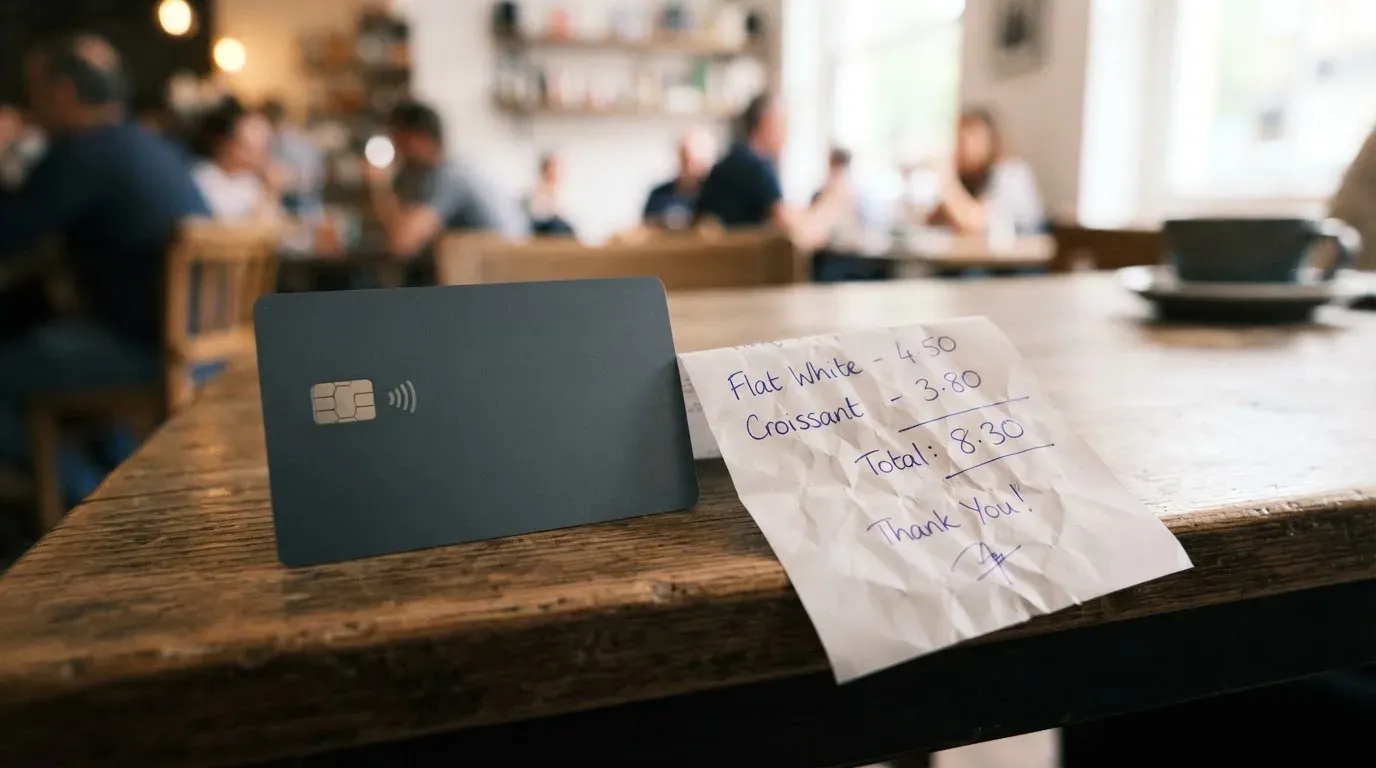
There is one thing the official material does say about money moving. Per the press release, spending crypto with the card counts as a sale of the crypto — which has tax implications wherever you pay tax on capital gains. That is not a fee, and I am not going to turn it into tax advice, but it changes the arithmetic: every card payment funded from crypto may be a separate disposal, measured in your local currency at the value on the date of the transaction. If you are in the US, the IRS treats digital assets as property, so swapping them for goods or dollars generally produces a gain or loss, short-term if held a year or less. If you are in the EU, the question of whether your national rules treat it the same way is yours to check locally.
On the trading side, the help centre states that trading is commission-free with a 1 EUR third-party cost per trade. That is not a card fee but it belongs in the same mental account: you are trading to hold, and then spending what the trading produced.
Here is the fee picture, with every official gap left visible rather than papered over.
| Fee or limit | Amount | Source |
|---|---|---|
| Virtual card issuance | 0 EUR | Unofficial (kreditkartenheld.com, 20 July 2026) |
| Classic card issuance | 5 EUR one-time | Unofficial (kreditkartenheld.com, 20 July 2026) |
| Mirror card issuance | 50 EUR one-time | Unofficial (kreditkartenheld.com, 20 July 2026) |
| Monthly or annual fee | None reported | Unofficial (kreditkartenheld.com, 20 July 2026) |
| Crypto conversion on card spend | Counts as a sale of the crypto | Official (press release) |
| Card-specific spend fee | None mentioned in the press release | Official |
| Foreign-currency surcharge | None reported; official Visa rate used | Unofficial (kreditkartenheld.com, July 2026) |
| Top-up by card, Apple Pay or Google Pay | 1% of the amount | Unofficial (kreditkartenheld.com, July 2026) |
| SEPA transfer | Free | Unofficial (kreditkartenheld.com, July 2026) |
| ATM withdrawal | Free worldwide from 100 EUR; below 100 EUR a 1 EUR fee | Unofficial (kreditkartenheld.com, July 2026) |
| ATM withdrawal cap | No cap on amount or count reported | Unofficial (reisetopia.de) |
| ATM operator’s own fee | May still apply | Unofficial (pagamentidigitali.it) |
| Daily spending limit | 1,500 EUR | Unofficial (kreditkartenheld.com, July 2026) |
| Weekly spending limit | 6,000 EUR | Unofficial (kreditkartenheld.com, July 2026) |
| Separate point-of-sale limit | Not given | Unofficial (kreditkartenheld.com, July 2026) |
| Tiers and benefits structure | Not stated officially | — |
| Currencies supported | Not stated officially | — |
One line deserves unpacking: “free ATM withdrawals worldwide” appears on the card page officially, while the 100 EUR threshold and the 1 EUR below it are third-party. If you take cash out once in a while, the official claim is enough. If you live on cash withdrawals, the threshold is the number to verify in your own app before you rely on it.
Now three everyday payments, and which fees actually touch them.
A 40 EUR coffee in euros, in Germany. No conversion, no foreign-currency surcharge, no ATM fee. This is the payment the card is built for, and on unofficial figures it costs nothing at the point of sale. The hidden side is the tax treatment above — you disposed of some crypto to buy the coffee.
A 30 EUR subscription paid in US dollars, while holding euros. Here the “no currency surcharge” claim matters most, because unofficial sources say the official Visa rate is used rather than a marked-up rate. That is a genuine saving against cards charging a few percent on top. The cost you still carry is the rate conversion itself, and whatever the sale of crypto does to your tax position.
A 90 EUR ATM withdrawal abroad, slightly below the threshold. On unofficial figures this falls into the 1 EUR band, and on top of that the ATM operator may charge its own fee — the third party in the transaction is not obliged to be generous. Withdraw 100 or more and the card’s own fee disappears, which is the single most actionable line in this table.
Top up: how the balance actually gets there
The card spends what you already hold. It is not topped up in the ordinary card sense — the funding is the crypto sitting in your Trade Republic account.
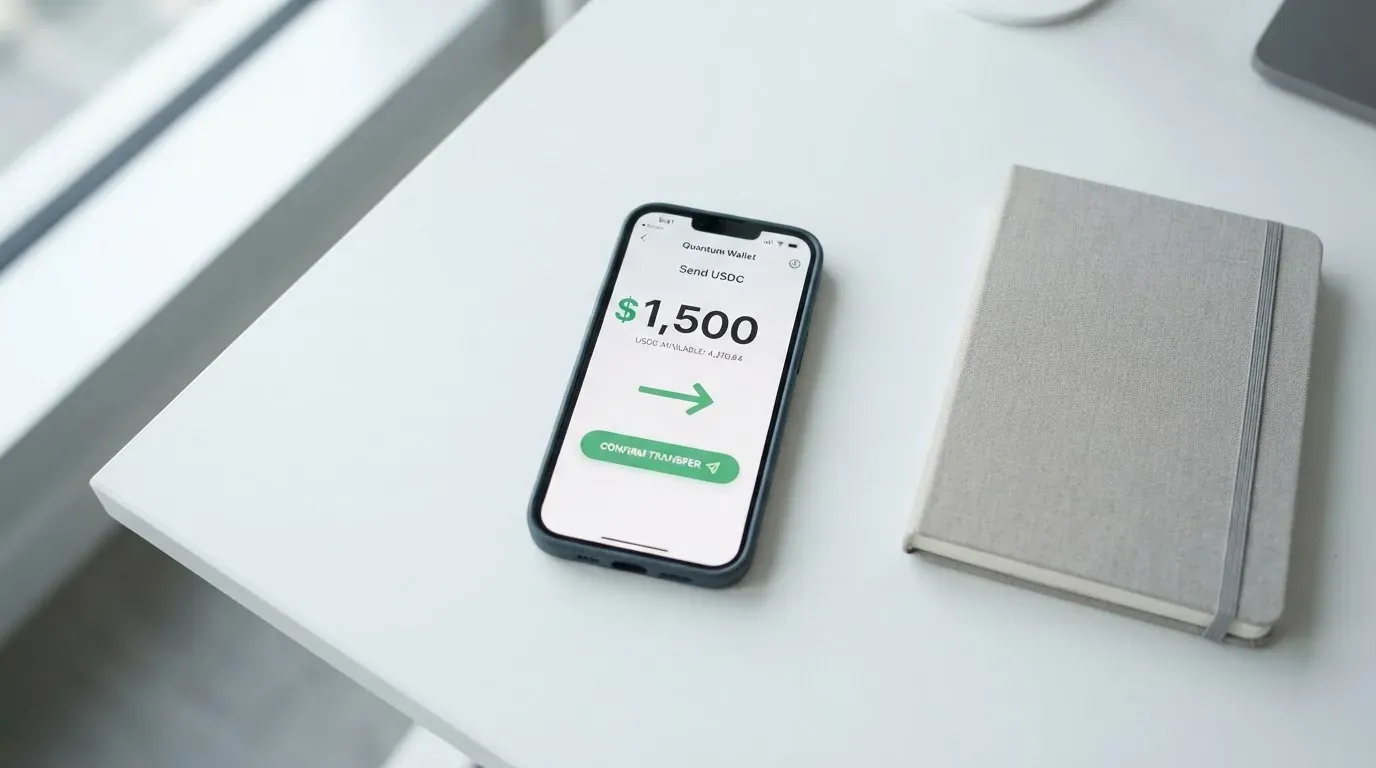
What is official: the press release states that customers can use crypto held with Trade Republic for card payments. What is not official, and this is the part that decides whether the card works for you: the coin list is not stated. Nobody publishes which tokens are spendable. That is a real gap for anyone holding something outside the mainstream.
The top-up routes themselves are also not stated officially — top-up options, withdrawal terms, all unpublished. Unofficial reports describe a broader picture:
- SEPA bank transfer: free (kreditkartenheld.com, July 2026).
- Top-up by card, Apple Pay or Google Pay: 1% of the amount (kreditkartenheld.com, July 2026).
- Spending directly from crypto held on the account, rather than converting in advance.
So the practical model is: keep fiat coming in over SEPA at no cost, hold whatever you intend to spend as crypto on the account, and let the card convert at the moment of payment. If you would rather convert first and spend a stable balance, that is the card-funded or wallet-funded route, at 1% as reported.
One warning belongs here even though it is about the crypto layer rather than the card. On-chain transfers are irreversible. A deposit sent on a network the provider does not support, or to an address belonging to a different network, can be lost or need manual support recovery with no guarantee. And network fees for your deposit are charged by the blockchain, not by Trade Republic. There is a July 2026 Portuguese complaint in the general record about a crypto deposit address sent without a network warning — not about the card, but it is the exact failure mode to check for twice before you press send.
Paying with it every day
This is where the card scores highest, and where the documentation is best in practice.
Wallet support is not stated in readable official pages, but third parties report both Apple Pay and Google Pay working, with the card added in the app (neuebanken.de, 2026). If you pay by phone, that is the path.
The rewards structure is where the official and unofficial pictures diverge, and it is worth reading twice because the numbers do not agree. Official material gives you two claims: the press release states 2% Crypto Saveback on card spend, reinvested into a savings plan, up to 1,500 EUR monthly spend, while the card page states 1% Saveback on card payments. Unofficial German reviews add that the 1% goes into a savings plan of at least 50 EUR per month with a cap of 15 EUR per month, and that it is not paid on transfers, ATM withdrawals, investments, top-ups, PayPal, gambling and quasi-cash. One review says crypto-funded payments earn 2% with a cap of 30 EUR since the end of 2025, which partly lines up with the official 2% claim.
Treat the 2% as the crypto-funded rate, the 1% as the general card rate, and the caps as unofficial. And note one thing no source makes clean: when the terms changed, at least one user lost the 1% they expected (GIGA, unofficial, date not read). Reward terms are the part of a card offer most likely to move under you.
Everything else about the card itself is not stated officially — merchant categories, blocked codes, app behaviour, dispute handling. If gambling or quasi-cash transactions matter to you, ask in the app; the exclusions reported by reviewers suggest they will not work.
What can go wrong
Nothing card-specific shows up in the complaint record. That is genuinely good news, and it is the reason reliability scores 9/10 rather than lower. Trustpilot, read on 2026-10-20, shows 4.6 out of 5 from 67,608 reviews, 11% one-star, with the most recent review dated 20 October 2026; visible reviews are mostly positive and one simply says the card works worldwide. No card-specific complaint theme turned up there.
The problems are company-level, not card-level, and you should know about them before you move money:
- Support that is slow or hard to reach is the most common theme in general Trade Republic complaints.
- Wide crypto spreads are complained about by users.
- Account blocks that are hard to resolve recur in the record.
- German press reports rising BaFin complaints (date unclear in what I could read).
- That July 2026 Portuguese complaint about a crypto deposit address with no network warning.
Behind all of it is a real bank: Trade Republic Bank GmbH, Brunnenstrasse 19-21, 10119 Berlin, named as the issuer. The licence and BIN sponsor details are not stated in readable text, and the security setup — two-factor, card freeze, limits, 3-D Secure — is not stated officially either, because the support centre page redirects and the article text was not readable.
Two structural risks sit underneath all of this, and neither is Trade Republic’s fault but both are worth holding in mind. First, platform custody: private keys are held by the provider, so the risk is counterparty and hack risk, and the sector has a record — Mt. Gox at about US$350 million reported stolen across 2011–2014, Coincheck at about US$400 million in 2018, Ronin Network at US$625 million in 2022. Second, card programmes can simply end: Visa terminated its global agreements with FTX on 13 November 2022 and the FTX US debit card was wound down; WaveCrest, a Visa issuer that supplied crypto card brands, was suspended in Europe in 2018, closing all its Visa programmes. A closure typically means a notice period, then spending and loading stop, then you are asked to withdraw. One 2026 closure reported by a secondary source had new loads ending 8 July 2026 and spending stopping 8 August 2026 — single source, unconfirmed, but the shape of it is what to watch for.
There is one more thing that can make a crypto-funded payment fail for reasons that have nothing to do with the bank. When you pay, your card presents a BIN that tells the merchant which institution and country issued it, and a shop can apply extra scrutiny if that country differs from your billing address. Some merchants decline prepaid or foreign BINs for exactly this reason. Add address verification, which compares the numeric parts of your billing address against issuer records and is mainly offered in the US, Canada and the UK, and declines on foreign-issued cards are easy to run into. If a payment is refused, that is the first thing to consider — not fraud, and not your crypto.
Finally, a declined authorisation can leave a hold on funds for several days, typically up to seven.
What to take instead
If the Trade Republic card does not fit — you are outside the EU, or you need a coin it will not name, or you simply cannot read a fee schedule — the category has alternatives. Here is how the three I looked at compare, on the same terms I used for Trade Republic.
| Trade Republic | International Visa Card | UNi Card | Whop Cards | |
|---|---|---|---|---|
| My score | 7.2 / 10 | 6.7 / 10 | 6.1 / 10 | 5.2 / 10 |
| Issuer | Trade Republic Bank GmbH, Berlin | U.S.-issued Platinum Visa card | Mastercard network, UNi.Global account | Visa |
| Availability | Germany/EU based; list not stated | Not for residents or registrants of Belarus, mainland China, North Korea, Cuba, India, Iraq, Iran, Israel, Myanmar, Nepal, Nicaragua, Russia, Syria, Turkey, Ukraine, Venezuela, Vietnam | Not stated | 31 US states for consumers, 41 for businesses |
| Physical or virtual | Virtual, Classic, Mirror (unofficial) | Virtual; physical “coming soon” | Not stated | Not stated |
| Issuance cost | 0 EUR virtual, 5 EUR Classic, 50 EUR Mirror (unofficial) | $5 one-time | Not stated | “No extra fees”, amounts not listed |
| Monthly or annual fee | None reported (unofficial) | None on Classic; Pro $9.00/month, Max $19.00/month | “No annual fee” | Not stated |
| Foreign-exchange cost | No surcharge reported; official Visa rate | Visa exchange rate + 2% FX fee | No FX fee; converted at live OTC rates | Not stated |
| Funding | Crypto held on the account; SEPA free, card 1% (unofficial) | USDC or USDT at 1:1 into the USD account; USD, EUR, SEPA, SWIFT, FedNow | Not stated | Whop balance, backed by stablecoin collateral from a linked wallet |
| Rewards | 2% crypto saveback up to 1,500 EUR monthly spend (official); 1% on card payments (official) | No cashback stated | Spend-to-Earn up to 3% | 5% cashback at select merchants, currently Uber |
Three observations from putting them side by side.
The International Visa Card buys reach, not value. It is the only one of the four with a published eligibility blacklist and a published price, and both are a kind of bluntness you can plan around. But it charges a 2% foreign-exchange fee on top of the Visa rate where Trade Republic reportedly charges none, its physical card is still “coming soon”, and its deposits are USDC/USDT at 1:1 — with networks not stated. Its FATF grey-list treatment is case by case with compliance approval, and the rule is by residence or registration, with citizenship not mentioned.
UNi is the cleanest on fees and the vaguest on access. “No annual fee or foreign transaction fee”, converted at live OTC rates, “no hidden exchange fees” — that is a better fee story than Trade Republic’s. But who can get one is not stated, the issuance fee is not stated, funding is not stated, and the physical-versus-virtual question is not answered either. You would be applying on trust.
Whop is a narrow product wearing a card’s clothes. It spends from a Whop balance, backed by stablecoin collateral from a linked wallet, with coins and networks not stated. Its 5% cashback at select merchants — currently Uber — is the biggest reward on offer here, but it is a marketing partnership, not a card benefit, and the payout currency and conditions are not stated. Unsurprisingly it also scores lowest.
The pattern across the whole category is worth naming: the cards with published prices are usually the narrowest, and the cards with broad reach are usually the ones that will not tell you their terms. Trade Republic sits near the awkward middle — broad enough to be useful, quiet enough to require you to check things in the app yourself.
Who I would recommend it to
I would recommend this card to someone specific: an EU resident who already holds an account at Trade Republic, spends most of their money in euros, and treats crypto as something they intend to use rather than something they intend to admire. For that person, the maths is close to ideal — no annual fee, no reported currency surcharge, free SEPA funding, free cash from 100 EUR, and Apple Pay and Google Pay if you would rather not carry the plastic.
I would not recommend it as a first move. If you have never used Trade Republic, you are starting a brokerage relationship to get a payment card, and the card is the smaller half of that relationship. If you are outside the EU, the route is not described anywhere I could read and I would not assume it exists. If you need a specific token, the coin list is not published, so you cannot check before you try. And if you are the kind of person who wants the fee schedule in front of you before you commit — fairly reasonable — you will not find it here, and you should weigh that discomfort against the 8/10 I gave the costs.
The narrower my recommendation gets, the more it is worth saying what would change my mind. A published country list and coin list would move eligibility and top-up options off the floor. A published fee table would move cost from a third-party claim to a fact. Those three documents are the difference between this being a good card and this being a card you can actually evaluate. Until they appear, you are taking the pricing on trust from reviewers, and you are taking the eligibility on trust from the app.
You can, to be fair, find out everything you need by doing a few things yourself: open the account, look at the card screen, check your own spending limits, check which coins appear against the account, and test one small payment. That tells you more than any review, including this one. What no small test will tell you is how the card behaves when a reward term changes or a programme is wound down — and that is the risk you are accepting by choosing a card whose documents are still being written.
Frequently asked questions
What is the Trade Republic card?
It is a payment card issued by Trade Republic Bank in Berlin that spends directly from crypto held in your Trade Republic account, rather than from a bank balance you top up in advance. Officially, the card is called “The Trade Republic Card”. The version range — virtual, Classic and a metal Mirror — comes from third-party reviews, and the network is not stated in readable official text.
How does the Trade Republic card work?
You pay, and the crypto behind the payment is sold to cover it. That is why the press release describes card spending as a sale of the crypto, and why each payment may be a separate taxable disposal measured at the value on the transaction date. In practice the model resembles a pre-loaded balance: you cannot spend more than the crypto you hold, converted at the moment of payment.
Is Trade Republic a bank, and who owns the card?
The issuer named for the card is Trade Republic Bank GmbH, Brunnenstrasse 19-21, 10119 Berlin, which appears in the page footer. So the card sits with a German bank rather than only with a fintech brand. Licence and BIN sponsor details are not stated in readable text, and I have not verified them beyond that.
Who can get the card?
The honest answer is that the official pages do not say. The product is Germany/EU based, with en-de and en-nl site versions, and the country list is not disclosed in readable form. Identity verification requirements are not stated either. If you already bank with Trade Republic, the card shows up inside the account if you qualify; otherwise there is no published reasoning to work from.
Can I use it in my country, and does it work abroad?
In the EU that is its home territory and the answer is yes. Outside it, the general pattern of crypto cards applies: merchants can read the BIN, see an issuer country different from your billing address, and some decline foreign or prepaid cards outright — and address verification is generally unavailable for foreign-issued cards. The card itself is reported as working worldwide. Check your own app before travelling.
Does it require KYC, and how do I get approved?
Verification is not stated in readable official pages, so assume a document step. EU anti-money-laundering rules require regulated firms to verify name, address, date of birth, nationality and identity documents, run a sanctions check, and assess whether you are a politically exposed person — and if due diligence cannot be completed, the institution must refuse the relationship.
What does it cost?
Official amounts are not published. Unofficial sources, notably kreditkartenheld.com in July 2026, report a 0 EUR virtual card, 5 EUR one-time for Classic and 50 EUR for Mirror, no annual or monthly fee, no foreign-currency surcharge using the official Visa rate, and 1% for topping up by card, Apple Pay or Google Pay, with SEPA transfers free.
How do I top it up?
You do not top the card up in the usual sense — you hold crypto on your Trade Republic account and spend it directly. On the fiat side, third-party reviews report SEPA bank transfers as free and card or wallet funding at 1%. The list of spendable coins is not stated officially, and blockchain transfers are irreversible, so check the network before sending anything.
Is it safe, and what about losing money?
Custody is the real question: with a custodial platform, the provider holds the credentials, so you are exposed to counterparty and hack risk — the sector has a history of Mt. Gox, Coincheck and the Ronin Network losses. Card programmes can also be wound down, as FTX’s was after Visa terminated its agreements on 13 November 2022. Trustpilot sits at 4.6 out of 5 from 67,608 reviews, with no card-specific complaint theme found.
Is it worth it?
For an EU resident already using the brokerage who spends mostly in euros, yes — no annual fee and no reported currency surcharge are hard to argue with. For anyone who needs published eligibility, a named coin list or a readable fee table, no; those are the three things this card does not currently offer, and they are the three things you would be trusting a reviewer rather than a bank for.
Choosing an app or neobank card – cryptocardadvisor
Content created by the «cryptocardadvisor» team