
Toku card review for anyone paid in stablecoins
 Available in US

The Toku card is a Visa debit card that spends from a stablecoin payroll balance rather than from a bank account. It is not a consumer card you can simply apply for: Toku issues it to people whose employers already pay them through Toku’s payroll infrastructure, in stablecoins, into a connected Rain wallet. The card then draws on that settled balance. That single design choice shapes everything about who the card is for, how it works, what it costs, and what remains unknown.
The conditions described here are current as of October 28, 2026.
Verdict
Toku scores 5.2 out of 10. The number reflects an honest trade-off: the card does one specific job well (turning stablecoin payroll into something you can swipe at a shop), but the public information about it is thin, the geography is narrow, and the everyday fee structure is not stated. If you are a contractor paid in stablecoins by a Toku customer, the card is genuinely useful. If you are anyone else, there is no way to sign up, and not enough published detail to evaluate it as a general-purpose product.
| Criterion | Mark | Why |
|---|---|---|
| Who can get it | 5 / 10 | Issuance is open now in the US and Latin America (Mexico, Colombia, Brazil are named); APAC is listed as “Q2 2026” |
| Cost | 5 / 10 | Issuance fee, conversion fees and ATM fees are not disclosed |
| Top-up options | 4 / 10 | You do not top up: the employer pays stablecoins into a connected Rain wallet, and the card spends the settled balance; Rain supports USDG, USDC, RLUSD |
| Reliability and complaints | 6 / 10 | The card is issued by a partner under a Visa licence; Rain’s general footer names Cross River Bank as issuer, but whether that applies to Toku is not stated; one Trustpilot review gives 3.2 |
| Everyday use | 6 / 10 | Virtual card is available immediately, physical “where applicable”; Apple Pay, Google Pay and ATM support are not described |
| Total | 5.2 / 10 |
In plain terms: this is a card built for a particular payroll flow, not a card you shop for. If you are a Toku payroll recipient, it is the path of least resistance to spend what you have already been paid. If you are not, the practical answer today is to look at a different card, and the comparison section below is where to start.
Who they will give the card to
The card is for people who are already in Toku’s payroll system. Toku describes it as available to recipients in the US and Latin America, with Mexico, Colombia and Brazil named. Asia-Pacific is listed as “Q2 2026”, which means the card is not yet open there, and you should not assume the regional launch will arrive on that exact date.
Two things follow from this. First, eligibility is geography-based: the page talks about recipients, not about citizens. Your country of residence is what matters, and the page does not list every country in the named regions. Second, even within the named regions, the card is tied to being paid by a Toku customer. A freelancer in Mexico who has never used Toku cannot just sign up; the employer, or the payroll provider, has to be on Toku already.
For anyone outside the US, Latin America and the upcoming APAC rollout, the card is not an option today, and the page does not give a wider timeline. The audience note that sits behind the score is the simplest way to think about it: contractors paid in stablecoins by Toku customers. If that is not you, you are reading the wrong product page.
How to get it
You do not apply in the usual sense. Toku issues the card to payroll recipients of Toku customers, once the employer side is already set up. The flow is: an employer pays in stablecoins to the recipient’s connected Rain wallet, and the card draws on the settled balance. There is no public sign-up form for the general public to walk into.
What Toku calls “standard KYC at issuance” means identity is checked once. The page does not list the documents, the proof of address it asks for, or a minimum age, and the only KYC level mentioned is the single “standard” one. If you are the recipient, expect the usual name, date of birth, address and ID check that any regulated payment product runs, and expect to be told if the card is virtual, physical, or both, in your country.
The card itself is a Toku-branded Visa. The page names Visa only; Mastercard is not mentioned. Virtual cards are available immediately; physical cards are issued “where applicable” in supported regions, with the delivery time and cost not stated. The card’s currency is not stated either, which matters for any fee that gets applied when you pay in a currency other than the one the balance is held in. If you want to know more before you sign anything, the costs section below is where the gaps start to bite.
Fees: what it really costs
This is where the public information is thinnest, and where you should slow down before you commit. Toku has not published an issuance fee, a monthly fee, conversion fees, foreign-exchange fees, ATM fees, or daily and monthly limits. The page treats these as not stated rather than as zero, and the scoring reflects that: a card with no published fee schedule is a card you cannot budget against.

| Fee or limit | Value |
|---|---|
| Issuance fee | Not stated |
| Monthly / annual fee | Not stated |
| Conversion (crypto to spend) | Not stated |
| Foreign-exchange fee | Not stated |
| ATM withdrawal fee | Not stated |
| Daily spending limit | Not stated |
| Monthly spending limit | Not stated |
| Tiered plans | None published |
A few practical consequences. First, because the card spends from a settled stablecoin balance, there has to be a conversion step at some point, and how wide the spread or fee is on that step is the single most important cost in your life with this card. Second, the ATM fee being unstated means a cash withdrawal could turn out to be expensive in a way you only learn about afterwards. Third, the absence of stated limits means there is no public cap to plan around; the limit you actually get will be set at account level and may depend on your KYC outcome.
Two everyday payments illustrate how this plays out. Paying for a coffee in your card’s currency in a country where the card is supported: the merchant charges in fiat, the network routes it to the issuer, and your stablecoin balance is drawn down. The fees that bite here are the conversion fee on the stablecoin side, which is not stated, and any network or scheme fee, which is also not stated. Paying in a foreign currency while travelling: the same unknowns apply, plus whatever foreign-exchange margin the issuer chooses to apply, which is again not stated. The honest summary is that the fee table is empty, and that is itself a cost: you cannot compare this card to a competitor on price without making assumptions.
One related point worth flagging. Stablecoins themselves are not free to move. On-chain network fees for the underlying transfer are charged by the blockchain, not by Toku, and they are not visible in any Toku fee schedule. In the Toku model those costs are mostly borne by the employer’s payroll flow rather than by you, but they are still real, and they are why a card that “spends stablecoins” is not the same as a card that “spends for free”.
Top up
The card is not topped up by the cardholder. That is the single most important fact about funding, and it is the one that decides whether the card is even relevant to you. Payroll settles in stablecoins to a connected Rain wallet, and the card draws on the settled balance. There is no deposit flow for the user to run, no “add money” button, and no bank transfer to a card account. The page does not describe a manual top-up path, a user-initiated deposit, or a withdrawal from a card balance back to a wallet.
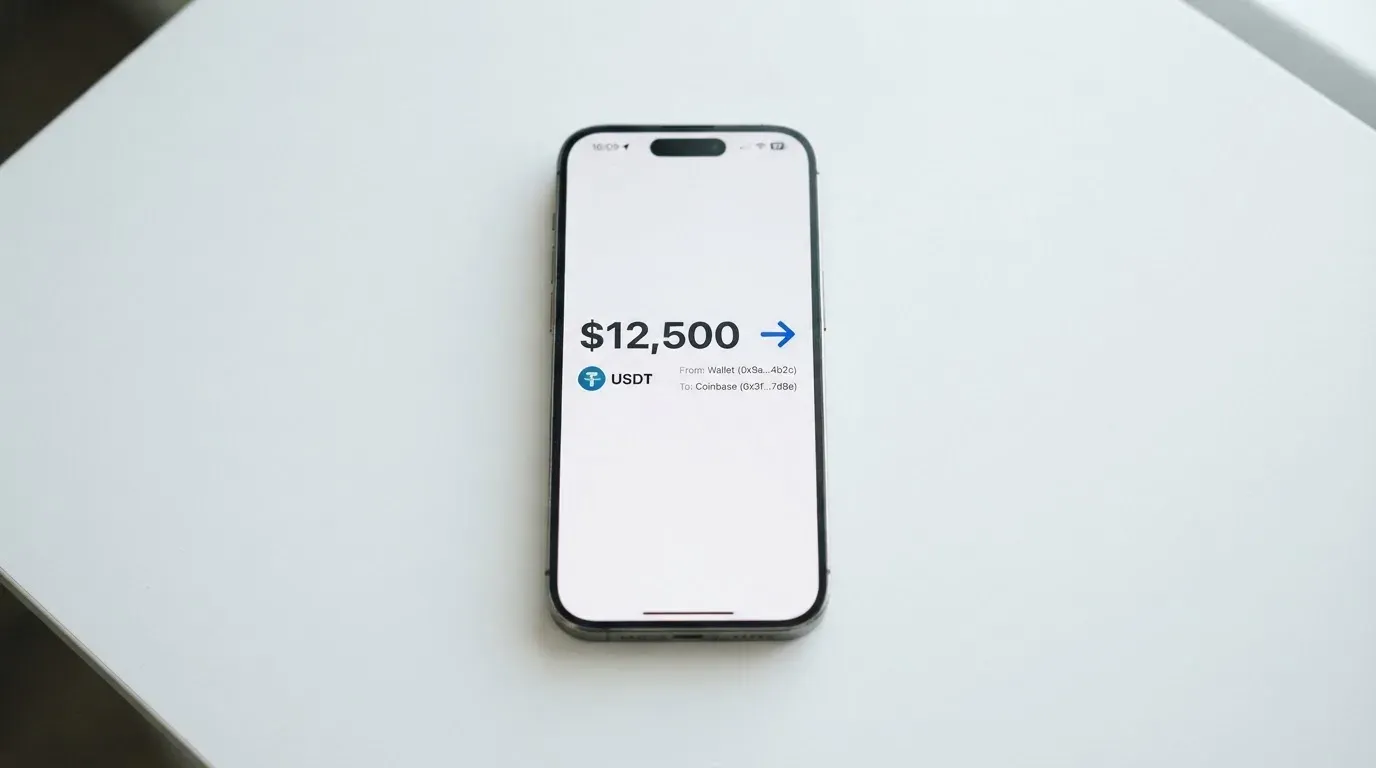
Rain, the connected wallet, supports USDG, USDC and RLUSD. Those are the three stablecoins the payroll flow can settle in. Other stablecoins are not part of this flow, and the page does not suggest you can swap one for another inside the card product.
A practical consequence is that you cannot use the Toku card the way you would use a prepaid travel card: load it before a trip, top it up when it runs low, drain it at the end. Your balance is your payroll. If a payment is bigger than your settled balance, it will not go through, and because daily and monthly limits are not stated, you cannot predict in advance where that ceiling sits. The card behaves like a payroll-disbursement account rather than a spending tool you control.
If you are a Toku payroll recipient, this design is convenient: the money lands and you can spend it. If you are reading this hoping to find a crypto card that lets you deposit your own stablecoins and spend them, this is not that product, and the alternatives below include cards that are.
Paying with it every day
The page gives you just enough to picture daily use, and not much more. A virtual card is available immediately at issuance, so you can start paying online or in app the moment the account is open. A physical card is issued “where applicable” in supported regions, with delivery time and cost not stated. The card runs on the Visa rails, which means it works at any merchant that accepts Visa, subject to the issuer’s policies and the BIN the card carries.
What the page does not tell you is the everyday layer. There is no dedicated Toku card app described, and no app-store rating to lean on. Wallet support, in the sense of Apple Pay and Google Pay, is not addressed: it is not confirmed, and it is not denied. Cash access at ATMs is not described, and the ATM fee is not stated, so the practical question “can I pull cash out, and what does it cost” has no public answer. Reward or cashback terms are not stated. Dispute and chargeback procedures are not stated. None of these are unusual to leave out for a B2B payroll product, but they are the things a cardholder actually feels.
Two background points are worth keeping in mind while you read those gaps. First, on the network side, Visa-branded cards work at any merchant that accepts Visa, but a card issued in one country can look “foreign” to a shop in another, and some merchants are stricter with prepaid or foreign-issued card numbers. Second, on the wallet side, tokenised mobile wallets (Apple Pay, Google Pay) replace the card number with a device-specific number, and the issuer can choose what that token can and cannot do. None of this is specific to Toku, but it is the reason a card that “works with Visa” is not the same as a card that “works everywhere you tap”.
What can go wrong
The honest risk picture is short, because there is very little public signal either way.
On the issuer side, the card is issued by a partner under a Visa licence, and the page does not name that partner. Rain’s general footer says Visa debit cards are issued by Cross River Bank (Member FDIC) under a Visa U.S.A. Inc. licence, and that Rain Products, Inc. acts as programme manager rather than as a bank. Whether that arrangement applies to the Toku card is not stated. In other words, the legal issuer of your card is publicly identified for Rain, but not for Toku, and the difference matters for who is on the hook if something goes wrong. The June 2025 announcement of the Rain–Toku stablecoin payroll partnership is the most recent public milestone, and it is the only one worth dating.
On the user-feedback side, the page has very little to go on. No official incidents are described. A search for Reddit or forum complaints turned up nothing. Trustpilot shows a 3.2 rating from a single review, which is too small a sample to draw themes from. The one Trustpilot review that does exist, dated January 2026, is from a business applicant who was told “we are not right fit for you business at this time” after a KYB inquiry. That is a small signal that the sales-side filtering is real, but it tells you nothing about the cardholder experience.
On the security layer, the spending is built on a connected Rain wallet, and Rain explicitly says it is not a bank, exchange or asset custodian. Two-factor authentication, instant card freeze, and the rest of the typical safety controls are not described for the Toku card. Blockchain transfers are irreversible, and stablecoin transfers are no exception, so a payroll payment sent to the wrong recipient or the wrong address is not something a card provider can quietly reverse.
On the programme-closure risk, the category has a record of cards stopping. Visa terminated its global agreements with FTX on 13 November 2022, and the FTX US debit card was wound down by its issuer. WaveCrest, a Visa card issuer that supplied several crypto card brands, was suspended by Visa in Europe in 2018, closing all WaveCrest-issued Visa programmes. Neither example is about Toku, but they are the reason a payroll card tied to a single programme is worth treating as a counterparty relationship rather than as a permanent piece of infrastructure.
What to take instead
Toku is a payroll product, not a consumer card you can go and get. So the honest “instead” list is not “another Toku”, it is “the kind of card you might actually be able to apply for, depending on where you live”. Three cards that come up regularly in the same conversation, in plain language, with the public numbers as they stand.
TokenPocket (TP Card) — 5.8 / 10. A Visa debit card in a list of European countries and territories (Germany, France, Spain, Switzerland among them) and a Mastercard debit card in Australia, Canada, Hong Kong, Japan, Taiwan, New Zealand, Singapore, South Korea and the UK, with the Americas listed as “planned for Q2 2025”. The card runs on Arbitrum, holds balances in EUR24 and USD24, and is virtual (no physical card described). On cost, TokenPocket covers part of an NFT creation fee and the user pays “a small portion” (the amount is not stated), and the FAQ says “Apart from these, TP Card does not charge any additional fees”. A 1% fee is charged on crypto deposits, with a note that it is intended to be refunded later through rewards or reduced transaction fees. The FX fee is not stated, and extra fees can come from inter-institution settlement. There is no cashback programme described.
MetaMask Card — 7.1 / 10. Sign-up is open in 45 listed countries and territories, including Andorra, Argentina, Brazil, Canada, Mexico, Germany, France, Spain and Uruguay, with other regions on a waitlist; proof of residency is required, and US/UK sign-ups are temporarily closed per the FAQ. The card is Mastercard, issued by Monovate with Crypto Life as card provider, virtual card first (instant) and a Metal tier that can be pre-ordered in the app after Virtual approval, one card per user. Virtual is free, with no annual or maintenance fee; Metal is $199 a year. The fee language is “minimal fee for each transaction” with the precise amount not on the pages read, no additional MetaMask fees, and no foreign transaction fee, with the Mastercard rate used. The card spends directly from the connected wallet on Linea, Base, Monad and Solana, with named tokens including mUSD, wETH, EURe, GBPe, USDC and USDT. Cashback is paid in mUSD into the Money Account: 1% on Virtual, headline 3% on Metal with the footnote limiting 3% to the first $10,000 spent and 1% after that, plus a $FLY bonus via the Blackbird dining app (5x on Virtual, 7x on Metal).
KAST — 6.1 / 10. Available to residents of a country list shown at KYC, with the list itself not published and a “Restricted Locations” reference but no countries named; the rules around ID are precise: if you live in a supported country but hold only an ID from a restricted region you can still be ineligible, dual citizens with an ID from a supported country may pass, only the account holder’s own ID is accepted, and a VPN does not bypass the check. Up to 10 cards per user, in tiers: Standard (Visa Platinum), Premium (Visa Infinite metal) and Private (Visa Infinite gold plated), plus other designs. Account balance in USD, with stablecoin deposits converted 1:1 at 0% spread. Annual membership is 0 USD on Standard, 1,000 USD on Premium and 10,000 USD on Private, billed annually upfront. Stablecoin top-ups are 0%, USD card spend is 0%, the per-transaction fee is 0%, Apple and Google Pay are 0%, and non-USD FX is 0.5% to 1.75% depending on residence, transaction country and card programme. Cashback in USD: 1.5% on the first 2,000 USD a month on Standard, 2% on the first 10,000 USD a month on Premium, 3% on the first 40,000 USD a month on Private, paid when the transaction is authorised, plus KAST Points on the higher tiers.
| Card | Score | Where you can get it | Card network | Cost in plain words | Cashback |
|---|---|---|---|---|---|
| Toku | 5.2 / 10 | US, Latin America (Mexico, Colombia, Brazil), APAC “Q2 2026” — payroll recipients only | Visa | Not stated | Not stated |
| TokenPocket | 5.8 / 10 | Listed European and Asia-Pacific countries; Americas planned | Visa (EU), Mastercard (APAC) | 1% on crypto deposits; other fees “not stated” beyond the small NFT-creation portion | None described |
| MetaMask | 7.1 / 10 | 45 listed countries; others on a waitlist; US/UK temporarily closed | Mastercard | Virtual free; Metal $199/year; minimal per-transaction fee | 1% (Virtual), 3% to $10,000 then 1% (Metal), plus Blackbird $FLY bonus |
| KAST | 6.1 / 10 | Country list shown at KYC; specifics not published | Visa (Standard Platinum; Infinite metal and gold plated on Premium and Private) | 0 USD Standard, 1,000 USD Premium, 10,000 USD Private per year | 1.5% / 2% / 3% by tier, on tier-specific monthly caps |
The pattern across the three alternatives is that they are consumer cards: you sign up, you pass KYC, you deposit your own crypto, you spend. The Toku card is the one in this list that is none of those things, and that is the whole reason its score is what it is.
Who I would recommend it to
If you are a contractor already being paid in stablecoins by a Toku customer, the card removes the awkward middle step of converting payroll into a bank balance and then onto a card. It is built for exactly that flow, and the convenience of having the card spend the settled balance directly is real. The unknowns on fees are worth raising with whoever runs your payroll on the Toku side before you start leaning on the card for anything beyond a coffee.
If you are anyone else, this is not the card for you. A freelancer in a supported country who is not on Toku payroll cannot apply. A resident of any country outside the US, Latin America and the upcoming APAC rollout has no path. A user who wants to deposit their own stablecoins and spend them has no top-up flow to use. The right next step in those cases is one of the consumer cards in the comparison above, chosen on where you live, what you want to spend, and how much published fee information matters to you.
The single thing I would check first, before doing anything else with this card, is the fee schedule. If your payroll provider can show you what conversion, FX and ATM fees actually apply to your account, the rest of the decision becomes straightforward. If they cannot, the gap is a real cost, and you should plan around it.
Frequently asked questions
What is the Toku card?
The Toku card is a Visa debit card that spends from a stablecoin payroll balance. It is issued to people who are already being paid through Toku’s payroll infrastructure, with the stablecoins settling into a connected Rain wallet and the card drawing on that settled balance.
How does the Toku card work?
An employer pays you in stablecoins through Toku, the payment settles into your connected Rain wallet, and the card you hold draws on that settled balance at the point of sale. You do not top the card up yourself.
Is Toku a bank?
No. Toku provides payroll and compliance infrastructure, and the page describes the card as issued by a partner under a Visa licence. Rain’s general footer says its Visa debit cards are issued by Cross River Bank, Member FDIC, with Rain Products, Inc. as programme manager rather than bank, but whether that arrangement applies to the Toku card is not stated.
Who owns Toku?
Toku is the brand behind the card; the legal issuer is a partner under a Visa licence, and that partner is not named on the public page. The card sits on top of a Rain wallet, and the public materials do not go further than that.
Is the Toku card available in my country?
Issuance is described as available now in the US and Latin America, with Mexico, Colombia and Brazil named. Asia-Pacific is listed as “Q2 2026”. Countries outside those regions are not on the current list, and there is no general public sign-up form.
How do I get a Toku card?
You do not apply in the usual sense. The card is issued to payroll recipients of Toku customers, so the path is to be paid through Toku first. Identity is verified once under a “standard KYC at issuance” process; the specific documents are not listed.
Does the Toku card require KYC?
Yes, the same identity check is run at issuance, and it is described as a single standard KYC level. The exact documents, the proof of address it asks for, and any minimum age are not stated on the public page.
How do I top up the Toku card?
You do not. The card is funded by employer payroll, which settles in stablecoins to your connected Rain wallet. Rain supports USDG, USDC and RLUSD, and the card spends from that settled balance.
Can I withdraw cash from a Toku card at an ATM?
The page does not describe ATM use. The ATM fee is not stated, and there is no published information on cash withdrawal limits, so the practical answer is that you should not plan around ATM access until your payroll provider confirms it.
Is the Toku card safe?
The card is built on a connected Rain wallet, and Rain says it is not a bank, exchange or asset custodian. Two-factor authentication, instant card freeze and the rest of the usual safety controls are not described for the Toku card itself, and the public user-feedback signal is a single Trustpilot review with a 3.2 rating, which is too small a sample to draw themes from.
Choosing a wallet card – cryptocardadvisor
Content created by the «cryptocardadvisor» team