
Telecard card review: a Telegram virtual Mastercard funded by stablecoins, weighed against the costs and risks
 Available in US
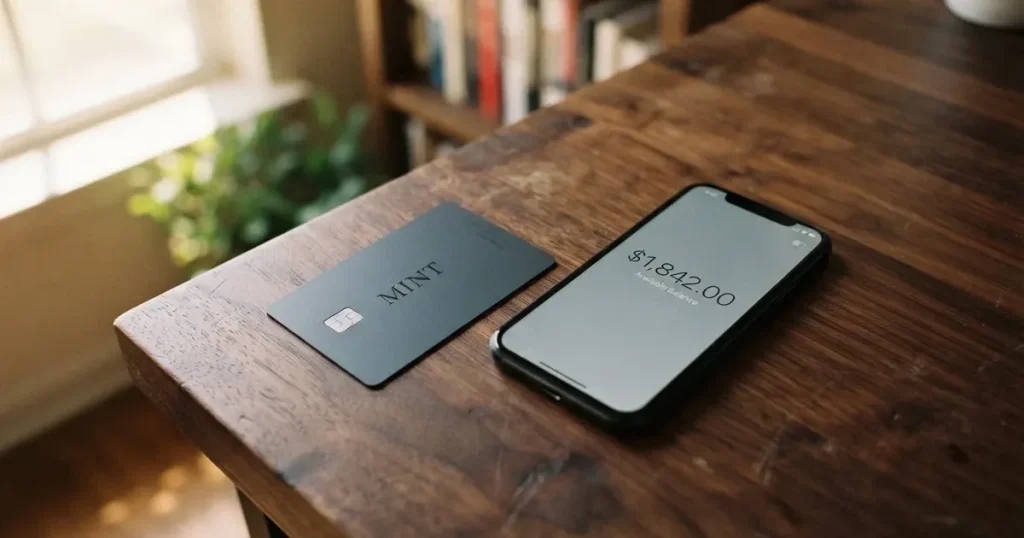
Telecard is a virtual Mastercard that lives inside a Telegram bot. You fund it with USDT or USDC, convert the balance at the moment of payment, and spend wherever Mastercard is accepted — including through Apple Pay and Google Pay. The pitch is simplicity: no bank account, no paperwork if you pick the VIP tier, and a card number in minutes.
The reality, once you look past the marketing, is more uneven. The company describes itself as “a financial technology company, not a bank and not insured by the FDIC,” and the public terms do not name the legal entity, the issuer, the jurisdiction, or the licences behind the card. There is no physical card, no ATM access, and very little third-party commentary to draw on. That does not make Telecard a bad product — for a narrow reader it does exactly what it promises — but it shapes the score, and it shapes the kind of person this card suits.
Conditions are current as of October 28, 2026.
Verdict
Telecard earns 6.1 out of 10. It is fast, cheap to start, and convenient if you already live in Telegram and hold USDT on Tron or Ethereum. It also leaves several important questions unanswered, charges a monthly fee on the only no-KYC tier, and offers no recourse beyond an in-app chat and a generic support email.
| Criterion | Score | Why it scores that way |
|---|---|---|
| Who can get it | 8 / 10 | Works in 150+ countries wherever Mastercard is taken; only explicitly barred users are those sanctioned by the US Government including OFAC |
| Cost | 6 / 10 | Standard plan is $5 once; VIP is $49 plus $19 per month; 1.5% conversion on non-USD payments; 0.5 USDT gas per transaction; $99 minimum sits in the wallet as your balance, not a refundable deposit |
| Top-up options | 7 / 10 | USDT on Tron (TRC-20) or Ethereum (ERC-20), USDC on Ethereum (ERC-20); deposit fee 0%; bank transfers are still “coming soon” |
| Reliability and complaints | 3 / 10 | No legal entity, jurisdiction, issuer or licence named in the terms; “not a bank”; funds sit in Telecard’s custodial account; no Trustpilot or Reddit footprint to verify behaviour under pressure |
| Everyday use | 6 / 10 | Virtual Mastercard issued instantly inside the Telegram bot; Apple Pay and Google Pay supported; no plastic, no ATM |
Who it suits. Someone whose main need is a quick virtual Mastercard for online and contactless spending, who already holds stablecoins on Tron or Ethereum, who is comfortable with a custodial wallet, and who does not need a physical card or cash access. Telegram-first users will find the flow natural; everyone else will be giving a chat bot access to their payment balance.
Who it does not suit. Anyone who needs cash from an ATM, a physical card for in-store situations where tap-to-pay is not accepted, an auditable issuer with named licences, or a card tied to a self-custody wallet they control. It also does not suit heavy spenders, because the VIP monthly fee, the per-transaction gas, and the conversion charge all stack on top of the 1.5% currency fee.
Will they give you the card
The short answer is: almost certainly yes, if you are not under US sanctions.
The official site says the card works in more than 150 countries wherever Mastercard is accepted, and the only residents or citizens explicitly excluded by the terms are people “blocked or sanctioned by the United States Government, including OFAC.” Identity verification is described as “available in most major regions,” but the help pages do not publish a supported-country list, and they do not name any countries the card is barred in beyond the sanctions condition. If your country is not on the OFAC list, you should be able to apply, but you may discover an issue only after you start the KYC process.
A useful detail for readers in restricted regions: the restriction is on the user, not the geography of spending. The terms are written around who you are, not where the card is used at the moment, so the same card can still decline at a merchant whose own policies block a particular issuer country or merchant category.
Age is not stated on the public pages, which is a small but real gap. Standard industry practice in the prepaid card market is 18+, but Telecard does not confirm this in the terms I could read.
How to get it
The whole flow lives inside a Telegram bot. You start the bot, pick Standard or VIP, complete (or skip) verification, send crypto to the deposit address, and receive a virtual Mastercard that you can add to Apple Pay or Google Pay immediately. There is no web-only sign-up, no app store download, and no physical card to wait for.
Standard plan — with KYC. You submit a government-issued ID, a selfie of yourself holding that ID, and a proof of address dated within the last three months. The help pages say review takes 24 to 48 hours and that you will be notified through Telegram; the card activates only after approval. The main marketing page claims verification “takes up to 5 minutes,” which directly contradicts the help-centre wording — a small but telling inconsistency, and the help-centre version is the one to plan around. Reasons for rejection are not stated, so if you are refused, you will not be told why.
VIP plan — no KYC. You skip the identity check entirely. The trade-off is a $49 setup fee, a $19 monthly fee, and a $15 charge each time you need a new card number. VIP holders can also email support to ask for higher spending limits.
A few practical points worth holding on to:
- You must send crypto to activate. The minimum deposit to switch the card on is $99, and the help centre is explicit that this is “NOT a fee” — it sits in your wallet as spendable balance. So if you are just testing the service, you still need to commit at least $99 of value to see the card work.
- Card currency is USD. The card is denominated in US dollars, so any purchase in another currency will pass through the 1.5% conversion fee.
- There is no plastic. If a merchant does not accept contactless, you cannot fall back to a physical card — there is one to fall back to.
What it really costs: fees, limits and a few everyday examples
This is the section where the headline price ($5) stops being the whole story. The on-ramp is cheap; the ongoing cost depends on how much you spend, in what currency, and on which plan.

The costs table
| Fee or limit | Standard | VIP |
|---|---|---|
| Card issuance | $5 one-time | $49 setup |
| Monthly fee | None | $19 per month |
| Currency conversion (non-USD payments) | 1.5% | 1.5% |
| Cross-border / FX (where applicable) | “up to 3%” | “up to 3%” |
| Gas fee per card transaction | 0.5 USDT | 0.5 USDT |
| Card reissuance | Not stated | $15 |
| Minimum deposit to activate | $99 (refundable as balance) | $99 (refundable as balance) |
| Daily spending limit | $500 | $500 (higher on request) |
| Monthly spending limit | $5,000 | $5,000 (higher on request) |
| ATM withdrawal | Not supported | Not supported |
A few things to read out of that table. First, the $99 minimum is not a fee, but it is also not your money you can pull back without spending — it becomes your card balance, and withdrawing crypto out of the wallet carries its own network cost. Second, the limits reset at midnight UTC for the daily cap and on the 1st of the month for the monthly cap, and they do not apply to deposits, withdrawals, or internal transfers. Third, the gas fee is charged in USDT per successful transaction, not per attempt, so a declined card does not burn a fee.
Three everyday scenarios
- A $40 online subscription in USD, Standard plan. You pay $40, the merchant settles in dollars, and the only Telecard-side cost is the 0.5 USDT gas fee. Your $40 leaves your balance, and roughly 0.5 USDT (worth 50 cents at peg) leaves with it.
- A €50 in-store contactless payment via Apple Pay, Standard plan. Mastercard converts euros to dollars at the network rate, and Telecard adds 1.5% on top. On a €50 payment the conversion charge is roughly $0.75, plus the 0.5 USDT gas fee. The card spending limit is per US dollar, so you also need to be aware of the rate on the day.
- Heavy monthly use, VIP plan. At $19 a month you want to be spending enough that the no-KYC convenience pays for the fee. If you spend $2,000 a month in a mix of currencies, you are paying $19 (membership) + 0.5 USDT × N (gas) + 1.5% on the non-USD portion. The breakeven against the Standard plan’s $5 fee and its KYC requirement depends on how much you value skipping verification.
Two small but important details that the table does not capture: the help centre says deposit fees are advertised as 0%, but it does not state who pays the underlying blockchain network fee when you send USDT in. And the 1.5% conversion fee is applied on non-USD payments, not on USD payments — so paying a US-based merchant in dollars is cheaper than paying a European one in euros, even before exchange-rate movements.
How to top it up
Funding Telecard is the part of the product that has the fewest moving parts, and that is also where the highest risk of an unrecoverable mistake sits.
Supported coins and networks. The help centre lists three combinations:
- USDT on Tron (TRC-20)
- USDT on Ethereum (ERC-20)
- USDC on Ethereum (ERC-20)
The main marketing page also mentions ETH and TRX, which the help-centre page does not confirm. If you want to be safe, treat the help centre as the source of truth, and only send the three combinations it lists. Polygon is explicitly not supported, even though USDT exists on Polygon — do not send USDT on Polygon to Telecard, because the funds will not arrive in your balance.
Minimum and fees. Minimum $99 to activate, no deposit fee advertised, no fiat top-up. Bank transfers are listed as “coming soon” on both the main page and the help centre, so right now crypto is the only way in. Sending more than $99 to a card you intend to use immediately is fine; the $99 is the activation floor, not a per-top-up minimum.
One network, one address, one chance. A blockchain transfer is irreversible, and the help centre warns that funds sent to a wrong address or on the wrong network are not recoverable by Telecard. Two practical safeguards:
- Send a small test transaction first, then the rest. The network fee on Tron is a fraction of a dollar, and on Ethereum it can be much higher — so on Ethereum the test costs you, but it costs you less than losing the whole amount.
- Match the network exactly. USDT on Tron is not the same as USDT on Ethereum, and the receiving address will look different. Sending Tron-USDT to an Ethereum-USDT address is a common, irreversible loss.
Paying with it every day
In normal use Telecard behaves like any other prepaid Mastercard. The card number is virtual from the moment it is issued; you can type it into a website, save it in a browser, or add it to Apple Pay or Google Pay for contactless payments in shops. The tokenised wallets replace the card number with a device-specific number, so paying with a phone does not expose your card details to the merchant.
Where the card works. Anywhere Mastercard is taken, online and in person, in the 150+ countries the site lists. Practical limits come from the card type rather than the geography:
- No ATM access. Cash does not come out of this card. The terms do not list ATM support and the public material makes no mention of cash withdrawal.
- Blocked merchant categories are not stated. The card does not publish a list of blocked MCCs, so it is not possible to say in advance whether a gambling site, a crypto exchange deposit, or a high-risk subscription will be declined. Some issuers block gambling and similar categories by policy; Telecard does not say either way.
- Foreign merchants may decline. Cards issued by lesser-known programmes sometimes face extra scrutiny at checkout because the BIN lookup reveals an unfamiliar issuer country or a prepaid flag. The help pages do not address this, but it is a known pattern in the category.
- Holds can outlast the purchase. A pre-authorisation at a hotel or car-rental desk can leave a hold on the card balance for several days after the actual charge settles, which can be surprising on a $500 daily limit.
Spending controls. The card carries a hard daily limit of $500 and a monthly limit of $5,000 on both plans, resetting at midnight UTC and on the first of the month. VIP holders can email support to ask for higher limits. There is no public list of controls inside the app for things like per-transaction caps, merchant blocks, or freeze-on-demand; the help pages do not mention 2FA, instant freeze, or spending-category toggles. That is unusual for a card product and worth treating as a feature gap until proven otherwise.
Rewards. Telecard runs a referral programme called Fiorini. You earn Fiorini for each friend who activates a card, plus cashback when those friends spend. The published rate is 1 USDT = 100 Fiorini, but the cashback percentage itself is not specified on the public pages, so the actual return on spend is not knowable in advance. A cashback rate that is “not specified” can mean a small headline number, a tiered scheme, or a promotional offer that changes — read it as marketing copy, not a guaranteed yield.
The app is the bot. The wallet and card live inside the Telegram bot, not a separate iOS or Android app. App store ratings are not stated, and the experience is whatever Telegram’s web and mobile clients give you. That keeps the barrier to entry very low (no install), but it also means the quality of the experience depends on Telegram itself.
Disputes. The terms commit you to binding arbitration and waive class actions, with [email protected] as the first point of contact. A refund policy is not addressed in the help pages, so do not assume one exists.
What can go wrong
This is the section I would read twice, because Telecard’s reliability score in my own evaluation is the lowest of the five criteria, and the gap comes from what the public material does not say rather than from anything it says outright.
The issuer is unnamed. Telecard describes itself as “a financial technology company, not a bank and not insured by the FDIC.” The terms do not name a parent company, a registered legal entity, the jurisdiction the entity sits in, the bank or e-money institution that actually issues the Mastercard, or the licences that entity holds. For a financial product that holds your money in a custodial balance, that is a meaningful gap. A licensed issuer in a named jurisdiction gives you a regulator to complain to, a deposit-guarantee or safeguarding regime to fall back on, and a paper trail if the company disappears. Telecard offers none of those publicly.
Funds are custodial. When you send USDT to Telecard, you are sending it to a wallet Telecard controls. You see a balance inside the bot, but the private keys are not yours, and a withdrawal is a request for Telecard to send funds back out. The history of custodial crypto services is not reassuring: large failures of the past (Mt. Gox around US$350 million reported stolen between 2011 and 2014, Coincheck around US$400 million in 2018, Ronin Network US$625 million in 2022) are the reason self-custody exists as a category. None of this is unique to Telecard, but the absence of named licences makes it harder to assess what would happen to user balances in a similar scenario here.
No third-party footprint. A search on Trustpilot and Reddit for “telecard.ai” reviews on 2026-10-21 returned no pages naming the brand. That is not evidence of a problem, but it does mean there is no public track record to lean on. For a product that holds your money and runs an in-app support flow, the absence of complaints is not the same as a clean record — it can also mean the user base is small, or that unhappy users have not posted publicly.
Stablecoins are not risk-free. USDT and USDC are designed to hold a value against the US dollar, but the word “stable” is doing a lot of work. The most famous failure is TerraUSD in May 2022, and USDC briefly lost its peg in March 2023 during the US banking turmoil. Today, USDC is redeemable 1:1 for US dollars and is reported to be backed by cash and cash equivalents, while USDT’s reserves are described by Tether as backing the token 1-to-1. Neither guarantee removes the counterparty risk that sits inside the issuer of the stablecoin itself, and on top of that, Tether has stated it disables tokens held in wallets on the OFAC sanctions list and has frozen funds tied to illicit activity. Stablecoins are not censorship-proof, and the issuer of the stablecoin can act on balances it does not like.
Network choices are asymmetric. USDT on Tron is the cheapest way to fund Telecard, but Tron and Ethereum behave very differently under load. Tron fees are typically a fraction of a dollar, while Ethereum mainnet fees can run from a few dollars to tens of dollars during busy periods. If you are topping up from an Ethereum wallet during a spike, the cost of a single deposit can be higher than the entire card balance is worth. On the way out, withdrawals to an external wallet take minutes and the network fee is on you: roughly 0.5–2 USDT on Tron and 5–50+ USDT on Ethereum. The help centre also lists a separate “withdrawal gas fee 0.5 USDT” on the main page, which suggests there may be two layers of fee in some cases; if the wording is unclear to you, ask support before you withdraw a small amount.
KYC gap on the marketing page. The main site claims verification “takes up to 5 minutes”; the help centre says 24 to 48 hours. If you need the card to pay for something specific, plan around the longer estimate.
Card-network risk. Visa and Mastercard do not issue cards to consumers directly, but they do terminate programmes. Visa’s November 2022 wind-down of FTX is the most cited recent example, and Mastercard has shown it can act similarly. A programme closure typically follows a notice period: new loads stop, spending stops, and users are asked to withdraw remaining balances within a window. There is one secondary-source report of a 2026 closure that gave roughly a month between end-of-loading and end-of-spending, but that is a single unconfirmed source and is mentioned here only to underline why a clear issuer and a clear withdrawal path matter.
Customer support is asynchronous. The official channels are an in-app chat via @telecardcryptobot, a Help Centre at telecard.ai/help, and an email at [email protected] with a stated 24–48 hour response time for general questions, prioritised for urgent issues such as a blocked card. For a card that is the only payment method some users have, that response time matters.
What to take instead
Telecard is one of several Telegram-issued virtual cards in the same space, and the right comparison depends on what you are trying to do. I have looked at three alternatives with the same kind of “virtual card inside Telegram, fund with crypto” positioning, and the trade-offs come out clearly.
| Card | Score | Geography | KYC | Issuance | Monthly | Funding | Cash access |
|---|---|---|---|---|---|---|---|
| Telecard | 6.1 / 10 | 150+ countries | Standard: yes (24–48 h); VIP: none | $5 / VIP $49 | None / $19 | USDT-TRC20, USDT-ERC20, USDC-ERC20; bank “coming soon” | No |
| Azul Card | 5.3 / 10 | Worldwide except Russia, Belarus, North Korea, Iran, Syria, Cuba, Sudan, Venezuela, Ukraine, Crimea, Donetsk, Luhansk, Zaporizhzhia, Kherson | Required | $20 (refunded after $2,000 spent) | $5 | Crypto to the card in Telegram; coins and networks not named on the public pages | No |
| OnCards | 4.6 / 10 | Not stated | Not stated | Not stated | None stated | USDT BEP20 only | No |
| Ape Wallet | 5.5 / 10 | Not stated; Russian focus (SBP, Russian passport KYC) | Required; Russian passport mentioned | Not stated (promo codes change price) | None stated | USDT wallet balance | No |
A few observations that come out of that table.
- Azul Card has the clearest published country list, which makes it easier to know in advance whether you can use it. The $20 issuance is refunded after $2,000 of spend, which is a different way of charging the same kind of fee, and the $5 monthly charge plus a 4% crypto top-up fee plus a $0.25 per-transaction fee make the running cost significantly higher than Telecard’s on the basic plan. Azul is a Mastercard in USD; FX fees are not stated.
- OnCards is the simplest of the three to describe but the hardest to evaluate. The site says “no hidden charges” but does not publish the actual fees, and only one funding token/network (USDT on BEP20) is mentioned. Country availability is not stated. The score reflects the absence of information, not a finding that it is bad.
- Ape Wallet is positioned differently: it is a Telegram wallet first, with two card products on top (a “service” card for subscriptions and online, and an Apple/Google Pay card). Funding runs through a USDT balance inside the wallet. Issuance price and fees are not given in fixed numbers, which is an obstacle for direct comparison.
For a reader choosing between these, the practical question is which one names its issuer, its fees, and its supported countries clearly enough that you can verify your own case before you commit $99 or more.
Who I would recommend it to
I would recommend Telecard in a fairly narrow set of circumstances. You already hold USDT on Tron or Ethereum, you are comfortable with a custodial wallet, your country is not on the OFAC sanctions list, and the thing you need is a virtual Mastercard to put into Apple Pay or Google Pay for online and contactless spending. You do not need cash from an ATM, you do not need a physical card, and you are willing to live with daily and monthly limits of $500 and $5,000 on the basic plan. The $5 one-time fee on Standard is reasonable for that use, and the activation minimum of $99 (which stays as your balance) is bearable if you intend to spend the money anyway.
I would not recommend it if you need cash access; if you spend more than roughly $1,000 a month and want to skip KYC, because the $19 monthly VIP fee will eat into the convenience; if you are a heavy cross-border spender in non-USD currencies, because the 1.5% conversion charge plus the 1.5%–3% FX add-on adds up quickly; if the absence of a named issuer, jurisdiction, and licence in the public terms is a deal-breaker for you; or if your use is in a category the card may block (gambling, crypto exchange deposits, adult content) and the help pages do not tell you in advance. The same applies if you want a card backed by a self-custody wallet you control, or a card with an instant freeze and 2FA you can see in the app — those features are not stated in the public material.
If you are a Telegram-first user with a small stablecoin balance who needs a working virtual card within minutes, Telecard does what it says on the tin, and it does it cheaply. If you are anyone else, the unnamed issuer and the limited feature set are reasons to keep looking.
Frequently asked questions
What is Telecard card?
Telecard is a virtual Mastercard issued inside a Telegram bot. You fund the card’s balance with USDT on Tron or Ethereum or USDC on Ethereum, and the card spends that balance wherever Mastercard is taken, including through Apple Pay and Google Pay. There is no physical card and no ATM access.
How does Telecard card work?
You start the @telecardcryptobot in Telegram, choose the Standard or VIP plan, send the minimum $99 in a supported stablecoin to the deposit address, and receive a virtual Mastercard number. The card is denominated in US dollars, so non-USD payments go through a 1.5% conversion fee on top of the network’s own exchange rate, plus a 0.5 USDT gas fee per successful transaction.
Is Telecard a bank?
No. The official material describes Telecard as “a financial technology company, not a bank and not insured by the FDIC.” The legal entity, jurisdiction, and the licensed institution that actually issues the Mastercard are not named in the public terms, which is a meaningful gap for a product that holds your balance in custody.
Who owns Telecard?
The public terms do not name a parent company, a registered legal entity, or a jurisdiction. The site frames Telecard as a financial technology company partnered with Mastercard, and the bot is the only front end. Without a named owner, regulatory recourse in a dispute is harder to assess.
How do I apply for Telecard card?
Open the Telecard bot in Telegram and follow the prompts. Standard plan requires a government ID, a selfie holding the ID, and a proof of address dated within the last three months, with a stated review time of 24 to 48 hours. VIP plan skips verification but costs $49 to set up and $19 per month, and you still need to send at least $99 in crypto to activate the card.
Does Telecard require KYC?
Standard does: a government ID, a selfie with the ID, and a proof of address, with review taking 24 to 48 hours. VIP does not. Reasons for rejection on Standard are not stated in the public help material, so you may not be told why a check failed.
How do I top up Telecard card?
Send USDT on Tron (TRC-20), USDT on Ethereum (ERC-20), or USDC on Ethereum (ERC-20) to the deposit address shown in the bot. The minimum to activate is $99, the deposit fee is advertised as 0%, and bank transfers are listed as “coming soon.” Polygon is not supported, and sending the wrong coin to the wrong network can mean a permanent loss.
How do I add Telecard to Apple Pay or Google Pay?
Once the card is issued, open your wallet app on iPhone or Android, choose to add a payment card, and enter the card details from the bot. The card details are tokenised, so the wallet does not store the actual Mastercard number. Apple Pay and Google Pay support is the main way to use Telecard in physical stores, because there is no plastic card.
Is Telecard safe?
The card uses a custodial model, so the funds you deposit sit in Telecard’s own wallet rather than yours; you trust the company to keep them safe and to release them when you withdraw. The public material does not name the issuer, the licences, or the jurisdiction, and there is no Trustpilot or Reddit footprint to confirm behaviour under stress. Treat the safety question as one of counterparty trust, not as a guaranteed safe product.
Can I withdraw money from Telecard to my bank account?
Not yet. The help centre says bank withdrawals are “coming soon.” Today, withdrawals are crypto-to-crypto: you send your balance to an external wallet on Tron or Ethereum, with Tron network fees of roughly 0.5–2 USDT and Ethereum fees of 5–50+ USDT depending on congestion, plus a separate 0.5 USDT withdrawal gas fee listed on the main page. Transfers are irreversible once confirmed.
Choosing a virtual card – cryptocardadvisor
Content created by the «cryptocardadvisor» team