
TapX card review: three virtual tiers, real questions to answer first
 Available in US

The TapX card is a crypto-funded payment card that exists in three virtual versions (Visa Universe, Mastercard Business and Visa E-commerce) priced in USDT, with no physical or metal edition. The Universe tier carries the heaviest issuance fee at 199.00 USDT but the lowest top-up charge, while the E-commerce tier at 30.00 USDT is built for paying online services and has the lightest verification step. Nothing on the card’s public pages names a legal entity, a card issuer or a licence, and the site only says the product “works globally” without listing countries. That combination (a working product, three clearly differentiated tiers, and very little disclosed about the company behind it) is what this review takes apart.
Conditions are current as of October 28, 2026.
Verdict
The TapX card earns 5.1 out of 10 in this review. The score breaks down as follows.
| Criterion | Score | Reason |
|---|---|---|
| Who can get it | 8 / 10 | The card page states it “works globally” with no country list, so eligibility looks wide on paper. |
| Cost | 2 / 10 | Universe issuance is 199.00 USDT, with a 3.0–3.5% top-up fee and a 0.50 USD authorisation charge on top. |
| Top-up options | 5 / 10 | The official page names USDT only; starting data mentions more tokens but is unconfirmed. |
| Reliability and complaints | 4 / 10 | No legal entity, issuer or licence is named; the domain is recently registered and WHOIS is hidden. |
| Everyday use | 7 / 10 | Three virtual cards, Apple Pay and Google Pay on two tiers, useful for online services, but no plastic. |
| Total | 5.1 / 10 |
The card suits people who already hold USDT, want a virtual Visa or Mastercard to pay for online subscriptions and software, and do not need a physical card. The Universe and Business tiers also work with Apple Pay and Google Pay, so a phone wallet is enough. The card does not suit anyone who needs an ATM card, who wants the backing of a named bank or licensed e-money institution, or who is not comfortable funding a balance on a service that discloses essentially nothing about who runs it. If you want anonymity, a regulator to fall back on, or a card you can hand to a waiter in a restaurant, TapX is not the right product today.
Who can get the TapX card
The card’s own page says “Every card is crypto-friendly, works globally” and does not list any countries or exclusions. That is wider in writing than almost any competitor I have reviewed, but it is also less specific: the card page does not say which citizens or residents it accepts, whether it serves people in the EU, the UK, the US, Russia, Belarus or anywhere in particular, and whether it is willing to onboard people whose country of residence is on a sanctions list. If a country, a sanctions regime or a card network rule blocks you later, the card page gives you no warning in advance.
The three cards have three different verification levels, and the level you go through depends on the card you buy. The E-commerce card asks for a phone number only, so it is the lightest check. The Mastercard Business tier asks for a phone number and an international passport. The Visa Universe tier asks for a phone number, an international passport and a face photo, which is closer to a standard KYC flow.
The card’s pages do not say whether you need to be 18, whether you need a proof of address, which documents count as proof of address, or what reasons would get an application rejected. They do not say how nationality is screened against sanctions lists, either, even though that screening is standard in the industry. So in practice you only learn whether you qualify when you try to verify, and you have to accept the card’s terms before you do.
How to get the TapX card
The signup flow has three steps, and the time it takes depends on which tier you pick. You choose a card, you verify as much as that card requires, and you pay the card’s price plus a 10.00 USDT initial top-up. The Universe and Business tiers are issued within 2 minutes after verification, so the technical issue is fast.
The verification itself is a card-level decision, not a separate flow. If you pick the E-commerce card, you supply a phone number and that is the entire KYC. If you pick the Business card, you add an international passport to that. If you pick the Universe card, you also take a face photo. There is no intermediate level: you cannot, for example, get a Business card with a lighter check, nor upgrade from E-commerce to Universe without re-verifying.
Because every card is virtual, there is no delivery step. You do not wait for a card in the post, you do not enter a shipping address, and there is no courier. The card number and the wallet-add steps appear in your dashboard, and the Universe and Business tiers can be added to Apple Pay and Google Pay immediately.
What the page does not say is as important as what it does. It does not say how long the KYC review takes if a human has to look at your documents. It does not say which countries’ passports it accepts. It does not say whether you can verify with a national ID card or only with an international passport, and it does not say what happens to your data if your application is rejected.
What the TapX card really costs (fees and limits)
The card comes in three tiers with three different price tags, and the cheapest to buy is not the cheapest to run. Issuance is 199.00 USDT for Visa Universe, 50.00 USDT for Mastercard Business and 30.00 USDT for Visa E-commerce; each tier also requires a 10.00 USDT initial top-up. There is no monthly fee on any of the three tiers, which is one of the few things the card does that is genuinely simple.

| Fee or limit | Visa Universe | Mastercard Business | Visa E-commerce |
|---|---|---|---|
| Issuance | 199.00 USDT | 50.00 USDT | 30.00 USDT |
| Initial top-up | 10.00 USDT | 10.00 USDT | 10.00 USDT |
| Monthly fee | None | None | None |
| Top-up fee | 3.0% | 3.5% | 3.5% |
| Authorisation fee | 0.50 USD | 0.50 USD | 0.10 USD under 1 USD, free above |
| Apple Pay commission | — | 0.20% | — |
| 3DS fee | — | — | 0.03 USD |
| High-decline penalty | — | — | 0.80 USD if declines exceed 10% |
| FX fee | Not stated | Not stated | Not stated |
| ATM fee | Not stated | Not stated | Not stated |
| Per-transaction limit | 80,000.00 USD | 500,000.00 USD | 20,000.00 USD |
| Daily limit | 1,000,000.00 USD | 500,000.00 USD | No limit stated |
| Monthly limit | 1,000,000.00 USD | 500,000.00 USD | No limit stated |
A few things stand out from this table. The first is that the Universe card costs 199.00 USDT while the Business card costs 50.00 USDT, but it charges a lower top-up fee (3.0% vs 3.5%) and a higher monthly limit. If you plan to load a lot and spend a little, Universe is the cheaper option to run; if you plan to load a little and spend a little, Business is cheaper to start. The E-commerce card is the cheapest to buy and is shaped for small, frequent online payments, but its per-transaction limit is the lowest of the three at 20,000.00 USD.
The second is the small charges that add up. A 0.50 USD authorisation fee on every Business or Universe transaction is a flat cost that hurts small payments the most. A 0.20% Apple Pay commission on Business is a separate charge from the top-up fee, so paying through Apple Pay costs you both the loading mark-up and the payment mark-up. On E-commerce, transactions under 1 USD still cost 0.10 USD to authorise, and if your declines run above 10% you also pay 0.80 USD per decline over the threshold. These are not large amounts, but they are exactly the kind of small, repeated fees that turn a “cheap” card into an expensive one.
The third is what is missing. The card page does not state an FX fee, so converting from USDT to a non-USD currency at the point of sale is a cost you have to discover by trying. The card page does not state an ATM fee, even though the card is virtual and you would expect that to mean ATMs are simply not supported. Limits are stated in USD, and the card page does not say whether the card supports multiple currencies or only USD. If your salary is in euros or pounds, you are paying a conversion that the card page does not price in advance.
A few everyday payments
A 50.00 USD subscription paid with Universe: 3.0% top-up fee of 1.50 USDT on the load, then 0.50 USD authorisation fee, so the effective cost is about 2.00 USD on a 50.00 USD payment. A 5.00 USD online purchase paid with E-commerce: 3.5% top-up fee of about 0.18 USDT, no authorisation fee because the purchase is above 1 USD, so the cost is small in absolute terms but a meaningful percentage of what you spent. A 200.00 USD Apple Pay payment with Business: 3.5% top-up fee of 7.00 USDT, 0.50 USD authorisation fee, plus 0.20% Apple Pay commission of 0.40 USD, for a total of about 7.90 USD on a 200.00 USD payment. None of these is ruinous, but every one of them is more than a regular debit card with no foreign-exchange spread.
Top up the TapX card
The official card page describes the initial top-up in USDT and does not list any other funding method. The starting data I have seen mentions USDT, USDC, ETH and BTC via the dashboard, but that is not confirmed by the card’s public page, so I would not count on it. If you are thinking about TapX, the only funding you can rely on from the public information is USDT, and only the networks the page does not name in advance.
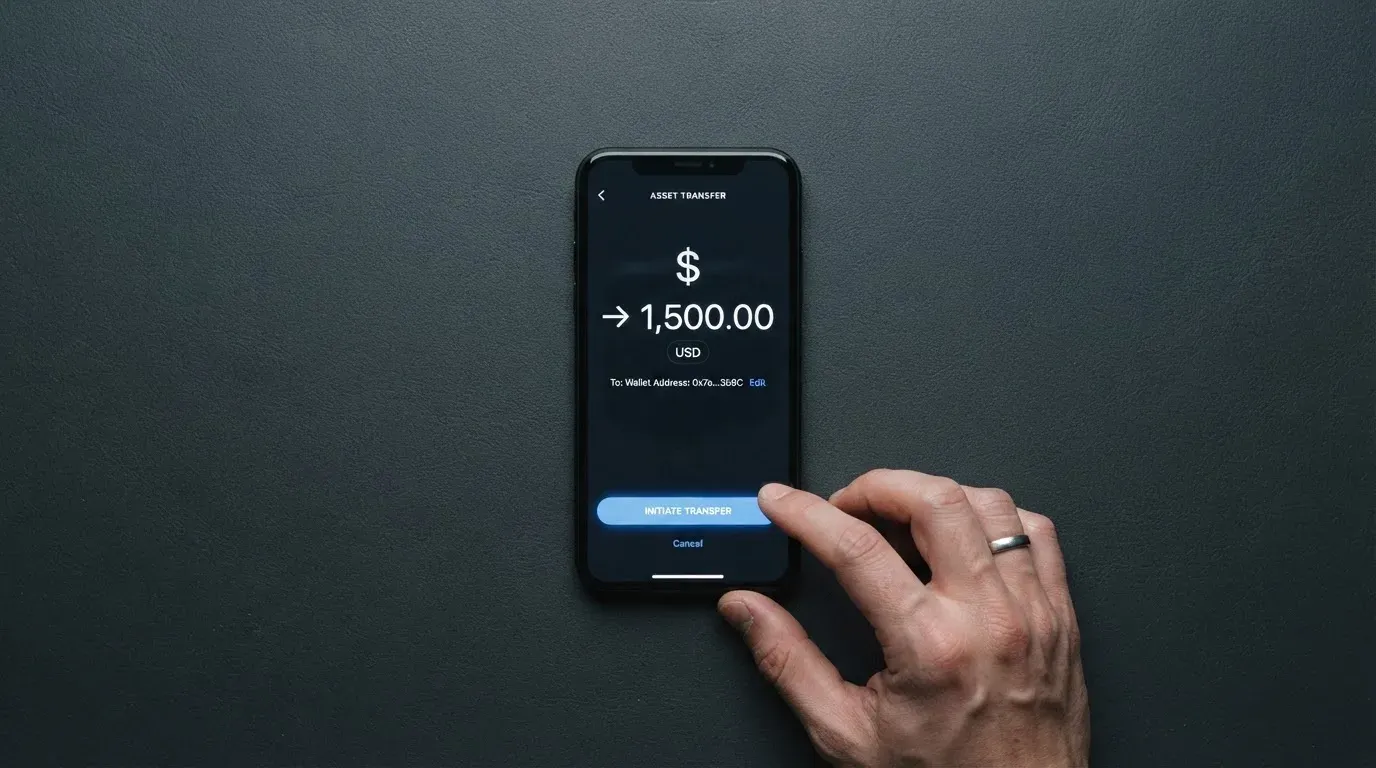
The minimum top-up is 10.00 USDT, which is also the amount you pay at signup. After that, the top-up fee is 3.0% on Universe and 3.5% on Business and E-commerce. The page does not say which network the top-up is sent on, which means you do not know in advance whether to send USDT on Ethereum, on Tron, on Solana or on another chain. It also does not say who pays the on-chain network fee, and it does not say whether you can fund the card from a bank transfer or a card-to-card payment.
This is where TapX differs from a typical card in a way that matters. Most cards that accept crypto at least tell you the supported networks on the funding page, because sending USDT to a USDT address on the wrong network is a common, irreversible mistake. If TapX only shows the address inside the dashboard after you sign in, that is reasonable for security, but it does mean you cannot plan a top-up in advance or check the network against your wallet’s options before you sign up.
Withdrawal is not described at all. There is no statement on the page about cashing out, sending the balance back to a bank account, or returning unspent USDT to an external wallet. Given that the card is virtual-only and the limits are stated in USD, the natural reading is that the balance is closed-loop: you load USDT, you spend it on the card, and any unspent amount stays on the platform until the card page describes an exit.
Paying with TapX every day
All three cards are virtual, and there is no physical or metal edition. The Universe and Business cards work with Apple Pay and Google Pay, and the card page also says every card is “ready for Apple Pay & Google Pay” in its marketing. That means the most common real-world use is paying from a phone wallet at a contactless terminal, not handing over a piece of plastic.
The E-commerce card is shaped for a specific kind of spend. The page lists Google, OpenAI, ChatGPT, Microsoft, Meta, Shopify, AWS, Telegram and TikTok as the kind of service it is built for, so the target use is paying for online subscriptions and cloud services from a USDT balance. The per-transaction limit on E-commerce is 20,000.00 USD, which is more than enough for a year of cloud bills, and the page says “no limits” for daily and monthly spend, which is one of the few places TapX is generous on paper.
The card page does not list blocked merchant categories. Most crypto cards block gambling (MCC 7995) by policy, and many block adult content, prepaid cash, and certain gift cards, but TapX does not say. If you only need to pay for the services the page lists, this does not matter; if you want to know whether your local supermarket is treated the same as a betting site, you have to find out by trying.
The card page describes a dashboard and a web interface, plus a Telegram bot, as the places where you manage the card. There is no separate app rating or app store listing I can confirm. For an online-only card, the absence of a native mobile app is unusual but not a deal-breaker: a web dashboard and a Telegram bot can do most of what an app does, including checking the balance, freezing the card, and adding it to Apple Pay or Google Pay.
The card page claims “favorable conditions for commissions and conversion” for the Universe tier. That is marketing language rather than a rewards programme, and the rest of the page does not describe a cashback rate, a points scheme, or any incentive to use the card over a competitor. If you are picking a card because it pays you back, this is not the card for you.
Disputes and chargebacks are not described. If a merchant charges you twice, sends you the wrong item, or refuses to send anything, the card page gives you no information on how to file a complaint, how long a review takes, or whether the issuer will even help you. The Business tier supports 3-D Secure, which is the standard online-cardholder-verification step and which can shift liability in a dispute, but the Universe and E-commerce tiers do not say.
What can go wrong with the TapX card
The first thing that goes wrong with TapX is also the most basic: the card page does not name a legal entity, a card issuer or a licence. The only company information is “© Copyright TapxCard, 2026”. If your money is held by an unnamed company in an unnamed jurisdiction, and the card programme is run by an unnamed issuer under an unnamed licence, you have no obvious place to complain if something goes wrong and no obvious regulator to escalate to.
The second is the state of the domain itself. An aggregator note flags the TapX domain as recently registered with hidden WHOIS, which means the owner’s identity is not visible in the public registration record. There is no Trustpilot page for TapXCard that I could find, no Reddit thread about the brand, and no recurring complaint data. That is not the same as the card being a scam, but it is a thin public footprint for a service that asks you to verify your passport and load USDT.
The third is that the card’s own pages do not list support channels. The only contact information is a Telegram bot, an Instagram account, an X (Twitter) account and a Facebook page. There is no email address, no support ticketing system, no phone line and no office address. If your card is blocked at a checkout, if a top-up is missing, or if you want to close the account, the only public path is a Telegram bot.
The fourth is the combination of small fees and missing fee lines. The 0.50 USD authorisation fee and the 0.20% Apple Pay commission are the kind of fees that look small in the table and add up over a year of regular use. The FX fee, the ATM fee, the withdrawal fee and the declined-transaction penalty are not stated, so you only learn about them when they appear on a statement. The E-commerce tier’s “0.80 USD if declines exceed 10%” penalty is the most concrete risk: if your card is being declined repeatedly, you are paying extra for the inconvenience, and you are not told what counts as a decline in that rule.
The fifth is the wider industry risk that is not specific to TapX. Crypto card programmes have been shut down before, and when a programme shuts down the users are told to withdraw their balance, often within weeks. With a card whose issuer is not named, the operational risk is harder to evaluate than with a card issued by a known bank.
What to take instead
If TapX does not fit, the three closest alternatives I have reviewed are Cardex, CardFlow and HyperCard. None of them is a perfect replacement, and all of them have their own gaps.
| Card | Score | Who it suits | Where it falls short |
|---|---|---|---|
| Cardex | 5.6 / 10 | People who want a single crypto card with a conversion engine that picks the rate at payment time. | Card currency is Naira per its App Store listing; the fee structure is not stated. |
| CardFlow | 4.9 / 10 | People in Nigeria or paying in Naira who want a free virtual USD Mastercard funded from crypto. | Country focus is Nigeria; conversion fees and limits are not stated. |
| HyperCard | 4.7 / 10 | People who need a prepaid USD or EUR balance and want deposit in USDT, BTC or ETH. | The card network is not stated; fees and limits are not stated. |
Cardex markets itself as a single crypto card available in 200+ countries, with real-time conversion at the moment of payment. Its App Store listing shows the card running on VERVE, Visa, Mastercard and UnionPay, with both virtual and physical versions, which is a wider hardware offering than TapX. Its weakness is that fees, limits, and rewards are not stated, and the App Store listing is Naira-focused, so if you do not live in Nigeria the value is less obvious.
CardFlow is a virtual USD Mastercard that the company says is created in 3 minutes and that it markets as “Nigeria’s smartest fintech card platform” for “Nigerians and global users”. Its strongest pitch is the price: creating a virtual card is free, per its own FAQ. It accepts Bitcoin, USDT, ETH or Naira bank transfer. It does not state fees, limits, or a card network beyond Mastercard.
HyperCard is a prepaid card with a balance in USD or EUR, deposits in USDT, BTC or ETH through an app, and acceptance in “more than 176 countries” per its App Store page. It does not state the card network, fees, limits, or rewards on the pages I could read, so the comparison to TapX is mostly on funding flexibility and acceptance.
If your priority is a named company behind the card, none of these three is a clear winner either; they all leave room for further checking. If your priority is a free virtual card, CardFlow is the cheapest to start. If your priority is a card that converts at the moment of payment, Cardex markets that as its main feature. If your priority is a card with a published fee schedule, TapX is actually one of the more transparent of the four, which is a backhanded compliment to the category.
Who I would recommend TapX to
I would recommend TapX to a narrow, specific kind of reader. You already hold USDT in a self-custody wallet and you want to turn that balance into a Visa or Mastercard you can use at a checkout, online or through Apple Pay and Google Pay. You do not need a physical card, you do not need to withdraw cash from an ATM, and you are comfortable with the card’s small per-transaction charges. You also do not need a regulator on the other end of the relationship: you accept that the company behind the card is not named, that the licence is not stated, and that your protection is the size of the balance you load rather than the law.
Within that narrow group, the Universe tier is the one to pick if you plan to load and spend more than a few thousand USD a month, because its 3.0% top-up fee and 0.50 USD authorisation fee amortise better over large payments. The Business tier is the one to pick if you want Apple Pay and Google Pay on a Mastercard and you do not want to pay 199.00 USDT to start. The E-commerce tier is the one to pick if you only need to pay for online services like cloud bills, advertising and SaaS subscriptions, and you are happy to live with the lowest verification and the lowest per-transaction limit.
I would not recommend TapX to anyone who needs a card from a known bank, a card issued under a published e-money or payment-services licence, or a card that names a regulator you can complain to. I would not recommend it to anyone whose only way to fund a card is a bank transfer in fiat, because the card page does not list fiat top-up as an option. I would not recommend it to anyone who needs a physical card, an ATM card, or a card with a published FX fee before they sign up. And I would not recommend it to anyone who cannot afford to lose the balance they load, because the protection on the other side of the relationship is, as far as the public pages show, essentially none.
Frequently asked questions
What is the TapX card?
The TapX card is a crypto-funded payment card that comes in three virtual versions: Visa Universe, Mastercard Business and Visa E-commerce. It is funded in USDT, the limits are stated in USD, and there is no physical edition. It is marketed as a card for paying online services and for using Apple Pay and Google Pay.
How does the TapX card work?
You pick a tier, you verify as much as that tier requires (phone only, phone plus passport, or phone plus passport plus face photo), and you pay the card’s price plus a 10.00 USDT initial top-up. The Universe and Business tiers are issued within 2 minutes, you add the card to Apple Pay or Google Pay, and the balance is spent from there.
Is TapX a bank?
The card’s public pages do not say. There is no named legal entity, no named card issuer, and no named banking or e-money licence. The only company information on the page is a copyright line for TapxCard, 2026, which is not enough to identify a regulated bank.
Who owns TapX?
The public pages do not say. The domain is recently registered with hidden WHOIS, so the registration record does not show the owner’s name either. This is one of the main open questions a prospective user has to accept before signing up.
Is the TapX card available in my country?
The card page says it “works globally” and does not list any countries or exclusions. In practice that means you only find out whether your country is supported when you try to verify, and there is no published list to check in advance. Sanctions screening and issuer policy are still applied even if the marketing does not mention them.
Does the TapX card require KYC?
Yes, but the level depends on the card. The E-commerce card asks for a phone number only, the Business card adds an international passport, and the Universe card adds a face photo on top. Proof of address and minimum age are not stated on the public pages.
How do I top up the TapX card?
The official page names USDT as the initial top-up and a 10.00 USDT minimum. Other funding methods, supported networks, and the party that pays the on-chain network fee are not stated on the public page, so you only see the deposit address inside the dashboard after sign-up.
Can I withdraw cash with the TapX card?
The card’s pages do not say. The card is virtual-only and the public pages do not list ATM support or an ATM fee, so the natural reading is that cash withdrawal is not a feature of the product. If you need cash from an ATM, this is not the card for that.
Is the TapX card free?
No. The Universe tier costs 199.00 USDT to issue, the Business tier 50.00 USDT, and the E-commerce tier 30.00 USDT. On top of that you pay a 10.00 USDT initial top-up, a 3.0% or 3.5% top-up fee on every reload, and small per-transaction fees that the page lists under each tier.
Is the TapX card safe?
The card supports 3-D Secure on the Business tier, the authorisation fees are visible, and the limits are stated in plain numbers. The safety gaps are on the company side: no legal entity is named, no issuer is named, no licence is named, and the public support channel is a Telegram bot. If your priority is a card from a known, regulated institution, TapX does not currently provide that.
Choosing a virtual card – cryptocardadvisor
Content created by the «cryptocardadvisor» team