
A Gibraltar-issued Mastercard with a euro balance, cashback and a low Trustpilot score
 Available in US
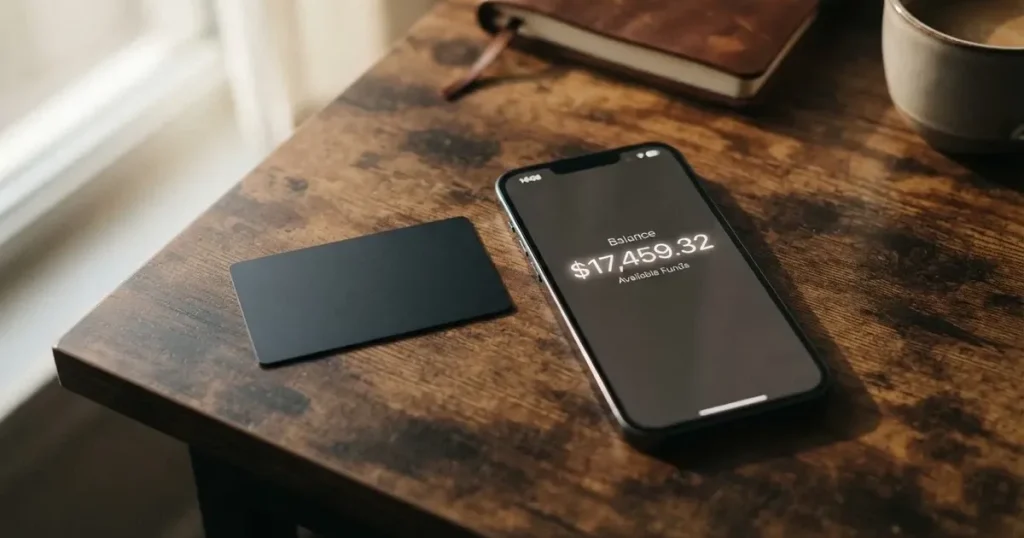
The Tap card is a crypto-linked payment card that behaves less like a crypto wallet and more like a prepaid euro account with a card attached. You hold crypto, a stablecoin balance or cash in an app, and you spend from an ordinary Mastercard — physically or virtually — with cashback of up to 8% advertised and a licence held by Tap Global Limited in Gibraltar. On paper that is a clean, familiar proposition. In practice the card’s own public pages leave a great deal unsaid: no country list, no fee schedule, no card currency, no named issuing partner, and no explanation of which networks you can send crypto over. Those silences, plus a Trustpilot score of 3.4 out of 5 from 321 reviews and recurring reports of accounts frozen for days to weeks, are what this review is really about.
My overall mark for Tap is 5.6 out of 10. That is not a scathing score and it is not a recommendation. It sits in the middle of a field where the alternatives here score between 5.2 and 6.7 — a field that is, in general, thin on disclosed information and thick on unresolved complaints. If you need a card that just works, with published fees and a stated list of countries you may live in, Tap is a hard sell, because it will not give you either. If you already hold crypto, want a euro balance rather than a dollar one, live in a place where Tap says the service may not be available but you are willing to test it, and you can survive an account review lasting a fortnight, then there is a version of Tap that makes sense.
The conditions described here are current as of October 28, 2026.
| Criterion | Mark | Why |
|---|---|---|
| Who can get it | 6 / 10 | No country list on the site; only “Services May Not Be Available In All Jurisdictions” and an instruction to verify eligibility in your region; the number of countries is not disclosed |
| Cost | 6 / 10 | Nothing official disclosed; unofficial: monthly fee, issuance, top-up and ATM free, FX 1.5%; user reports of a $35 withdrawal fee and an inactivity fee |
| Top-up options | 5 / 10 | No coin list published, stablecoins, USDT, BTC, SOL and a bank/crypto on-off ramp mentioned; unofficial: crypto must be converted before loading the card |
| Reliability and complaints | 4 / 10 | Tap Global Limited (Gibraltar), Gibraltar FSC DLT licence No. 25532, Moorwand Ltd named as issuer for the new card; Trustpilot 3.4 out of 5, accounts frozen for days and weeks, withdrawal delays |
| Everyday use | 7 / 10 | Physical and virtual Mastercard; unofficial: Apple Pay and Google Pay noted, but “No Apple Pay” also appears among the complaints; ATM withdrawals free |
| Total | 5.6 / 10 | A usable card attached to a service that discloses very little about itself |
Who it suits, in one line: people who want crypto, multi-currency balances and cashback, and who are comfortable treating a card as something you test rather than something you depend on. Who it does not suit: anyone who needs a guaranteed country list, a published fee table, a clear answer on cash withdrawals, or certainty that money in the account will still be there next week.
Will they give you the card?
Short answer: probably, if you are over 18 and your region is not excluded, but you cannot find out from Tap’s public pages, because the company does not publish the list.
There is no country list on the site. What is published is a warning — “Services May Not Be Available In All Jurisdictions” — and an instruction to verify eligibility in your region. The number of countries is not disclosed. Compare that with the alternative cards in this review: the International Visa Card publishes a seventeen-country exclusion list, and Whop Cards publishes thirty-one US states for consumers and forty-one for businesses, plus a named list of unsupported countries. Tap publishes nothing comparable. If your country is on someone else’s exclusion list, that is at least a fact you can check; with Tap, you check by applying and finding out.
The identity requirements are also unstated on the official pages. What is not stated includes whether a document is needed, what kind, and whether there are tiers of verification. The unofficial picture, from cryptocards.so in 2026, is that identity verification involves an email address, a phone number and an identity document, and that proof of address and a selfie are not required. Take that as third-party reporting, not as something Tap confirms.
One further thing worth knowing before you apply: the card itself is a physical and a virtual Mastercard, in a dark finish, and the card currency is not stated. That single omission turns out to matter, because Tap describes the existing card as euro-denominated, with other currencies converted at the point of sale. There was also an announcement on 5 October 2026 of a new multi-currency Mastercard, but no launch date was given for it, so at the time of writing you should not plan around it.
How to get it
There is no application walkthrough on Tap’s public pages — no steps, no documents list, no delivery information, no statement of what verification levels exist. So the honest answer to “how do I get it” is: you install the app, you sign up, and you find out what they want next.
What can be said with confidence is thinner than you would like. The app is on the App Store with a rating of 4.5 out of 5 from 25 ratings, version 3.8.8, requiring iOS 15.6 or later, read on 2026-10-20; the Google Play app is listed under com.tapngo.tap, though its rating was not read. Support is described as “Available 24/7” with no channels named, and the app languages are English, French, Greek, Italian, Spanish and Swedish. Delivery time and delivery cost for the physical card are not stated. Whether the card arrives activated, or whether activation is a separate step, is not stated either — and “how do I activate the card” is one of the things people search for most, so the silence there is worth noticing.
One conflict to flag early, because it will confuse you if you go looking: a third-party site, cryptocards.so in 2026, lists the network as Visa. Tap’s own pages show a Mastercard. If the network matters to you — it does, for acceptance in some places and for which wallet tokenisation works — go by what is physically in your hand.
Fees: what it really costs
Here is the uncomfortable part. Tap does not publish its fee schedule. Issuance, monthly fee, conversion, FX, ATM, daily limits and monthly limits are all not stated on the public pages. There is no “zero” claim and no conversion or FX figure in the official material. So the numbers below come from third-party sources and from user reports, and you should treat them as the best available picture rather than as a contract.
| Fee or limit | Value | Source |
|---|---|---|
| Card issuance | Free | Unofficial (cryptocards.so, 2026) |
| Monthly fee | Free | Unofficial (cryptocards.so, 2026) |
| Declines | Free | Unofficial (cryptocards.so, 2026) |
| Top-up | Free | Unofficial (cryptocards.so, 2026) |
| ATM withdrawals | Free and unlimited | Unofficial (cryptocards.so, 2026) |
| Currency conversion (FX) | 1.5% | Unofficial (cryptocards.so, 2026) |
| Crypto withdrawal | $35 reported by users | User reports; Tap says fees are in its terms |
| Cashback | Up to 8% | Official; payout asset, tiers and caps not stated |
| Tiers | Not stated on the site | — |
| Daily spend limit | “Unlimited” in one listing, 15,000 EUR cap in the same source’s complaints | Unofficial, internally inconsistent |
| Monthly limit | Not stated | — |
Three everyday payments, so the table turns into something you can picture.
Coffee abroad. You are in a country that is not the eurozone, so this is a foreign-currency purchase on a euro card. Tap’s own statement is that other currencies are converted at the point of sale. Applying the unofficial 1.5% FX fee is standard for foreign-currency spending on this card, and because Tap does not publish a fee schedule, this percentage is the primary cost factor you should anticipate. No other fee applies at the merchant, but the conversion happens at the point of sale.
A monthly subscription. Say EUR 30 in your home currency, paid on the same date each month. On a euro card in the eurozone this is a straight EUR 30 with no conversion at all — the cheapest version of this card. Outside the eurozone it carries the same conversion percentage on every single charge, which is why people who live outside the euro area and rely on Tap for recurring bills tend to be the ones who feel the 1.5% most.
Withdrawing cash at an ATM. Unofficial sources say withdrawals are free and unlimited; the official pages say nothing. Here the user reports are the thing to weigh, not the fee table: several reviewers describe a $35 crypto withdrawal fee, which is a different operation — moving crypto off the platform rather than taking cash out of an ATM — and Tap’s position is that its fees are set out in its terms. Before you rely on either figure, find the terms in the app and read them.
The pattern to notice is that everything Tap can describe as “zero” is described as zero by third parties, and everything that costs money under pressure — the FX rate, the crypto withdrawal, an inactivity or monthly fee that reviewers reported draining balances between April and June 2026 — is either absent from the public pages or defended as being in the terms.
Top up: how the money gets in
Topping up Tap starts with a transfer to the right network, and “the right network” is exactly what Tap does not tell you.
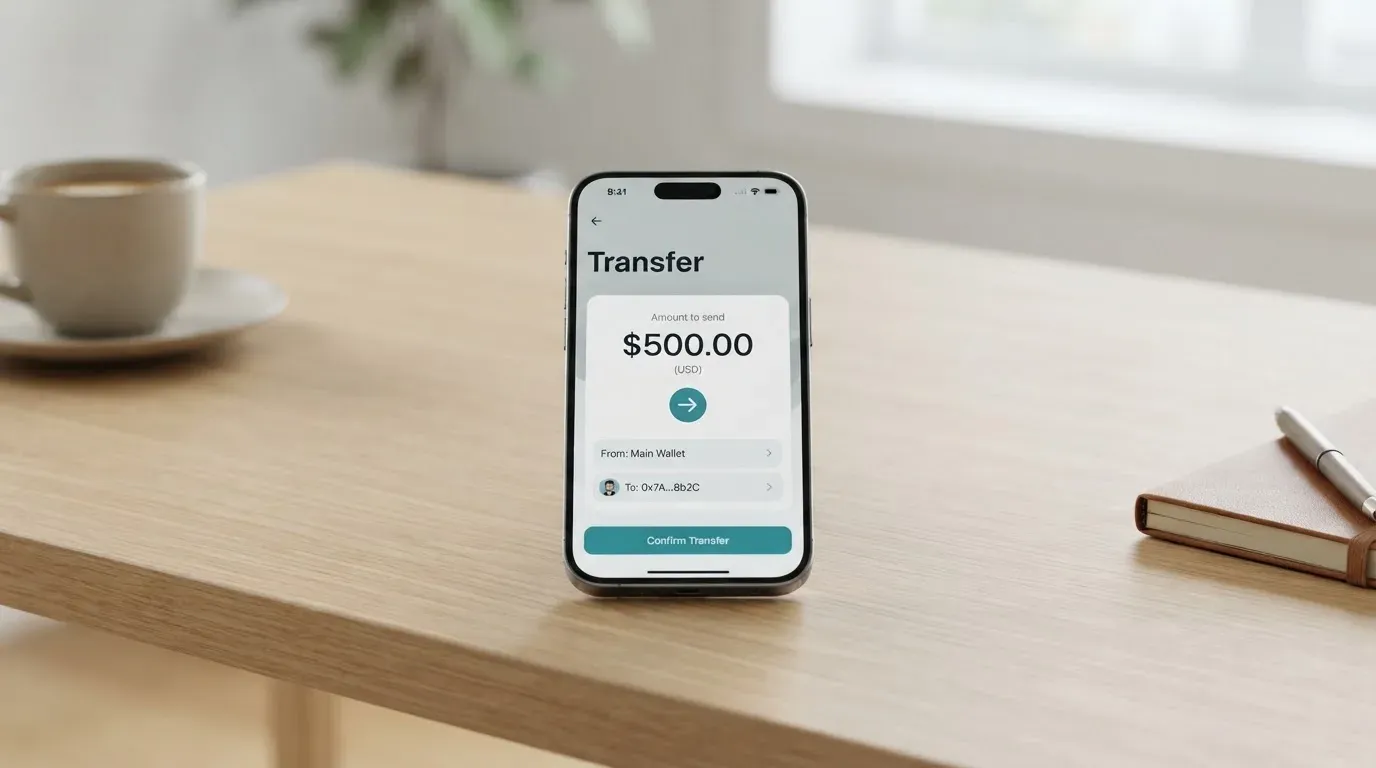
There is no funding list on the site and no network list. What the page mentions in passing: stablecoins, yields on USDT, BTC and SOL, and a Bitcoin on-off ramp. Fees and minimums for topping up are not stated. The site does mention dedicated IBANs to hold seven national currencies, and a bank-or-wallet-to-crypto on-off ramp; that ramp is described as available “between a bank account or wallet and crypto, available anytime”, with fees and the treatment of a closed account not stated. On the currency side, the site says “Use 80+ currencies” and “Use the currency of your choice to load up your card”.
The unofficial picture adds the piece that changes how you should approach this: crypto must be converted before it is loaded onto the card — that is, Tap behaves like a prepaid card, not like a wallet that spends directly from your coins. The same source is internally inconsistent about how many coins are supported, showing 48 in the pros and 0 in the section below them, which is a good illustration of the general standard of third-party information in this category.
Why does the missing network list matter so much? Because blockchain transfers are irreversible. Send a deposit over a network the provider does not support, or to an address belonging to a different network, and the money can be lost outright or need manual support recovery with no guarantee of success. Gas and bandwidth for your deposit are charged by the blockchain, not by Tap, so that cost exists regardless. And if you hold USDT on Tron, note that Tether issues it on several chains including Tron, whereas Circle stopped supporting USDC on Tron in February 2024 — so “USDC over TRC20” is not a native option, and picking a chain on instinct is how people lose deposits.
Paying with it every day
Day to day, Tap is the part of the card that works best, and it is the highest score in my table at 7 out of 10.
You get a physical and a virtual Mastercard. That combination matters: the virtual one is what you use for subscriptions and online payments, the physical one for everything else, and having both means you can freeze one without losing the other. You can also freeze the card or lock the account instantly from the app, reveal the card details and view the PIN there — the standard modern control set, and genuinely useful when a card goes missing.
Cashback is “up to 8%” on qualified purchases. The payout asset, any tier structure and any caps are not stated. Unofficial reporting describes VIP tiers with an entry level of 0.5%, so read “up to 8%” as a ceiling reached under conditions you have not been told rather than a rate you should plan your budget around.
The mobile wallets are where the picture gets murky. Apple Pay and Google Pay are marked as supported in one third-party listing, while the complaints in that same listing include “No Apple Pay support”. Official pages say nothing either way. If tapping to pay at a terminal is how you intend to use the card, treat this as unverified and check inside your own wallet before you commit to it.
Two things about how the card behaves in the wider payments system are worth knowing, because they explain the declines people report. A card number begins with a six- or eight-digit issuer identification number, and merchants can look it up to see which institution and country issued it — which is why a card issued in one country can look foreign to a shop in another and attract extra scrutiny. Separately, a merchant category code is a four-digit number classifying the business, and MCC 7995 covers gambling; many issuers block it by policy rather than by law, and the blocked list varies by issuer. Tap does not publish which categories it blocks. And a declined authorisation can leave a hold on your funds for several days, typically up to seven.
What can go wrong
This is where Tap loses the most ground, and it is worth being blunt: the reliability and complaints score is 4 out of 10, and it is the lowest of the five criteria.
The company is Tap Global Limited, Gibraltar (No. 118724), Madison Building, Midtown, Line Wall Road, Gibraltar GX11 1AA, licensed by the Gibraltar Financial Services Commission under the DLT Regulatory Framework, Licence No. 25532. Banking and e-money are provided by “Our Authorised Issuing Partners” — the specific provider is shown in the app and varies by region, currency and account type, and the issuer name is not stated on the site. That arrangement is common in this industry and it is not inherently a problem, but it does mean you should find out who your money actually sits with before you fund it.
The user reports are the substance of the 4. On Trustpilot, tap.global shows 3.4 out of 5 from 321 reviews, 36 of them in the last twelve months, read on 2026-10-20. On the UK Trustpilot listing the figure is 3.5 out of 5 from roughly 309 reviews. The complaints that repeat: accounts frozen or locked for thirteen days without explanation, and in the December 2025 to February 2026 window for days to weeks at a stretch; deposits and withdrawals that simply did not arrive in January, June and September 2026; repeated KYC checks and long onboarding; a revoked referral bonus; inactivity or monthly fees draining a balance between April and June 2026; a high crypto withdrawal fee; and slow support at weekends. Tap’s own material says fees are set out in its terms.
Note what is absent from that list of complaints: no official complaints page exists, and no dispute process is stated. The terms page did not load its text when checked, so how a dispute would be handled is genuinely unknown to me.
Two structural risks sit underneath the complaint list, and they apply to this whole category rather than to Tap alone.
Your money is not a bank deposit. Tap says plainly that it is “not a bank” and that accounts are held by authorised issuing partners. An electronic money institution must safeguard customer funds by segregating them or insuring them, but such funds are not the same as bank deposits and may not be covered by a deposit guarantee scheme. If you are reading this because you have trouble getting an ordinary bank card, that distinction is the single most important sentence in this review: this is not the same protection you would have at a bank, and if a provider’s licence or status is unclear to you, that is a reason to stop.
Crypto custody is someone else’s decision. If you hold crypto on the platform rather than in a wallet you control, control of the private key belongs to the provider, and there is no recovery if it is lost. Transfers are typically irreversible, a stolen key cannot be undone by the network, and the sector has a documented history of custodian failure — Mt. Gox at roughly US$350 million reported stolen between 2011 and 2014, Coincheck at about US$400 million in 2018, and the Ronin Network at US$625 million in 2022. A self-custody-linked card avoids that but transfers the risk to you: losing the seed phrase, falling for phishing, or clipboard malware that silently swaps a pasted address.
Finally, the category has a habit of disappearing. Visa and Mastercard do not issue crypto cards themselves — they license issuers and can suspend a programme. Visa terminated its global agreements with FTX on 13 November 2022 and the FTX US debit card was wound down; WaveCrest, a Visa card issuer that supplied crypto card brands, was suspended by Visa in Europe in 2018 and all its Visa programmes closed. Closures typically follow a pattern: a notice period, then loading and spending stop, then you are asked to withdraw what is left. So keep a withdrawal path in mind from day one, and do not treat a crypto card balance as a place to park money.
What to take instead
Three alternatives came up in this comparison, and the honest thing to say is that none of them is dramatically better — they score between 5.2 and 6.7, against Tap’s 5.6. But each is better on a specific axis, and if the axis that annoys you most is disclosure, there is a better option.
| Card | Score | Card type | Cost | Fees | Funding | Rewards |
|---|---|---|---|---|---|---|
| Tap | 5.6 / 10 | Physical and virtual Mastercard | Not stated officially; unofficial: free monthly and issuance | Not stated officially; unofficial: FX 1.5%, free ATM | Not stated officially; unofficial: convert crypto before loading | Up to 8% cashback |
| International Visa Card | 6.7 / 10 | Virtual, U.S.-issued Platinum Visa; physical “Coming soon” | $5 one-time virtual issuance, no maintenance; Classic free, Pro $9.00/month, Max $19.00/month | USD use free on all plans; foreign currency at Visa exchange rate + 2% FX fee; deposits of any kind free | USDC or USDT into the USD account free at 1:1; also USD, EUR, SEPA, SWIFT, FedNow; networks not stated | No cashback stated |
| UNi Card | 6.1 / 10 | Multicurrency card on the Mastercard network, spends from the UNi.Global balance | “No annual fee”; issuance fee not stated | “No annual fee or foreign transaction fee”; converted at live OTC rates, “no hidden exchange fees” | Not stated | Spend-to-Earn up to 3% |
| Whop Cards | 5.2 / 10 | Visa, online and in stores; physical/virtual not stated, also issued to team members | “No extra fees”; no amounts listed | Not stated | Spends from a Whop balance; pending balance usable as soon as a payment arrives, standard withdrawals use settled funds; backed by stablecoin collateral from a linked wallet, coins and networks not stated | 5% cashback at select merchants, currently Uber |
On eligibility, the International Visa Card is the one that publishes. It is not available to residents or legal registrants of Belarus, mainland China, North Korea, Cuba, India, Iraq, Iran, Israel, Myanmar, Nepal, Nicaragua, Russia, Syria, Turkey, Ukraine, Venezuela or Vietnam; FATF grey-list countries are reviewed case by case with compliance approval. Purchases are blocked in North Korea, Cuba, Iran, Russia, Syria, Ukraine and Venezuela. The rule is by residence or registration, and citizenship is not mentioned — which is a real distinction, because nationality is usually screened separately from address.
On fees, UNi Card states what it does not charge: no annual fee, no foreign transaction fee, conversion at live over-the-counter rates, and no hidden exchange fees. It does not state its funding routes, so you would be going in with the same question open.
Whop Cards is the one to consider if cashback is your priority — 5% at select merchants, currently Uber, with more planned — and the one to skip if you need clarity, since its fees, card currency, card type and eligible countries are all either partial or unstated.
Who I would recommend it to
I would recommend Tap to someone in roughly this position: you already hold crypto or a stablecoin, you spend most of your money in the euro area, you want a physical and a virtual Mastercard from one app, you are drawn by the cashback, and you treat the account as a secondary card you can rebuild if it gets frozen. If you can live with those conditions, Tap does what it says on the tin — it is the highest-scoring of the criteria here for everyday use, and the account controls are modern.
I would not recommend it — and would steer you to the alternatives above — if any of the following is true. You live somewhere you would want a definitive answer about, because Tap publishes no country list. You have had an account frozen or a KYC review before and you cannot absorb a freeze of a fortnight. You rely on cash withdrawals or on moving crypto off the platform, because the withdrawal fee is a $35 rumour rather than a published figure. You are trying to plan around the 8% cashback, because the tiers and caps are not stated. Or you are looking for bank-grade protection on the balance, because Tap says it is not a bank and the safeguarding comes from an issuing partner whose name is not even published on the site.
If you are in the situation this review was written for — someone who has trouble getting an ordinary bank card at all — I would say this: a crypto card is a payment tool, not a substitute for a banking relationship, and the licensing, the safeguarding and the eligibility questions deserve more weight than the cashback rate. Check who holds your money, check what happens if the provider is wound down, and do not park funds you cannot afford to have frozen for a month.
Frequently asked questions
What is the Tap card?
Tap is a crypto-linked payment card from Tap Global Limited, a Gibraltar-licensed company. It gives you a physical and a virtual Mastercard that spend from an app balance you fund with crypto, stablecoins or cash — the existing card is euro-denominated, with other currencies converted at the point of sale. It is a prepaid-style product: crypto is converted first, then the card spends a fiat balance.
How does the Tap card work?
You convert or load money into your Tap balance, then spend it with the Mastercard like any other card, in stores or online. Because it behaves like a prepaid card rather than a debit card tied to a bank account, it draws only on the loaded balance and cannot overdraw. Card payments are routed by Mastercard, and the underlying programme sits with an authorised issuing partner shown in the app.
Is Tap a bank?
No. Tap states plainly that it is not a bank, and that accounts are held by its authorised issuing partners. Its own licence is a Gibraltar Financial Services Commission DLT licence, No. 25532. Funds held through an e-money partner must be safeguarded, but they are not bank deposits and may not be covered by a deposit guarantee scheme.
Who owns Tap?
Tap is Tap Global Limited, registered in Gibraltar as No. 118724, at Madison Building, Midtown, Line Wall Road, Gibraltar GX11 1AA. It is licensed by the Gibraltar FSC under the DLT Regulatory Framework. On 5 October 2026 it announced that Moorwand Ltd had been appointed as issuer and BIN sponsor for a new multi-currency Mastercard, citing 400,000 customers.
Is the Tap card available in my country?
You cannot tell from the site. Tap publishes no country list — only “Services May Not Be Available In All Jurisdictions” and an instruction to verify eligibility in your region, and the number of countries served is not disclosed. Some alternatives here do publish an exclusion list, which is a real advantage if your country is unusual.
Does the Tap card require KYC?
What Tap publishes does not say. Unofficially, cryptocards.so in 2026 reports that verification involves an email address, a phone number and an identity document, with no proof of address and no selfie required. Note that any regulated provider must check identity, and repeated KYC checks are among the complaints users have filed.
How do I top up the Tap card?
The site’s own funding and network lists are not published, which is the single riskiest gap in this card. It mentions stablecoins, USDT, BTC and SOL, dedicated IBANs holding seven national currencies, and a bank-or-wallet to crypto on-off ramp available anytime. Unofficially, your crypto must be converted before loading. Transfers are irreversible, so confirm the network before sending.
Is the Tap card free?
Unofficially, yes: monthly fee, issuance, top-up and ATM withdrawals are all reported as free, with FX at 1.5%. Tap itself publishes no fee schedule at all, and users report a $35 crypto withdrawal fee and an inactivity or monthly fee that drained balances. Read the terms in the app before relying on any of it.
Can I add the Tap card to Apple Wallet?
Uncertain. One third-party source marks Apple Pay and Google Pay as supported; the complaints in that same source include “No Apple Pay support”, and Tap’s own pages say nothing. If tapping to pay is central to how you would use the card, check your wallet after activation rather than before you commit.
Is the Tap card safe and worth it?
Define “safe” first: Tap is not a bank, the safeguarding comes from an unnamed issuing partner, and accounts have been reported frozen for thirteen days and for stretches of weeks. Trustpilot shows 3.4 out of 5 from 321 reviews. On value, the “up to 8%” cashback is real as a ceiling but its tiers and caps are not published. Treat it as a secondary card, not a place to keep money.
Choosing an app or neobank card – cryptocardadvisor
Content created by the «cryptocardadvisor» team