
A free virtual Visa from a hardware-wallet brand, with gaps in its own published details
 Available in US
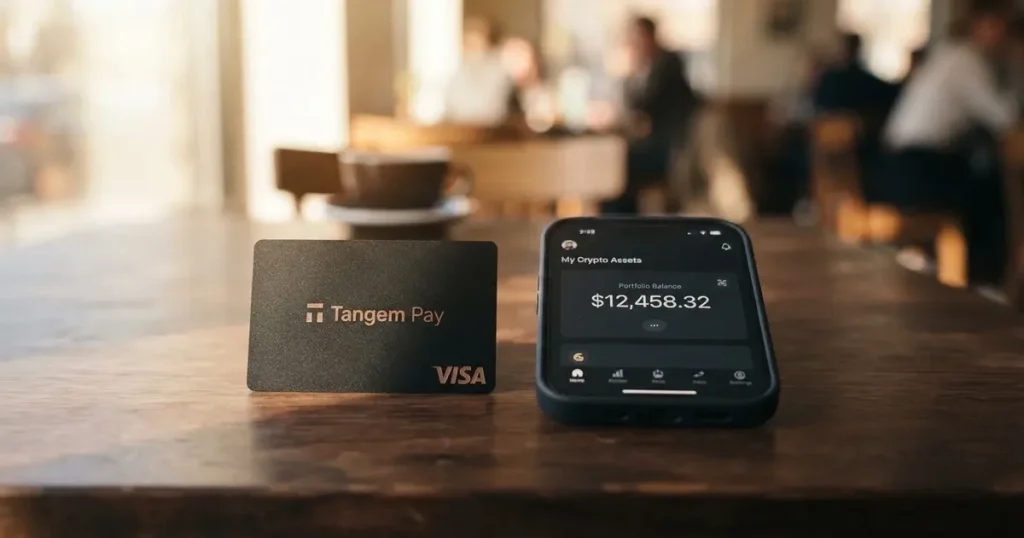
Tangem Pay is the payment card that comes out of the Tangem Wallet app, and its pitch is easy to summarise: a Visa number you load with stablecoins or bank money and then spend like any other card, with the Basic plan costing nothing to hold. That much is true, and the free tier is genuinely rare in this category. What follows is what I found when I read the card’s own pages closely — where it is strong, where the published information simply stops, and where the people already using it report the friction.
I want to be straight with you about one thing before anything else: this card is not fully described by its own documentation. Several figures I would want before I loaded it — which countries exactly, what the crypto conversion costs, whether a monthly spending cap exists — are simply not stated on the readable pages. I will flag each one where it comes up rather than guessing, and I will keep the unofficial third-party claims clearly separate from what the card itself says.
The conditions described below are current as of October 28, 2026.
Verdict: 6.9 out of 10
My score for Tangem Pay is 6.9 / 10. That is a “worth considering with eyes open” number, not a “close your eyes and apply” one. The card does several things well and leaves other things unsaid.
Who it suits. If you already keep money in the Tangem Wallet, you want a virtual Visa you can load and spend without opening a second app, and you would rather not pay a monthly fee, the free Basic tier is exactly what it claims to be. It also fits anyone who values the non-custodial structure — the balance sits in a smart contract you control, and Tangem states plainly that it does not hold, custody or control users’ assets.
Who it does not suit. If you need a plastic card in your hand tomorrow, this is the wrong card right now — third-party reporting says physical cards are not generally in circulation. If you are in the UK or the EU, you cannot use it at all today; both are described as planned for 2026. If you spend in anything other than US dollars, you will pay a 1.5% conversion margin on top of the Visa exchange rate. And if you are the kind of user who wants every number printed before signing up, several of the numbers are missing.
The audience Tangem is aiming at is fairly obvious: people who already hold a Tangem Wallet and want a free virtual Visa attached to it, rather than a broader bank-replacement proposition.
| Criterion | Mark | Why |
|---|---|---|
| Who can get it | 7 / 10 | Available in the US and selected countries in LATAM, APAC, MEA and Africa; no country list published, UK and EU planned for 2026 |
| Cost | 7 / 10 | Basic $0 a month, Plus $29.99 a month; $0 transaction fee, FX at Visa rate + 1.5%, ATM 4% on Basic, plastic delivery $14.53 to $82.10 |
| Top-up options | 6 / 10 | Native USDC on Polygon from any wallet or an in-app swap, plus bank funding over ACH/FedWire in some regions |
| Reliability and complaints | 7 / 10 | Issued by Third National, programme run by Rain, service delivered by Paera LLC; Tangem is not regulated as a financial services provider; reports of declines at fuel stations and KYC lockouts |
| Everyday use | 7 / 10 | Basic is virtual, Plus is plastic, Apple Pay and Google Pay via card details; ATM 4% on Basic, 2% on Plus; unofficial: withdrawals not yet available, physical cards not mass-issued |
Total: 6.9 / 10
Who they will issue the card to
Eligibility is residence-based, and the card says so directly: “Eligibility is determined based on your country and region of residence.” You see the answer in the app during onboarding, which means the test is where you live, not where your money is.
Broadly: available in the United States (not all states) and in selected countries across Latin America, Asia-Pacific, the Middle East and Africa. That is the whole official statement. The country list is not stated on the readable page, and neither is the full list of states or territories. What you are told about reach is that the card works at “Visa-accepting merchants in over 150 countries” — which is about where you can spend, not where you can sign up.
Third-party sites publish a list of thirty-one countries as available (Argentina, Australia, Bahamas, Barbados, Belize, Bolivia, Brazil, Chile, Colombia, Costa Rica, Dominican Republic, Ecuador, El Salvador, Guatemala, Guyana, Honduras, Hong Kong, Jamaica, Japan, Mexico, New Zealand, Nicaragua, Panama, Paraguay, Peru, Philippines, Singapore, South Africa, Trinidad and Tobago, United Arab Emirates, Uruguay) and the UK, Andorra and EU states as restricted. Treat that as unofficial: it is not confirmed by the card, and it may lag behind the app.
The UK and the EU are described as planned for 2026. Physical card shipping is excluded for 20 countries including Russia — that list comes from press coverage of a Tangem statement and is dated unconfirmed, so I would check in-app rather than assume.
How to get it
The card is a Visa, and there are three tiers with different card products behind them:
| Tier | Card product | Format |
|---|---|---|
| Basic | Visa Platinum | Virtual (plastic appears in the comparison table) |
| Plus | Visa Signature | Plastic |
| Prestige | Visa Infinite | Virtual, plastic and metal |
The card currency is USD across the product. That single fact shapes almost everything else about how it feels to use, so I will come back to it in the fees section.
To sign up you need to pass identity verification. The card describes this as “ID verification and eligibility checks”, and the verification is run by Sumsub — government ID plus face verification, taking two minutes, after your country of residence is confirmed. What documents are required, whether proof of address is needed, and what the minimum age is: not stated.
Two things about that process matter more than they look. First, the check applies to the Pay account only, not to your Tangem Wallet — your wallet’s standing is separate. Second, transaction limits are not fixed: they depend on your “risk profile, verification level, and account history”, and those levels are not named anywhere I could find. So a limit you read about from someone else may not be your limit.
You also need app version 5.35 or later.
On delivery: the physical card fee runs $14.53 to $82.10 depending on the address, and the exact figure is shown in the app when you order. Issuing is $0 for the first physical card on both Basic and Plus; an additional virtual card costs $5 and a replacement $1. Delivery times are not stated. Tangem says physical shipping covers nearly 200 countries except 20, including China, Russia, North Korea and Palestine — again, that comes from press coverage of a Tangem statement with no confirmed date.
Here is the part that catches most applicants out. Unofficial reporting from August 2026 says the live product is a virtual Visa card only, with physical cards not generally available, most cards issued within five minutes and manual review taking up to 48 hours. Tangem press coverage also mentions a first physical batch capped at 5,000 cards. None of that is confirmed by the card, but if you were counting on plastic, this is the part to verify yourself before you commit.
Fees: what it really costs
Let me separate the parts that are clear from the parts that are blank, because that distinction matters more here than usual.
What is published:
- Plan fee: Basic $0, Plus $29.99 per month. Prestige is shown as a single $999 yearly payment and marked coming soon.
- First physical card issuing: $0 on Basic, $0 for the first card on Plus.
- Additional virtual card $5, replacement card $1, dispute $30.
- Delivery $14.53 to $82.10.
- Transaction fee $0. On-chain withdrawal $0.
- Foreign exchange on non-USD purchases: Visa exchange rate + 1.5%.
- ATM: 4% (Basic), 2% (Plus), 1% (Prestige). No free allowance is stated.
- Bank onramp: $1 ACH or $10 FedWire on Basic, $0 on Plus. Bank offramp: $1 ACH or $11 FedWire on both.
- USDC converts 1:1 to USD.
What is not stated: the card issuance fee as a standalone line, any free ATM allowance, and — most importantly — the crypto conversion fee. The page points to a separate tariffs PDF for that. So the honest answer to “what does it cost me to swap my crypto into card balance” is: the card’s own pages do not tell you.
| Fee or limit | Basic | Plus | Prestige |
|---|---|---|---|
| Plan cost | $0 | $29.99 per month | $999 per year (shown as one payment, coming soon) |
| First physical card issuing | $0 | $0 for the first card | not stated |
| Additional virtual card | $5 | $5 | $5 |
| Replacement card | $1 | $1 | $1 |
| Physical delivery | $14.53 to $82.10 | $14.53 to $82.10 | $14.53 to $82.10 |
| Transaction fee | $0 | $0 | $0 |
| FX on non-USD spend | Visa rate + 1.5% | Visa rate + 1.5% | Visa rate + 1.5% |
| ATM fee | 4% | 2% | 1% |
| Bank onramp | $1 ACH / $10 FedWire | $0 | not stated |
| Bank offramp | $1 ACH / $11 FedWire | $1 ACH / $11 FedWire | not stated |
| On-chain withdrawal | $0 | $0 | $0 |
| Dispute fee | $30 | $30 | $30 |
| Daily POS spend per card | $10,000 | $50,000 | $100,000 |
| Cards per user | 3 | 5 | 10 |
Now, three everyday payments, so the percentages land on something real.
A $30 lunch in dollars. No fee. The transaction fee is $0 and USDC converts 1:1 to USD. This is the cleanest case the card has, and on the Basic plan it is genuinely free.
A €28 dinner paid from a dollar card. You eat the Visa exchange rate — whatever the card network sets that day — plus 1.5%. If Visa’s rate on the day happened to be fair, that is about 42 cents on $28. The card’s own fees PDF is dated as applicable from September 25, 2026, though the document title reads Aug_25_2026; either way, the 1.5% figure is the current published one.
A $60 taxi or a $40 fill-up, declined and retried. The transaction fee stays $0, but if the authorisation fails, note that a declined hold can sit on the balance for several days. Separately, if you are on Basic and need cash, 4% on the withdrawal is the headline number, capped at three withdrawals per 24 hours and $250 each time — though see the next section, because unofficial reporting says ATM withdrawals are not actually live at Basic yet.
One more thing that belongs in a cost review: the cashback. Basic pays 1% with a $100 monthly cap, Plus 2% with a $300 cap, Prestige 4% with a $1,000 cap. The currency the cashback is paid in is not stated. A boosted rate of 5%, 10% and 15% on the first $500 is marked coming soon, and so is a welcome bonus of up to $75.
Top up: where the money comes from
There are two routes, and the card puts it plainly: “Stablecoins or directly from your bank account.” The specifics live in the fees PDF rather than the landing page, and the landing page does not name the coins or networks.
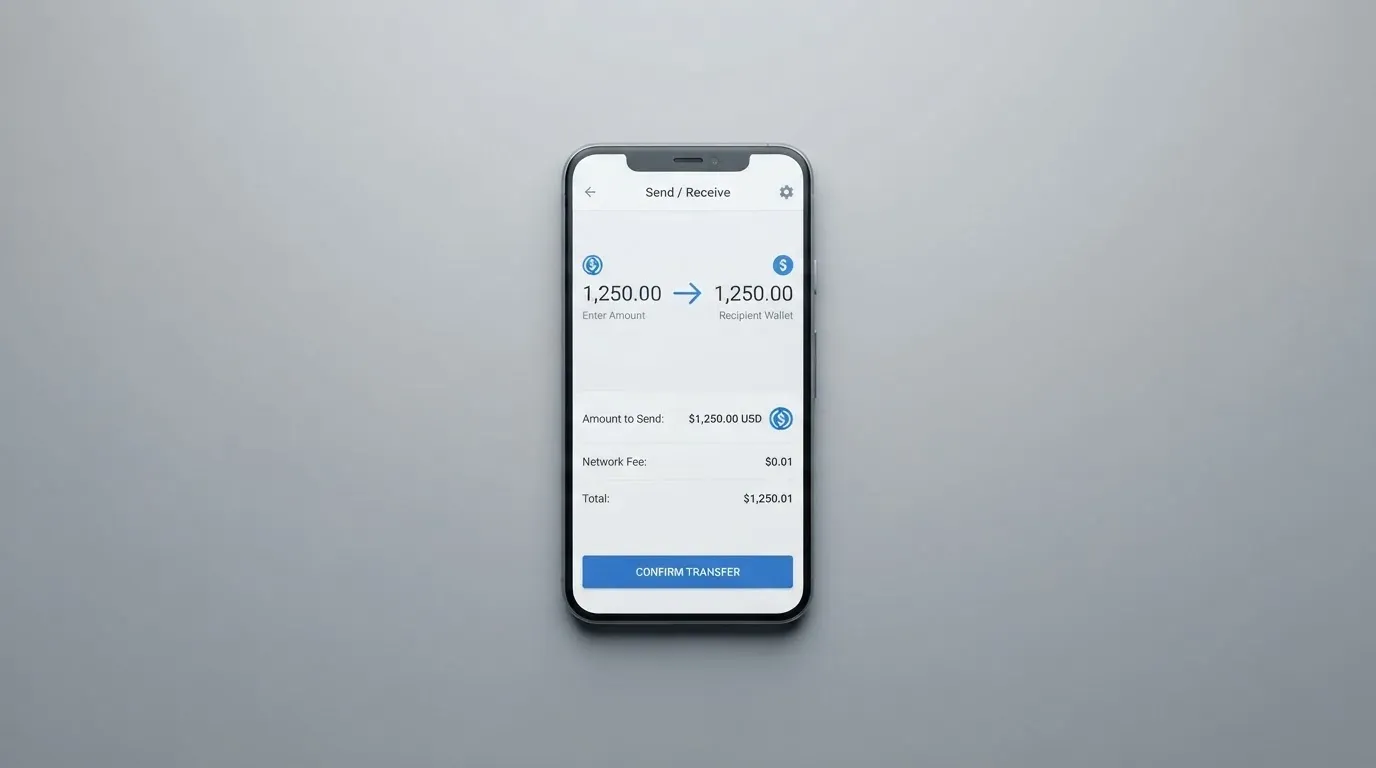
The route that matters is USDC on the Polygon network. That is native funding — USDC sent from any wallet that supports it, or an in-app swap. Note the detail in the PDF: Polygon gas is paid by you, to the network. The network fee for your deposit is charged by the blockchain, not by Tangem, and the withdrawal fee on their side is $0.
The bank route runs over ACH and FedWire where the jurisdiction allows it, at $1 ACH or $10 FedWire on Basic and $0 on Plus. Availability varies by jurisdiction, which is one of those phrases that does a lot of quiet work.
Minimum top-up: not stated. So if you are trying to work out whether a $15 top-up makes sense, the card does not help you.
The single most important structural point: the card spends only the loaded balance. It is a pre-loaded balance model, not credit. You cannot overdraw it, which sounds like a limitation until you remember what it protects you from.
Getting money back out: on-chain withdrawal is $0, and a bank offramp costs $1 via ACH or $11 via FedWire. The balance you do not spend “stays in the account you control”, in the smart contract. The procedure for closing an account is not stated.
Paying with it every day
The card is a Visa, so wherever a Visa is accepted and accepted by a merchant willing to take it, it goes. The problem in practice is a category of merchant that crypto cards routinely struggle with, and user reports concentrate there: fuel pumps, hotels and restaurants, where the shop places a pre-authorisation hold and the amount is much larger than the eventual bill.
Adding it to a phone wallet works by entering the card details — the card number, expiry, security code — into Apple Pay or Google Pay. Whether Apple Pay and Google Pay are officially supported is not stated; the mechanics are described but the phrasing is loose. It also has blocked merchant categories, which include gambling, online casinos and liquor stores; the full list was not published on the page I read.
The app is the Tangem app, on iOS 16.4+ and Android, version 5.35 or later for Pay. The App Store listing for the wallet app reads 4.9/5 from 25K ratings — I want to be careful here, because that rating covers the whole crypto wallet, not the Pay card specifically, and it is not evidence that the card works well.
If a payment goes wrong, the dispute fee is $30. The timeframes for a dispute are not stated. That $30 is the number to weigh before you file anything: if a $40 transaction is disputed and not refunded, the fee is three-quarters of what you are arguing over.
A last everyday-use point that sounds odd until you know the category: this is a USD card. Purchases convert 1:1 to USD. Multi-currency balances are not stated, so there is no euro balance and no sterling balance to hold.
What can go wrong
Three companies are involved, and it helps to know which is which. Rain manages the programme and is described as a Visa Principal Member. Third National issues the Visa card. Paera LLC, a US entity, operates the programme and is responsible for onboarding, KYC and AML. Tangem AG makes the wallet. Licences are not stated on the pages I read, and note that the main page still names Rain as issuer while other material names Third National.
Tangem is explicit that it is “not regulated as a financial services provider”, that it “does not hold, custody, or control users’ assets”, and that the USDC “sits in a smart contract you control”. If you freeze the card, it disconnects from Visa and the on-chain balance is untouched. Identity data is handled by Sumsub, and Tangem does not see it. Elliptic is used for transaction monitoring. Whether funds are insured: not stated, and I would not assume it.
Now the complaints, which is where the risk section earns its place. A secondary aggregator summarising Reddit threads — not verified — reports declines at gas pumps, hotels and restaurants tied to pre-authorisation holds, KYC lockouts after the card was already issued, and activation problems where support asked for video proof. One source puts the fuel-pump hold at $175. Trustpilot for Tangem as a brand reads about 4.1/5 from 876 reviews. There is no Tangem Pay-specific Trustpilot page.
Two structural risks sit underneath those anecdotes. The first is the BIN. Visa-accepting merchants can look up the issuer identification number at the start of your card and see which institution and country issued it, and some apply extra scrutiny when that differs from the billing address — which is why a card issued in one country can look foreign in a shop in another. Address Verification Service, which compares the street number and ZIP a buyer types against issuer records, is mainly offered in the US, Canada and the UK and is generally unavailable for foreign-issued cards, so it can contribute to declines. The second is that programme closures happen. Visa terminated its global agreements with FTX on 13 November 2022 and the FTX US debit card was wound down; WaveCrest, a Visa issuer that supplied several crypto card brands, was suspended by Visa in Europe in 2018, closing every programme it had issued.
And the one that is hardest to frame: crypto transfers are irreversible. Send to a network the provider does not support, or to an address belonging to another network, and the funds can be gone or need manual recovery with no guarantee of success. Getting the network and address right is not a detail here.
What to take instead
Three cards came up when I looked around, and each is a fair comparison for a different reason.
| Tangem Pay | MetaMask Card | KAST | TokenPocket | |
|---|---|---|---|---|
| Score in my comparison | 6.9 | 7.1 | 6.1 | 5.8 |
| Card | Visa, USD | Mastercard | Visa, USD | Visa/Mastercard debit |
| Cheapest tier | $0 | Virtual free; Metal $199/year | Standard $0/year | Fee partly covered by TokenPocket |
| Cashback | 1% (Basic) | 1% Virtual, 3% headline Metal | 1.5% on first $2,000/month (Standard) | None stated |
| Foreign exchange | Visa rate + 1.5% | No additional fee, Mastercard rate | 0.5%–1.75% by country | Not stated |
| Where it is offered | US (not all states) and selected LATAM/APAC/MEA/Africa | 45 listed countries; other regions on a waitlist | Residence list shown at KYC, not published | European countries for Visa; wider for Mastercard |
MetaMask Card scores highest here at 7.1, and the reasons are concrete: sign-up is open in 45 listed countries, proof of residency is required, and the virtual card is free with no annual or maintenance fee. It has no foreign transaction fee and uses the Mastercard rate. It spends directly from a connected wallet across Linea, Base, Monad and Solana, and cashback is paid in mUSD. The catch is metal at $199/year, one card per user, and US/UK sign-ups temporarily closed per its FAQ. The cashback headline of 3% for Metal is footnoted to apply to the first $10,000 spent, then 1% — worth reading closely.
KAST is the one to look at if you want the widest set of stablecoins. Standard is $0/year, and its fees are unusually transparent: 0% stablecoin top-up, 0% USD spend, 0% Apple and Google Pay, and a 0.5%–1.75% FX fee depending on where you live and which card programme you are on. It accepts USDT, USDC, PYUSD and RLUSD. Against that, Premium is 1,000/year, Private is 10,000/year billed annually upfront with no monthly option, there is a $1/month inactivity fee after 12 months, and the country list is not published. It also states that living in a supported country is not enough if your ID comes from a restricted region.
TokenPocket is the weakest of the four at 5.8. It charges 1% on depositing cryptocurrency into the card, which it says is refunded later through rewards or reduced transaction fees — so it is a fee you pay now on the promise of getting it back in another currency. Its Americas availability is described as planned rather than live.
Who I would recommend it to
Three groups. First, existing Tangem Wallet holders who want a free virtual Visa and nothing more — for that person, Basic is hard to argue against at $0 a month and $0 per transaction. Second, anyone who is paid in or holds USDC on Polygon and wants to convert to spendable dollars without leaving a self-custody setup, and who accepts the 1.5% margin on non-USD spending. Third, users in the listed LATAM, APAC, MEA and African markets who have a bank route that works, where ACH or FedWire funding may be available at $0 on Plus.
And three groups I would steer elsewhere. If you are in the UK or the EU, come back in 2026. If you need physical plastic for a shop that will not take a virtual card, this is not there yet according to the unofficial reporting. If you spend heavily in a currency other than the dollar, do the arithmetic on the 1.5% before you commit — at Plus rates, that margin is more meaningful than the monthly fee you are trying to avoid.
And for everyone: read the trust section twice. Non-custody protects the crypto side. It does not protect you from a card network declining an authorisation, or from a programme being wound down.
Frequently asked questions
What is the Tangem Pay card?
It is a Visa payment card issued through the Tangem Wallet app that spends from a balance you load, rather than from a bank account. Crypto sits in a smart contract you control; the card itself draws on a pre-loaded balance. Three tiers: Basic (virtual, Visa Platinum, free), Plus (plastic, Visa Signature, $29.99/month) and Prestige (Visa Infinite, coming soon).
How does Tangem Pay work day to day?
You top up, then spend only what is loaded — it is a pre-loaded balance card, not credit, so it cannot overdraw. Because the card is USD-denominated, purchases convert 1:1 to USD, and non-USD transactions carry the Visa exchange rate plus 1.5%. Freezing the card disconnects it from Visa and leaves the on-chain balance untouched.
Is Tangem Pay a bank?
No. Rain manages the programme as a Visa Principal Member, Third National issues the card, and Paera LLC operates it and handles onboarding, KYC and AML. Tangem AG makes the wallet and states it is “not regulated as a financial services provider”. Licences are not stated on the pages reviewed.
Do I need KYC to get the card?
Yes. Sign-up includes “ID verification and eligibility checks” run by Sumsub — government ID and face verification, two minutes, after your country of residence is confirmed. This applies to the Pay account only, not your wallet. Which documents are needed, whether proof of address is required, and the minimum age are all not stated.
Which countries can I use it in?
Officially: the US (not all states) and selected countries across Latin America, APAC, the Middle East and Africa, with the country list not stated on the readable page. Third-party sites list 31 countries as available, but that is unofficial. The UK and EU are described as planned for 2026, and spending reach is at Visa-accepting merchants in over 150 countries.
How much does the Tangem Pay card cost?
Basic is $0 a month with a $0 transaction fee and 1:1 USDC conversion. Plus is $29.99/month and waives bank funding fees. Other published charges: FX at Visa rate + 1.5%, ATM 4% on Basic and 2% on Plus, delivery $14.53 to $82.10, additional virtual card $5, replacement $1, dispute $30, bank offramp $1 ACH or $11 FedWire.
How do I top up the card?
Two routes: native USDC on the Polygon network from any supporting wallet, or an in-app swap, with Polygon gas paid by you to the network; or a bank onramp over ACH or FedWire where the jurisdiction allows, at $1 ACH or $10 FedWire on Basic and $0 on Plus. Minimum top-up is not stated. On-chain withdrawal is $0.
Can I use it in Apple Pay and Google Pay?
You can add the card to Apple Pay and Google Pay using the card details in the app. Whether both are officially supported is not stated, though the mechanism is described. Blocked merchant categories include gambling, online casinos and liquor stores; the complete list was not published on the page I read.
Is it safe, and what are the known complaints?
The crypto side is non-custodial — USDC sits in a smart contract you control and Tangem says it does not hold or control user assets. Complaints reported via a Reddit-based aggregator include declines at fuel pumps, hotels and restaurants tied to pre-authorisation holds, KYC lockouts after issuance, and activation problems. Trustpilot for Tangem as a brand reads about 4.1/5 from 876 reviews; there is no Tangem Pay-specific page.
What are the daily and ATM limits?
Daily POS spend is $10,000 per card on Basic and $50,000 on Plus, with an annual limit of $10,000,000 per card, 100 transactions per day and 1,000 per month. ATM withdrawals are capped at three per 24 hours and $250 each, at 4% on Basic and 2% on Plus — though unofficial reporting says ATM is not actually live at Basic. A monthly spend limit is not stated.
Choosing a wallet card – cryptocardadvisor
Content created by the «cryptocardadvisor» team