
Revolut card review — who it's really for and what it costs in 2026
 Available in US
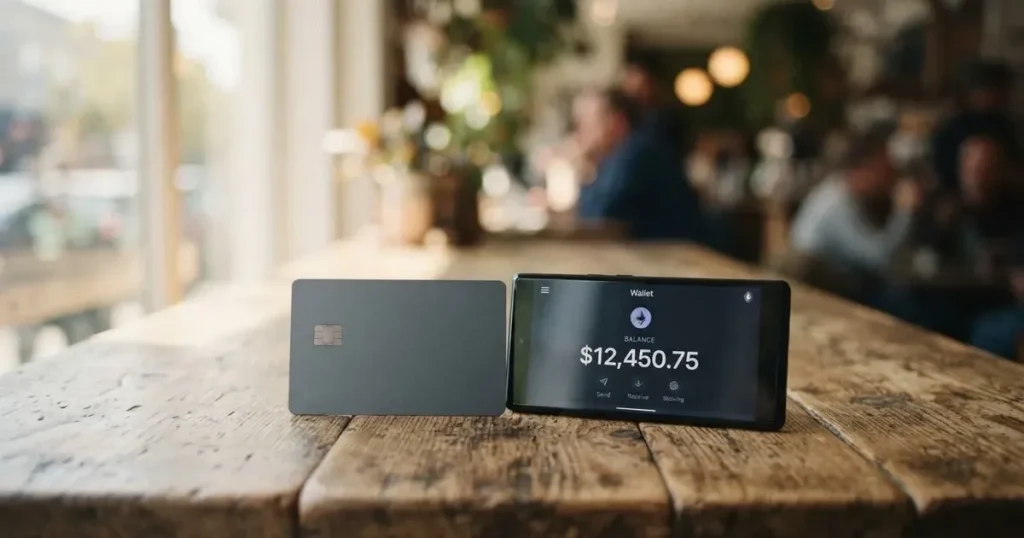
If you’ve ever tried to open a bank account in a country that isn’t quite ready to have you, you know how quickly “just get a card” turns into paperwork you don’t have. Revolut built its name by making the signup fast and the app slick, and the crypto card sits on top of that account: you load a balance, convert when you want, and spend anywhere Visa or Mastercard is taken. The pitch is real, but so is the catch: the fees, the country list, and what happens when something goes wrong. This review goes through all three so you can decide whether Revolut earns a place in your wallet, or whether one of the alternatives further down fits you better.
Conditions on this page are current as of October 28, 2026.
Verdict
I came out of this with a 6.5 / 10 for Revolut, which puts it in the “useful for the right person, frustrating for the wrong one” range. The product itself is clean, and if you already live inside the Revolut app for travel money, FX, and budgeting, the crypto card feels like a natural extension. The score holds back because the country coverage is narrower than the marketing suggests, the fee schedule is the kind of document you have to read twice, and the user reports of accounts being closed without much explanation are loud enough that I’d hesitate before parking a meaningful balance there.
Here’s how the score breaks down:
| Criterion | Mark | Why |
|---|---|---|
| Who can get it | 6 / 10 | Officially, availability depends on country and plan. Unofficially, 37 countries are served, including most of the EU, the UK, Australia, Japan, Singapore and New Zealand; 12 countries are closed, including the US, India, and Russia. |
| Cost | 6 / 10 | Virtual cards are free on Standard, Plus and Ultra. Crypto exchange is charged per plan — unofficially, 1% above £1,000 per month on Standard, plus a 1% weekend markup. |
| Top-up options | 8 / 10 | Unofficially, the card draws from a chosen crypto or fiat account with fallback, supports 250+ tokens for spending and 30+ fiat currencies; officially, the coin list isn’t published. |
| Reliability and complaints | 7 / 10 | Unofficially, the issuer is Revolut Ltd in the UK and Revolut Bank UAB in the EU, with crypto in the EU handled by Revolut Digital Assets Europe Ltd. Trustpilot is high, but complaints cluster around account closures and difficult disputes. |
| Everyday use | 6 / 10 | Virtual crypto card; unofficially, Apple Pay and Google Pay work, ATM allowance depends on the plan. |
The short version: if you’re an EU or UK customer who already runs day-to-day money through Revolut, the crypto card is a sensible add-on and the score feels about right. If you live somewhere Revolut doesn’t serve, or you want a card whose fees you can state from memory, look at the alternatives section.
Who will actually be issued the Revolut card
Officially, Revolut doesn’t publish a single page that lists who qualifies and who doesn’t — the rules live in the plan terms and the help centre, and the country list is scattered across them.
The card is reportedly available in 37 countries. That includes most of the EU (Austria, Belgium, Bulgaria, Croatia, Cyprus, Czech Republic, Denmark, Estonia, Finland, France, Germany, Greece, Hungary, Iceland, Ireland, Italy, Latvia, Liechtenstein, Lithuania, Luxembourg, Malta, Netherlands, Norway, Poland, Portugal, Romania, Slovakia, Slovenia, Spain, Sweden, Switzerland), plus the UK, Australia, Brazil, Japan, New Zealand and Singapore. A second aggregator says 48+ countries, so the real number sits somewhere in that range and probably depends on which Revolut entity issues the card in your region.
The closed list is shorter but includes some of the countries people most often ask about: Belarus, Canada, Cuba, India, Iran, Libya, Myanmar, North Korea, Russia, Sudan, Syria, and the United States. If you’re reading this from the US, you can stop here — Revolut is not an option. If you’re in Canada or India, the same applies for now. (Unofficial, CryptoCardHub, August 2026.)
Two things follow from this. First, eligibility is not the same as a credit check — Revolut is a prepaid-style product, so you’re not borrowing. Second, the country you’re in matters more than the country on your passport, in the same way that bank account rules usually care about residence. If you move, expect to re-verify.
The card itself is a virtual crypto card, meaning you don’t get a piece of plastic for the crypto balance by default — it’s a number you can use online or load into a wallet. The fee schedules Revolut publishes list virtual cards as free on Standard, Plus and Ultra. Which network it runs on (Visa or Mastercard) depends on where you live.
How to get it
The signup flow itself isn’t documented on Revolut’s public pages in a single place, but you download the app, create an account, verify your identity, and then add the crypto card from inside the product catalogue.
The KYC side is more involved than the marketing suggests. Revolut runs a full identity check — government ID, often a selfie — and may ask for source-of-funds declarations for larger crypto transactions. That’s standard for a regulated e-money institution, but worth knowing in advance: have your ID and a proof of address ready, and don’t be surprised if the review takes longer than the “minutes” the app implies.
For the physical card, if you want one, pricing varies sharply by tier. Standard delivery is around £4.99 / €5.50 (unofficial), Plus is paid, Premium is free express, and Metal / Ultra is free priority. Replacements run around £5 / €6 for Standard, Plus and Premium, more for Metal and Ultra.
Two practical things to be aware of before you start:
- Revolut Pro and Business accounts cannot link this card, so if you’re a freelancer using Revolut Pro, this isn’t the product for you.
- The crypto card lives inside your personal Revolut account, so if your account is closed, the card goes with it.
Fees: what it really costs
This is the section where most readers’ eyes glaze over, so I’ll keep it concrete.
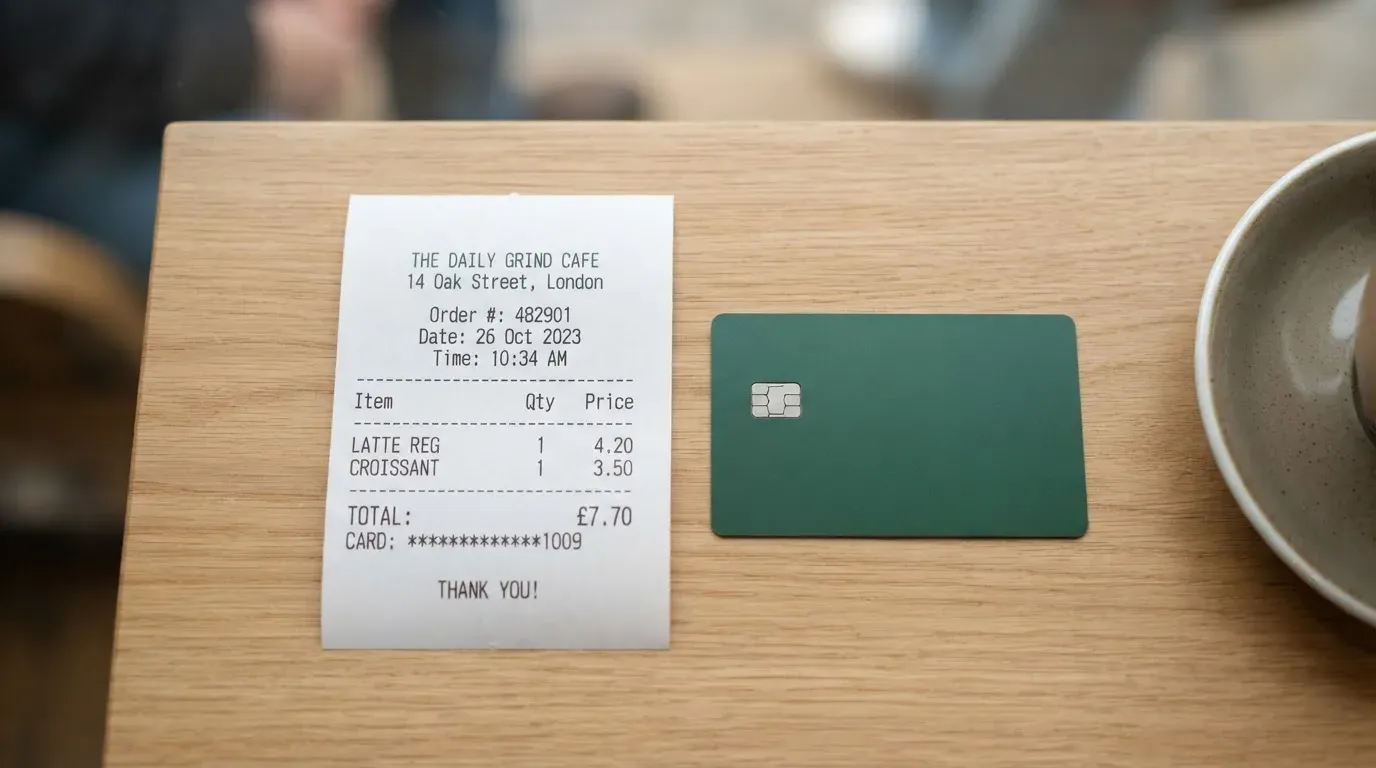
The headline is good: virtual cards are free on Standard, Plus and Ultra — there’s no issuance fee and no monthly fee for the card itself. The charges show up when you actually use it, especially around currency conversion and exchange.
| Fee or limit | Amount (official) | Unofficial notes |
|---|---|---|
| Virtual card issuance | Free (Standard / Plus / Ultra) | Physical card delivery paid unless Premium / Metal / Ultra |
| Monthly plan fee | Not stated on card page | Standard £0; Plus £3.99 / €2.99; Premium £7.99 / €7.99; Metal £14.99 / €13.99; Ultra £55 / €60 per month |
| Crypto exchange fee (with card) | “No exchange fee” on Revolut help, fair usage may apply | Standard 1% above £1,000 / month; Plus 0.5% above £3,000 / month; Premium / Metal / Ultra 0% (weekday) |
| Weekend FX markup | Not stated | Standard 1%; Plus 0.5%; Premium / Metal / Ultra 0% |
| 2023 terms crypto fee | — | 1.99% or £0.99, whichever greater (Standard / Plus) — historical |
| Foreign currency conversion | Not read on the schedule | “Visa exchange rate + 2% FX fee” pattern seen in similar products; confirm in-app before relying on it |
| ATM withdrawals | Allowance then 2% | Free up to £200 / month (Standard, Plus), £400 (Premium), £800 (Metal), £2,000 (Ultra); daily ATM limit £3,000 |
| Exchange count | 100 per 24 hours (official) | One unofficial source says 200 per 24 hours — contradict each other, take the official one as the floor |
| Single transaction | Not stated officially | Unofficial: ~£100,000 |
| Spend limits | Not stated | — |
A few everyday examples, with the fees that actually bite:
- A coffee in your home currency. Free. The card just spends the loaded balance.
- A coffee abroad, paid on a weekday. The Visa or Mastercard rate is used, and on Standard you’ll pay the 1% markup above the £1,000 monthly free allowance. On Premium, Metal or Ultra, this disappears on weekdays.
- A coffee abroad, paid on a Saturday. On Standard, that 1% weekend markup (unofficial) stacks on top. On Premium, Metal and Ultra, the weekend markup is 0% (unofficial).
- A £500 ATM withdrawal in the UK on Standard. Free, because it’s under the £200 monthly allowance (unofficial) by £300. Withdraw £250 and you’ll pay 2% on the £50 over the limit.
- A weekend ATM withdrawal abroad. The FX rate applies, the 2% ATM fee applies if you’re over the allowance, and on Standard, the 1% weekend markup may apply. Add them up: this is where Revolut stops feeling cheap.
The honest summary is that the card is free to hold and the conversion is free in modest amounts, but the moment you go over the plan’s allowance, or do anything on a weekend, the fees are not trivial. The official help page for the German market is the clearest single line: no exchange fee for crypto transactions with the card, but fair-usage fees may apply depending on plan — which is Revolut-speak for “read your plan page before you travel.”
Top up: how to fund the card
This is the bit that confuses people the most, because the funding path depends on whether you’re thinking about Revolut-the-app or the crypto card specifically.
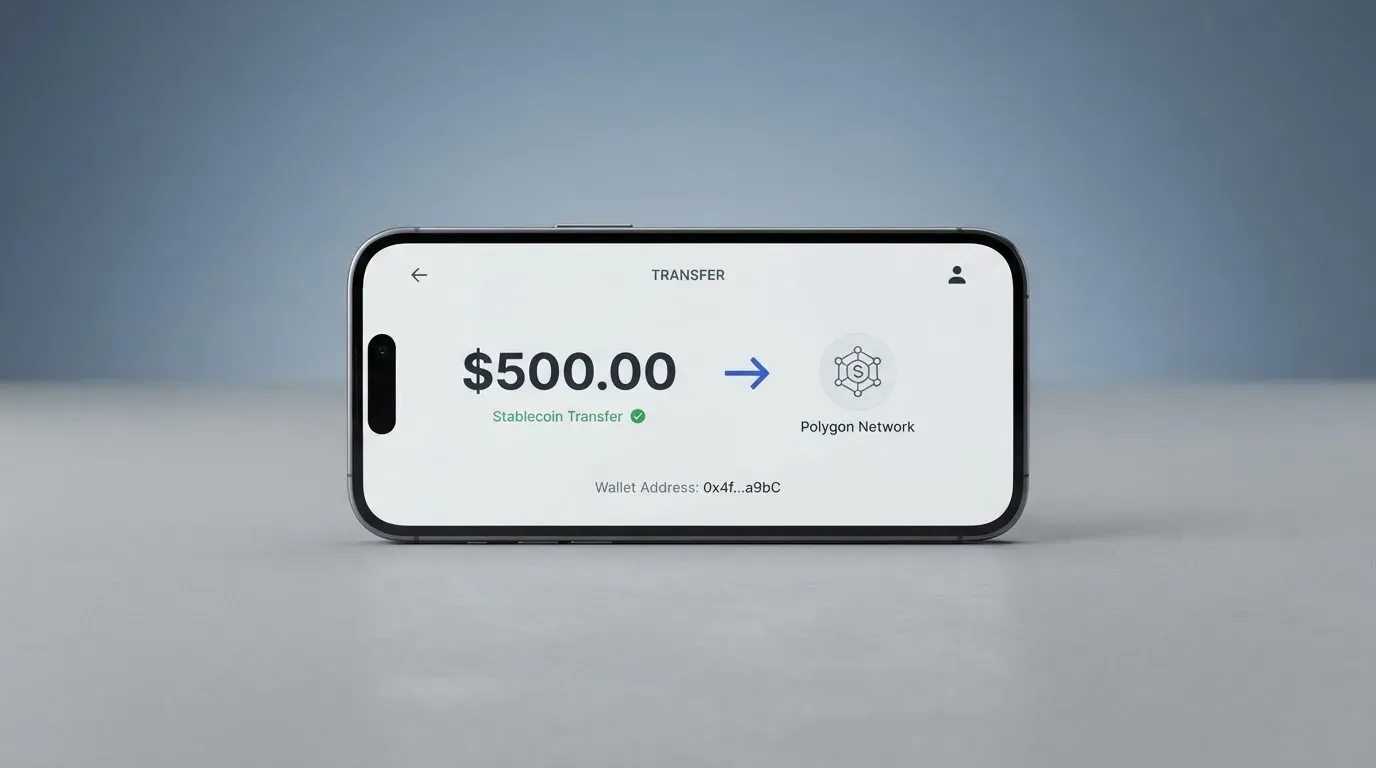
The card draws from a chosen crypto or fiat account, with a fallback to other accounts if the chosen one is empty. Revolut advertises 250+ tokens available for spending and 30+ fiat currencies, but the official page does not list which coins, on which networks, with which minimums.
Most crypto cards publish, or at least link to, a list of supported networks because getting the network wrong is one of the most expensive mistakes a user can make. The practical move is to fund from inside the Revolut app (where the network is selected for you) rather than sending tokens in from an external wallet.
A few practical points:
- Fiat top-up works the way you’d expect: bank transfer, card, or Apple Pay / Google Pay, into a Revolut account in one of 30+ supported currencies. The card then spends from that balance, converting to the merchant’s currency on the way.
- Crypto top-up means the app converts the asset into the spend currency at the moment of payment (or near it). The 1% / 0.5% exchange fee is what funds the conversion.
- Sending tokens from an external wallet requires the right network. The rule is the same as for any other crypto product: send a small test first, confirm it lands, and never send more than you can afford to lose in a network error.
- Withdrawals out: not stated. Revolut lets you cash out to a bank, and crypto balances can typically be sold inside the app, but there is no published “withdraw your stablecoin to an external address” feature, which suggests the path is app-to-bank, not app-to-wallet.
Paying with it every day
Once the card is loaded, the day-to-day is straightforward, and that’s by design.
Apple Pay and Google Pay are both supported, which is the way most people actually pay in 2026 anyway. The card is accepted anywhere Visa or Mastercard is taken online, which is the same as anywhere a normal card is taken.
Rewards are where the tiers start to matter. Metal and Ultra earn 0.1% cashback (unofficial) in eligible European countries and 1% elsewhere (unofficial), capped at roughly one month’s fee; Standard, Plus and Premium earn nothing. The cap being roughly one month’s fee is the giveaway — this is cashback designed to offset the subscription, not a serious earn.
The app itself is one of the better-rated financial apps on either store. App Store is 4.8 / 5 from around 140,000 ratings, Google Play is 4.5 / 5, and Trustpilot is 4.6 / 5.
Disputes are where the experience can get harder. There is no official page on Revolut’s crypto card dispute process, and the user reports suggest that getting a chargeback through on a crypto-funded purchase is more difficult than on a regular bank card. A UK Financial Ombudsman decision (DRN-5705456) is a useful data point: a customer paid a crypto platform with their card, the platform turned out to be a scam, and the ombudsman found no chargeback grounds. In other words, the card’s protections are real, but they’re not a substitute for due diligence on the merchant.
What can go wrong
This is the section I’d read first if I were deciding whether to keep a balance in Revolut.
Account closures. The most common complaint theme is accounts being closed without a clear reason. Trustpilot sits around 4.5 / 5 across a very large review base (about 425,000 reviews), so this is a small minority — but a small minority of a very large user base is still a lot of people. The pattern in user reports is: account locked, funds held, support replies slowly, and the closure eventually stands. Revolut’s own pages don’t publish a closure rate or a typical hold time.
Crypto deposits held for months. At least one Reddit user reported a crypto deposit being held for 2.5+ months. This is consistent with how e-money institutions handle source-of-funds reviews, but the user experience is that the money has simply vanished.
Difficult chargebacks. Beyond the Financial Ombudsman case above, user reports describe fraud claims that were denied or stalled. The reason codes Revolut would rely on are the standard Visa / Mastercard ones (fraud, goods not received, duplicate billing), but the friction is real.
1.99% / £0.99 historical fee. 2023 terms (unofficial) had a 1.99% (unofficial) or £0.99 (unofficial) whichever-greater crypto fee on Standard and Plus. This is older, and the current in-app fee schedule may differ — but it’s a useful reminder that fee schedules change.
The weekend markup. On Standard and Plus, the 1% / 0.5% weekend markup is the kind of thing you only notice after a trip. If you travel on weekends and use a Standard plan, you will lose a meaningful amount to FX.
UK banking licence status. Revolut was granted a UK banking licence with restrictions by the PRA in July 2024. For a UK customer, this matters because it changes the regulatory wrapper around the funds; for an EU customer, the relevant entity remains Revolut Bank UAB.
Issuer / entity questions. Revolut runs on multiple entities: Revolut Ltd in the UK, Revolut Bank UAB in the EU, and Revolut Digital Assets Europe Ltd (Cyprus, MiCA CASP) for the EU crypto side. Which one you’re a customer of depends on where you live, and that has knock-on effects on which regulator you go to if something goes wrong.
Support. 24/7 in-app chat is available in 100+ languages, but with limited help on crypto-specific issues. The general rule with any large fintech applies: the more specialised your question, the longer the wait, and the less likely the front-line agent is to have an answer.
The pattern across all of these is that Revolut is a fast, well-priced product on the happy path, and a slow, frustrating experience on the unhappy path. The unhappy path is rare, but it’s not negligible.
What to take instead
If the country list or the fee structure doesn’t quite fit you, here are the alternatives, with their own scores. The point isn’t that one of these is universally better — it’s that they solve different problems.
International Visa Card — score 6.7 / 10. The closest competitor in spirit. The account is unavailable to residents or legal registrants of a long list of countries (Belarus, mainland China, North Korea, Cuba, India, Iraq, Iran, Israel, Myanmar, Nepal, Nicaragua, Russia, Syria, Turkey, Ukraine, Venezuela, Vietnam), and purchases are blocked in North Korea, Cuba, Iran, Russia, Syria, Ukraine, Venezuela. The rule is by residence, not citizenship. The card is a US-issued Platinum Visa, virtual, and pays in USD; a physical card is listed as “coming soon”. Issuance is $5 one-time, no maintenance fee, with plans at Classic (free), Pro ($9 / month) and Max ($19 / month). Card use in USD is free; foreign currency uses the Visa exchange rate plus a 2% FX fee. Deposits of any kind are free, including USDC and USDT at 1:1 into the USD account, and the usual USD / EUR / SEPA / SWIFT / FedNow rails. No cashback is stated. The pitch is simple: a US dollar card and a US dollar account, and the rest of the world can use it as long as it’s not on the blocklist.
UNi Card — score 6.1 / 10. A multicurrency card on the Mastercard network, spending from the UNi.Global account balance. The headline is “no annual fee, no foreign transaction fee” and assets convert at “live OTC rates” with “no hidden exchange fees”. Country availability, issuance costs, or supported funding paths are not stated officially, so this is one to dig into before signing up. Spend-to-Earn rewards are advertised at up to 3% with UNi Card, which is competitive for a no-fee product.
Whop Cards — score 5.2 / 10. A Visa card that works anywhere Visa is taken, including online and in stores, and can be issued to team members. Consumer availability is 31 US states; business availability is 41 states. Unsupported consumer countries include Belarus, mainland China, Cuba, Hong Kong, India, Iran, Iraq, Israel, Myanmar, Nepal, Nicaragua, North Korea, Russia, Syria, Turkey, Ukraine, Venezuela, Vietnam. The card spends from a Whop balance, and pending balance is usable as soon as a payment arrives (a useful detail for creators). The data behind it is backed by stablecoin collateral from a linked wallet. 5% cashback is advertised at select merchants, currently Uber, with more planned. Pricing is described as “no extra fees” but neither issuance nor monthly amounts were officially published, so treat the “no fees” claim carefully and confirm in-app.
A quick comparison to keep these in your head:
| Card | Score | Headline fee | Top-up | Reward |
|---|---|---|---|---|
| Revolut | 6.5 / 10 | Free on Standard weekday, 1% weekend / over allowance | 250+ tokens (unofficial), 30+ fiat | 0.1–1% (Metal / Ultra) |
| International Visa Card | 6.7 / 10 | Free in USD, Visa + 2% FX | USDC / USDT 1:1, USD / EUR / SEPA / SWIFT / FedNow | None stated |
| UNi Card | 6.1 / 10 | No annual or FX fee | Not stated officially | Up to 3% |
| Whop Cards | 5.2 / 10 | “No extra fees” (not detailed) | Stablecoin collateral from linked wallet | 5% at select merchants |
Who I’d recommend this to
Pulling all of the above together, here’s where I’d land.
If you live in the UK or the EU, you already use Revolut for everyday banking, and you want to spend crypto without opening a new account — Revolut is the obvious answer. The card is free to hold, the conversion is cheap within plan limits, and the integration with the rest of the Revolut app means you don’t have to juggle a second product.
If you’re on Standard and you travel a lot, or pay in foreign currencies often — upgrade to Plus or Premium, or use a different card for foreign spend. The 1% weekend markup and the over-allowance fees add up faster than people expect.
If you live in the US, Canada, India, Russia, or any other country on the closed list — Revolut isn’t an option for you. The International Visa Card is the closest match in spirit, and UNi Card or Whop Cards may fit if your use case is more creator- or team-oriented.
If you want a card whose fees you can state from memory — Revolut isn’t that card. The fee schedule is layered: free for the card, free for the conversion within allowance, then several overlapping charges once you go over. If clarity matters more than cost, the alternatives with simpler fee structures may suit you better.
If you’re planning to keep a meaningful balance on the card — keep it modest. The user reports of accounts being closed and funds being held are loud enough that I’d treat Revolut as a spending tool, not a savings account.
The 6.5 / 10 is fair. It’s a good product for its core audience, and a frustrating one if you fall outside it.
Frequently asked questions
What is the Revolut card?
The Revolut card is a prepaid-style card tied to your Revolut account, available as a virtual card by default and as a physical card on paid tiers. There’s a dedicated crypto version that lets you spend from a crypto balance, converting at the point of payment under the plan’s exchange fee.
How does the Revolut crypto card work?
You hold a balance in your Revolut account in fiat or crypto; when you pay, the app converts crypto to the merchant’s currency (or spends your fiat balance directly), and the card networks handle the rest. The card draws from a chosen account with fallback to your other accounts, and conversions above the plan’s monthly allowance are charged a fee.
Is Revolut a bank?
In the UK, Revolut was granted a banking licence with restrictions by the PRA in July 2024. In the EU, Revolut Bank UAB is the licensed bank for most EEA customers. In other regions, Revolut operates through partner banks or as a regulated e-money institution. The exact wrapper you’re a customer of depends on where you live.
Who owns Revolut?
Revolut was founded by Nikolay Storonsky and Vlad Yatsenko, and remains a private company. The group operates through regional entities — Revolut Ltd in the UK, Revolut Bank UAB in the EU, and Revolut Digital Assets Europe Ltd for EU crypto under MiCA.
Is the Revolut card available in my country?
Officially, Revolut doesn’t publish a single country list for the crypto card. Unofficially, the card is available in around 37 countries — most of the EU plus the UK, Australia, Brazil, Japan, New Zealand and Singapore — and unavailable in 12, including the US, Canada, India and Russia. The most reliable check is the Revolut app on your phone, which will tell you within minutes whether sign-up is open where you are.
Does the Revolut card require KYC?
Yes. As a regulated e-money institution, Revolut is required to verify customer identity. Revolut runs a full KYC process — government ID and likely a selfie — with source-of-funds declarations possible for larger crypto transactions.
How do I add the Revolut card to Apple Wallet or Google Pay?
The card can be tokenised into Apple Pay and Google Pay from inside the Revolut app, and both wallets are supported. The Device Account Number stays in your phone’s Secure Element, not on Apple’s servers, so you get the usual tokenisation security.
Is the Revolut card free?
The virtual card is free on Standard, Plus and Ultra plans. The card itself carries no monthly fee, but the plan you choose does, and there are charges for FX above plan allowances, weekend markups on Standard and Plus, and ATM withdrawals beyond the monthly free allowance.
Is the Revolut card safe?
The product uses the standard toolkit: 3-D Secure for online payments, app-based 2FA, instant card freeze, and tokenised mobile wallets. The main safety caveat is the same as with any custodial crypto product — your funds sit with Revolut, and user reports of account closures and held balances mean it’s worth keeping the balance modest.
How do I delete my Revolut account?
Revolut lets you close your account from inside the app, under profile or settings. You’ll typically be asked to withdraw or spend any remaining balance first, including any crypto balance, before the closure completes. There is no published timeline for the process, so it’s worth initiating it while you still have some fiat in the account in case anything needs verification.
Choosing an app or neobank card – cryptocardadvisor
Content created by the «cryptocardadvisor» team