
RedotPay Card: A Genuine Payment Card From Your Crypto, With Usual Provider Risks
 Available in US

RedotPay turns a crypto balance into something you can spend in an ordinary shop — a Visa debit number, virtual or plastic, that behaves like a prepaid card. The proposition is simple and, for people who have trouble getting a normal bank card, genuinely useful. But the same model brings the same trade-offs: you are trusting a programme manager you cannot easily name, and the single most common complaint pattern is money held during verification. I spent this review weighing the card against its own published terms and the pattern of user reports, and here is where it landed.
Conditions described are current as of October 28, 2026.
Verdict: a solid everyday card wrapped in a provider you can’t fully see
RedotPay scores 6.9 out of 10. That is a passing grade with reservations — a genuinely good card, held in trust by people you must depend on. It is not a bad product; it is a product whose risk sits mostly outside your control.
The score breaks down as follows:
| Criterion | Mark | Why |
|---|---|---|
| Who can get it | 8 / 10 | 47 places closed for card issuance as of August 28, 2026, but the rest of the world open; service claims 9 Million+ Users |
| Cost | 6 / 10 | Virtual card 10.00 USD, physical 100.00 USD, maintenance free; 1.00% transaction fee, 1.20% non-default currency, 2% ATM up to 10,000 USD monthly |
| Top-up options | 8 / 10 | Crypto on-chain to the card, USDT-TRC20 from 1 USDT, USDC and ETH; top-up to card balance free, networks listed on the deposit page |
| Reliability and complaints | 4 / 10 | Issuer unnamed (BIN Sponsor), programme manager Redotpay Technology Pte. Ltd.; complaints about KYC and source-of-funds freezes, Trustpilot 778 reviews |
| Everyday use | 9 / 10 | Virtual and physical, Apple Pay and Google Pay, ATMs worldwide |
| Total | 6.9 / 10 | A very usable card with one very weak leg: who stands behind it |
Who this suits. If you hold crypto, sit outside the restricted countries, and want a card you can add to Apple Pay or Google Pay and use anywhere Visa is accepted, RedotPay does the job well. The everyday-use score is the highest in the table, and it is earned: virtual and physical, tap or swipe, both mobile wallets, a wide ATM network, and a flat 1% that is easy to predict. The 6.9 is not low because the card is bad; it is low because the card is fine and the issuer story is thin.
Who it does not suit. If you need a card that never freezes mid-payment, if you are a resident of any of the 47 places where card issuance is closed, or if you want to know precisely which institution issued your card and answer to a regulator you can name — this is not your card. The reliability mark of 4 out of 10 is the one to read twice. People whose money has been held for source-of-funds review describe weeks, not days.
Will they give you the card?
Mostly — but two official lists say the rule in two different ways, and the difference matters to you.
The KYC list (“Unsupported Countries/Regions”) states: “If you are a citizen of any of the countries or regions listed below, you will not be able to complete identity verification (KYC) or use RedotPay’s services.” It is explicit that this is “based on local regulations and sanction policies — not on individuals”. It lists: Afghanistan, Albania, Belarus, Bosnia and Herzegovina, Bouvet Island, Burkina Faso, Burundi, Central African Republic, Congo (DR), Croatia, Cuba, Eritrea, Ethiopia, Guinea-Bissau, Haiti, Iran, Iraq, Kosovo, Lebanon, Liberia, Libya, Mainland China, Mali, Montenegro, Myanmar, Netherlands Antilles, Nicaragua, North Korea, North Macedonia, Russia, Serbia, Slovenia, Somalia, South Sudan, Sudan, Syria, Ukraine, United States, Venezuela, Yemen, Zimbabwe.
Then there is a second, separate list — card issuance, dated August 28, 2026, covering 47 places — that adds India, Indonesia, Morocco, Nepal, Singapore, Turkey and says: “Residents of these areas are ineligible for both virtual and physical cards.” It also says those residents cannot use those places as billing addresses. Notably, it does not mention citizenship.
So what does this mean for you? If you are a citizen of, say, Serbia or Russia, you are blocked under both readings — Serbia, Russia, Belarus and Ukraine appear on both lists. If you live in India or Turkey but hold another citizenship, the second list still blocks you, because it speaks of residents, not citizens. If you are a citizen of a restricted country but resident in, say, Georgia or Kazakhstan, the first list says no. Georgia, Armenia, Kazakhstan and the UAE appear on neither list — which does not guarantee you will pass verification, but it does mean no published rule excludes you.
The honest summary: the KYC list is about citizenship, the issuance list is about residence, and both exist. Check where you were born and where you actually live; if either is on a list, stop here.
How to get it
Six steps, one identity check, and a rule about physical documents that catches people out.
- Minimum age is 18.
- You need an original physical ID. The card is blunt about this: “Do not use copies, screenshots, or photos of a screen”. The document must be valid at least three months from submission, and both sides if there is data on the back.
- Extra documents (JPG, PNG or PDF, up to 10MB) only if the system asks for them. You type in your “true, current address in full”; no separate proof-of-address document is mentioned.
- The sequence: install the app, sign up (email, Google or Apple ID), verify identity, fund the account, open the Card section, choose virtual or physical.
- For a physical card, billing and shipping addresses must be in English. The cardholder name printed on the back cannot be changed — so get it right at application.
- Delivery: standard mail is waived; DHL Express “varies by country”, calculated at checkout. As of July 21, 2026 delivery is unavailable in the issuance-restricted places plus Egypt, Palestine and Tunisia, “due to logistical and customs constraints”. Delivery time is not stated on the card’s public pages.
The card is available in two forms, virtual and physical. Network: a Visa debit in the Singapore terms, though the card page itself only says “leading card networks”. Card currencies: a USD card (USD BIN) and an HKD card (HKB BIN).
One verification level is described — identity plus address, with extra documents on request. The processing time and the official reasons for rejection are not stated. That gap is worth knowing before you apply: you are not told what to expect in days, or what specifically will fail you.
Fees: what it really costs
One flat percentage on what you spend, plus a card purchase fee up front, and a handful of small edge-case charges.
| Item | Amount | Notes |
|---|---|---|
| Virtual card application | 10.00 USD | Paid at application |
| Physical card application | 100.00 USD | Not cancellable or refundable once paid |
| Virtual replacement | 5.00 USD first, then 10.00 USD | |
| Account maintenance | Free | No monthly or annual fee, no inactivity fee mentioned |
| Transaction fee | 1.00% | The crypto conversion fee |
| Default-currency payment | Free | |
| Non-default currency | 1.20% | |
| Small authorisation (1.00 USD or less) | First 5 per card per month free, then 0.2 USD | |
| Declined transaction | First 3 per month free, then 0.5 USD | |
| ATM | 2.00% (HKD card); 2% on USD card up to 10,000 USD monthly, 3% above | Free allowance not stated |
| RedotPay Pro plan | 12.90 USD monthly or 129.00 USD annual | Annual includes ATM fee waivers |
Some merchants carry their own 1.5% (min 0.50 USD), first 3 per month waived: Gulf Health Counsel, Free Fire, PUBG Mobile, Brawl Stars, eFootball, Facebook Ads, Discord. The fee table is effective December 1, 2025.
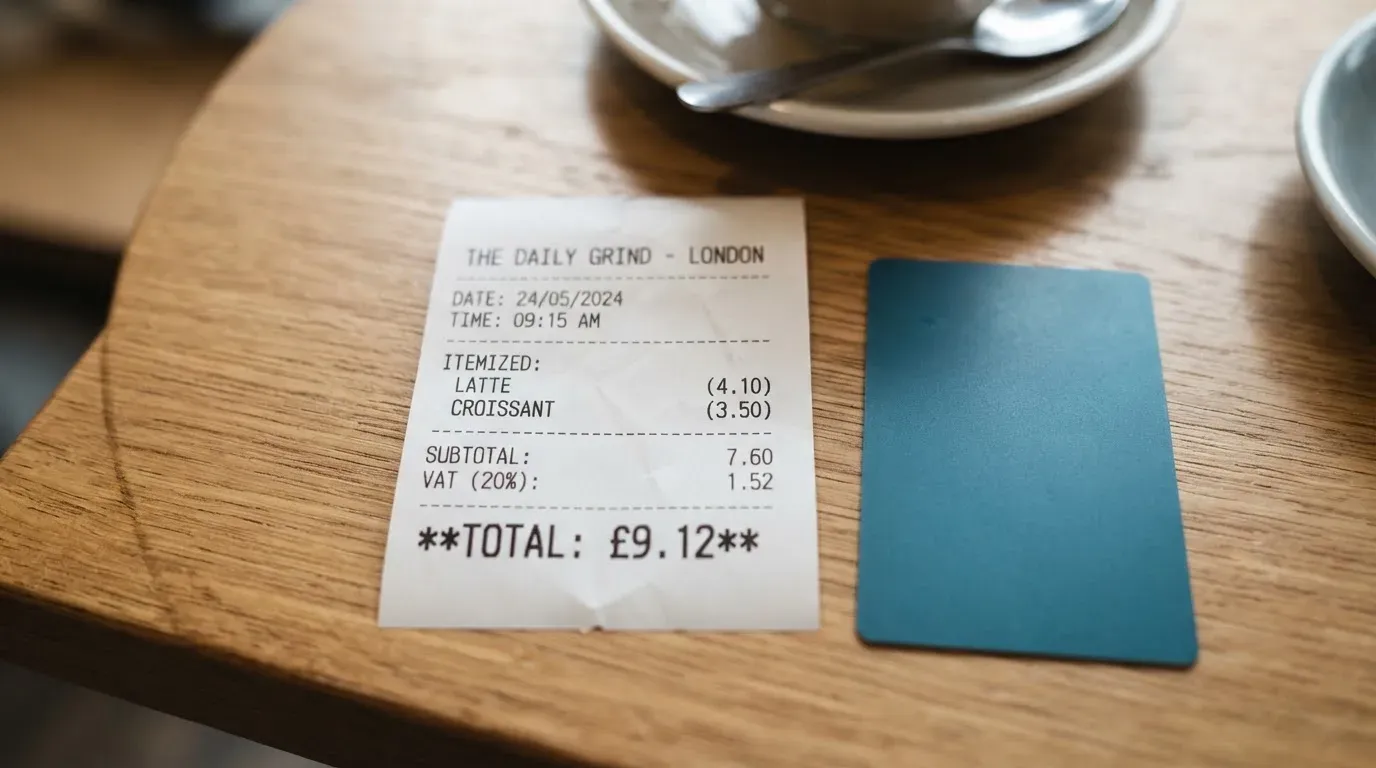
Three everyday payments, and which fees apply:
- A 20 USD coffee paid in your card’s default currency. The 1.00% transaction fee applies: 0.20 USD. The default-currency waiver means no currency surcharge. Total cost 20.20 USD.
- A 50 USD purchase paid in a currency that is not your card’s default. The 1.00% applies and the 1.20% non-default currency charge applies on top — the card does not say these are mutually exclusive, so read it as up to roughly 1.10 USD in fees. Read the cost before you commit at the terminal; the rate is the one that decides it.
- Withdrawing 200 USD from an ATM on the USD card. Within the 10,000 USD monthly threshold, 2%: 4.00 USD. Above that threshold, 3%.
The physical-card fee is deducted from the balance, and the 5 USD welcome reward “can’t be used toward the issuance fee” — so you cannot offset the 10 USD virtual-card cost with the new-user bonus. That is a real, if small, sting on the entry price.
On limits: per transaction 100,000 USD, daily 1,000,000 USD (both BINs), balance unlimited. ATMs: 3 per day, 30 per month; daily 23,000 HKD (HKD card) or 3,750 USD (USD card); monthly 75,000 HKD or 50,000 USD. The card also notes: “For USD cards: In some countries and regions, daily limits are $3,000 and monthly limits are $10,000.” In practice the limit you meet is the one your region is given, not the headline number. Check yours in the app before you rely on it.
Top up: how to fund the card
Free to load from crypto, and that free load is the strongest thing about the card.
- On-chain crypto deposit, or buying crypto with a credit card in the app (ETH, USDC, USDT — depends on region).
- USDT-TRC20 minimum deposit is 1 USDT after network fees. Each asset is accepted only on the networks shown on the Deposit page, and RedotPay may change them.
- Deposit fee to card balance: free. Crypto deposit: free, minimum for example 1 USDT on TRC20. The network fee is borne by the sender and counted before the minimum.
- Transfers in from a mainstream credit or debit card: 3% fee, minimum 1 USD.
Why the network rule is the thing to get right. On-chain transfers are irreversible. If you send on a network the provider does not support, or to an address belonging to a different network, the funds can be lost or need manual support recovery with no guarantee. The Deposit page is the source of truth for which networks are live; check it immediately before each transfer, not from memory. And note the asymmetry: topping up from crypto is free, but topping up from a bank card costs 3%. If you have crypto, the free route is the obvious one.
Paying with it every day
This is where the card is genuinely good, and the 9 out of 10 is not a courtesy.
- Virtual card: “Apple Pay/Google Pay Integration” — add it to your phone’s wallet and pay by tap.
- Physical card: cash accepted “globally”, tap or swipe.
- Controls you can set: per-card limits, online / POS / ATM toggles, currency toggles. A disabled currency is declined — that is a deliberate setting, not a bug.
- There is no formal list of blocked merchant categories and no MCC list. The card’s own position is that “some individual merchants may have their own internal policies regarding prepaid or crypto cards”, and illegal use is banned. The card is not usable in sanctioned countries.
The rewards position is thinner than the marketing implies. There is a 5 USD welcome reward, usable only on spending and valid for 30 days. The card page lists “Points & Rewards” and “RedotPay Pro” as separate programmes, and no card cashback rate is stated — so do not model a cashback return into your budget.
The app itself rates well on iOS: 4.75 from 4,312 ratings, updated 2026-09-28 (read 2026-10-20). The Android rating is not stated, which is worth noting if you are on Android — you are relying on the iOS figure as the only public signal of user sentiment.
A practical note on declined payments: a declined authorisation can leave a hold on funds that remains for several days, typically up to 7. Combined with the small-authorisation and declined-transaction fees above, a run of failed attempts is not free.
What can go wrong
The single biggest risk is not fraud — it is a freeze, and the freeze is a rule, not a bug.
- The issuer is not named. The Singapore terms name “Redotpay Technology Pte. Ltd.” as the programme manager and an unnamed “BIN Sponsor” as the actual issuer. The App Store seller is “Red Dot Technology Limited”. You are a customer of a programme manager fronting a bank it does not name. The website footer cites “N° 144 en el Registro de PSAV de la CNV (República Argentina)” and claims “9 Million+ Users”, but neither of those tells you who stands behind your balance when something goes wrong.
- Freezes are official practice, not a rumour. The card’s own materials acknowledge freezes linked to P2P orders and dispute handling, and the terms give RedotPay the power to freeze accounts; fees are non-refundable under the terms (clause 16.3).
- User reports line up on one theme. Trustpilot shows 778 reviews (2026). The recurring themes: KYC-related holds on funds, support escalations going unanswered for days, and limits on daily payments. A review-analysis site describes freezes involving source-of-funds reviews lasting weeks as the most serious complaint — that is a third-party site, not the card, so treat it as a signal rather than a confirmed fact.
- Insurance and two-factor authentication are not stated. Safeguarding of customer funds and 2FA are not described on the card’s public pages. I cannot tell you they are absent; I can tell you they are not promised, which is not the same thing.
- Support and withdrawal terms are not stated. Neither the support response commitment nor the withdrawal process is described on the public pages. That is a real gap when the most common complaint is that support does not answer.
- Dispute handling is not stated. The card’s public pages do not describe how a disputed transaction is resolved. That matters more than usual here, because a dispute is exactly the situation where you would want a written process.
The background risk you should price in. A card like this depends on several parties: the network (Visa) routes and sets rules, the licensed issuer holds the programme, and the crypto brand is often only a programme manager and front-end. Visa and Mastercard themselves do not issue crypto cards to consumers — they license issuers, and they can suspend a programme. Visa terminated its global agreements with FTX on 13 November 2022, and the FTX US debit card was wound down. WaveCrest, a Visa issuer that supplied crypto card brands, was suspended by Visa in Europe in 2018, closing all its Visa programmes. Programme closures are a category risk, not a RedotPay-specific one — and a 2026 closure reported by a secondary source (new loads ended 8 July 2026, spending stopped 8 August 2026) is a single unconfirmed source, so treat it as a pattern to be aware of rather than a forecast.
If a closure ever came, the typical sequence is a notice period, then spending and loading stop, then you are asked to withdraw remaining balances. Keep your balance on the card small enough that you could withdraw it in that window. That is not alarmism; it is the one piece of advice that costs nothing and applies to any prepaid-style card.
What to take instead
If the fee or the freeze worries you more than the convenience, these are the alternatives I scored, with the same questions I asked RedotPay.
International Visa Card — 6.7 / 10. A U.S.-issued Platinum Visa, virtual, paying in USD; the physical card is listed as “Coming soon”. Account and card are not available to residents or legal registrants of Belarus, mainland China, North Korea, Cuba, India, Iraq, Iran, Israel, Myanmar, Nepal, Nicaragua, Russia, Syria, Turkey, Ukraine, Venezuela, Vietnam; FATF grey-list countries are reviewed case by case with compliance approval. Purchases are blocked in North Korea, Cuba, Iran, Russia, Syria, Ukraine, Venezuela. The rule is by residence or registration — citizenship is not mentioned. Cost: 5 USD one-time virtual issuance, no maintenance fee, plans Classic free, Pro 9.00 USD/month, Max 19.00 USD/month. Card use in USD is free on all plans; foreign currency is “Visa exchange rate + 2% FX fee”. Deposits of any kind: no fee — deposit USDC or USDT into the USD account, free at 1:1, networks not stated; also USD, EUR, SEPA, SWIFT, FedNow. No cashback stated.
| RedotPay | International Visa Card | UNi Card | Whop Cards | |
|---|---|---|---|---|
| Score | 6.9 / 10 | 6.7 / 10 | 6.1 / 10 | 5.2 / 10 |
| Network | Visa debit (USD/HKD BIN) | U.S.-issued Platinum Visa | Mastercard | Visa |
| Type | Virtual + physical | Virtual (physical coming soon) | Not stated | Not stated |
| Issuance | 10.00 USD virtual, 100.00 USD physical | 5 USD one-time | Not stated | No extra fees stated |
| Maintenance | Free | Free | No annual fee | Not stated |
| FX | 1.00% + 1.20% non-default | Visa rate + 2% | Live OTC rates, no FX fee | Not stated |
| Rewards | 5 USD welcome, 30 days | No cashback stated | Up to 3% spend-to-earn | 5% cashback at select merchants |
UNi Card — 6.1 / 10. A multicurrency card on the Mastercard network, spending from the UNi.Global account balance. “No annual fee”, “no annual fee or foreign transaction fee”, assets converted at “live OTC (Over-the-Counter) rates”, “no hidden exchange fees”. “Spend-to-Earn rewards” up to 3%. No annual fee quoted; issuance fee, funding routes and card type are not stated; eligibility is not stated either.
Whop Cards — 5.2 / 10. Visa, works anywhere Visa is accepted online and in stores. Spends from a Whop balance (a pending balance is usable as soon as a payment arrives; standard withdrawals use settled funds); starting data backed by stablecoin collateral from a linked wallet. 5% cashback at select merchants, currently Uber, more planned. Availability: consumers in 31 US states (Alabama, Alaska, Arkansas, California, Colorado, Connecticut, Florida, Hawaii, Illinois, Indiana, Iowa, Kansas, Kentucky, Maine, Massachusetts, Michigan, Minnesota, Missouri is not listed — Montana, Nebraska, New Hampshire, New Jersey, New York, North Carolina, Ohio is not listed — Oklahoma, Pennsylvania, South Carolina, South Dakota is not listed — Tennessee is not listed — Texas, Utah, Virginia, West Virginia, Wyoming); businesses in 41 states. Unsupported consumer countries: Belarus, China (Mainland), Cuba, Hong Kong, India, Iran, Iraq, Israel, Myanmar, Nepal, Nicaragua, North Korea, Russia, Syria, Turkey, Ukraine, Venezuela, Vietnam. Unsupported corporate countries include Russia and Belarus. Whether the basis is citizenship or residence is not stated; card type, currency, and conversion fees are not stated.
My read on the comparison. RedotPay’s edge is real and practical: the widest combination here of physical plus virtual, two mobile wallets, published ATM rates, and free crypto top-up. The International Visa Card is the closest rival and comes out slightly lower mainly because its physical card does not exist yet — but its 2% FX fee is worse than RedotPay’s non-default 1.20%, and its 9.00 or 19.00 USD monthly plans are optional rather than required. UNi Card looks cheapest on paper, but I would hesitate: the fee page makes claims, and the eligibility, funding and card-type answers are simply not published. Whop Cards is the least useful of the four for most readers, with its US-state gating.
Who I would recommend it to
I would recommend RedotPay to you if all three of these are true.
- You live somewhere the card is actually open. Not on the KYC citizenship list, and not resident in any of the 47 places where card issuance is closed. If you are a citizen of a restricted country or a resident of one of those 47 places, this card is not for you and no reading of the terms changes that.
- You already hold crypto. The 1.00% fee is the crypto conversion fee; topping up from crypto is free while loading from a bank card costs 3%. The economics only make sense if you are already in the crypto world.
- You treat the balance as spend-through money, not savings. Keep a modest balance, be comfortable with per-card limits and toggles, and accept that a compliance freeze is a possibility you cannot argue your way out of quickly.
I would point you elsewhere if any of these are true.
- You need to know who your issuer is. “BIN Sponsor” unnamed is not a small gap; it is the gap that drives the 4 out of 10 on reliability.
- You cannot tolerate funds being held during verification. The recurring complaint, across hundreds of reviews, is exactly that.
- You are in one of the closed places, or you need delivery to a region delivery does not reach.
- You want cashback or rewards as a reason to choose. No card cashback rate is stated; the 5 USD welcome reward is spending-only and expires in 30 days.
The honest summary of this card: a good card, competently built, with the everyday use genuinely dialed in, sitting on top of a provider stack you cannot fully audit. For the reader who has trouble getting an ordinary bank card and holds crypto, that trade is usually worth making — with eyes open about the freeze risk, and with the balance kept small.
Frequently asked questions
What is the RedotPay card?
The RedotPay card is a Visa debit card — virtual or physical — that spends a balance you fund yourself, usually from crypto. It behaves much like a prepaid card: you load a balance, and the card draws down that balance, so it cannot overdraw. In the Singapore terms the card is a Visa debit, in two currencies, a USD card on a USD BIN and an HKD card on an HKB BIN. RedotPay markets the programme; the actual issuing institution is not named.
How does the RedotPay card work?
You install the app, sign up, verify your identity, fund the account, then open the Card section and choose a virtual or physical card. To spend, you add the virtual card to Apple Pay or Google Pay, or tap or swipe the physical one. Each payment draws on the loaded balance, and a 1.00% transaction fee — the crypto conversion fee — applies. Payments in your card’s default currency are waived; a non-default currency adds 1.20%.
Is RedotPay a bank?
No. RedotPay is not a bank, and the card’s public pages do not present it as one. The Singapore terms name “Redotpay Technology Pte. Ltd.” as the programme manager and an unnamed “BIN Sponsor” as the actual issuer; users must be ordinarily resident outside Singapore. The website cites Argentine PSAV registration and claims 9 Million+ Users. Whether customer funds are safeguarded or insured is not stated on those pages.
Who owns RedotPay?
Ownership is not stated in the way you would want it. The names in the public record are Redotpay Technology Pte. Ltd. as programme manager in the Singapore terms, and Red Dot Technology Limited as the App Store seller. The site footer cites “N° 144 en el Registro de PSAV de la CNV (República Argentina)”. None of these tells you who holds the issuing licence or would answer a claim if the programme failed.
How do I get a RedotPay card?
Six steps: install the app, sign up with email, Google or Apple ID, verify your identity, fund the account, then open the Card section and choose virtual or physical. Minimum age is 18. You need an original physical ID — no copies, screenshots or photos of screens — valid at least three months from submission, both sides if there is data on the back. Physical cards need English billing and shipping addresses, and the cardholder name printed on the back cannot be changed.
Does RedotPay require KYC?
Yes. The card’s own “Unsupported Countries/Regions” list says that citizens of the listed countries “will not be able to complete identity verification (KYC) or use RedotPay’s services”, and that the restrictions are “based on local regulations and sanction policies — not on individuals”. One verification level is described — identity plus address, with extra documents on request. Processing time and official rejection reasons are not stated, so you are not told in advance how long it takes or what specifically fails.
Can I use RedotPay in my country?
That depends on two separate published lists. The KYC list blocks citizens of a set of countries including the United States, Mainland China, Russia, Serbia, Ukraine, and others. A second list, card issuance dated August 28, 2026, adds India, Indonesia, Morocco, Nepal, Singapore and Turkey for residents of those places, ineligible for both virtual and physical cards. Georgia, Armenia, Kazakhstan and the UAE appear on neither. Check both lists — your citizenship and your residence.
How much does it cost to use a RedotPay card?
The transaction fee is 1.00%, waived for payments in your card’s default currency, with 1.20% for a non-default currency. Small authorisations of 1.00 USD or less are free for the first five per card per month, then 0.2 USD; declined transactions are free for the first three per month, then 0.5 USD. ATM withdrawals cost 2% on the HKD card, and 2% on the USD card up to 10,000 USD monthly, 3% above. Up front: 10.00 USD for a virtual card, 100.00 USD for a physical one.
Is RedotPay safe to use?
The card’s practical safety features are real: per-card limits, online, POS and ATM toggles, currency toggles, and Apple Pay or Google Pay tokenisation, which replaces the card number with a device-specific number so each payment uses a one-time code. But two-factor authentication and any insurance or safeguarding of funds are not stated on the public pages. And the card’s terms give RedotPay the power to freeze accounts, which matches the most common user complaint on Trustpilot — KYC and source-of-funds holds on funds.
Is RedotPay worth it?
It is worth it if you already hold crypto, sit outside the restricted lists, and want a virtual card in Apple Pay or Google Pay plus optional plastic, with free crypto top-up and a flat, predictable 1.00% fee. It is not worth it if you need to know your issuer by name, if you cannot tolerate a compliance freeze, or if you are in one of the 47 places where card issuance is closed. Keep a modest balance, because a closure would mean a notice period, then a stop on loading and spending, then a request to withdraw.
Where can I use the RedotPay card?
Anywhere Visa is accepted, plus ATMs. The virtual card integrates with Apple Pay and Google Pay; the physical card takes tap or swipe and is accepted for cash “globally”. You can toggle online, POS and ATM acceptance per card and switch the card currency in the app. There is no formal list of blocked merchant categories, but individual merchants may have their own policies on prepaid or crypto cards, and the card is not usable in sanctioned countries.
Choosing an app or neobank card – cryptocardadvisor
Content created by the «cryptocardadvisor» team