
PSTNET card review: what the virtual crypto card actually delivers
 Available in US
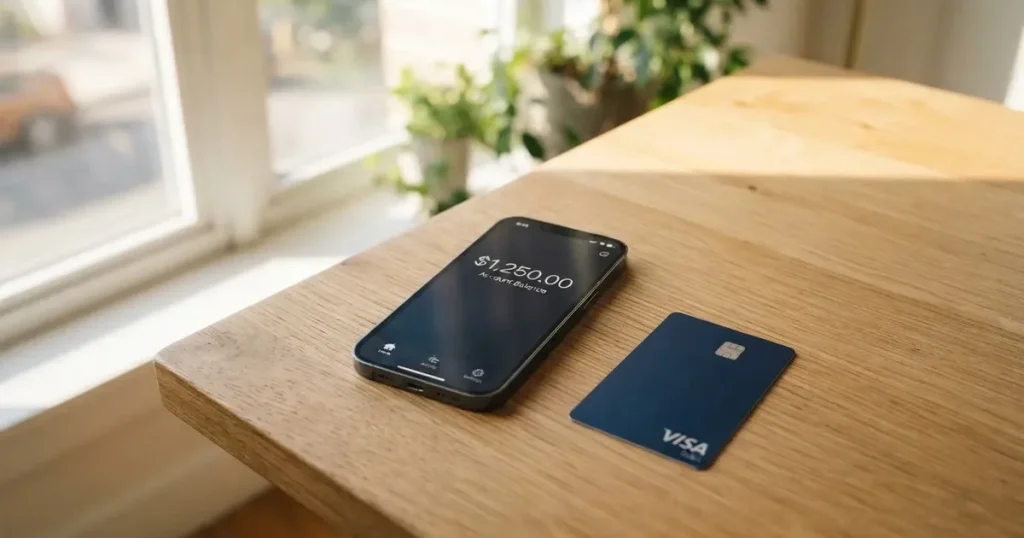
PSTNET sells virtual payment cards that draw on a balance you load with crypto. The company positions itself as a tool for advertisers and media buyers who need fresh card numbers for ad platforms, but the product is open to anyone who passes identity checks. That positioning is useful, because it explains both the strengths (lots of virtual cards, many card BINs) and the gaps (no physical card, no public fee schedule, several user complaints about frozen accounts and slow crypto withdrawals).
The conditions described here are current as of October 28, 2026.
Verdict
PSTNET earns 5.3 out of 10 in this review. The product is a virtual-only, USD-denominated card range with an automated identity check, instant card issuance and crypto top-up. That is enough to be useful for a narrow audience, mainly media buyers and advertisers who need fresh card numbers for ad platforms, and not enough for someone who wants an everyday debit card. There is no physical card, no public fee schedule, no published company information, and a noticeable share of users on Trustpilot report slow crypto withdrawals and account suspensions.

The breakdown looks like this:
| Criterion | Mark | Why it scored where it did |
|---|---|---|
| Who can get it | 8 / 10 | Open to most countries with a published caveat, though the United States is restricted and at least one user reported a country being dropped from support |
| Cost | 4 / 10 | Card pricing is published for the Ultima tier but other fees (top-up, FX, monthly maintenance outside the first month) are not stated; unofficial sources point to a 2% top-up fee |
| Top-up options | 7 / 10 | Crypto deposits to a PSTNET balance are advertised as instant; the supported coins and networks are not listed on the public site |
| Reliability and complaints | 4 / 10 | Company information and licences are not published; user complaints centre on slow crypto withdrawals, KYT holds and unexplained card suspensions |
| Everyday use | 3 / 10 | Virtual cards only, in USD; the card range blocks gambling, dating, money transfers, fuel, brokerage and several other categories |
The card suits you if you run online ad accounts, need disposable card numbers tied to crypto, and are comfortable holding a balance with an opaque custodian. It is a poor fit if you need a physical card, want to spend in shops abroad, or care about clearly stated fees and a regulated, named issuer.
Who can get the card
PSTNET says its products “may not be available to all customers” but does not publish a country list. A previous check found the card open worldwide outside restricted countries, with the United States restricted, and a July 2026 Trustpilot review from a user who said their country was no longer supported. If your country of residence or citizenship matters to you, the safe move is to ask support before you start the sign-up.
There is no public minimum age, no list of excluded countries and no statement of which customers are eligible. The card is sold to both individuals and businesses; the advertiser focus is built into the product range rather than into a published eligibility filter.
How to get it
The sign-up runs through PSTNET’s web app. You create an account with Google or email, complete “full eKYC execution” through Sumsub, which handles automated ID and biometric verification, and once that clears the card is issued instantly. The site markets the steps as quick: sign up, pass KYC, get a card.
Sumsub is a third-party identity provider used by many crypto and fintech companies. It performs document and biometric checks and shares the result back with PSTNET. The public site does not state which documents are accepted, whether proof of address is required, or what the minimum age is. If you have an uncommon document type (residency permit, refugee travel document, second nationality), plan for the chance that Sumsub will ask for more.
The card range you can pick from at sign-up looks like this:
- Ultima – a single virtual card with 3D-Secure.
- PST Private – 22 BINs and unlimited cards.
- Google Ads – 12 BINs aimed at Google Ads.
- TikTok Ads – 3 BINs aimed at TikTok.
- Advertisement – 15 BINs aimed at other ad platforms.
- Virtual prepaid, Virtual debit and Platinum – generic virtual cards.
The card network (Visa or Mastercard) is not stated on the public pages, and no physical card is listed. Delivery, in the sense of a card arriving in the post, is not part of the product. There is no mobile app; the only client is a web app and a Chrome browser extension, which means sign-in and card management happen in a browser rather than a phone app.
What it really costs
The pricing story is split. The Ultima card page says “from $7” for the card price, and the Ultima detail page lists $16 for issuance and monthly maintenance after the first month. The PST Private page says the first 100 cards are free. The two pages disagree on the headline number, and several fees that matter for everyday use are not stated at all.
Unofficial sources (a third-party review on techeconomy.ng, dated 2022-2025, and a Chrome extension listing) describe a $7 monthly maintenance fee, a $99 annual fee, and a 2% top-up fee. These figures are not stated on PSTNET’s own pages and have not been confirmed by the card issuer.
Here is the public cost picture, with gaps marked:
| Fee or limit | Amount | Source |
|---|---|---|
| Ultima card price | “from $7” | PSTNET cards page |
| Ultima issuance and monthly maintenance after month 1 | $16 | PSTNET Ultima page |
| PST Private first 100 cards | free | PSTNET Private page |
| Monthly maintenance (other tiers) | not stated officially; unofficial $7/mo | unofficial |
| Annual fee (other tiers) | not stated officially; unofficial $99/yr | unofficial |
| Top-up fee | not stated officially; unofficial 2% | unofficial |
| Transaction, declined-payment, refund, withdrawal fee (PST Private) | 0% | PSTNET Private page |
| FX / conversion fee | not stated | – |
| ATM fee | not stated (virtual cards only) | – |
| Daily and monthly spend limits | not stated (PST Private: “unlimited”) | PSTNET Private page |
What a coffee costs
You top up $50 in USDT, convert to USD, and buy a $5 coffee. The top-up fee, if the unofficial 2% is correct, takes $1 off the balance before the card is even issued. PSTNET says the card itself has a 0% transaction fee on PST Private; the Ultima page is silent on this. If you later refund the transaction, PST Private says the refund is 0%; on other tiers the page does not say.
What a $100 online ad spend looks like
You pay $100 to a Google Ads card. There is no FX step (the card is in USD), and PSTNET does not list a transaction fee on the Google Ads tier. The risk sits elsewhere: some users report that the card is declined at certain merchants (Amazon digital, Stripe), and AVS-based merchants can decline prepaid or foreign BINs, which means the same card that worked on Google Ads can fail at a US shop that checks your billing address.
What a non-USD subscription looks like
You subscribe to a €30/month service with a USD card. The site does not publish an FX margin. Most crypto cards charge somewhere between 0% and 3% on top of the wholesale rate, but until PSTNET states its own number, treat any estimate as guesswork.
The honest summary: the cost of using PSTNET is hard to predict because most of the fees that bite are not stated. The card is free to issue at the entry tier if you are inside the “first 100 free” window, after which a $16 monthly charge is on the table. A 2% top-up fee is a reasonable working assumption until the company publishes its own number, and any FX cost is an unknown.
How to top it up
The funding flow is “instant crypto deposit into your PSTNET account”. You send crypto to a deposit address, and the equivalent USD balance appears on the card. The public site does not list supported coins or networks. Unofficial sources (the Chrome extension listing) mention USDT on TRC20 and ERC20, and BTC.
This matters more than it sounds. Crypto transfers are irreversible, and sending USDT on the wrong network, for example ERC20 USDT to a TRC20 deposit address, can mean the funds are lost or need manual recovery with no guarantee. Circle stopped supporting USDC on Tron in February 2024, so “USDC over TRC20” is not a native option, and an ERC-20 transfer needs ETH in the wallet to pay gas. Before you send anything, confirm the network and address with PSTNET support.
The PST Private page advertises “0% withdrawal fee” and “express withdrawal” for taking funds back out. Some user reports describe waits of up to 14 days for crypto withdrawals, with the company saying the delay is manual review. Minimum top-up, who pays the network fee, and fiat top-up options (bank transfer, card) are not stated. What happens to your balance if the account is closed is also not stated.
Paying with it every day
The card is virtual and denominated in USD. You add it to a checkout page online, or, in theory, to a mobile wallet. Whether Apple Pay and Google Pay are supported is not stated on the public pages. Tokenisation (the process that replaces your card number with a device-specific number for mobile wallets) is common for Visa and Mastercard programmes, so it is plausible, but the site does not confirm it.
The Ultima page blocks a long list of merchant categories by MCC (merchant category code, the four-digit number that classifies a business by what it sells):
- Gambling (MCC 7995)
- Dating (7273)
- Money transfers (6051)
- Quasi-cash (4829)
- Fuel and EV charging (5552, 5533, 5541, 5542)
- Freight and trucking (4215, 4214)
- Brokerage (6211)
- Massage parlours (7297)
- Other restricted categories (7800-7802, 5172)
This is a typical issuer policy rather than a legal rule, and the blocked list varies by card. The implication is that this is not a general-purpose card. It will not work at a petrol station, on a betting site, or for a money transfer. For online ad spend on Google, TikTok or a generic ad platform, the BINs are designed for that.
Cashback is advertised at 3% on PST Private, but the conditions, the cap and the currency the cashback is paid in are not stated. Disputes and chargebacks (refunds ordered by the card issuer when you contest a charge) are not described on the public pages, and the restricted-usage guidance only covers chargebacks and refunds for deactivated virtual cards, not for disputed transactions more broadly.
There is no mobile app. Card management happens in a web app or in the Chrome extension. If you prefer to freeze a card, change a limit, or check a transaction from your phone, that workflow is not in place.
What can go wrong
The biggest risks sit in three places: who actually holds your money, what happens when something goes wrong, and how the company is set up.
Custodial balance. Your card balance sits in a PSTNET account, which means the company holds the funds rather than you holding the crypto in your own wallet. If PSTNET has operational problems, the custodian fails, or your account is frozen, getting the balance back depends on the company’s solvency and on the support team. The site does not say whether customer funds are segregated (kept in a separate account so they are not part of the company’s assets if it goes bankrupt) or insured. Crypto transfers are typically irreversible, and a stolen private key has no built-in recovery, so the same irreversibility that protects you from chargebacks also protects a custodian that decides not to return your money.
KYC and frozen accounts. The sign-up runs through Sumsub for identity, and crypto deposits are screened with KYT (Know Your Transaction) checks. Users in 2026 have reported deposits held for days or weeks, accounts suspended without clear notice, and card blocks that were not explained. This matches the regulatory pattern: if due diligence cannot be completed, the institution is required to end the relationship, and a virtual card programme can be wound down quickly by the network. Visa terminated its global agreement with FTX in November 2022 and the FTX US debit card was wound down by its issuer. WaveCrest, which supplied crypto card brands, was suspended by Visa in Europe in 2018 and all WaveCrest-issued programmes closed. A programme closure typically gives a notice period, then stops spending and loading, then asks users to withdraw remaining balances.
No public company information. PSTNET does not name its legal entity, the country it is incorporated in, or the licences it holds. Trustpilot has 381 reviews, of which 67% are five stars and 25% are one star; the site itself claims 458 Trustpilot reviews. Trustpilot has withheld the TrustScore, citing a guideline breach and the removal of fake reviews, which is a yellow flag. The eKYC runs through Sumsub, and the public support channel is Twitter and Telegram; there is no email or phone number listed on the pages I read.
Specific user complaints (2026):
- Crypto withdrawals taking up to 14 days, with the company citing manual review.
- Crypto deposits held for days to weeks, with the company citing KYT checks.
- Account and card suspensions without a clear written reason.
- Declines on Amazon digital goods and on Stripe merchants.
The pattern is not “this card is a scam”. The pattern is “this is a custodial product at the edge of the regulated card space, run by a company that does not publish its own legal entity, and the support experience can be slow when the KYT or KYC system flags a transaction”.
What to take instead
If the gaps above matter to you, the alternatives below trade on different strengths. None of them is a perfect substitute; the point is to see what kind of trade-off you would be making.
| Card | Score | What it is | Where it suits you | Where it does not |
|---|---|---|---|---|
| Cardex | 5.6 / 10 | One crypto card on Verve, Visa, Mastercard and UnionPay, with both virtual and physical cards, available in 200+ countries, and an “AI-Powered Conversion Rate” that picks the best exchange rate at the moment of spend | Users who want a physical card and a wider network range, and who do not mind an opaque conversion engine | Anyone who needs a published fee schedule, which Cardex also does not provide |
| CardFlow | 4.9 / 10 | A virtual USD Mastercard, created in 3 minutes, aimed at Nigeria but open to “global users”; funding in BTC, USDT, ETH or Naira bank transfer; card creation is free | Users who want a free virtual USD card and can fund with multiple assets | Anyone outside the Nigerian focus who needs a clear fee structure or dispute process |
| HyperCard | 4.7 / 10 | A prepaid card with USD or EUR balance, deposited in USDT, BTC or ETH, accepted in more than 176 countries | Users who want a multicurrency prepaid card and a simple crypto top-up | Anyone who needs published fees, a named issuer, or a public cost breakdown |
The trade-off across all three is the same shape: the more features you get, the less clear the cost. PSTNET itself sits in the middle of that range, with a strong product fit for media buyers and weak public information for everyone else.
Who I would recommend it to
I would recommend PSTNET if you are an advertiser or media buyer who needs fresh virtual card numbers for ad platforms, are comfortable paying in USD only, can hold a balance with a custodian whose legal entity is not publicly named, and do not need a physical card. The card range, with 22 BINs on PST Private and the ad-specific tiers, is built for this workflow, and the 0% transaction fee on PST Private is real even if the rest of the fee schedule is thin.
I would not recommend it if you need a physical card for in-person shopping, want to spend at petrol stations, on gambling, or for money transfers, need a published fee schedule before you commit, or want a named, regulated issuer that has stated which country it is in. The Trustpilot mix (67% five stars, 25% one star, TrustScore withheld) and the slow-withdrawal complaints mean the support experience is uneven, and the absence of a public fee schedule means the real cost is something you discover by using the card.
For everyone else, the alternatives above are worth a look, or a more established custodial card from a named issuer is a safer starting point. The wider context: Visa and Mastercard do not issue crypto cards to consumers, they license issuers, and they can suspend a programme. A card that looks fine today can be wound down by the network next month, and the only protection is the issuer’s own balance sheet and the clarity of its communications, both of which are weak at PSTNET.
Frequently asked questions
What is the PSTNET card?
PSTNET is a range of virtual payment cards denominated in USD, funded from a crypto balance held in your PSTNET account. The cards are virtual only, there is no plastic card, and the product is positioned for online ad spend and media buying rather than for everyday shopping.
How does the PSTNET card work?
You sign up, pass identity checks through Sumsub, get a virtual card instantly, top up the balance with crypto, and spend the balance online. The card is a prepaid card in the sense that it draws on a stored balance, and the balance is the crypto-to-fiat conversion done at the moment of deposit.
Is PSTNET a bank?
No. PSTNET does not state on its public pages that it is a bank, and it does not name the legal entity, country of incorporation, or licences behind the card programme. The identity check is run by Sumsub, a third-party KYC provider, which is typical for a fintech that outsources compliance.
Who owns PSTNET?
PSTNET does not publish its ownership, legal entity, or jurisdiction on the pages I read. If ownership matters to you for tax, sanctions or compliance reasons, you would need to ask the company directly, and even then treat the answer with care.
Is the PSTNET card available in my country?
The site says the card “may not be available to all customers” and does not publish a country list. A previous check found the United States restricted, and a July 2026 Trustpilot review reported a user’s country being removed from support. The safest path is to ask support before you sign up.
Does the PSTNET card require KYC?
Yes. The sign-up runs “full eKYC” through Sumsub, with automated ID and biometric verification. The public site does not state which documents are accepted, whether proof of address is required, or what the minimum age is.
How do I top up the PSTNET card?
You send crypto to a deposit address, and the equivalent USD balance is credited to your account. The site markets this as instant, but does not list supported coins or networks; unofficial sources point to USDT on TRC20 and ERC20, and BTC. Crypto transfers are irreversible, so confirm the network and address with support before sending.
How do I withdraw money from PSTNET?
PST Private advertises 0% withdrawal fee and “express withdrawal”. Some users have reported waits of up to 14 days, with the company saying the delay is manual review. What happens to your balance if the account is closed is not stated.
Is the PSTNET card free?
Partly. The first 100 PST Private cards are free, the Ultima card starts at $7, and the Ultima page lists $16 for issuance and monthly maintenance after the first month. Other fees (top-up, FX, monthly maintenance on other tiers) are not stated officially; unofficial sources describe a 2% top-up fee.
Is the PSTNET card safe?
It carries the usual risks of a custodial crypto product: the company holds your balance, the legal entity is not named, the Trustpilot TrustScore has been withheld by Trustpilot over fake-review concerns, and some users report slow withdrawals and unexplained suspensions. Treat it as a tool for a narrow workflow rather than a place to park funds you cannot afford to lose.
Choosing a virtual card – cryptocardadvisor
Content created by the «cryptocardadvisor» team