
Prive Visa Platinum review
 Available in US
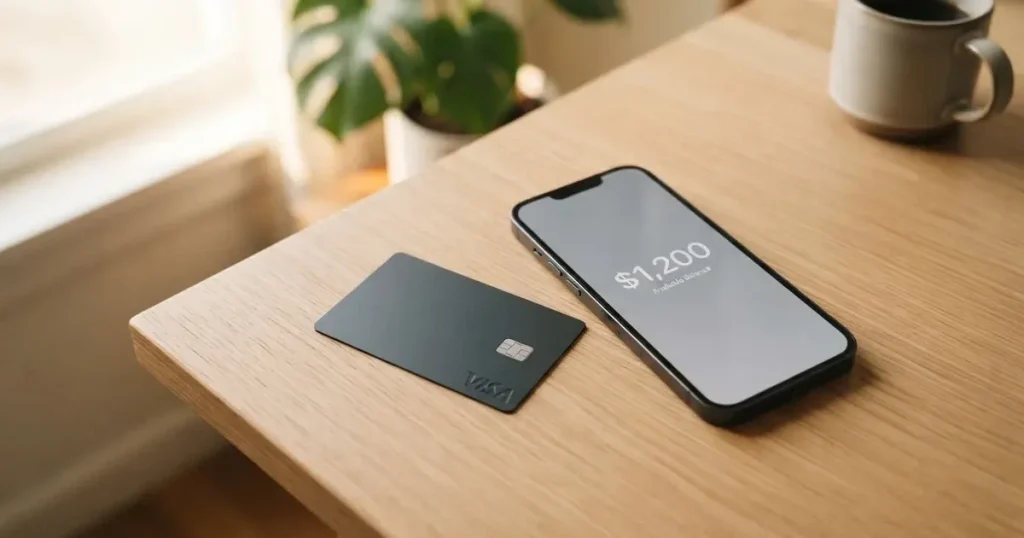
The Prive card is a Visa Platinum that draws on a balance you control from your own crypto wallet. It is pitched at people who already hold USDC, USDT, EURC or PYUSD in a self-custody wallet and want to spend that balance in the real world without first cashing out to a bank. The appeal is straightforward: the keys stay with you, the card spends from a converted balance, and the company emphasises that the funds are not sitting on its books.
What the card does well is real, but the public information around it is unusually thin. The fee schedule is published. The Terms of Service are published. Beyond that, key details are missing: no list of supported countries, no named card issuer, no FCA authorisation number, no published chargeback procedure, and a contradictory set of signals about where the card is even available. I have worked through the published pages and the independent coverage, and I will walk you through what the card actually offers, what it costs, and where the gaps leave you exposed.
The conditions described here are current as of October 28, 2026.
Verdict
Prive sits in a specific niche: a self-custody Visa Platinum for someone already holding stablecoins. If that is your situation, the core mechanic works, and the card does what it says. Outside that niche, the gaps in disclosure (country list, issuer identity, dispute process) make it harder to recommend as a primary card. The total score is 5.1 out of 10.
| Criterion | Mark | Why |
|---|---|---|
| Who can get it | 5 / 10 | No published country list; off-ramps cover 80+ countries, but the Terms describe a Hong Kong audience and an independent catalogue says the card is not available in Hong Kong. Sources disagree. Early access reportedly required an invitation. |
| Cost | 3 / 10 | The metal card is $99.00 ($39.00 card fee plus $60.00 shipping), the virtual card is $10.00 with a displayed 50% discount to $5.00, the top-up fee is 0.50% with a $0.50 minimum and a $0.05 network fee, and FX adds another 2.00%. ATM withdrawals carry a 1.00% markup with no free allowance stated. There is no monthly fee and no fee to close the account. |
| Top-up options | 7 / 10 | USDC, USDT, EURC and PYUSD from a non-custodial wallet, plus fiat rails (FPS, ACH, SEPA) for GBP, USD, EUR, NGN, KES, MXN and BRL. The specific networks the card accepts are not named. |
| Reliability and complaints | 5 / 10 | Operated by Prive Technologies Limited, which states plainly that it is not a bank. The licensed card programme partners are not named. No FCA number is published. Reports from a 2026 user summary mention login failures after an update and slow support. The iOS app sits at 4.3 out of 5 from 20 ratings. |
| Everyday use | 7 / 10 | Virtual and physical metal card options. ATM withdrawals work, with a 1.00% markup. A Google Pay terms page exists. Independent sources say Apple Pay and Google Pay are not supported, which contradicts that page. Blocked merchant categories are not listed. |
| Total | 5.1 / 10 |
If you are a self-custody holder who wants to spend USDC or USDT from your own wallet, the mechanic is what you are looking for, and the top-up line-up covers the main use case. If you want a card with a clear regulator behind it, a published country list, a transparent dispute process, and a strong daily-spend story, this is not yet that card.
Who they will give the card to
Prive does not publish a country list. The site frames the product in global terms, and the off-ramp side (sending converted balances out to local bank accounts) advertises coverage in more than 80 countries. At the same time, the Terms of Service carry a section that says the website content is “intended exclusively for Hong Kong residents.” An independent catalogue I checked, dated 2026, goes the other way and says the card is “not available in Hong Kong.” The two statements cannot both be right, and I will not guess which is current.
The Terms set the age requirement at 18 or the age of majority, whichever is higher. Membership is “subject to application and verification” at Prive’s discretion, and the company runs its KYC through Sumsub and Bridge. The help centre has eight articles on KYC, but the specific documents are not shown on the public pages. Unofficial coverage from the same 2026 catalogue lists the requirements as an email address, a phone number, and an identity document, with no proof of address or selfie required. Unofficial: I have not confirmed this against the help-centre content.
The card is positioned as a Visa Platinum, available as a virtual card or as a “premium metal” physical card. The card currency itself is not stated on the public schedule; the published fiat balances are GBP, USD, EUR, NGN, KES, MXN and BRL.
What this means for you: the eligibility story is half-told. If you are outside the obvious corridors, you may be able to get the card, but you should treat sign-up as an experiment until the app confirms you have cleared KYC. The verification process is tiered, and the limit you can spend depends on which tier you reach, but the tier names, unlocks, processing times, and rejection reasons are not published. Unofficial: the catalogue names a single “ID Verification” tier and reports complaints about slow KYC review.
How to get the card
The published flow is short: install the app, onboard and verify your identity, order a virtual card, and request the metal card from inside the app if you want it. The metal card is shipped for an additional fee, and the published rate bundles $60.00 of shipping into the $99.00 metal price, with replacement of a lost, stolen or damaged metal card costing $99.00. Delivery countries and delivery times are not stated.
The unofficial catalogue suggests that the card is in early access with an invitation required, and a separate note describes it as not available in Hong Kong. I have not confirmed either of these statements through Prive’s own channels.
What this means for you: the steps themselves are standard. The unusual piece is the gap between the published Terms and the third-party coverage. If sign-up matters to you, the practical test is whether the app lets you past identity verification for your country. If it does not, you have lost nothing but a few minutes.
What it really costs: fees, markups and the everyday numbers
This is the part of the Prive story that is best documented. The fee schedule took effect on 12 April 2026 and the rates are published in full.
| Fee or limit | Amount |
|---|---|
| Metal card (card fee + shipping) | $99.00 ($39.00 card fee + $60.00 shipping) |
| Virtual card | $10.00, shown discounted 50% to $5.00 |
| Monthly fee | None published |
| Card closure | Free |
| Crypto top-up (USDT/USDC) | 0.50% with a $0.50 minimum and a $999,999 maximum, plus a $0.05 network fee |
| FX markup | 2.00% |
| Domestic spend (no FX) | No extra fee published |
| Declined authorisation | $0.50, but only if your decline rate is above 5% over 10 or more attempts |
| ATM withdrawal | 1.00% markup; free allowance not stated |
| Replacement of lost/stolen/damaged metal card | $99.00 |
| Per-transaction ceiling | “up to $100,000 per transaction”; daily and monthly card limits depend on verification tier |
| Network fee for stablecoin top-ups | $0.05 |
A third-party catalogue I checked lists the daily, monthly and ATM limits as unlimited, and lists every fee as free, which directly contradicts the official schedule. I am going with the official schedule here. Unofficial: that catalogue is the source for the unlimited claim.
A few everyday numbers, because the schedule only makes sense once you run it through real payments.
Paying for a $100 dinner at a restaurant in your home currency, topped up from your own USDC wallet. The 0.50% top-up fee is $0.50, the $0.05 network fee applies, the 2.00% FX markup does not apply because the merchant settlement is in your card’s base currency. Your total all-in cost above the actual price is about $0.55, plus whatever your own wallet paid in gas to send the USDC to Prive.
Paying for a $100 hotel in a country that settles in a currency different from your card’s base currency. The same $0.50 plus $0.05 top-up cost applies, and now the 2.00% FX markup layers on top. Your all-in cost is roughly $2.55 plus the wallet’s gas.
Withdrawing $200 from an ATM. The 1.00% markup is $2.00. There is no published free allowance, so that $2.00 is the floor. The ATM operator may add its own surcharge on top, which is outside Prive’s control.
A declined authorisation. The first ten declines are free. If your decline rate climbs above 5% over ten or more attempts, you start paying $0.50 per decline. For most cardholders this is a non-event; for anyone building a script that retries on failure, it matters.
What this means for you: the headline number is the 2.00% FX markup, which is on the high side for a crypto card. If most of your spending is in your card’s base currency and you top up from USDC, the per-payment cost is small. The moment you start spending abroad, the FX layer is the single biggest fee you pay, and there is no way to avoid it within the published schedule.
How to top it up
Prive advertises two parallel rails: crypto from your own wallet, and fiat through local payment systems. The crypto line-up is USDC, USDT, EURC and PYUSD, held in a non-custodial wallet whose keys you control. The card top-up is instant from the wallet balance, with a 0.50% fee (subject to the $0.50 minimum and the $999,999 maximum) and a $0.05 network fee for USDT and USDC. The specific networks the card accepts are not named, and that is a meaningful gap: the same USDC token can be sent on Ethereum, Solana, Polygon, Arbitrum, Base or a long list of others, and a transfer on the wrong network is not recoverable.
Fiat top-ups are supported in GBP, USD, EUR, NGN, KES, MXN and BRL, routed through FPS, ACH or SEPA depending on the currency. The fiat fees are not stated. There is no published minimum top-up beyond the $0.50 fee minimum.
Withdrawals work in both directions. The published fee is 0.00% on the conversion with a $0.01 minimum, plus a $0.05 network fee for USDT and USDC. Off-ramps go to local bank accounts in 80+ countries. The Terms note that on termination, any outstanding balances become due, and there is a separate account-closure disclosure page.
What this means for you: the rail mix is genuinely useful. If you already hold stablecoins, the wallet-to-card path is exactly what you want. If you want to fund the card directly from a bank account, the option is there, but the missing fee schedule for fiat top-ups means the actual cost is something you only see after you try. The unspecified network list is the part I would push on first: confirm in the app which network the deposit address belongs to before you send anything.
Paying with it every day
The card presents as a standard Visa Platinum: virtual and physical, online and in-store. The public pages have a Google Pay terms document, which suggests Google Pay support. A third-party catalogue from 2026 says both Apple Pay and Google Pay are not supported, which contradicts the published page. I am calling this out as unconfirmed on both sides; the safer reading is that the Google Pay page is the company’s stated position, and Apple Pay is unstated.
ATM withdrawals work, with the 1.00% markup discussed above. Blocked merchant categories are not stated, so the standard 7995 gambling block that many issuers apply is neither confirmed nor denied; you only find out at the point of sale.
The app has a points system. Points accrue from top-ups, payments, withdrawals and referrals, and can only be used in the app. There is no cashback published, so treat the points as a closed-loop feature rather than a rebate.
On the support side, the help centre and online support are described as “24 hours a day, 7 days a week” and reachable at [email protected]. The app is published in English and ten other languages; Russian is not confirmed. The iOS app sits at 4.3 out of 5 from 20 ratings as of 21 October 2026; the Google Play listing exists under the package name life.prive but I could not read its current rating.
What this means for you: the basic Visa rails work, and the ATM markup is competitive with several alternatives. The omissions (no published blocked-MCC list, no published tokenisation support, no published dispute process) are the everyday-use gaps that surface the first time something unusual happens at a checkout.
What can go wrong
The company structure is Prive Technologies Limited, which states that it is “not a bank.” Card services run through “licensed card programme partners” that the public pages do not name. KYC is handled by Sumsub and Bridge. The Terms are governed by Hong Kong law, and disputes are subject to arbitration in Hong Kong through HKIAC. No FCA authorisation number is published, and the card agreement page currently shows “content not yet available,” which means the formal chargeback process and timing are not described on the company’s own site.
On the security side, the marketing line is “Your Wallet. Your Keys.” Crypto stays in your non-custodial wallet until the moment of top-up, and fiat balances are held with “regulated partners.” The app supports biometric login, two-factor authentication and real-time fraud detection. FSCS protection does not apply, per the FCA-facing disclosure.
The published news is thin, and the fee schedule took effect on 12 April 2026 and may change with 15 days’ notice. There is no Trustpilot page for Prive Money that I could find, and the Reddit and Trustpilot searches that surfaced “Privé” returned unrelated shopping sites rather than the card.
The most concrete complaint signals I found come from a single user summary in the 2026 catalogue: login failures after an update, slow and vague support, and a quirk that payment links require the payer to register and pass KYC. None of these are official incidents, and one user summary is not a trend line.
What this means for you: the practical risk profile has three pieces. First, the unstated identity of the issuing partner means you cannot check a regulator’s register for the entity that holds your card programme. Second, the unstated dispute process means that if a charge goes wrong, you do not yet have a published timeline to point to. Third, the self-custody model puts the seed-phrase and clipboard-hijacking risks squarely on you; the card does not relieve you of that responsibility.
What to take instead
The honest framing is that none of these alternatives is a perfect substitute, and each one trades on a different axis. I have scored them in the same format and kept the figures from the public pages.
TokenPocket (5.8 / 10). A Visa debit card for a list of European countries and territories including Germany, France, Spain and Switzerland, and a Mastercard debit for Australia, Canada, Hong Kong, Japan, Taiwan, New Zealand, Singapore, South Korea and the UK. Americas are “planned for Q2 2025.” The card runs on Arbitrum, with balances in EUR24 and USD24. The card itself is virtual only. The headline pricing is “no additional fees” beyond a 1% deposit fee that is later refunded through rewards. FX fees are not stated, and inter-institution settlement can add extras. Best for an Arbitrum-native user whose country is on the published list.
MetaMask Card (7.1 / 10). A Mastercard, virtual first and Metal available by in-app pre-order, with one card per user. The issuer is Monovate and the card provider is Crypto Life. Virtual is free with no annual or maintenance fee; Metal is $199 per year. Sign-up is open in 45 listed countries and territories, with other regions on a waitlist; proof of residency is required, and the FAQ flags US and UK sign-ups as temporarily closed. Spending is directly from the connected wallet across Linea, Base, Monad and Solana, with named tokens including mUSD, wETH, EURe, GBPe, USDC and USDT. The headline rewards are 1% cashback in mUSD on Virtual, and 3% on Metal (limited to the first $10,000, then 1%), plus a $FLY 5X/7X bonus through Blackbird. There is no foreign transaction fee; the Mastercard rate is used. Best for a self-custody MetaMask user who wants a Metal option and a published country list.
KAST (6.1 / 10). Up to ten cards per user, in three tiers (Standard, Premium, Private), with Visa Platinum, Visa Infinite metal and Visa Infinite gold plated options, plus themed designs (Pengu, Solana, Bitcoin). Account balance is in USD, with stablecoin deposits converted 1:1 at a 0% spread. The annual membership is the meaningful cost: Standard 0 USD, Premium 1,000 USD/year, Private 10,000 USD/year, all billed annually upfront with no monthly option. Standard physical is 0 USD card fee plus 40 USD delivery; Premium and Private physical cards are included. Stablecoin top-up is 0%, card spend in USD is 0%, Apple and Google Pay are 0%, and non-USD FX is 0.5% to 1.75% depending on residence, transaction country and card programme. Cashback is paid in USD: 1.5% on Standard (first 2,000 USD/month), 2% on Premium (first 10,000 USD/month), 3% on Private (first 40,000 USD/month), plus KAST Points on the paid tiers. Best for a heavy spender who can use the cashback caps and is comfortable with an annual commitment.
| Card | Score | Card type | Network | Annual cost | FX markup | Headline cashback |
|---|---|---|---|---|---|---|
| Prive | 5.1 / 10 | Virtual and metal | Visa Platinum | None published; $99 metal one-off | 2.00% | None (in-app points only) |
| TokenPocket | 5.8 / 10 | Virtual only | Visa (EU) or Mastercard (other regions) | None published | Not stated | 1% deposit fee refunded via rewards |
| MetaMask Card | 7.1 / 10 | Virtual and Metal | Mastercard | Free Virtual; $199/year Metal | Mastercard rate | 1% Virtual; 3% Metal (capped) |
| KAST | 6.1 / 10 | Virtual and physical, up to 10 | Visa Platinum / Visa Infinite | 0 to 10,000 USD/year | 0.5% to 1.75% | 1.5% to 3% in USD |
What this means for you: if the FX markup is your main concern, MetaMask Card is the strongest of the four on the published pages, and KAST is the strongest if you can use its cashback caps. If self-custody from a specific wallet is the requirement, MetaMask and Prive are the cleanest fits. If you are willing to pay an annual fee for a clear published country list, KAST is the most explicit on what you get and what it costs.
Who I would recommend it to
Prive is a reasonable card for a specific reader: someone who already holds USDC or USDT in a self-custody wallet, who values keeping the keys until the moment of payment, and who can tolerate the gaps in disclosure. If that is you, the top-up rail is the right shape, the points system adds a small utility, and the absence of a monthly fee keeps the holding cost at zero until you order a metal card.
Prive is not the card I would recommend to someone who needs a published country list before they apply, who wants to confirm the card issuer on a regulator’s register, who plans to dispute a transaction, or who spends a large share of their budget in non-base currencies. The 2.00% FX markup is high for a crypto card, the unstated network list is a real risk on the deposit side, and the unstated dispute process is a real risk on the spend side.
The practical checklist before you commit any funds:
- Confirm the country you will be applying from is treated as supported by the app, not just by the marketing pages.
- Confirm the deposit network the app shows you matches the network your wallet intends to send on.
- Read the Terms and the account-closure disclosure so you know how a balance is treated at termination.
- Keep the metal card as an upgrade, not as the default, until you have a feel for the virtual card.
For the broader reader, MetaMask Card is the safer recommendation on the same self-custody axis, and KAST is the stronger recommendation if an annual fee is acceptable and the cashback caps fit your spend. TokenPocket fits the smallest set of countries and has the least public information, but it is the cleanest fit for an Arbitrum-native user.
Frequently asked questions
What is the Prive card?
The Prive card is a Visa Platinum issued through the Prive app, available as a virtual card or as a physical metal card. It is designed to be topped up from a non-custodial wallet holding USDC, USDT, EURC or PYUSD, with fiat top-ups also supported through FPS, ACH and SEPA in a defined list of currencies.
Is Prive a bank?
No. Prive Technologies Limited, the company behind the card, states that it is not a bank. Card services run through licensed card programme partners that the public pages do not name, which means there is no published issuer to look up on a regulator’s register.
Who can get the Prive card?
The Terms set the age requirement at 18 or the age of majority. Prive does not publish a country list, and the public statements about availability are inconsistent; the Terms describe a Hong Kong audience, while an independent catalogue says the card is not available in Hong Kong. Early access has been reported to be invitation-only. KYC is required.
How do I apply for the Prive card?
The published flow is to install the app, onboard and verify your identity, order a virtual card, and request the metal card from inside the app if you want it. Whether the app lets you past identity verification depends on your country, and the specific documents required are not listed on the public pages.
What does the Prive card cost?
The metal card is $99.00 ($39.00 card fee plus $60.00 shipping), the virtual card is $10.00 with a 50% discount shown to $5.00, there is no monthly fee, the top-up fee is 0.50% with a $0.50 minimum plus a $0.05 network fee, the FX markup is 2.00%, and the ATM markup is 1.00% with no free allowance stated. Closing the card is free.
How do I top up the Prive card?
From a non-custodial wallet holding USDC, USDT, EURC or PYUSD, with the top-up credited instantly. The card also accepts fiat top-ups in GBP, USD, EUR, NGN, KES, MXN and BRL through FPS, ACH and SEPA. The networks the card accepts for stablecoin deposits are not named on the public pages, and that gap is worth confirming in the app before you send any funds.
Can I use Apple Pay or Google Pay with the Prive card?
The published position is that a Google Pay terms page exists, suggesting Google Pay support. A third-party catalogue says neither Apple Pay nor Google Pay is supported. The public information is contradictory, and the safer reading is that the Google Pay page is the company’s stated position while Apple Pay remains unstated.
Is the Prive card safe?
Crypto stays in your non-custodial wallet until the moment of top-up, and fiat balances are held with regulated partners. The app supports biometric login, two-factor authentication and real-time fraud detection. FSCS protection does not apply. Crypto transfers are irreversible, so a deposit sent on the wrong network or to the wrong address is not recoverable, and a stolen seed phrase cannot be reversed.
What can I do if a transaction goes wrong?
The Terms subject disputes to arbitration in Hong Kong through HKIAC. The card agreement page currently shows “content not yet available,” so the formal chargeback process, time frames and reason codes are not published. There is no Trustpilot page for Prive Money that I could find, and there is no published record of an official incident.
How do I close my Prive account?
The card can be closed free of charge, and the Terms note that any outstanding balances become due at termination. There is a separate account-closure disclosure page. Practical steps (in-app closure, identity reverification, off-ramp timing) are not described on the public pages, and the off-ramp side advertises bank-account withdrawals in 80+ countries.
Choosing a wallet card – cryptocardadvisor
Content created by the «cryptocardadvisor» team