
A cheap-to-hold crypto card built for Hong Kong residents, with real gaps in what it discloses
 Available in US
If you have trouble getting an ordinary bank card where you live, the PokePay card is probably on your screen. It advertises a physical and a virtual Visa you can load with stablecoins, with no monthly fee, no annual fee, and no cross-border transaction fee. On paper that is an unusually generous set of numbers. The reason it is worth reading this review anyway is that the card’s public pages are written for one place in particular, and the details a reader in most other countries need most — the fee you pay when crypto is converted, the card’s own currency, whether your money is insured — are simply not published.
I spent this review reading the card’s own terms, FAQ and footer, then comparing what is stated against what a third-party check found. My score for the card as a whole is 5.4 out of 10: genuinely cheap to hold and easy to top up with USDT, held back by a narrow eligibility stance, a long list of undisclosed costs, and a support and reliability picture that has drawn real complaints.
The conditions described here are current as of October 28, 2026.
Verdict: a fair card for one audience, an unfinished page for everyone else
Here is how I arrived at 5.4, criterion by criterion.
| Criterion | Mark | Why |
|---|---|---|
| Who can get it | 2 / 10 | The site is intended only for residents living in Hong Kong; the United States is said to be closed |
| Cost | 8 / 10 | No monthly or annual fee and 0% cross-border transaction fee; the card-opening fee and FX costs are not disclosed |
| Top-up options | 8 / 10 | You can fund it with USDT, USDC, BTC and ETH |
| Reliability and complaints | 4 / 10 | The issuing bank is not named and the licences are self-declared; there was a wave of blockings in the second half of 2025 |
| Everyday use | 6 / 10 | Physical and virtual Visa, cash withdrawal mentioned; Apple Pay reportedly not supported |
| Total | 5.4 / 10 |
Who this suits: someone who lives in Hong Kong, holds stablecoins they already want to spend, and wants a card with no monthly or annual charge and no cross-border markup. If that is you, the core proposition is real and the price of holding it is genuinely low.
Who it does not suit: almost everyone reading this outside Hong Kong. The eligibility statement is about residence, not citizenship, and the site also notes that promoting the service outside Hong Kong may require permits. If you are in the US, or anywhere the card is not clearly licensed for, you are outside the intended audience by design, and I would not build a spending habit on it.
The two halves of the score matter more together than separately. The cost side is high because nothing monthly is charged to you. The eligibility and reliability sides are low because you cannot easily find out who stands behind the balance, and because a provider that describes itself narrowly is telling you something true and unflattering about its own reach.
Will they give you the card
Straight answer: probably not, unless you are living in Hong Kong, and probably not if you are in the United States.
The card’s own site says the content of the website is “only for Hong Kong residents living in Hong Kong”. That is a statement about who the service is meant for, and it is the first thing you should weigh before anything else on this page. It also notes that promotion outside Hong Kong may need permits.
The picture beyond that comes from a third-party check and is not confirmed by the card. That source reports the card is available in “most countries” but that the United States is explicitly restricted, and that one German-language version of the site also lists China as blocked. Read alongside the site’s own Hong Kong-only notice, the honest summary is this: the intended audience is Hong Kong residents living in Hong Kong; reach elsewhere is inconsistent between the site’s own language versions and cannot be relied on. Countries, delivery destinations and any exceptions are not stated on the card’s public pages.
So before you spend an hour on an application, the question is not “can crypto cards be had where I live” but “does this one name my country as a place it serves”. For most readers the answer is no, and the cost of finding out is not always paid back.
How to get it
The application path runs through identity verification, and the card says plainly that what you type must exactly match the documents you upload.
- Identity verification is required before you can use the services. There is also email verification.
- Your typed data must exactly match your passport name, which is usually in English. The card instructs you to use Google Chrome with the camera enabled; mismatches fail the check.
- Enhanced due diligence may ask where your funds and wealth came from at a later stage.
What the card does not tell you is which specific documents you need — passport or ID, proof of address, proof of age — nor how long verification takes, nor what the different verification levels are. Those are not stated.
There is no physical card fee disclosed for applying, and no issuance figure is published on the public pages. One FAQ line refers to “no annual fee in the 0th year” without making the meaning clear, and the card-opening fee is still not stated officially. So you can apply, but you cannot fully predict the first-month cost from the card’s own words.
A third-party check adds colour that is not confirmed by the card: KYC described as free and taking under a minute through a vendor called Didit, an age range of 18 to 80 in the app, and a requirement that your balance be above 0 USD before you can complete verification. Treat that as one person’s account of how it behaved, not as a promise.
If your typed name does not match your passport character for character, the check fails — that is the single most cited practical stumbling block in applications of this kind, and it is entirely on you to get right before you start.
Fees: what it really costs to hold and to spend
This is where the card both impresses and disappoints. What is published is genuinely good; what is not published is exactly what bites.
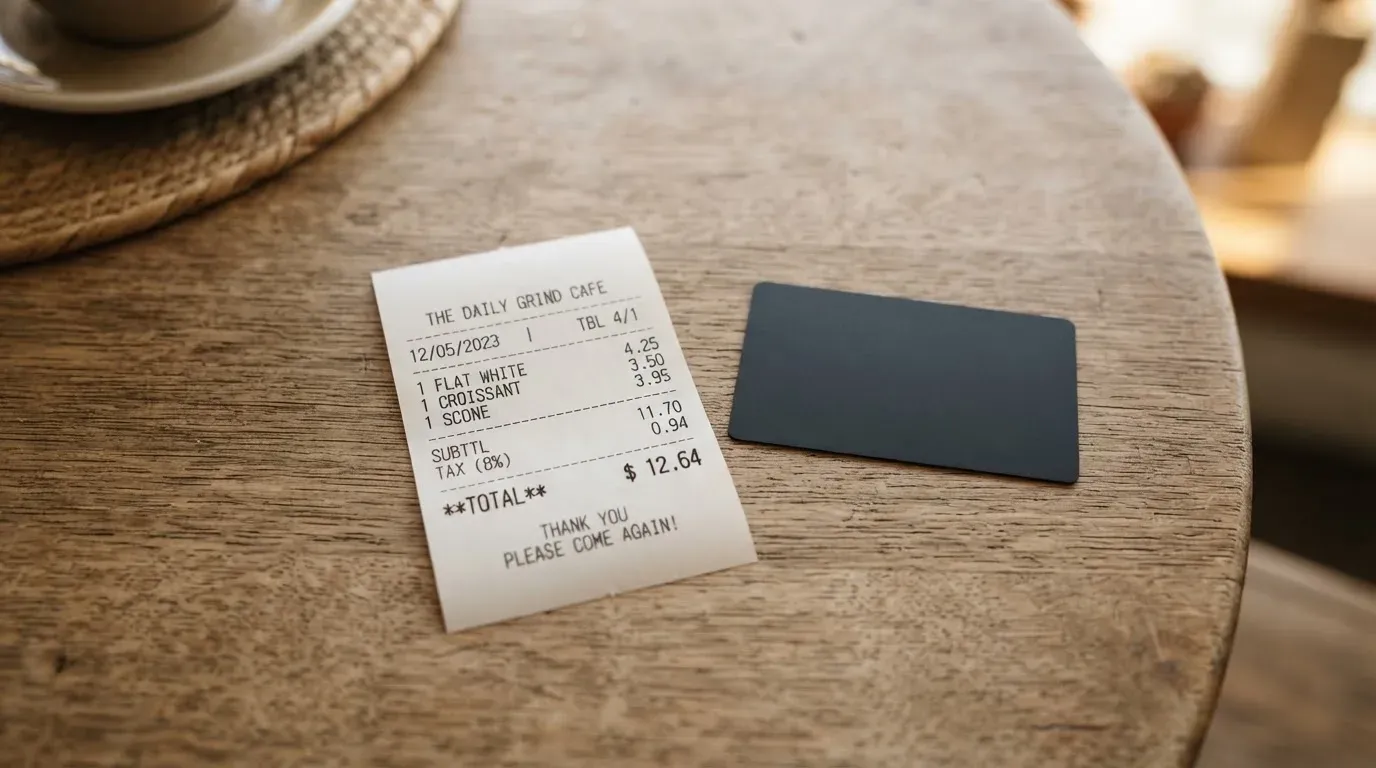
Here is every cost and limit the card’s own pages state, with the honest gaps marked.
| Fee or limit | What the card states |
|---|---|
| Monthly fee | 0 — “0 monthly fees, 0 annual fees” |
| Annual fee | 0 — “0 annual fees”; one unclear FAQ line about “no annual fee in the 0th year” |
| Micro-transaction fee | None — the card says there are no micro-transaction fees |
| Issuance / card-opening fee | Not stated officially |
| Cross-border transaction fee | 0% — “0% cross-border transaction fees” |
| Crypto conversion fee / spread | Not stated |
| FX (foreign exchange) fee | Not disclosed |
| ATM cash withdrawal fee | Mentioned as possible (“cash withdrawals”) but no fee or allowance stated |
| Daily limit | 100,000 HKD, with a minimum single transaction of 0.1 HKD |
| Monthly limit | Not stated |
| Tiers | A single tier; no account tiers are described |
Three everyday payments, and which fees bite:
- Paying a Hong Kong shop for a small meal. No monthly or annual charge applies. The cross-border fee is 0%, so if the merchant prices in another currency the only plausible cost is the unstated conversion or FX fee. The 0.1 HKD minimum means tiny purchases are permitted.
- Paying an overseas online merchant in a foreign currency. This is the case the card advertises best — 0% cross-border transaction fee. But the card’s own currency is not stated, and how it converts to other currencies is not stated either. So the headline 0% is real, and it sits next to an unpriced conversion step.
- Taking cash out at an ATM. Withdrawal is described as something the card supports, but the fee and the allowance are not stated. A third-party check also found the ATM fee undisclosed and called heavy ATM use a poor fit for this card. That is advice, not a number.
The one thing that is both free and clear is what you pay simply to hold the card: nothing monthly, nothing annually. If your only question is “does keeping this cost me”, the answer is no.
A third-party check adds costs the card does not publish: a virtual card opening fee “as low as 5 USD” (attributed to the site), the app charging 5 USD in June 2026 despite a “limited-time free” banner, a +5 USDT surcharge for ERC-20 deposits with no surcharge on Arbitrum, BNB Chain, Polygon or AVAX C-Chain, and no disclosed FX fee. These are unofficial and not confirmed by the card.
The category rule that helps you keep your expectations straight: on-chain network fees for your deposit are charged by the blockchain, not by the card company. So topping up from your own wallet costs you a network fee regardless of what the card charges.
Top up: how the money gets in
You fund the card with crypto, and the card lists four of them: “recharging with cryptocurrencies such as USDT, USDC, BTC, and ETH”. That is the whole stated menu.
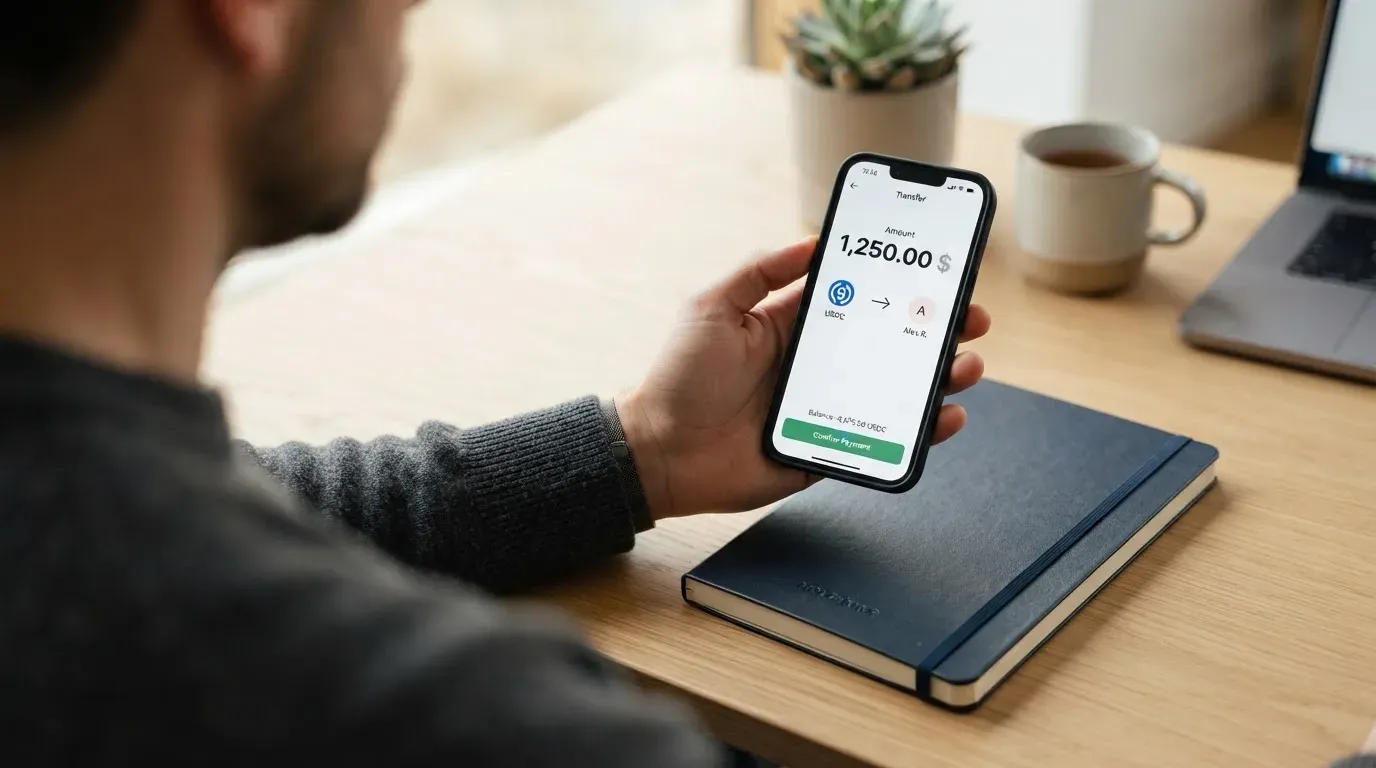
- Which networks to use is not stated on the card’s public pages. A third-party check reports five supported deposit networks — ERC-20, Arbitrum, BNB Chain, Polygon and AVAX C-Chain — and that is not confirmed by the card. This is the single most dangerous gap in this section, and I come back to it below.
- No top-up fee and no minimum are listed. Crypto recharge of the four coins usually credits in about 15 minutes; if it has not arrived after 30 minutes, the card says to contact support.
- Payment platforms are named as alternatives: WeChat, PayPal, Alipay and Wise. For overseas accounts, SWIFT, SEPA and local clearing are listed. Fees are said to be “disclosed before a transaction or published on the Website or a Fees Schedule” — but no amounts appear in the Terms.
- Getting money back out is handled through the website or support, and only if there are no pending transactions or amounts owed. Remaining funds are returned after AML/CTF checks. The fee for withdrawing the balance to crypto or to a bank is not stated.
Here is why the network question matters more than it sounds. A stablecoin is not a single thing; the same token exists on many blockchains. If you send USDT on a network the provider does not support, or to an address belonging to a different network, the transfer can be lost or need manual recovery with no guarantee — blockchain transfers are irreversible. The card tells you which coins, but not which rails. That is the gap to close with support before you send anything large, and I would close it before your first meaningful deposit rather than after.
Paying with it every day
In the stores and apps you already use, the card behaves like an ordinary prepaid Visa. It is a Visa, physical and virtual, and it draws on a balance you have loaded — so it cannot overdraw. Card payments run over the Visa network, which routes the transaction and sets the rules; the issuer holds the card programme; the crypto brand is usually the front end that markets it.
- Apps. iOS on the Hong Kong App Store, Android on Google Play, an APK download, and a web login. The App Store HK listing shows 3.9 out of 5 from 15 ratings.
- Cash. Withdrawal is mentioned as supported.
- Rewards. The card says only “generous rewards” — rate, currency and conditions are not stated. A third-party check reports 3% cashback on a first purchase as a time-limited banner, not confirmed by the card.
- Wallet linking is not stated on the home page or FAQ. A third-party check reports Apple Pay is not supported, with users saying “this card is not supported” when adding to Apple Wallet, and Steam also not working. Not confirmed by the card.
If you do get this card, the everyday friction is not the swipe, it is the edges: whether a given merchant accepts a prepaid or foreign-issued card, whether 3-D Secure challenges you at checkout, and whether a declined payment leaves a short-lived hold on your balance. None of that is PokePay-specific; it is how prepaid and cross-border cards behave in general.
What can go wrong
This is the section I would not skip. The card’s stated protections are reasonable; the gaps around them are the point.
- Your money is held custodially, and it is not a bank deposit. The card says funds are held separately from operating funds, that they are “not deposits”, and that they are not insured by CDIC or any deposit insurance scheme. It claims 24/7 monitoring, custody through partner banks, transaction monitoring, AML screening and encryption. This is the standard custodial arrangement: you are trusting the provider, not holding the keys yourself.
- The account can be frozen. The card may suspend or freeze the account and the balance without prior notice in listed circumstances. Closing an account requires no pending transactions and returns funds only after AML/CTF checks.
- The issuing bank is not named. The copyright notice names PokePay Technology Co., Ltd. Licences are listed for Hong Kong, the United States, Canada, Ontario and Poland, but the bank actually behind the card is not identified on the public pages.
- The licences are self-declared. The site declares registrations including FINTRAC (Canada), Ontario MSB, Poland VASP and Hong Kong; FINTRAC itself says a registration is not an endorsement. A third-party check reports a wave of suspensions in the second half of 2025, with the company saying funds would be returned within about 10 business days. That report is from a single secondary source and is unverified.
- Card security details. The card locks after repeated wrong CVV or expiry entries, or three wrong PIN entries, and customer service unlocks it after verifying you. Multi-factor authentication is recommended, not required.
- Refunds and disputes take real time. Typical refund windows the card lists: 3–7 working days for normal merchants; 7–14 for airlines, hotels and travel agencies; 3–10 for online payment platforms; 7–30 for cross-border; and 30–90 days for chargebacks. Complaints go to a designated contact, and Canadian law governs.
- The complaint record is thin but real. The Trustpilot page found is for pokeapay.com, possibly a different entity, with 2.8 out of 5 from only 3 reviews; there is no pokepay.com page there. One 1-star review calls the app “fake” and says verification passed without showing the full face. A third-party check found slow support response to be the most consistent complaint.
Two background facts sharpen all of this. Custodial platforms have a track record of failure — Mt. Gox, Coincheck and Ronin Network together account for billions in reported losses — so holding funds with a custodian carries counterparty and hack risk that no amount of in-app security removes. And because stablecoins can lose their peg (TerraUSD collapsed in May 2022; USDC wobbled in March 2023), the “fiat” balance you spend is not the same as cash.
What to take instead
If PokePay does not fit — because of where you live, or because the undisclosed costs bother you — these are the alternatives I compared it against, and how each scores.
| Card | Score | Strength | Watch-out |
|---|---|---|---|
| International Visa Card | 6.7 / 10 | US-issued Platinum Visa, virtual, spends in USD; $5 one-time virtual issuance, no maintenance fee | Excludes residents and registrants of a long list of countries including Russia, Belarus, mainland China, India, Turkey, Ukraine and others; physical card “coming soon”; 2% FX fee plus Visa’s exchange rate |
| UNi Card | 6.1 / 10 | Multicurrency Mastercard-network card spending from a UNi.Global balance; no annual fee, no foreign transaction fee, converts at live OTC rates | Eligibility not stated; physical/virtual not stated; funding not stated |
| Whop Cards | 5.2 / 10 | Visa that works anywhere Visa is accepted; 5% cashback at select merchants (currently Uber) | Consumer availability limited to 31 US states; explicitly unsupported in Hong Kong, mainland China and a long list of others; fees not stated |
A few honest comparisons. The International Visa Card scores highest here mainly because it discloses its costs — a $5 issuance fee and a 2% FX fee are numbers you can plan around, unlike an undisclosed conversion spread. But its country exclusions are strict and its physical card is not yet available. The UNi Card is the cleanest on the cost side, with no annual or foreign transaction fee and live conversion rates, but it publishes almost nothing about who can open one or how you fund it. Whop Cards sits closest to PokePay’s score and is the most explicitly geographically narrow, limited to 31 US states for consumers.
If the reason you are reading about crypto cards is that a normal bank card is hard to get where you are, all four of these are worth a look — but so is checking whether a local e-money or prepaid institution in your own country is the more direct answer.
Who I would recommend it to
I would recommend the PokePay card to one person: someone living in Hong Kong who already holds USDT or USDC, wants to spend it at ordinary merchants, and does not mind that the card’s own pages are aimed squarely at them and at almost nobody else. For that person it is a good deal — no monthly fee, no annual fee, no cross-border transaction fee, and a straightforward stablecoin top-up.
I would not recommend it to a reader who needs the card to work reliably in a country the card does not clearly license, who plans to link it to Apple Pay, or who needs to know exactly what a transaction will cost before they make it. I would be especially careful with a first deposit: confirm the deposit network with support in writing before you send funds, because the card does not publish which networks it accepts and blockchain transfers cannot be reversed.
My honest summary is that the low price of holding this card is well advertised and, as far as it goes, true; the things that decide whether it is *safe and predictable* to hold are the ones the public pages leave blank. Check the network before you top up, read the freeze terms before you need them, and do not treat the balance as an insured bank deposit, because on the card’s own account it is not one.
Frequently asked questions
What is the PokePay card?
PokePay is a prepaid-style Visa card that you fund with cryptocurrency instead of a bank account. You load USDT, USDC, BTC or ETH, the balance is converted, and the card pays merchants like an ordinary Visa — online, in stores, and at ATMs. The card is issued under PokePay Technology Co., Ltd. The app runs on iOS, Android and the web.
Is PokePay a bank?
No — and this distinction matters. PokePay holds your balance as a provider, not as a bank deposit. The card’s own terms say the funds are “not deposits” and are not insured by CDIC or any deposit insurance scheme. It is a payment programme fronted by a technology company, and the issuing bank behind the card is not named on the public pages.
Who can get a PokePay card?
The site’s own notice says it is intended for Hong Kong residents living in Hong Kong. A third-party check says the card is available in “most countries” but that the United States is restricted. Because the site’s language versions differ on this, the safest read is that it is a Hong Kong product and anyone else is on uncertain ground. Confirm your own country with support first.
Does the PokePay card require KYC?
Yes. Identity verification is required before you can use the services, and the data you enter must exactly match your uploaded documents and your passport name. Enhanced checks may later ask about the source of your funds. The card does not publish which specific documents you need, how long it takes, or what the verification levels are.
Is the PokePay card free?
Holding it is free: the card states 0 monthly fees, 0 annual fees, and no micro-transaction fees. Spending is also free of the usual cross-border markup — 0% cross-border transaction fee. But the card-opening fee, the crypto conversion fee, the FX fee, and the ATM withdrawal fee are all either unclear or not stated, so “free to hold” does not mean “free to use”.
How do I top up the PokePay card?
You send USDT, USDC, BTC or ETH to the card, and it usually credits in about 15 minutes. The card does not state which blockchain networks it accepts — that is the part to confirm with support before your first deposit, because a transfer on an unsupported network can be lost. No top-up fee or minimum is listed, though network fees are paid to the blockchain, not the card.
Can I add the PokePay card to Apple Wallet?
Probably not, according to a third-party check, which reports users being told “this card is not supported” when adding it to Apple Wallet, and Steam also not working. The card’s own pages do not address wallet linking at all. If a mobile wallet is important to how you pay, treat this as unsupported until the card confirms otherwise in writing.
Is the PokePay card safe to use?
The card claims 24/7 monitoring, partner-bank custody, AML screening and encryption, and it locks the card after repeated wrong PIN or CVV entries. But your balance is custodial — the provider holds it — and the card itself warns the funds are not a deposit and are not insured. Visa and Mastercard also licence issuers and can suspend a programme. Safety here rests on trust in a provider whose bank is not named.
How do I withdraw money from the PokePay card?
You request a withdrawal through the website or support, and it is processed only when there are no pending transactions or amounts owed. Remaining funds are returned to you after AML/CTF checks pass. The fee for withdrawing to crypto or to a bank account is not stated on the card’s public pages, so ask before you rely on it.
Is the PokePay card worth it?
For a Hong Kong resident spending stablecoins day to day, the value is clear — no monthly or annual fee and no cross-border transaction fee is genuinely better than most. For everyone else it is harder to justify, because eligibility is narrow, the conversion and FX costs are unpublished, and support has drawn complaints about slow responses. Decide based on your own country and how much you would actually spend through it.
Choosing an app or neobank card – cryptocardadvisor
Content created by the «cryptocardadvisor» team