
A Quick Virtual Card Funded With USDT or USDC, but With More Gaps Than Answers
 Available in US
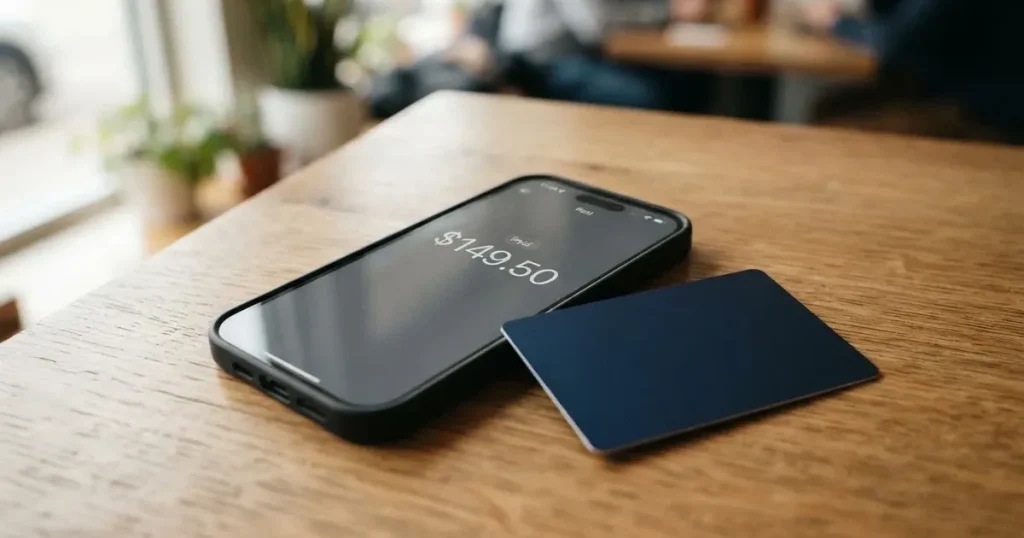
Nero is a virtual payment card you fund with USDT or USDC and spend wherever a card is accepted, including through Apple Pay and Google Pay. On paper that combination is useful for anyone whose local banking is unreliable or who simply wants to keep a stablecoin balance ready to spend. In practice the picture is much thinner than the marketing suggests: the company does not name the card network, the issuing bank, its licences, the supported stablecoin networks, FX markups, ATM fees, or even the list of countries it will and will not serve. The single number that matters most here is the 4.8 out of 10 I land on after working through the facts, and the reason it is not lower is that the proposition itself is straightforward, the launch is recent (25 June 2026) and the funding path is well-trodden. The reason it is not higher is that almost everything you would normally want to confirm before putting real money on a card is either missing or marked “not stated” on the public pages.
This review walks through who the card is for, what it costs, how you actually use it, where the gaps are, and what to consider instead. The conditions described are current as of October 28, 2026.
Verdict
Nero earns a 4.8 out of 10. The score reflects a product that does a few things and says very little about the rest. It is a quick virtual card funded with USDT or USDC, with mobile wallet support for contactless payments. It suits readers who already hold stablecoins, need a card number fast, and are comfortable with a provider that has not published the country list, network, issuer, fees or licences that a more established issuer would put in a help-centre article. It does not suit readers who care about transparent pricing, regulatory clarity, or the kind of dispute rights that come with a regulated bank-issued card.

| Criterion | Mark | Why it gets that mark |
|---|---|---|
| Who can get it | 5 / 10 | Restricted countries are acknowledged to exist but never listed; nothing specific about Russian or Belarusian eligibility on readable pages |
| Cost | 3 / 10 | 4% top-up commission is the only number stated; issuance fee is undisclosed, FX markup is undisclosed, ATM fees are not stated |
| Top-up options | 6 / 10 | USDT or USDC accepted, converted to fiat at payment; supported blockchain networks not confirmed on readable pages |
| Reliability and complaints | 5 / 10 | Nero Sphere LIMITED in Hong Kong is identified; issuer bank and licences are not named; no Trustpilot page or user reports found |
| Everyday use | 6 / 10 | Virtual card with standard number, expiry and CVC; Apple Pay and Google Pay supported for contactless; ATM, MCC blocks and rewards not stated |
Total: 4.8 / 10
Who will they give you the card
Nero’s website says restricted countries exist, but it does not publish a list. That sentence is the entire eligibility section on the readable pages. There is no published country roster, no stated minimum age, no residency requirement and no mention of which citizenships are accepted or refused. Public pages do not specify any statement about Russian or Belarusian applicants, so you should not assume either way; you will likely discover your status only by going through sign-up and seeing what the form accepts or rejects.
For a general reader, that is the most important thing to understand before you spend time on this card. Most regulated issuers publish, at minimum, a country dropdown, a list of unsupported jurisdictions, and a separate note about sanctioned countries. Nero publishes none of those. The press release confirms that registration, top-up and card issuance happen entirely online, with no bank-branch visit, which is helpful, but it does not tell you whether you, in your country, will be the one allowed to complete the journey. Treat “no list” as “you will find out at sign-up,” and have a backup plan in case the answer is no.
How to get it
The signup path is described as fully online. You register on the website, top up the card, and the card is issued, all without visiting a bank branch. The card itself is virtual, with a standard card number, expiry date and CVC, which means you can use it for online checkout, add it to a digital wallet, or share the details where a digital card is accepted. The card network, the card’s base currency, and the type of KYC you will be asked to complete are not stated on the readable pages. There is no description of identity verification steps, no stated document list, and no mention of any tiered verification level. In practice that usually means a basic ID and selfie check at minimum, but the provider has not committed to that on the public pages.
A physical card is not described. If you need a plastic card to hand to a waiter or to insert into a payment terminal, this is not the product for you. If a virtual number plus a phone wallet covers your needs, the sign-up path is short: register, top up, wait minutes for the card, and you are ready to spend.
What it really costs: the fees you can and cannot see
The cost section is where Nero loses the most marks. There is exactly one concrete fee number on the public pages: a 4% top-up commission. The other figures any reasonable reader would expect, including the issuance fee, monthly fee, FX markup, ATM withdrawal fee, daily and monthly limits, conversion fee at payment, and any tiered pricing, are simply not stated.

| Fee or limit | What the card says |
|---|---|
| Issuance fee | One-time fee, amount not stated |
| Monthly fee | Not stated |
| Top-up commission | 4% |
| Conversion to fiat at payment | Happens at the time of payment; rate/fee not stated |
| FX fee | Not stated |
| ATM withdrawal fee | Not stated |
| Daily limit | Not stated |
| Monthly limit | Not stated |
Now let me walk through three everyday payments so you can see where the unknowns actually hurt you.
Paying for a coffee in a local currency you do not hold. You hold USDT on your card, the café is in, say, Thailand, and the terminal charges in Thai baht. The 4% top-up commission already came off when you funded the card. At payment, USDT is converted to fiat and then to baht, and the provider has not published the FX markup on either leg. For a US$5 coffee, the 4% top-up commission is certain, but the provider has not published its FX markup. Any unstated FX fee will add to the cost beyond the top-up commission. You will not see this line on a receipt.
Paying for an online subscription in US dollars. You top up with USDC, your subscription is billed in USD, and the conversion path may be simpler. You still pay the 4% top-up commission on the way in. If the provider converts USDC to USD at a 1:1 with no fee, the only cost is the entry commission. If it charges a spread on that conversion, you do not know the rate until you see it on the card statement.
Withdrawing cash from an ATM. This is the part with the most unknowns. The ATM fee is not stated, the daily and monthly limits are not stated, and the FX on top of any ATM fee is not stated. Until those numbers are public, treat any ATM use as a worst-case scenario: the maximum fee your issuer or network could charge, plus whatever Nero adds. For a card with this much missing information, paying by card and avoiding cash withdrawals is the safer route.
The honest summary: with a 4% top-up commission alone, this is already an expensive way to spend stablecoins compared to cards with lower top-up fees. With the other fees unstated, the total cost of using Nero could be higher than the headline number suggests.
How to top it up
Nero accepts USDT or USDC, and the conversion to fiat happens at the moment of payment, not at the moment of top-up. That is a meaningful design choice: your stablecoins stay as stablecoins until you actually spend, so you are not exposed to a conversion rate that might move against you between funding and spending.
The minimum top-up amount, the network fees you will pay on the blockchain, who pays those fees, and the supported blockchain networks are not confirmed on the readable pages. Circle’s USDC, for example, is natively supported on 38 networks as of 16 September 2026, including Ethereum, Solana, Base, Polygon PoS, Avalanche, Arbitrum and Stellar. Tether’s USDT is issued on networks including Ethereum, Tron, Solana, Polygon and Avalanche. Crypto transfers are irreversible, and a deposit sent on a network Nero does not support, or to an address for a different network, can be lost or sit unrecovered pending manual support. Until Nero publishes the supported networks, do not send funds without confirming the network in your account or with support first.
The 4% top-up commission is the cost of putting money on the card. After funding, the card is issued within minutes. Fiat top-up options (bank transfer, card top-up, Apple Pay cash-in) are not stated, so USDT and USDC are the only funding paths currently listed.
Paying with it every day
The card is a virtual card with a standard number, expiry and CVC, so it works for online checkout, recurring subscriptions, and any place you would type card details into a form. For in-store payments, the card supports Apple Pay and Google Pay, which means you can add it to a phone wallet and pay contactless at any terminal that accepts mobile payments. The card network itself is not named in the readable material, which is unusual for a payment card and means I cannot tell you whether the tokenised wallet experience goes through Visa Secure, Mastercard Identity Check, or another scheme’s flow.
Blocked merchant categories (the MCCs the issuer will refuse) are not stated, so I cannot tell you whether gambling, crypto purchases, or certain subscription types will be declined. The rewards, cashback, or any incentive for spending are not stated either. There is no separate app, and the service is used through the website. Dispute and chargeback processes are not described. If you dispute a transaction, the process is not publicly documented, and that is a real gap for anyone using a card for online purchases where things can go wrong.
The practical takeaway: the card is built for the simple cases, online payments and contactless wallet payments, and it does those quickly. Anything more involved, like cash withdrawals, recurring business expenses, or recovering a disputed charge, is not documented and may not be supported.
What can go wrong
The risks fall into three buckets: what is not said, what is said, and what is implied by the structure.
What is not said is the largest bucket. The issuer bank is not named. The card network is not named. The licences (e-money institution, money services business, CASP, or any other regulatory status) are not named. The country list, supported networks, ATM fees, FX markup, KYC steps and dispute process are all not stated. Each of those is a thing you would normally check before loading a card, and the only way to find most of them out is to start the process and hope the answer is reassuring.
What is said is the company name: Nero Sphere LIMITED, based in Hong Kong, with David Vance listed as Director of Growth on the press release. Hong Kong is a real financial centre, but a Hong Kong incorporation alone is not a regulatory status. A regulated card programme normally shows you the issuing bank, the licence number, and the regulator’s register entry, none of which are present on the readable pages. The launch is recent, 25 June 2026, based on a paid press release, which means the product has not been in users’ hands long enough for a meaningful public track record to develop.
What is implied by the structure is the usual counterparty and custody risk of any custodial product. With a custodial platform, the provider holds the funds (or the keys to the funds) until the moment of payment, which means the user is exposed to the provider’s solvency, security and any decision it makes about withdrawals. The history of custodial failures in crypto is long, and the lesson is that holding funds on a platform always carries a counterparty risk that self-custody does not. Even putting that aside, programme closures do happen: the WaveCrest suspension in 2018 closed every Visa programme WaveCrest issued, and the FTX card was wound down by its issuer after Visa terminated the global agreements in November 2022. If something similar happens to Nero’s programme, users typically get a notice period, then loading stops, then spending stops, then any remaining balance has to be withdrawn, but the timing and terms of any such event are at the provider’s discretion.
Support is handled by staff rather than automated systems, and the press contact is [email protected]. Support languages and hours are not stated, which for a card used in many countries is a meaningful gap, since a cardholder in one time zone may find that the staffed support window falls outside their own day.
What to take instead
Nero is not the only virtual crypto card on the market. Three alternatives, all of which I have also reviewed, sit close to it in different ways. None of them is a perfect substitute, but each fills one of the gaps Nero leaves open.
| Card | Score | What it offers that Nero does not |
|---|---|---|
| Cardex | 5.6 / 10 | A crypto card on Verve, Visa, Mastercard and UnionPay networks, accepted in 200+ countries, with real-time crypto-to-fiat conversion that the provider claims uses an AI-scanned best rate |
| CardFlow | 4.9 / 10 | A free virtual USD Mastercard created in about 3 minutes, with funding in Bitcoin, USDT, ETH or Naira bank transfer |
| HyperCard | 4.7 / 10 | A prepaid card in USD or EUR, deposit crypto such as USDT, BTC or ETH in the app, accepted in 176+ countries (per the App Store listing) |
Cardex has the broadest published network coverage of the three, including multiple card networks and a published acceptance country count, but its fees, including the cost of the AI-powered conversion, are not stated, so the same transparency problem appears in a different form. CardFlow’s strongest feature is the “completely free” virtual card creation stated in its FAQ, which removes the unknown issuance fee that hangs over Nero, but its fee structure beyond that is not stated. HyperCard is the simplest: a prepaid USD or EUR card with no App Store fees listed, but again the wider fee picture is not on the page.
If Nero’s missing information is the reason you hesitate, all three alternatives inherit some of that gap, but Cardex at least names the card networks and CardFlow names the funding options more clearly. None of them is a fully regulated bank-issued card, and if that is what you need, a card from a major exchange such as Binance, Crypto.com or Bybit, issued under a published EMI or bank licence, will be a more transparent option at the cost of a longer application.
Who I would recommend it to
I would recommend Nero to a reader who already holds USDT or USDC in a custodial wallet, needs a virtual card number fast, and is happy to send a small test top-up first to confirm the supported network before committing a larger amount. The proposition is small but real: top up, get a card in minutes, spend through Apple Pay or Google Pay, and treat the card as a spending tool rather than a store of value.
I would not recommend it to a reader who needs a physical card, who plans to withdraw cash from ATMs regularly, who wants to know the FX markup in advance, who needs a documented dispute process, or who lives in a country that the card might silently refuse to serve. I would also not recommend it to anyone for whom the issuer’s regulatory status matters. With no named issuer, no named licence, and no published country list, the card asks the user to absorb risks that a regulated product would not.
If the missing information matters to you, start with Cardex (broader network coverage, real-time conversion feature), CardFlow (free virtual card creation, more funding options) or HyperCard (USD or EUR balance, broad acceptance). If regulatory clarity matters more than anything else, look at cards from major exchanges with published EMI or bank licences and published fee schedules. The right card is the one that matches both your funding habit and your tolerance for unknowns, and on that second measure, Nero asks for more tolerance than most.
Frequently asked questions
What is the Nero card?
Nero is a virtual payment card you fund with USDT or USDC and spend wherever a card is accepted, including through Apple Pay and Google Pay for contactless payments. The card is issued by Nero Sphere LIMITED, a Hong Kong company. The card network and the issuing bank are not named on the public pages.
How does the Nero card work?
You register on the website, top up the card with USDT or USDC, and the card is issued within minutes. The card has a standard number, expiry and CVC, so you can use it for online checkout. At the moment of payment, the stablecoin is converted to fiat and the merchant is paid in the merchant’s currency. The supported blockchain networks and the conversion rate are not stated on the readable pages.
Is Nero a bank?
No. Nero is a card programme operated by Nero Sphere LIMITED, a company based in Hong Kong. The press release does not name a bank issuer or any financial-services licence. A Hong Kong incorporation is a corporate registration, not a banking or e-money licence, and the public pages do not show a regulator entry for the card programme.
Who owns Nero?
The company behind the card is Nero Sphere LIMITED, with a Hong Kong dateline on the press release. The press contact is David Vance, listed as Director of Growth. Beneficial ownership beyond the company name is not stated in the readable material.
Is the Nero card available in my country?
Nero’s website says restricted countries exist but does not publish a list. There is no country dropdown, no published exclusions and no statement about specific citizenships. The only way to find out whether you can use the card is to start the sign-up process and see what the form accepts or rejects. The website does not specify any eligibility for Russian or Belarusian citizens in particular.
Does the Nero card require KYC?
The KYC process is not described on the readable pages. The press release says registration, top-up and card issuance are fully online with no bank-branch visit, which suggests a digital ID check, but the documents requested, the verification tiers and the timeline are not stated. Expect a basic identity check at minimum, but do not rely on that until the provider publishes it.
How do I top up the Nero card?
You top up with USDT or USDC. The minimum top-up, the supported blockchain networks, the network fees, and who pays those fees are not confirmed on the readable pages. The card is issued within minutes of funding. Fiat top-up options such as bank transfer or card top-up are not described, so stablecoin is the only funding path currently listed.
How do I add the Nero card to Apple Wallet?
The provider confirms that Apple Pay and Google Pay are supported, which means you can add the card to a phone wallet. The card number, expiry and CVC are standard, so the usual “add card” flow in the wallet app should work. The specific tokenisation flow and the 3-D Secure experience are not described in the public material.
Is the Nero card safe?
Safety depends on what you mean. The card uses standard virtual card security: a card number, expiry and CVC, plus tokenised mobile wallet support. The provider’s regulatory status, dispute process, security disclosures and track record are not stated, and the product launched on 25 June 2026, so there is no long public history to draw on. Treat it as a spending tool for small amounts, and keep larger balances in a wallet you control.
Is the Nero card worth it?
The honest answer depends on what you already have. If you hold USDT or USDC and need a virtual card number quickly, and you are comfortable with a 4% top-up commission and several unstated fees, Nero does the basic job. If transparent pricing, regulatory clarity, ATM access, or a physical card matters to you, one of the alternatives in the comparison section, or a card from a major exchange, will fit better.
Choosing a virtual card – cryptocardadvisor
Content created by the «cryptocardadvisor» team