
The MSX card in plain words: a Visa you spend from a crypto balance
 Available in US
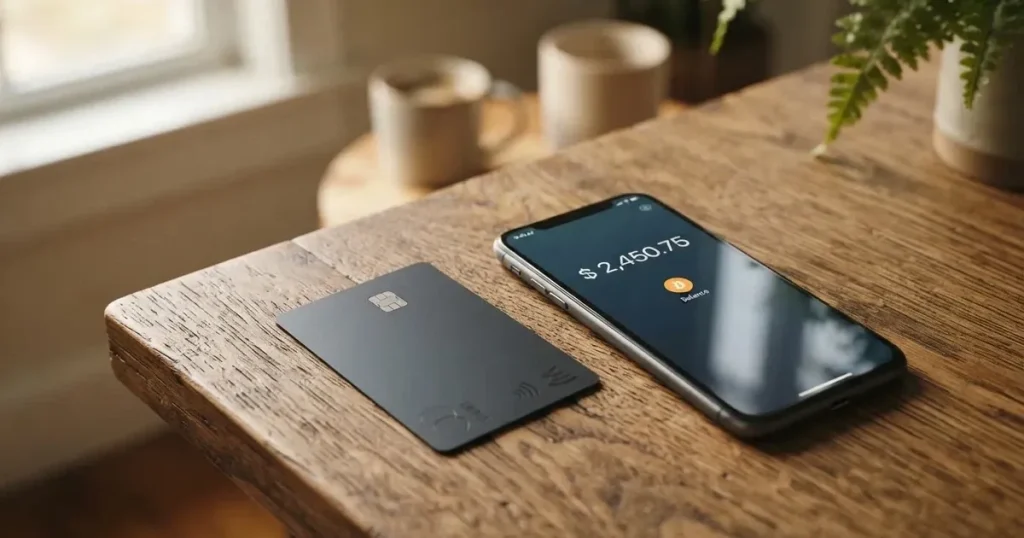
The MSX card is a Visa-branded payment card that spends the crypto you hold on the MSX platform rather than money in a bank account. On paper that is a neat fit for one specific person: you already use MSX, you hold stablecoins there, and what you want is an ordinary-looking Visa to pay with in shops and online. For that person it probably does what it claims. For anyone else — and especially for someone reading this because an ordinary bank card is proving hard to get — the picture is thinner than the launch coverage suggests.
I gave it 6.4 out of 10. That is a mid-range score, not a warning and not an endorsement. It reflects a card that is young, real in the ways that matter, and quiet on the things you would need in order to decide with confidence. Most of what you can read about the MSX card right now comes from launch coverage rather than from the company’s own pages, and I have kept those two things apart throughout this review.
Who it suits: existing MSX platform users who want a Visa card for their crypto, who are comfortable holding funds on a custodial platform, and who are not bothered that the card’s fee schedule after the promotional period is not published. Who it does not suit: anyone who needs a bank account equivalent, anyone shopping for reward rates or a long fee table, anyone in a restricted jurisdiction who would rather read the terms than guess, and anyone whose priority is having their money reachable through a familiar deposit-guarantee scheme.
Conditions are current as of October 28, 2026
The score, and who it is for
The score is 6.4 / 10. I will not soften it and I will not explain it away, because a number you cannot interrogate is worse than no number. So here it is, criterion by criterion, with my reasoning in plain words.

| Criterion | Mark | Why |
|---|---|---|
| Who can get it | 8 / 10 | Broad on paper — global, with ATMs in several countries and regions, excluding Mainland China and OFAC-sanctioned areas; starting data adds the platform terms also exclude US, Canada and Hong Kong |
| Cost | 7 / 10 | Zero annual fee, zero top-up, zero payments during the promotional period; what it costs afterwards is not disclosed, and no FX fee is named |
| Top-up options | 5 / 10 | Spending draws on crypto held on the MSX platform; top-up is described as stablecoins (USDT, USDC) from the MSX account, with the coins and networks not spelled out |
| Reliability and complaints | 5 / 10 | Launched by MSX (Maitong), a tokenization platform with MSB registrations in FinCEN and Canada; the issuer is not named; I found no complaints either way |
| Everyday use | 6 / 10 | Physical Visa card for online and offline, contactless via Google Pay, ATMs in several countries and regions; Apple Pay is not disclosed |
| Total | 6.4 / 10 | A usable card for the right user, an opaque one for everyone else |
The single highest mark, “who can get it” at 8, is also the one I trust least, and I want to be honest about why. The reach is described as global, which is flattering, but it rests on third-party launch coverage rather than on a terms page I could read. The start data also flags that the platform’s own terms exclude the US, Canada and Hong Kong. So the picture is: open almost everywhere, closed in a few large places, and not clearly written down anywhere official. That combination is normal for a young platform and it is also exactly the combination that produces a bad afternoon for someone who assumed they were eligible.
The lowest marks — top-up options and reliability — are where a card like this has to earn trust, because that is where your money actually sits. Five out of ten on both. Not because anything bad has happened; because the information a careful person would want simply is not published.
The audience the card is built for is narrow and specific: MSX platform users who want a Visa card for their crypto. If that is you, several of the marks above stop being drawbacks and become irrelevant. If you are here because you need a card rather than because you were already on MSX, you are reading the wrong card’s review, and I would say so plainly.
Will they give you the card
The short answer: the card’s own public pages, as far as I could read them, do not set out who is eligible. That is not stated on an official page I could find, and I am not going to dress that up as a yes.
What is described is a broad, permissive reach. The unofficial picture, from launch coverage rather than the card, is global, with ATM withdrawals in several countries and regions, excluding Mainland China and OFAC-sanctioned areas. Starting data adds that the MSX platform’s own terms also exclude the US, Canada and Hong Kong. Three large, well-lit markets on top of the sanctioned list.
So how should you read that? As “open to a wide range of people, with named exclusions, none of which is published on a page you are pointed to.” If you live somewhere on that exclusion list, do not spend an evening filling in an application to find out. Check the platform’s terms yourself before you begin.
Two more things you will not find written down, and both matter more than the geography. The first is KYC. The card’s pages do not state what identity checks apply to the card. The unofficial line, which is MSX speaking about the platform rather than the card, is that it operates under applicable KYC, AML and transaction-monitoring requirements — which is the sort of sentence that tells you a system exists without telling you what you will be asked for. No card-specific steps, no list of documents, no age.
The second is the card form itself. Not stated officially. Unofficial coverage describes a physical card on the Visa network, usable online and in stores; one source does not even say whether it is virtual or physical. The currency the card is denominated in is not stated.
For a general picture of why these things vary, it helps to know how eligibility actually works in this category. Anti-money-laundering rules require regulated businesses to verify customers and assess risk as part of law, with ongoing monitoring and reporting of suspicious activity. In the EU, customer due diligence covers name, address, date of birth, nationality and identity documentation, a sanctions check, the purpose of the relationship, and whether you are a politically exposed person. In the US the customer identification programme requires name, date of birth, address and an identification number. And nationality is screened separately from residence, because sanctions screening and issuer risk policy apply to citizenship and country of birth, not just to your address. That separation is precisely why “global” and “excludes the US” can both be true at once.
None of that tells you what MSX will ask of you. It tells you that a real application somewhere behind this card involves a document check, and that where you were born may matter more than where you live.
How to get it
Here I have to disappoint you: the card’s public pages do not lay out an application. Not the steps, not the documents, not the eligibility form, not the age. Not stated.
That is the honest position, and for someone who has been turned away by a conventional bank it is an uncomfortable one. You cannot sit down with a checklist, because there is no checklist published. What you can do is this. Approach the platform rather than the card. The card appears to live inside the MSX platform, which is the part that has a public presence, a company story and, in the unofficial account, registrations with FinCEN in the US and in Canada. Whatever the onboarding flow is, it is very likely the platform’s, and the platform’s terms are the document that will actually tell you whether you are in scope.
Expect an identity check. That is not speculation dressed as fact; it is what the platform says it does, in general terms. It means you should have whatever a routine KYC check normally needs to hand — the same name as your documents, an address you can evidence, and a document you are willing to photograph — even though MSX has not published which ones.
And be honest about what you are signing up for. This is not a bank account. It is a card attached to a tokenization platform that holds your crypto. The company behind it is described in unofficial coverage as MSX (Maitong), a real-world-asset tokenization platform with money-services-business registrations with FinCEN and in Canada; starting data names Mystonks Holding LTD. The card issuer is not named. None of that is disqualifying, and I want to be careful not to make it sound that way — plenty of legitimate programmes look like this. But it does mean you are trusting a chain of parties you cannot fully name, and you should decide whether that is acceptable before you move funds rather than after.
One practical upside if you get that far: the card is described as physical, on the Visa network, usable both online and in stores. There is a virtual card in the app, but it is not described, so I cannot tell you its number, format, or whether it behaves differently at a merchant that checks card types.
What it really costs
This is the section where I would ordinarily tell you the price and the running costs. Here the card’s own pages do not disclose the schedule. Not stated. What exists is a promotional period described in unofficial coverage, and a set of numbers that stop where the promo stops.
I want to walk you through the cost picture the way you would meet it, because the shape matters more than the individual numbers.
| Fee or limit | What is described | Source status |
|---|---|---|
| Annual fee | 0 | Unofficial, promotional period |
| Top-up fee | 0 | Unofficial, promotional period |
| Payment fee | 0 | Unofficial, promotional period |
| Fees after the promotional period | Not disclosed | Not stated |
| FX / currency conversion fee | Not named | Not stated |
| ATM withdrawal fee | Not stated; ATMs available in several countries and regions | Not stated |
| Monthly spending limit | Up to $1,000,000 | Unofficial |
Two everyday payments, so the point is concrete rather than abstract.
Paying for a coffee in a shop, in your local currency, on a crypto-funded card. What applies is the payment fee — described as zero during the promotional period — plus whatever the currency conversion costs. And here is the gap: no FX fee is named. In this category that is the number that decides whether a card is cheap or expensive, because paying in a currency other than your own means someone converts something at a rate that is never the mid-market rate, and that difference is a fee even when it is not labelled one. For MSX I cannot tell you what it is, and neither, apparently, can the published material.
Paying for something online, in a different currency from the one your crypto is denominated in. Same story: the payment fee is the only number described, and the FX fee is the number that will decide your actual cost.
Paying in a currency that matches what you hold. Here the picture is at its clearest: payment fee zero during the promo, and if the conversion happens at a rate the platform does not disclose, that is a cost you have accepted rather than one you can price.
The monthly spending limit, described in unofficial coverage as up to $1,000,000, tells you the platform is not designing this for small purchases only. It also tells you almost nothing about the floor — whether small payments are allowed, whether there is a per-transaction minimum, and whether that limit is user-adjustable are all not stated.
Two questions a careful person asks that I cannot answer from published material: what does a card cost after the promotional period, and what is the FX fee. Both are not stated. Both are the difference between a free card and an expensive one. Treat “free” as a promotional fact with an end date, not as a property of the card.
How to Top up
The heading says top up because that is what you will search for, but let me be straight: the mechanics of funding this card are the least documented part of it, and that is why it scores 5 out of 10 on top-up options.
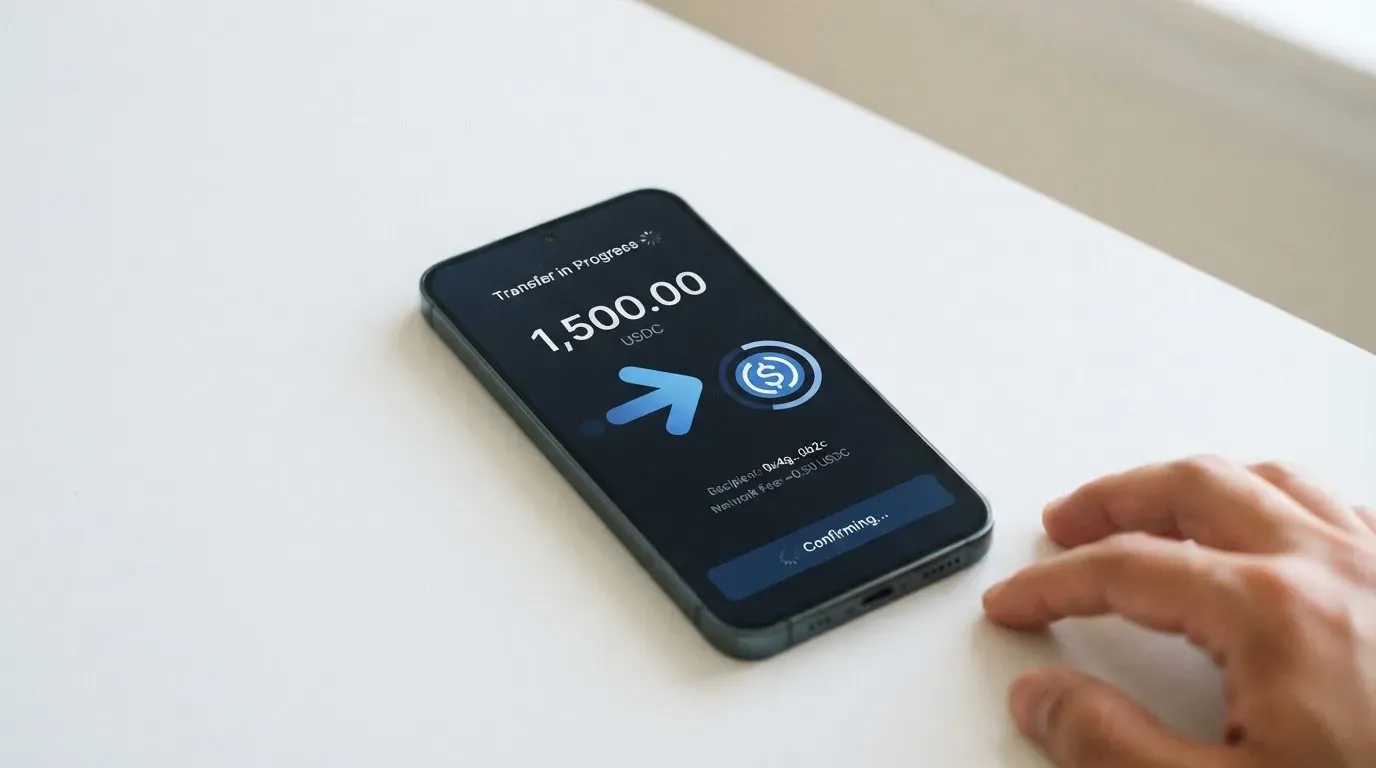
What is described, unofficial, is that spending draws on crypto assets held on the MSX platform. The card does not hold its own balance that you preload in the ordinary way; it spends from what is already there. Starting data describes top-up as stablecoins — USDT and USDC — from the MSX account, converted at the point of sale.
So the flow, as far as it can be reconstructed, is: you hold or acquire crypto on MSX, you pay with the card, and the crypto is converted at the moment of sale. That is a spend-from-balance model, which has one genuine advantage and one genuine drawback.
The advantage is that you are never exposed to a card balance that runs dry mid-month in a way you cannot see; what you hold is what you can spend.
The drawback is that every payment involves a conversion, and the rate, the spread and any fee attached to it are not published. In a category where the conversion rate is the real cost of the card, that is not a rounding detail. It is the main number.
What is not stated anywhere I could find: the coins and networks supported for top-up, whether a transfer must go to a specific address on a specific network, how long a top-up takes, and how you withdraw money from MSX back out. Those four gaps are what make this a 5 rather than a 7. Topping up a card should be the boring, predictable part of using it, and here it is the part with the least daylight.
If you are going to try it, the ordinary principle applies: send a small test amount first, on a network the platform has confirmed it supports, before you move anything you would miss. That is not a trick or a workaround; it is just how you avoid an irreversible transfer to an address that does not exist.
Paying with it every day
Here the card sounds most like the card you already use, which is genuinely its point.
The physical card sits on the Visa network and works online and in stores. Contactless payments work through Google Pay. ATMs are available in several countries and regions, excluding Mainland China and OFAC-sanctioned areas. That is the everyday-use picture: a card you tap, a card you insert, a card you use for a subscription. It is a normal card in almost every respect except where the money behind it comes from.
What is not disclosed: whether Apple Pay is supported, whether any merchant categories are blocked, and how disputes work if a payment goes wrong. The last of those is the one I would want answered. A declined payment on a crypto-funded card can leave a hold on your funds for several days — sometimes up to seven — and if your balance is denominated in a token, a hold is a hold on something whose price moves while it sits there. Whether MSX releases holds promptly on a crypto balance is not something the published material addresses.
On rewards: there is no cashback or reward programme described. What cardholders reportedly get instead is exclusive subscription rights to MSX pre-IPO offerings. That is not a rebate on your groceries; it is access to a private allocation, which is worth something only if you were going to invest in MSX anyway and have a reason to believe you cannot get in otherwise. I would not count it as a benefit in your arithmetic.
The wider category helps explain why “it is a Visa card” is not the same as “every shop will take it”. A merchant category code classifies a business by what it sells, and some codes — gambling, for instance — are blocked by issuers as a matter of policy rather than law, with the list differing by issuer. Address verification, which checks the billing address you type against issuer records, is mostly a US, Canada and UK thing and is generally unavailable for foreign-issued cards, which can cause declines. And because a merchant can look up the issuing institution and country from the card’s first digits and apply extra scrutiny when that country differs from your billing address, a card issued in one country can look foreign to a shop in another. That is not a defect specific to MSX. It is the quiet tax on every card issued outside your home market, and it is the reason “Visa” is necessary but not sufficient.
So: paying with this card day to day should feel ordinary. The friction, where it appears, will come from conversion costs you cannot see and from the handful of merchants that treat foreign or prepaid cards differently — not from the tap itself.
What can go wrong
Let me separate what I found from what I did not find, because in this category a clean search result is not the same as a safe product.
On incidents and complaints: I found no official incidents, and no user complaints. That is a genuinely mixed finding. It means no red flags — but it also means the card is too young to have a complaint history, and the search I ran turned up launch coverage and promotional material rather than independent user reports. There is no Trustpilot page and no Reddit thread I could locate. An absence of complaints from a product that has existed for months is not a safety certificate; it is mostly a statement about how new it is.
The company’s public post is that MSX was launched by MSX (Maitong), described as a real-world-asset tokenization platform holding MSB registrations with FinCEN in the US and in Canada, with Mystonks Holding LTD named in starting data. The card issuer is not named. Registrations are not the same as a card licence, and an unnamed issuer is not a red flag on its own — plenty of programmes run through a partner bank — but it does mean one link in the chain is invisible to you.
Security features are not stated: whether there is app-based two-factor authentication, an instant card freeze, spending controls, or 3-D Secure confirmation on online payments. Support is not stated: no published channel, no published hours. If you are locked out of an account, I cannot tell you from public material who you would be talking to or how fast they would answer.
There is a date worth knowing. Unofficial coverage places the announcement of the X Card on 4 June 2026. Whatever the current date, that tells you how young this is.
Now the risks that come from the category itself, which apply here as they do to any crypto-funded card.
- Your money sits with a platform, not in your pocket. Control of crypto belongs to whoever holds the private key. Custodial platforms have a real history of failure — Mt. Gox, Coincheck, Ronin Network among them — and a stolen key has no recovery path, because blockchain transfers are irreversible and the network cannot freeze or return funds.
- Programmes can be closed. Card programmes run through networks and issuers who can end them. Visa terminated its agreements with FTX in November 2022 and the card was wound down. A Visa-issued crypto programme, WaveCrest, was suspended by Visa in Europe in 2018, closing all its programmes. Closures typically mean a notice period, then spending and loading stop, then you are asked to withdraw what is left.
- A stablecoin is not a dollar. Stablecoins aim to hold a steady value but can depeg — TerraUSD collapsed, USDC wobbled during the 2023 banking crisis. If your balance is a token, its value is not the value on the screen.
- Transfers are one-way. A deposit sent on the wrong network, or to an address of another network, can be lost or need manual recovery with no guarantee. Network fees for your deposit are charged by the blockchain, not by the card.
- Blocked categories exist. Some merchant codes are blocked by policy. Gambling is the classic one. Whether MSX blocks anything is not stated.
None of these is an argument against the card. They are the ordinary conditions of holding value on someone else’s platform, and you accept them knowingly or you do not use this kind of card at all.
What to take instead
If you read the sections above and concluded that MSX’s opacity is a problem rather than an interesting footnote, you are not short of alternatives. Here are three, and I have kept their scores next to MSX’s 6.4 so you can see where each one lands.
| Card | Score | Who it is for |
|---|---|---|
| MSX | 6.4 / 10 | Existing MSX platform users who want a Visa card for their crypto |
| Bybit Card | 6.0 / 10 | Users in a long list of named regions who want a Mastercard or Visa with published fees and tiered cashback |
| Coinbase Card | 6.4 / 10 | US residents only, who want a Visa prepaid debit spending cash or crypto |
| Young Card | 5.7 / 10 | Users who value token-paid cashback over published card terms |
Bybit Card is the one to look at if documentation is your priority. Its fees are published region by region: a crypto conversion fee, an FX fee on top of the network rate, and in some countries an international fee on purchases made outside it. Its cashback is tiered and specific — Base 2.00% up to a 5 USD monthly cap, rising through Beta, Alpha, Apex, Omega to Infinite at 10% and a 600 USD cap — with a welcome offer of 10% cashback up to 110 USDT in the first thirty days. It is available across a long list of regions, and its help centre is explicit that the product is not meant for European Economic Area customers and that all EEA participation is strictly prohibited. The card currency depends on the country of your identity verification. It draws on a funding account rather than holding its own balance, converting crypto when fiat runs short. Its score is 6.0, a shade below MSX’s, but for someone who wants to read the fee table before signing up, that is the better trade.
Coinbase Card scores the same 6.4 as MSX but for a much narrower population: it is available in all US states except Hawaii, following US identity rules, and nowhere else. In exchange it is unusually plain about the basics — a Visa prepaid debit card, virtual or physical, spending cash or crypto, with zero spending fees and no annual fees, and all crypto converted to US dollars for purchases and ATM withdrawals. It also offers optional crypto rewards on every purchase, US users only, at a variable rate shown in the app. If you are in the US, this is a comparison worth making; if you are not, it is not an option.
Young Card scores 5.7. Its cashback is paid in YNG tokens at a rate set by club tier — 0.1% at Essential, 1.8% at Gold, 3.6% at Platinum, with Bronze and Silver not stated. A reward paid in the platform’s own token is a different proposition from a reward paid in dollars, and you should price it that way.
One thing none of these changes: if your real problem is that no ordinary bank will give you a card, none of these is a bank. All of them are payment instruments attached to a crypto platform, with the same category risks — custodial holdings, irreversible transfers, depegging risk, and programmes that can be wound down. The difference between them is how much they publish and how many jurisdictions they serve.
Who I would recommend it to
I would recommend the MSX card to one person in particular: you already hold crypto on MSX, you mostly spend in a currency close to what you hold, you want the payments to look ordinary rather than look like a crypto transaction, and you are content to accept a fee schedule you cannot read in full in exchange for not having to move money between a bank and an exchange every time you buy something.
If that is you, the card does a real job. It is a Visa, it works in stores and online, it taps, and it spends what you already have. The promotional zero-fee period is genuinely attractive while it lasts. Just treat the promotional period as the thing you are buying, not the card.
I would not recommend it if any of these are true. You need your money to sit somewhere with deposit protection. You are in the US, Canada, Hong Kong, Mainland China or a sanctioned region, or you are elsewhere and cannot find the exclusion list in writing. You plan to run the card through Apple Pay, and silence on that is not good enough for you. You need to know your FX rate before you tap, not after. You need a dispute process and a support channel you can find without an account. Or you are choosing a card because conventional banks have turned you down, and what you actually need is a second route to a bank account rather than a second way to spend crypto.
And I would not recommend it on the strength of a launch, however good the coverage. The card was announced on 4 June 2026, the issuer is not named in public material, and I found no independent user reports at all. There is no complaints history to reassure you, and there is no complaints history to warn you. Those are different things, and only one of them is evidence.
If you want the same function with published fees, Bybit’s card in a supported region gives you a fee table you can actually budget from, and Coinbase’s gives you a plain, well-documented card inside the US. Compare those before you commit, and read the terms yourself rather than taking mine or anyone’s else as final.
Frequently asked questions
What is the MSX card?
The MSX card is a Visa payment card that spends crypto held on the MSX platform. It is issued on the Visa network and is described as usable online and in stores, with contactless payments through Google Pay. Rather than holding a prepaid balance, it draws on crypto already on the platform and converts at the point of sale. It is a payment instrument attached to a crypto platform, not a bank account.
Is MSX a bank?
No. MSX is described in unofficial coverage as a real-world-asset tokenization platform launched as MSX (Maitong), holding money-services-business registrations with FinCEN in the US and in Canada, with Mystonks Holding LTD named in starting data. Registrations of that kind are not a banking licence, and the card issuer is not named in public material. Money on the platform is not a bank deposit.
Who owns MSX?
The company’s public account is that MSX was launched by MSX (Maitong), a tokenization platform. Starting data names Mystonks Holding LTD as a related entity. Neither the official structure nor the card issuer is spelled out on a page I could read, so I would not present any single answer as confirmed. Check the platform’s own terms for the current legal entity.
Is the MSX card free?
During a promotional period, yes — unofficial coverage describes zero annual fees, zero top-up fees and zero payment fees. What the fees become after that period is not disclosed, and no FX fee is named at all. So the honest answer is that the card is free for now, at a price that has not been published. Do not budget on the zero lasting.
Does the MSX card require KYC?
The card’s public pages do not state what identity checks apply to the card. MSX says the platform operates under applicable KYC, AML and transaction-monitoring requirements, but no card-specific steps, documents or minimum age are given. Expect a document check in practice, because that is what the platform describes, but bring the same name and address as your documents.
Where can I use the MSX card?
In stores and online anywhere Visa is accepted, in principle — the card is described as global, with ATM withdrawals in several countries and regions, excluding Mainland China and OFAC-sanctioned areas. Starting data adds that the platform’s terms also exclude the US, Canada and Hong Kong. Foreign-issued cards can be declined by some merchants, and blocked merchant categories are not disclosed.
Can I use the MSX card in my country?
Probably, but check before you rely on it. The reach is described as global with the exclusions above, yet the official terms are not published in a form I could read. If your country is the US, Canada, Hong Kong or a sanctioned region, the published signal is no. Anywhere else, look for the exclusion list in the platform’s own terms before you move any money.
How do I top up the MSX card?
Top-up is described as stablecoins — USDT and USDC — from your MSX account, and spending draws on crypto already held on the platform. The coins, networks, addresses and timing are not disclosed, so send a small test on a network the platform confirms it supports first. Blockchain transfers are irreversible, and a transfer to the wrong network or address can be lost.
Is the MSX card safe?
There is no evidence of a problem and no evidence of reassurance. I found no official incidents and no user complaints, but the card was announced on 4 June 2026, so there has been little time for either. Security features, dispute handling and support channels are not stated. Your crypto sits with a platform, which carries the usual counterparty and hack risk.
Is the MSX card worth it?
For someone already on MSX who wants a Visa for crypto spending, possibly — the promotional zero fees and global reach are real benefits. For anyone choosing a card on published terms, the missing FX fee, the undisclosed post-promotional pricing and the unnamed issuer make it hard to justify. Compare Bybit’s card in a supported region or Coinbase’s in the US, where the fee tables are public, before you commit.
Choosing an exchange card – cryptocardadvisor
Content created by the «cryptocardadvisor» team