
MPay in plain sight, and behind the fine print
 Available in US

If you are the kind of person who cannot get an ordinary bank card — because your bank will not open one, because your country restricts them, because your documents sit in a drawer somewhere, or simply because the nearest branch is a day’s bus ride away — then a crypto-funded Visa number is not a hobby, it is infrastructure. MPay is one of the newer names in that space, and on paper it ticks the boxes: a virtual Visa card available now, funded with USDT from several chains, with a physical card promised. I went through the company’s own public pages carefully to see what is actually documented, and what is simply absent.
Here is the short version: the product is real and small, the promises are broad, and the disclosure is thin. MPay does not publish its card fees, its conversion terms, its limits, its currency, its identity checks, or the legal entity behind it. What it does publish is a four-tier price list, a network claim, and a slogan about zero limits. My score is 5.5 out of 10, and most of the reason sits in that gap between what a card needs to tell you and what this one doesn’t.
The conditions described here are current as of October 28, 2026.
The verdict: 5.5 out of 10
| Criterion | Mark | Why |
|---|---|---|
| Who can get it | 7 / 10 | “Available in most regions worldwide”, with details depending on jurisdiction; no country list |
| Cost | 5 / 10 | Issuance and servicing fees are not disclosed; plans Standard $0, Plus $3.99, Premium $7.99, Metal $14.99 monthly are listed but not tied to the card; fees not disclosed |
| Top-up options | 6 / 10 | USDT only, on Ethereum, BNB Chain, Solana and TON; USDC and other coins are planned |
| Reliability and complaints | 5 / 10 | “Backed by VISA & Invested by Mason Labs”; legal entity, issuer and licences unnamed; no complaints found |
| Everyday use | 4 / 10 | Virtual Visa only; physical card “Coming Soon”; Apple Pay, Google Pay and ATM access not disclosed |
| Total | 5.5 / 10 |
MPay’s audience, as the site frames it, is online payments with a virtual card topped up in USDT. That is a coherent, useful niche. If that is exactly your situation — you hold stablecoins, you buy things online, you want a card number that behaves like a Visa — then the concept fits and the app being a Telegram bot with a web app at app.mpay.cards is a low-friction way to start. The four plan tiers, a name on the plan list that includes a Metal option, an investment announcement in December 2025: this is a team that is trying to look like a real financial product, not a weekend script.
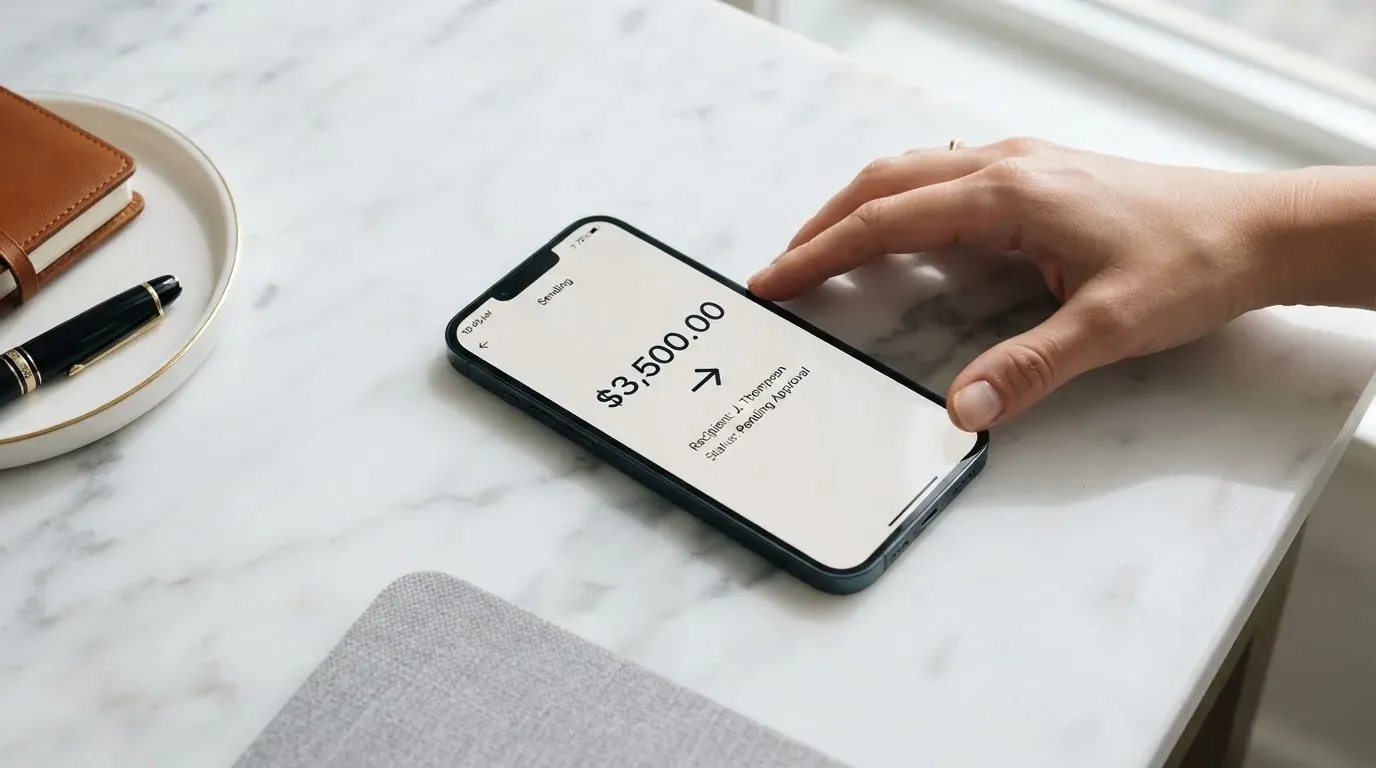
But here is what decides the score for me. A card is a promise that money will be converted at a stated rate, charged a stated fee, and backed by someone you can name when it goes wrong. MPay currently promises none of that in public. I could not find what a payment costs. I could not find what the daily or monthly ceiling is. I could not find the currency the card holds. I could not find whether there is a document check before you can load funds — the site does not say so either way, which is different from saying there isn’t one. A company that publishes “ZERO LIMITS” in its hero text and then no numbers anywhere is not reassuring me; it is making me do arithmetic I cannot do.
Who it suits: people who already hold USDT, who shop online rather than in physical stores, who can accept that they are trusting a small operator with an unnamed issuer, and who will test with small amounts before committing. Who it does not suit: anyone who needs a physical card today, who needs a bank branch relationship or a deposit guarantee behind the balance, who plans large payments, or who needs cash from an ATM. That is not a small audience excluded — it is most of what a card normally does.
Will they give you the card?
The eligibility answer MPay publishes is one sentence: “The MPay Virtual Card is available in most regions worldwide.” Then a caveat that the specifics depend on your jurisdiction. That is honest, and it is also the entire eligibility position. There is no country list, no list of countries where it is refused, no stated minimum age, no residency requirement, and no stated exclusions. For someone who has been turned away elsewhere, “most regions” is encouraging. For someone who needs to know before they commit, it is not enough.
Two things are worth separating here, because they are easy to confuse. Being *offered* the card in your country is one thing; being *able to use it* at merchants abroad is another, and MPay says nothing about the second. The card runs on Visa, so wherever a Visa number is accepted online it will in principle work, but acceptance is not eligibility and eligibility is not approval. The site also does not describe any onboarding branch: there is no stated KYC tier structure, no stated set of documents, no stated review time. Not stated means exactly that — the public pages do not say — and I would rather say it plainly than infer comfort.
If your decision hinges on your specific country, the only reliable move is to read the app’s own on-screen terms at the moment you sign up, and to check the published plan and fee screens in your own jurisdiction. That is not a trick and it is not a way around anything: it is simply the difference between a review of public pages and a review of your account.
How to get it
The card itself is straightforward to describe. What exists today is a virtual Visa card; the physical Visa card is “coming soon”, with “global shipping in selected countries at launch”. The card currency is not stated. So the realistic picture is: you get a card number and expiry in your account, you use it online, and the plastic arrives at some undated future point, in some subset of countries, at an undisclosed price.
There is also the ordinary question of what actually happens at sign-up, and here I have to be blunt: identity verification is not stated on the site, and neither are KYC levels. Any legitimate card issuer, anywhere, will have to satisfy anti-money-laundering rules, so a check almost certainly exists somewhere in the chain — the card network, the licensed partner, the issuer. What is missing is any public description of what you will be asked for, what data will be taken, and who holds it. That is a real gap, not a formality. If your instinct is privacy, or if your documents situation makes you wary of handing papers to a small company, this is the place to stop and think.
Delivery has the same shape. The physical card has not launched; shipping is promised “global shipping in selected countries at launch”, and the cost of shipping is not stated. There is no map of those selected countries. So a reader asking “how long does MPay take to arrive?” gets one honest answer: the virtual card is immediate, and the physical card is a promise with no date attached.
Practically, the route in runs through a Telegram bot and a web app at app.mpay.cards; no store listing for this product was found. If you prefer auditing a product in an app store with a visible publisher, a version history and review section, this is not that yet — the audit trail you would want lives in the Telegram and web interface, and in the fact that the public pages say so little.
Fees: what it really costs
Here is the honest problem. I cannot build you a fee schedule for this card, because MPay does not publish one. The site’s plan section lists Standard Free ($0), Plus $3.99, Premium $7.99 and Metal $14.99 (Month), and the accompanying descriptions are generic financial-app text — better limits and purchase insurance here, travel insurance and enhanced limits there — that never says what any tier costs *for the card*. Issuance and monthly card fees are not stated. Transaction fees are not stated. ATM fees are not stated, though the physical card has not launched anyway.

| Fee or limit | What MPay publishes |
|---|---|
| Issuance | Not stated |
| Monthly fee | Not stated for the card; plan list shows Standard $0, Plus $3.99, Premium $7.99, Metal $14.99 (Month) |
| Conversion | Not stated |
| FX (foreign currency) | Not stated |
| ATM | Not stated; physical card not yet launched |
| Daily limits | Not stated; hero text says “ZERO LIMITS”, no figures |
| Monthly limits | Not stated; hero text says “ZERO LIMITS”, no figures |
| Card currency | Not stated |
| Plan benefits | Plus: better limits and purchase insurance; Metal: travel insurance and enhanced limits — concrete benefits not specified |
Let me say what that means in plain terms, because “not stated” is a phrase that gets sanded down in reviews. Every one of those lines is a number that a merchant, an exchange or a blockchain will take from you at the moment you spend. On Ethereum, a network fee is charged in ETH by the network itself for moving your USDT — that cost is not MPay’s, but it comes out of the same money and it is not zero. On Tron, fees are paid through bandwidth and energy resources, often burning TRX. If your USDT sits on a network the provider does not support, or you send it to an address belonging to a different network, the transfer can be lost or need manual recovery with no guarantee. None of that is MPay’s fault, and all of it lands on the same balance you were planning to spend.
The “ZERO LIMITS” line deserves a specific note rather than a generic scepticism. Unlimited in what sense? Unlimited value? Unlimited per transaction? Unlimited merchants, including gambling and adult categories, which many issuers block by policy and which vary by issuer? Unlimited from which countries? A slogan without numbers is not a limit disclosure, and a reader who treats it as permission to load ten thousand dollars will be working from an assumption the site never made.
The tiers are the one pricing signal you get, and it is ambiguous by design. Four tiers priced from free to $14.99 a month are the shape of a consumer subscription product, not the shape of a card fee schedule — and the benefit descriptions (“better limits”, “enhanced limits”) name limits the site elsewhere declines to quantify. It is entirely possible that all four tiers apply to the app and the crypto side, and that the card itself sits at no extra charge; it is also possible the tiers gate card features. I cannot tell you which, and I would not guess with your money.
Two or three ordinary payments, walked through so you can see where the missing numbers bite:
- A €9 subscription. The merchant sees a Visa number and authorises €9 plus whatever the merchant adds. Whether you are charged €9 or €9 plus a conversion spread is decided entirely by terms MPay does not publish. If the card holds USDT converted to a currency you never chose, you are exposed to the FX rate on that date, again unstated.
- A $60 hotel deposit, pre-authorisation. The authorisation places a hold on your funds. A declined authorisation can leave a hold for several days — typically up to seven — and a virtual card funded from a crypto balance has no second funding source to fall back on while the hold sits there.
- A $40 in-app game purchase. Gaming is one of the categories MPay names as usable. Gambling, MCC 7995, is a different matter: many issuers block it on specific cards by policy rather than by law, and the blocked list varies by issuer. MPay does not state its blocked categories, so you would be finding out at the checkout.
How to top it up
This is the part MPay documents most concretely, and it is the part that makes the product coherent. Top-up runs on USDT. The site’s wording is that MPay “currently supports USDT for card top-up” and that support for other stablecoins like USDC and native tokens “is planned”. The networks listed are Ethereum, BNB Chain, Solana and TON. The wallets listed are MetaMask, Trust Wallet, TON Wallet and Phantom.
Note one inconsistency, because it changes what you should do. Starting data for this review listed USDC too, on BEP20, ERC20 and Base. The site text as it actually reads says USDT only. So treat USDT as the funded reality and everything else as roadmap.
The mechanism itself is the familiar non-custodial one: you connect a wallet and send. MPay states that it “never holds your crypto”, and that transactions are processed through “licensed payment partners” with fraud detection, encryption and real-time monitoring. The top-up fee and minimum are not stated, and withdrawal is not stated at all — I could find no published answer to how you get money back off the card, which for a card funded entirely by crypto is a question you will want answered before, not after.
Let me take the practical risks seriously, because USDT-only plus four networks is a narrower runway than it looks. USDT is issued on many chains — Ethereum, Tron, Solana, Polygon, Avalanche among them — and the chain you send on must be one the provider watches. Blockchain transfers are irreversible; a deposit on an unsupported network, or to an address of another network, can be lost or need manual support recovery with no guarantee. On Ethereum, gas is paid only in ETH, so a wallet holding USDT with no ETH in it simply cannot send. Choose the network from the list the app shows you at the moment of transfer, not from memory or from an old screenshot, and send a small test amount first.
There is one more thing to know about stablecoins that has nothing to do with MPay. A stablecoin aims to hold a stable value against a fiat currency, and despite the name, stablecoins are not necessarily stable: TerraUSD collapsed in May 2022, and USDC temporarily lost its peg in March 2023 during the US banking crisis. USDT is a Tether token intended to be backed 1-to-1 by reserves; Circle describes USDC as redeemable 1:1 for USD and 100% backed by cash and cash equivalents, mostly in an SEC-registered government money market fund, with monthly reserve attestations. The BIS put about 90% of stablecoin market capitalisation in USDT and USDC as of July 2025. None of that is a guarantee of your card balance, and Tether says it disables tokens in wallets on the OFAC sanctions list and has frozen funds tied to illicit activity, so stablecoins are not censorship-proof.
Paying with it every day
Day to day, MPay describes itself as usable on any online platform that accepts Visa — e-commerce, gaming, travel, SaaS. That is the correct mental model: this is a prepaid-style card drawing on a stored balance, not a debit card linked to your bank account. Where the balance runs out, spending stops.
I searched for the details that would make that usable and they are not there. Apple Pay and Google Pay support are not stated, so the tokenised-wallet route — where a device-specific number replaces your card number and each payment carries a one-time code — is simply unknown, and adding MPay to Apple Wallet is a question I cannot answer from public pages. ATM access is not stated, and the physical card has not launched, which makes cash effectively off the table for now. Blocked merchant categories are not stated. Rewards are not stated, and I found nothing in the plan descriptions that functions as a rewards programme.
Three payment mechanics explain why an online card like this gets declined for reasons that look arbitrary, and none of them are MPay’s fault but all of them are things you will hit:
- The BIN. A card number starts with a 6- or 8-digit issuer identification number, and merchants can look it up to see which institution and country issued the card. If the issuer country differs from the billing address you typed, extra scrutiny follows. This is why a card issued in one country can look foreign to a shop in another.
- Prepaid and foreign BINs. Some merchants simply decline prepaid or foreign BINs, because the lookup reveals the card type and issuer country. Address Verification Service compares the numeric parts of the billing address you type with issuer records; it is mainly offered in the US, Canada and the UK and is generally unavailable for foreign-issued cards, which can cause declines.
- 3-D Secure. Online payments often add an identity check where the issuer assesses risk and either approves frictionlessly or challenges you with a one-time code or biometric. Visa’s brand is Visa Secure, EMV 3-D Secure 2 supports one-time passcodes and app-based authentication. Under 3-D Secure, liability for fraudulent online payments can shift from the merchant to your bank — or, per its critics, to you.
And if something goes wrong with a payment, MPay does not state a dispute process. Whether you can charge something back, how long you have, what reason codes apply — that is not stated. In the US, debit card reversal rights come from Regulation E and credit card rights from Regulation Z, and prepaid-card coverage varies and should not be assumed. You should assume, for now, that your recovery route is a Telegram conversation.
What can go wrong
Nobody found a scandal. That is worth saying clearly, because silence here is not the same as a bad history. No official incidents were found, and a search for reviews across Trustpilot and Reddit returned nothing about this service. There is no Trustpilot page and no Reddit thread in the results. For a young product that is neutral: it means no evidence of harm, and it equally means no body of user experience to draw comfort from.
The risks here are structural rather than reputational.
- The unnamed chain behind the card. MPay describes itself as “Backed by VISA & Invested by Mason Labs”. The operating legal entity, the issuer and any licences are not stated. A third-party business listing mentions backing by IsPay and a $3 million investment round in December 2025 — unofficial, and not confirmed by MPay’s own pages. To understand why that matters: Visa and Mastercard do not issue crypto cards to consumers themselves; they license issuers, and they can suspend a programme. In November 2022 Visa said it had “terminated our global agreements with FTX”, and the FTX US debit card programme was wound down by its issuer. WaveCrest, a Visa issuer that supplied crypto card brands, was suspended by Visa in Europe in 2018, closing all WaveCrest-issued Visa programmes. A card is a front end over a licence held by someone else, and MPay does not name who.
- Programme closure. Closures follow a pattern: a notice period, then spending and loading stop, then users are asked to withdraw remaining balances. One 2026 closure reported by a secondary source ended new loads on 8 July 2026 and stopped spending on 8 August 2026 — a single, unconfirmed source, and I include it only to show the shape of the risk, not as a prediction about MPay.
- Unclear security features. MPay lists fraud detection, encryption and real-time monitoring through its payment partners. Two-factor authentication and instant card freeze are not stated — and those are the two controls you actually reach for when a card number leaks.
- Support is a Telegram bot. The contact points are the bot @MpayCardBot and the account @MpayCard. Hours and languages are not stated; the site interface appears in several languages including English, German, Spanish, French, Polish and Filipino. A bot is a reasonable front door and a poor place to argue a chargeback.
- Nothing about tax. I am not going to advise you on this, and no card site should. The general background: the IRS treats digital assets as property, so exchanging them for goods, services, dollars or other digital assets generally produces a taxable gain or loss, measured in local fiat currency at fair market value on the transaction date — which would make each card payment funded from crypto a separate disposal event. Whether that applies to you, and how, depends on facts only you and a qualified adviser have.
What I would want before funding this with anything meaningful: the legal entity named; the issuer named; the fee schedule in writing; the card currency; the daily and monthly limits; the dispute process; and the KYC policy. None of that is hostile to ask for. It is what every established issuer publishes.
What to take instead
I looked at three other cards in the same category and scored them on the same basis, so you can see the shape of the field. None of them is obviously safe; all of them have the same core question to answer, which is who stands behind the licence.
Cardex — 5.6 / 10. One crypto card in 200+ countries, with no country list or exclusions. It is a debit crypto card on the networks VERVE, VISA, Mastercard and UnionPay, virtual and physical, and its App Store listing is Naira-focused with the card currency shown as Naira. Creation and fees are not stated. What it does publish is the conversion story: real-time crypto-to-fiat conversion at the moment of payment, with an “AI-Powered Conversion Rate” that scans global exchange rates and picks the best one when you spend — though no fee percentage is given. Funding runs through USDT, USDC and BTC wallets, networks not stated. Rewards not stated. It edges MPay on score because it at least names its networks and its approach to conversion.
CardFlow — 4.9 / 10. Aimed at Nigeria — “Nigeria’s smartest fintech card platform” and “Nigerians and global users” — with no country list or exclusions. A virtual USD Mastercard, created in about three minutes. Creating a virtual card is free per its own FAQ; the monthly fee and transaction fees are not stated. Funding is Bitcoin, USDT, ETH or a Naira bank transfer, networks not stated. Rewards not stated. Its narrow geographic pitch is a virtue if you are in it and useless otherwise.
HyperCard — 4.7 / 10. No country list on official pages; the App Store says the card works in “more than 176 countries”, which is about acceptance, not eligibility. A prepaid “HyperCard” with the network not stated on the store page, balance in USD or EUR. No fees listed on the pages I could read. You deposit crypto such as USDT, BTC or ETH in the app and it converts to USD or EUR on the card; networks not stated. Rewards not stated.
| MPay | Cardex | CardFlow | HyperCard | |
|---|---|---|---|---|
| Score | 5.5 / 10 | 5.6 / 10 | 4.9 / 10 | 4.7 / 10 |
| Card now | Virtual Visa; physical “coming soon” | Debit, virtual and physical, on VERVE/VISA/Mastercard/UnionPay | Virtual USD Mastercard | Prepaid, network not stated |
| Cost | Plan list $0–$14.99/mo; card fees not stated | Not stated | Free to create; monthly fee not stated | Not stated |
| Funding | USDT on Ethereum, BNB Chain, Solana, TON | USDT, USDC, BTC | BTC, USDT, ETH or Naira transfer | USDT, BTC, ETH |
| Currency | Not stated | Naira per listing | USD | USD or EUR |
Two structural points apply to all four. First, prepaid versus debit is not a marketing label: a prepaid card draws on a stored balance, while a standard debit card asks your bank to withdraw funds from a linked account at purchase, and many crypto cards behave like the former — you convert or top up a balance and the card spends only that, which is also why it cannot overdraw. Second, a card is a payment service regulated separately from the crypto side: MiCA covers custody, exchange and transfer, so a crypto card often depends on two licences. Under MiCA, e-money tokens may be issued only by a credit institution or an electronic money institution; an EMI in the EU can issue e-money, payment cards and wallets but cannot lend. ESMA keeps an interim register of authorised CASPs, white papers and non-compliant entities, and that register is a reasonable place to look for any provider’s standing. The MiCA transitional period runs only until 1 July 2026 or until a provider receives or is refused authorisation, whichever comes first — which is now, or nearly.
If none of these four convinces you, the honest alternative is not another crypto card but a different answer to the underlying problem: an EMI-issued card from a licensed provider in your own jurisdiction, registered in the ESMA interim register or its local equivalent, with published fees and a deposit-guarantee position you can read. That is slower to get and much better documented. For readers in the US, the FinCEN guidance FIN-2013-G001 treats administrators and exchangers of convertible virtual currency as money transmitters, while mere users buying goods or services are not.
Who I would recommend it to
I would recommend MPay to exactly one kind of person, and describe them precisely, because “people who need a card” is too wide a group to be useful.
You, with USDT already in a self-custody wallet, buying things online — subscriptions, software, games — who have tried the ordinary route and found it closed. You who will load a small balance, spend it, and treat the whole exercise as a test rather than an infrastructure decision. You who read four numbers on a screen before you commit and will check the currency, the fee and the limit yourself at the point of top-up, because the website will not do it for you. And you who already accept that a young card backed by an unnamed issuer is a different proposition from a bank account, and are sizing your exposure accordingly.
I would not recommend it to you if any of these are true. You need a physical card in your hand this month. You need to draw cash. You intend to make payments large enough that an undisclosed conversion spread or an undisclosed FX fee would matter. You need Apple Pay or Google Pay and cannot work without it. You need a dispute process you can point to in writing. You need your balance to sit behind a deposit guarantee scheme or behind a named, licensed issuer you can hold accountable — and note that EMI customer funds must be safeguarded, by segregation in dedicated accounts or insurance, but such funds are not the same as bank deposits and may not be covered by deposit guarantee schemes. You are trying to avoid identity checks, because a legitimate card cannot be operated without them; KYC rules require regulated businesses to verify customers and assess risk as part of anti-money-laundering and counter-terrorism-financing law, including ongoing monitoring and suspicious-activity reporting, and in the EU, customer due diligence covers name, address, date of birth, nationality, identity documentation, a sanctions check, the purpose of the relationship and whether you are a politically exposed person. If due diligence cannot be completed, EU rules require the institution to refrain from the transaction or relationship and, where necessary, end existing relationships — which is precisely why accounts get closed or frozen pending documents. Nationality is recorded and screened separately from residence because sanctions screening and issuer risk policy are often applied to citizenship and country of birth as well as to country of address. Prepaid and debit cards are generally available to adults aged 18 or over, and some issuers set higher limits.
One last asymmetry, because it is the thing I keep returning to. When you use a self-custody-linked card, your funds stay in your own wallet until the moment of payment — MPay says it never holds your crypto — and you bear sole responsibility for key loss, phishing and clipboard-hijacking malware that swaps copied addresses. A seed phrase, typically 12 to 24 words, is an unencrypted form of the private key; anyone who obtains it can restore the wallet and spend the funds, and because transfers are typically irreversible there is no built-in recovery — the network cannot freeze or return them. Custodial platforms have a record of failure: Mt. Gox, about US$350 million reported stolen in 2011–2014; Coincheck, about US$400 million in 2018; Ronin Network, US$625 million in 2022. Neither route is the safe one. MPay’s model — your keys, their conversion — is the structurally preferable half of that trade, which is a point in its favour and part of why it scores what it does rather than less.
Five and a half. A real product with a real use, priced in a plan list, running on Visa rails, with the disclosure of a landing page. Load small, test the whole loop, and read what the app tells you that the website does not.
Frequently asked questions
What is MPay card?
MPay is a crypto-funded payment card. What exists today is a virtual Visa card, and the physical Visa card is described as coming soon, with global shipping in selected countries at launch. The card is described as backed by VISA and as invested by Mason Labs, though the operating legal entity, the issuer and any licences are not named on its public pages. The card currency is not stated.
How does MPay card work?
You top up with USDT, and the card spends that balance online. MPay describes non-custodial wallet integration, saying it never holds your crypto, with transactions processed through licensed payment partners that apply fraud detection, encryption and real-time monitoring. This is a prepaid-style model rather than a debit card linked to a bank account: the balance is loaded first, then spent, and the card cannot overdraw.
Is MPay a bank?
Nothing on the public pages says it is, and the operating legal entity is not stated. A card like this is normally issued by a bank or an e-money institution licensed to issue under the network’s licence, with the crypto brand acting as a programme manager or front end. An electronic money institution can issue e-money and payment cards but cannot lend. Whether MPay’s issuer is such an institution, its pages do not say.
Who owns MPay?
The site describes MPay as backed by VISA and invested by Mason Labs. A third-party business listing mentions backing by IsPay and a $3 million investment round announced in December 2025. That listing is unofficial and is not confirmed by MPay’s own pages, so treat it as a lead rather than a fact.
Does MPay card require KYC?
The public pages do not state the KYC requirements or the verification levels, so I cannot tell you what documents would be asked for. In practice any regulated issuer must perform customer due diligence under anti-money-laundering law, which in the EU covers name, address, date of birth, nationality, identity documents, a sanctions check, the purpose of the relationship and politically exposed person status.
How do I top up MPay card?
Top up with USDT from a connected wallet. MPay lists the networks Ethereum, BNB Chain, Solana and TON, and the wallets MetaMask, Trust Wallet, TON Wallet and Phantom. Support for USDC and native tokens is described as planned, not live. The top-up fee and minimum are not stated, so check the screen at the moment you transfer.
Is MPay card free?
Partly, and vaguely. The plan section lists Standard Free ($0), Plus $3.99, Premium $7.99 and Metal $14.99 per month, but the descriptions are generic and do not say what the tiers cost for the card. Issuance, monthly card fees, conversion fees, FX fees and ATM fees are all not stated. The only zero you can rely on is the $0 on the Standard plan.
Can I add MPay card to Apple Wallet?
I could not find a published answer. Apple Pay support is not stated on MPay’s public pages, and the same goes for Google Pay. For context, Apple Pay replaces the card number with a device-specific number stored in the Secure Element, never on Apple’s servers, and each payment uses a one-time dynamic security code — but whether MPay supports that route is something only the app or MPay itself will confirm.
Where can I use MPay card?
On any online platform that accepts Visa, which MPay names as e-commerce, gaming, travel and SaaS. MPay does not state which merchant categories are blocked, and gambling is a category many issuers block by policy rather than law, with the blocked list varying by issuer. Some merchants decline prepaid or foreign BINs outright, because the issuer lookup reveals the card type and country.
Is MPay card safe?
No service is safe; this one is more transparent than most about its own architecture and less transparent than most about its paperwork. I found no official incidents and no Trustpilot or Reddit discussion, which means no evidence of harm and no user history either. MPay states its funds model is non-custodial. But two-factor authentication, instant freeze, fees, limits and the dispute process are all not stated, and that combination argues for small test amounts.
Choosing a virtual card – cryptocardadvisor
Content created by the «cryptocardadvisor» team