
AutoCard reviewed: a crypto-funded card, but the fee sheet stays blank
 Available in US

AutoCard positions itself as a way to spend digital assets at a regular checkout, with a virtual and physical card in its app and a wallet you fill with crypto before paying. That is a familiar shape for a crypto card, and on paper it covers the basics. The problem is the parts that should make you confident enough to hand over your money are missing: the company does not publish the issuance fee, the network behind the card is not named on the public pages, the issuer and any licences are not named, and the legal text reserves the right to treat your card balance as non-withdrawable in a number of situations. I will walk you through what is in the public documents, what is not, and who this card is realistically for.
The conditions in this review are current as of October 28, 2026. The publication year is 2026.
Verdict
AutoCard scores 5.0 out of 10 in my assessment. The shape of the product is right: a virtual or physical card, an in-app wallet topped up with USDT or USDC, and the ability to set your own spending limits. But the company is essentially anonymous in regulatory terms, the fee schedule is not published, and the eligibility rules are so narrow that only residents of India (or whatever the company quietly adds to its list) can sign up, with citizens and residents of China explicitly excluded. The result is a card that is workable in a very specific situation, and a poor fit for almost everyone else.
| Criterion | Score | Reason |
|---|---|---|
| Who can get it | 3 / 10 | “Exclusively” for residents of India or other eligible jurisdictions the company names; citizens and residents of China (including Hong Kong and Macao) are prohibited |
| Cost | 5 / 10 | The issuance fee is taken from the wallet “as specified on the Platform” but no figure is published in the terms |
| Top-up options | 6 / 10 | Digital assets via the Deposit flow, starting data: USDT or USDC; the supported networks are not stated |
| Reliability and complaints | 6 / 10 | Operator is ESTARTECH PTE. LTD. in Singapore with a named address and contact; issuer and licences are not stated; no Trustpilot page exists |
| Everyday use | 6 / 10 | Virtual and physical card in the app, virtual issued in seconds, customisable spending limits; Apple Pay, Google Pay and ATM use are not described |
| Total | 5.0 / 10 |
In plain terms: this is a product for residents of India who want to fund a prepaid card from crypto and are comfortable that the operator is not naming its issuer, its networks, or its fees up front. If you live in a country the company quietly accepts, you might also be in scope, but the only way to know is to try. If you are in China, in Hong Kong, in Macao, or you just want a crypto card with a published fee schedule and a named issuer, this is not it.
Who will they give you the card
The terms draw a tight line around who can hold a card. The cards are, in the document’s own word, “exclusively” for residents of India or “any other eligible jurisdiction as specified by the Company”, with valid ID and contact details in that country. The phrase “as specified by the Company” matters: the operator is keeping a closed list that it can change without telling you in advance what is on it. You must be at least 18.
The exclusions are spelled out. Citizens or residents of China, including Hong Kong and Macao, are prohibited. The rules also catch Chinese IP addresses, Chinese phone numbers and Chinese ID documents, which means that even a non-Chinese citizen trying to sign up from a Chinese network connection or with a Chinese mobile number will run into the same wall. This is a typical sanctions-style filter: the operator is screening both citizenship and the practical signals (IP, phone, ID) that you are in a restricted jurisdiction.
The terms are silent on what specific documents you need to upload. The site does show a “NEED TO KYC” heading, and the conditions say that a Verified Account is reached only after you complete the KYC questionnaire and supply the supporting documents. Foreign-language documents may need a certified translation, and that translation is paid for by you. For Indian applicants, a PAN (Permanent Account Number) may be requested, which is the tax identifier the Indian tax authority issues. None of this is unusual for a regulated payments product, but the company has not told you in advance what the document checklist looks like, and that is something to be ready for.
How to get it
The signup path is in two stages. After you create an account with an email or phone number and a password, you are in an Unverified state. At that point, you can look around but you cannot top up the wallet or apply for a card. To move to a Verified Account, you have to complete the KYC questionnaire and upload the documents. Only then can you fund the wallet and request a card. This two-step model is standard for crypto card providers and lets the operator comply with anti-money-laundering rules before any money moves.
Once verified, the app offers a virtual card and a physical card. The App Store listing for “AutoCard — Crypto as Fiat” describes a virtual card that is created in seconds, with several cards storable in the same place. The starting data the listing provides is that the card balance is in USD, which suggests the fiat side of the product is dollar-based for now. The card network (Visa, Mastercard or anything else) and the underlying currency of the card are not named on the public pages, which is one of the things I will keep coming back to. Delivery time for the physical card is not stated.
The Android app is not on the Play Store. The iOS listing is the only store presence. On Android, the operator hosts the build as an APK on Amazon S3, named AutoCard_1.3.15.apk. Installing an APK outside a store means you are turning on “install from unknown sources” and accepting the app without the safety net of a store’s review or automatic updates, which is a choice the company has made and one you should make deliberately.
Fees: what it really costs
This is the part of the review where the score would normally gain or lose the most points, and AutoCard loses them because the public documents do not actually tell you what the card costs to run. The terms state that the card issuance fee is taken from your wallet “as specified on the Platform”, which is a polite way of saying the price is what the app says it is when you get there. The amount is not in the terms, and there is no published fee schedule on the marketing pages.

| Fee or limit | What is published |
|---|---|
| Card issuance | Paid from the Wallet, “as specified on the Platform”; amount not published |
| Monthly fee | Not stated |
| Conversion fee (crypto to fiat) | Not stated; conversion rate is the Platform’s, updated regularly |
| Foreign-exchange fee | Not stated |
| ATM withdrawal | Not stated |
| Top-up fee | Not stated |
| Daily spending limit | App lets you set custom limits; no defaults published |
| Monthly spending limit | App lets you set custom limits; no defaults published |
| Wallet base currency | A fiat currency chosen from the options offered on the Platform |
| Issuer and licence | Not stated |
The conversion rate is also the company’s own. The terms say the wallet is shown in a fiat currency you select from the options offered, and the rate is the platform’s, refreshed on a regular basis. There is no reference to a benchmark rate, no spread disclosed, and no separate conversion fee. In practice, the spread between the company’s rate and the mid-market rate is usually where the money is made, and you will only see it when you compare what you sent against what was credited.
For three everyday payments, the cost story is incomplete in every direction. Paying in a shop that bills in the wallet’s base currency should only hit you with whatever the platform charges for the crypto-to-fiat conversion, but that fee is not named. Paying in a shop that bills in a different currency adds an FX step, and the FX fee is not named either. Withdrawing cash from an ATM, if the card supports it at all, would carry an ATM fee that is also not named. Before you load any meaningful amount, you would want to put a small test transaction through and read the receipt line by line, because the only published cost you can plan around is the one you discover after the fact.
Top up
The top-up flow in the app is two clicks in name: tap Deposit, then tap Spend, and the digital assets you sent become card balance. The starting data the public pages provide is that the supported assets are USDT and USDC, which are the two largest US-dollar stablecoins and a sensible default for a card that needs a predictable dollar value at the till. The supported blockchain networks are not stated. That matters, because if you send USDT on a chain the operator does not watch, the funds can sit uncredited or be lost, and the on-chain transfer is irreversible.
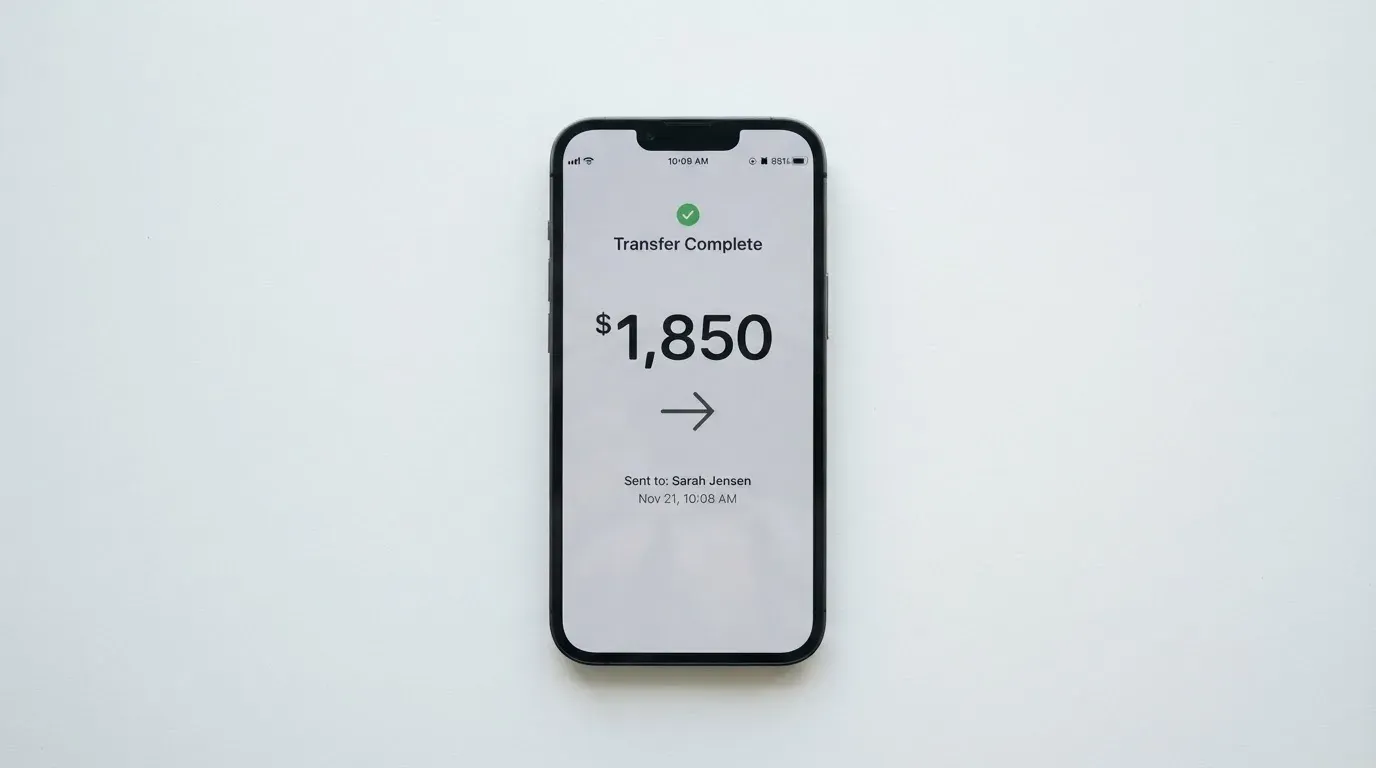
The wallet itself only holds virtual assets, not fiat. That is the company’s word, and it tracks with the deposit flow. The terms are explicit that the wallet cannot be topped up with bank transfers or card payments, only with virtual assets. Once you have a balance, you allocate funds to a virtual or physical card, and the issuance fee is taken from the wallet at allocation time. The terms are also explicit that the allocation is final: once funds are on a Virtual Credit Card, they cannot be moved back to the wallet. And the wallet cannot be withdrawn to an external account unless the company specifically allows it. In other words, the operator has built the rails so that money flows in, gets loaded, and stays loaded until you spend it.
On-chain network fees for the deposit are charged by the blockchain, not by AutoCard, so the cost of the transfer itself is set by whichever network you choose. That gives you some control: a Tron transfer is typically cheaper than an Ethereum mainnet transfer, for example, and stablecoin transfers on Solana, Polygon or Base are usually cheaper still. But the lack of a published list of supported networks means you are guessing until the deposit arrives, and if you guess wrong on a network, the support team may be able to help but cannot promise to recover funds sent to a chain they do not watch.
Paying with it every day
In the app, you get a virtual card in seconds and can stack several cards. You set your own spending limits, which is a useful control: a low daily cap means a stolen card number cannot drain a large balance. The company says in its store listing that the app uses “advanced encryption” and “secure payment processing”, with instant notifications for each transaction. That last point is the most useful, because it gives you a real-time feed to spot anything you did not authorise.
Beyond the basics, the product is silent. The terms do not name a card network, so I cannot tell you whether a particular shop will treat the card as domestic or foreign at the till. The site does not describe Apple Pay or Google Pay support, and the App Store listing does not advertise wallet tokenisation. ATM use is not described, so I would not plan a holiday around cash withdrawals from this card. Reward programmes for spending are not described either; the only “reward” page I could find is the referral programme, which pays you for bringing other users in, not for spending.
The dispute policy is the part to read carefully. The company says it is “not a party to any transactions between the Client and third parties” and will not handle claims about non-fulfilment by the merchant, and bears no liability for those disputes. It also reserves the right to reverse transactions it considers suspicious. Practically, that means if a shop does not deliver what you paid for, your path to a refund runs through the merchant and the card network’s chargeback process, not through AutoCard’s support inbox, and the operator’s idea of “suspicious” can mean anything from an unusual merchant to a spending pattern it does not like.
What can go wrong
The first risk is the one the documents do not cover. The operator, ESTARTECH PTE. LTD., lists a Singapore address and a contact email, but the card’s issuer is not named, and no payment-services or e-money licence is cited. That is not automatically a scam — many crypto card programmes run on a licensed issuer whose name the marketing pages do not put front and centre — but it means there is no regulator on the other side of the product whose register you can check. If the issuer is licensed in Singapore as a major payment institution, in the EU as an electronic money institution, or in the US through a state money transmitter or a bank partnership, that is information you would expect the company to publish to make its case. The fact that it does not is a soft signal, not a verdict.
The second risk is balance portability. The terms say you cannot reverse a card allocation, and the wallet can be withdrawn to an external account only if the company explicitly permits it. If the company pauses the programme, restricts your account, or winds down operations, you may find yourself with a card balance that is hard or impossible to extract. History has examples of this kind of cliff edge: in 2018, Visa suspended WaveCrest as a card issuer in Europe and the crypto card programmes that depended on it had to wind down; in November 2022, Visa terminated its global agreements with FTX and the FTX US debit card was wound down by its issuer. Programme closures typically give a notice period, then stop loading, then stop spending, then ask you to withdraw. The AutoCard terms do not promise you a clean exit, so the burden of getting your money out before any closure falls on you.
The third risk is on the deposit side. Blockchain transfers are irreversible, and the operator does not publish the list of networks it accepts. If you send USDT on a chain the operator does not watch, or to an address whose network you misread, the funds can be lost. Stablecoins themselves are not risk-free either: the public record includes the TerraUSD collapse in May 2022 and the temporary USDC depeg in March 2023, and a depeg at the moment you load your card means a different number on the till. The operator is also within its rights to freeze tokens tied to sanctioned addresses, because Tether, for one, has publicly disabled wallets on the OFAC sanctions list.
The fourth risk is support. The only contact channel published is a single email, [email protected]. The app’s user-facing language is English only. If your account is locked or your deposit is missing, the path to a human is one inbox, and there is no published Service Level Agreement for how quickly that inbox replies. There is no Trustpilot page for the company, so the public complaint record is essentially empty — that can mean the product is reliable, or it can mean the user base is small enough that the usual review sites have not picked it up yet.
What to take instead
If the country you live in does not match what AutoCard quietly accepts, or if the missing fee schedule and unnamed issuer bother you, here are three alternatives that scored in the same band in the wider review database. They each address a different version of the same problem.
| Card | Score | Eligibility | Card type | Top-up | What stands out |
|---|---|---|---|---|---|
| Cardex | 5.6 / 10 | “200+ countries”; no exclusions listed; App Store listing is Naira-focused | Debit crypto card on Verve, Visa, Mastercard, UnionPay; virtual and physical | USDT, USDC, BTC; networks not stated | Real-time conversion at payment time using an “AI-Powered Conversion Rate” that picks the best of several exchange rates |
| CardFlow | 4.9 / 10 | Aimed at Nigeria and Nigerians, with “global users” in the description; no country list | Virtual USD Mastercard, created in about 3 minutes | BTC, USDT, ETH or Naira bank transfer; networks not stated | The site says the virtual card is free to create, which is the one published number |
| HyperCard | 4.7 / 10 | No country list on the official pages; App Store says acceptance in 176+ countries | Prepaid card with USD or EUR balance | USDT, BTC, ETH in the app; networks not stated | Card balance in USD or EUR, which helps if you want a euro-priced product |
None of these three are a clearly better product than AutoCard on every dimension. Cardex has a wider country footprint but its fees are not published either. CardFlow at least publishes that the virtual card is free to create, but the rest of the fee schedule is missing. HyperCard has a published acceptance footprint but the issuer and fees are not on the public pages. The honest summary is that the segment as a whole is thin on published numbers, and the differentiator tends to be which country you are in and which stablecoin you want to fund with.
If you want a card with a more visible regulatory footprint, the mainstream options outside this list (issued by named banks or e-money institutions, with published fee schedules) are the safer first stop. If you are specifically looking for a no-KYC-light crypto card, accept that you are taking on more counterparty risk, and treat the card balance as spendable cash, not as savings.
Who I would recommend it to
I would recommend AutoCard to a narrow group. If you live in India, you want a prepaid card funded from USDT or USDC, and you are comfortable that the operator is not naming its issuer, its card network, or its fee schedule in the public documents, then this is a workable product. The app is in English, the wallet is two clicks from the card, you can set your own spending limits, and the virtual card is created in seconds, which is the part of the experience the company has clearly thought through.
I would not recommend it if you are outside the country list the operator keeps, if you need a card you can put in Apple Pay or Google Pay (the public pages do not describe wallet tokenisation), if you plan to use ATMs (the terms do not describe ATM use), if you want a fee schedule you can read before you load the card, or if you want the safety net of a named issuer and a regulator you can check. For those cases, the alternatives above or a mainstream card product are a better fit.
The single piece of advice I would give anyone considering this card: load a small amount first, put a real transaction through, and read the receipt. The only way to know what AutoCard actually costs is to watch it happen, and that is the test that costs you the least if the answer disappoints.
Frequently asked questions
What is AutoCard?
AutoCard is a prepaid card product operated by ESTARTECH PTE. LTD., a Singapore-registered company. The app holds a wallet you fill with digital assets, primarily USDT or USDC on the public information available, and the card is funded from that balance. The product is positioned for people who want to spend crypto at a regular card terminal rather than on a crypto-only merchant.
How does AutoCard work?
You sign up, complete KYC, send USDT or USDC to the wallet, allocate the balance to a virtual or physical card, and the card spends like any other prepaid card. The conversion from crypto to the wallet’s fiat currency happens at the platform’s rate, which is updated regularly. The network the card runs on and the exact mechanics of the conversion are not described in the public pages.
Is AutoCard a bank?
No. The operator is a Singapore company, and the card’s issuer is not named in the public documents. The terms are also explicit that the company operates only with virtual assets, not fiat, which means the wallet side is not a bank account. If you are looking for a bank, this is not one.
Who owns AutoCard?
The operator is ESTARTECH PTE. LTD., registered at 68 Circular Road, #02-01, Singapore 049422. The beneficial owners, the card’s issuer, and any payment-services licences are not stated on the public pages, which is one of the gaps the company’s marketing does not fill in.
Is AutoCard available in my country?
The terms say the cards are “exclusively” for residents of India or other eligible jurisdictions the company names, with a hard exclusion for citizens and residents of China including Hong Kong and Macao. The only way to know for certain whether your country is on the internal list is to start the signup process and see whether the KYC flow accepts your documents.
Does AutoCard require KYC?
Yes. The site shows a “NEED TO KYC” heading and the terms describe a Verified Account state that is reached only after the KYC questionnaire and supporting documents are submitted. You cannot top up the wallet or apply for a card before that, so the document check is the gate to the product.
How do I top up AutoCard?
You open the app, go to Deposit, and send USDT or USDC from an external wallet. The supported blockchain networks are not published, so the safest approach is to send a small test amount first to confirm the network is accepted, then load the rest. On-chain transfer fees are charged by the blockchain, not by AutoCard.
How do I withdraw money from AutoCard?
The terms say wallet balances can be withdrawn to external accounts only if the company explicitly permits it, and that funds allocated to a card cannot be moved back to the wallet. In practice, the most reliable “withdrawal” is to spend the balance on the card, and the operator does not promise a clean fiat exit otherwise.
Is AutoCard free?
The terms say a card issuance fee is taken from the wallet at allocation time, “as specified on the Platform”, and the amount is not published. The monthly fee, the conversion fee and the FX fee are also not stated. The only way to know what you will pay is to test a small transaction and read the receipt, because the published documents do not give you a number to plan around.
Is AutoCard safe?
The company is a named Singapore entity with a published address and a contact email, but the card’s issuer and any licences are not named in the public documents, and there is no Trustpilot page to anchor a public reputation. The terms also reserve the right to reverse transactions the operator deems suspicious, and the dispute policy puts the burden of merchant disputes on you, not on AutoCard. Treat the balance as spendable cash, not as long-term custody.
Choosing a virtual card – cryptocardadvisor
Content created by the «cryptocardadvisor» team