
Moon Card: A Cheap Virtual Card With Real Questions Behind It
 Available in US
The Moon card sits in the middle of the crypto card market. It is cheap to open, it loads from the coins most people already hold, and it pays out in dollars online. That is a real combination of strengths. It is also, on the evidence I could check, a service with an unusually thin public record — no named issuer, no published country list, and a stream of user reports about frozen balances. My score for it is 5.6 out of 10.
Before anything else, the honest caveat that colours everything below: almost everything specific I could find about Moon comes from third-party write-ups quoting Moon’s own terms, not from Moon’s public pages directly. Where I say something is unofficial, I mean exactly that. If a detail matters to your decision — your country, the fee on a specific payment, whether a merchant will accept it — check it in Moon’s own terms yourself, in the app, before you load funds. Terms change; my picture is dated.
The conditions described here are current as of October 28, 2026.
The verdict: a competent card with a paper trail problem
The score is 5.6 out of 10. That is not a dismissal. Moon does several ordinary things well. Top-up options score highest of anything I assessed. Cost is mid-range, and the headline conversion fee is not predatory. Who can get the card scores well on paper. What drags the number down is not the product design; it is everything around it: the issuer is unnamed, support is opaque, and the reviews are grim.
| Criterion | Mark | Why |
|---|---|---|
| Who can get it | 8 / 10 | Over 130 countries for Moon X, per unofficial sources quoting Moon’s terms; no public country list, sanctioned regions blocked |
| Cost | 6 / 10 | First Moon X card free, extra cards $2.99, Moon 1X $1.49; Moon X charges 1% with a $1.00 minimum; no FX or foreign transaction fees; a fee for an unused balance at expiry |
| Top-up options | 8 / 10 | BTC, Lightning, USDT TRC-20, USDC ERC-20, ETH |
| Reliability and complaints | 2 / 10 | Issuer and legal entity not disclosed (Moon LLC); Trustpilot 2.5 out of 5 from 276 reviews: frozen accounts, withheld funds, refunds held for ID, outages |
| Everyday use | 3 / 10 | Virtual and ready instantly; unofficial reports say Apple Pay, Google Pay and Samsung Pay not supported; ATM details not disclosed |
| Total | 5.6 / 10 |
So who does this card suit? In plain terms, Moon is built for quick, small online payments in dollars, funded from crypto you already hold. If that is your use — a subscription here, a SaaS tool there, a small invoice you need to pay in USD from a crypto balance — the mechanics are sound and the 1% fee is not going to hurt you. The top-up list covers the major assets, and you are not forced into one coin.
Who does it not suit? If your money needs to sit on the card for a while, if you need to pay anywhere in the world with confidence, if you need to argue a chargeback, or if you are the kind of person who wants to know which institution is ultimately holding your funds — this is the wrong card. The review scores reflect exactly those gaps. A 2 out of 10 on reliability is not a rounding error; it is the most important line in the table.
There is one more thing worth saying up front, because it affects the whole reading. Moon publishes a “not a custodial service” claim. That is a meaningful statement about how the brand describes itself. It is not the same as an independent assurance, a named issuer, or a deposit guarantee. I will come back to this in the risks section, because it is the single most misunderstood point about cards like this.
Will they give you the card?
The short answer: probably, but nobody can tell you precisely where. Unofficial sources quoting Moon’s terms say Moon X is offered in “over 130 countries”. That is a marketing-scale number, not a list. Moon’s public pages, as far as I could read, do not publish a country-by-country eligibility list, and the terms themselves say not all products are available in all countries. Sanctioned regions are prohibited outright, and purchases made from disallowed countries will not go through.
What this means for you in practice: you cannot use “Moon is available in over 130 countries” to answer the question “can I get one in my country”. Those are different questions. The first is a headline about reach; the second is about your eligibility, which is decided by Moon and by the partner institutions behind it. If your country is near a boundary — sanctioned, embargoed, or simply uncommon — that uncertainty is the answer you should plan around, not a detail to hope goes your way.
Because you may be reading this precisely because an ordinary bank card has been hard to get, one more honest word. Moon’s reach is genuinely useful in that situation, and I do not want the score of 2 on reliability to read as “avoid at all costs.” It reads as “know what you are holding.” Load small, test the loop end to end before you trust it with anything meaningful, and keep your own record of what you sent in.
How to get it
The signup flow, as described in unofficial sources quoting Moon’s terms, is deliberately light: an email address and a password, with two-factor codes sent by email. No identity-document list has been published. The terms set an age floor of 18, and they say Moon may request proof of eligibility at its discretion. They also mention that some blocked merchants “may open up after verification” — meaning verification is a tool Moon keeps in reserve, not a fixed step you complete once.
For you, that shape has an upside and a downside. The upside is speed: you can get a working virtual card quickly. The downside is that the absence of a published document list is not the same as the absence of document checks. The terms reserve the right to ask. Anyone whose funds are later held pending verification — which the reviews describe happening — was not in a no-KYC flow; they were in a flow where verification was always possible. KYC rules in general require regulated businesses to verify customers and assess risk, including ongoing monitoring, so “I never had to upload anything” is a statement about your first ten minutes, not about the life of the account.
How you get the card depends on which of the two products you want. Moon X is the reloadable card, linked to a Moon Credit balance, valid three years from purchase. Moon 1X is a single-load card aimed at US merchants. Both are Visa. Whether each comes as a physical card is not stated. The card you get is virtual and instant, and physical availability is the open question. Delivery timelines are also not stated. If you were hoping for a plastic card in the post, do not assume it; that is one of the first things to confirm with Moon directly.
Fees and limits: what it really costs
Money is where a crypto card earns or loses your trust, so this section is longer than it needs to be. The short version: the headline conversion fee is reasonable, the everyday extras are small but numerous, and there are a few penalty fees that only bite if something goes wrong.
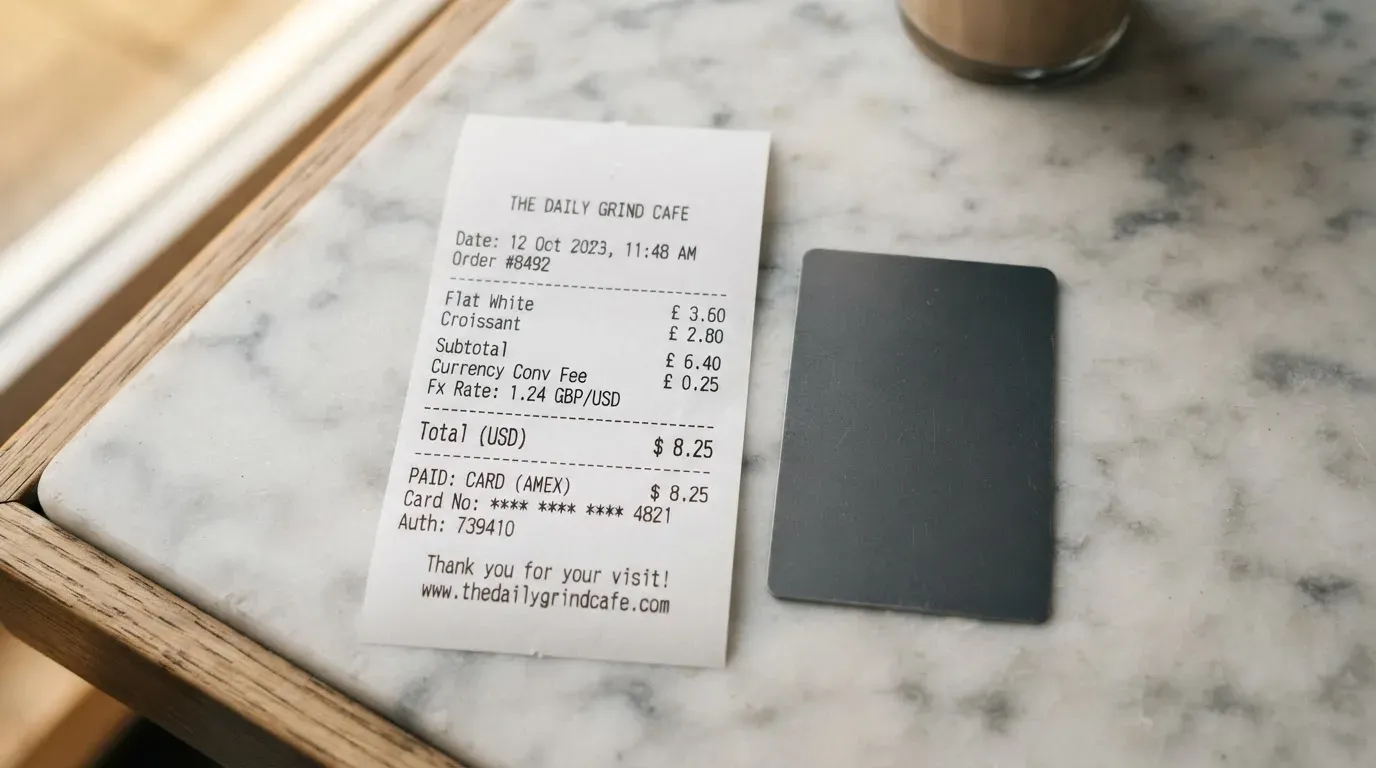
- Moon X transaction fee: 1% per transaction, with a $1.00 minimum.
- Moon 1X: no transaction fee.
- Moon states it charges no FX or foreign transaction fees.
- Cards are loaded in USD, so you are spending dollars.
The table below pulls together the fee and limit picture as I found it, all from the same unofficial-but-terms-quoting sources. Where a value is “not stated”, that is a genuine gap, not an oversight on my part.
| Fee or limit | Moon X | Moon 1X |
|---|---|---|
| First card | Free | $1.49 per card |
| Additional card | $2.99 | — |
| Monthly fee | Not stated | Not stated |
| Transaction fee | 1%, $1.00 minimum | None |
| FX / foreign transaction fee | None charged | None charged |
| Decline / reversal / refund fee | $0.50 after 20 per month | $0.50 after 20 per month |
| Excess-refund fee | $40 | $40 |
| Overdraw fee | $25 | $25 |
| Chargeback dispute fee | $17.50 | $17.50 |
| Unused balance at expiry | Charged as a fee | Charged as a fee |
| Monthly spend cap | $4,000 across all cards | Within the $4,000 account maximum |
| Per-card load | — | $5 minimum, $1,000 maximum |
| Card creation cap | 10 per day, 30 per month | 10 per day, 30 per month |
| Moon Credit purchase cap | $10,000 daily, $30,000 monthly | $10,000 daily, $30,000 monthly |
| ATM | Not stated | Not stated |
Now let me walk three ordinary payments through it, because abstract percentages hide their own size.
A $3 subscription. On Moon X you pay 1% of $3, which is $0.03 — but the fee has a $1.00 minimum, so you actually pay $1.00. On Moon 1X you pay no transaction fee. This is the practical lesson: the $1.00 minimum makes Moon X’s 1% fee bite hardest exactly where it is least expected, on small purchases. For frequent small payments, the 1X product is the one whose fee structure behaves.
A $200 online purchase from a merchant in a currency other than dollars. Moon says it charges no FX fee, so the cost is the 1% conversion fee on Moon X ($2.00) and whatever spread the conversion itself carries, which Moon does not state as a number. A foreign-issued card can also be declined by some merchants for reasons unrelated to the fee — more on that below.
A purchase that gets refunded, or one you need to dispute. The refund path has no fee for the first 20 a month; past that there is a $0.50 decline/reversal/refund fee (per unofficial sources), and an over-refund is charged $40. If you dispute a charge, there is a $17.50 fee — but it is charged only if Moon decides to proceed with a dispute you requested. That conditional matters: it is not a fee you pay for asking, it is a fee you pay if your challenge is accepted for processing. The time frames for disputes are not stated, which for someone whose money is on the line is a real omission.
Two limits deserve a second look. The $4,000 monthly spend cap across all cards is generous for a person paying subscriptions and modest for anyone running spend through it. And the expiry fee deserves emphasis: Moon X cards are valid three years from purchase, and unused balance at expiry is charged as a fee. So a card you forget about for three years can cost you the leftover balance. If you hold a balance, set a reminder. (Figures regarding spend caps and balance charges are based on unofficial sources quoting Moon’s terms; verify directly with the issuer for current policy.)
How to top up
This is the strongest part of Moon, and the score reflects it: 8 out of 10. You can load with BTC, Lightning, USDT TRC-20, USDC ERC-20, and ETH. That covers Bitcoin holders, people who prefer stablecoins, and people who want to spend from Ethereum. On Moon X you load a Moon Credit balance; Moon 1X has a $5 minimum load (as per unofficial reports; confirm current minimums in-app). The Moon Credit purchase limit is $10,000 daily and $30,000 monthly.
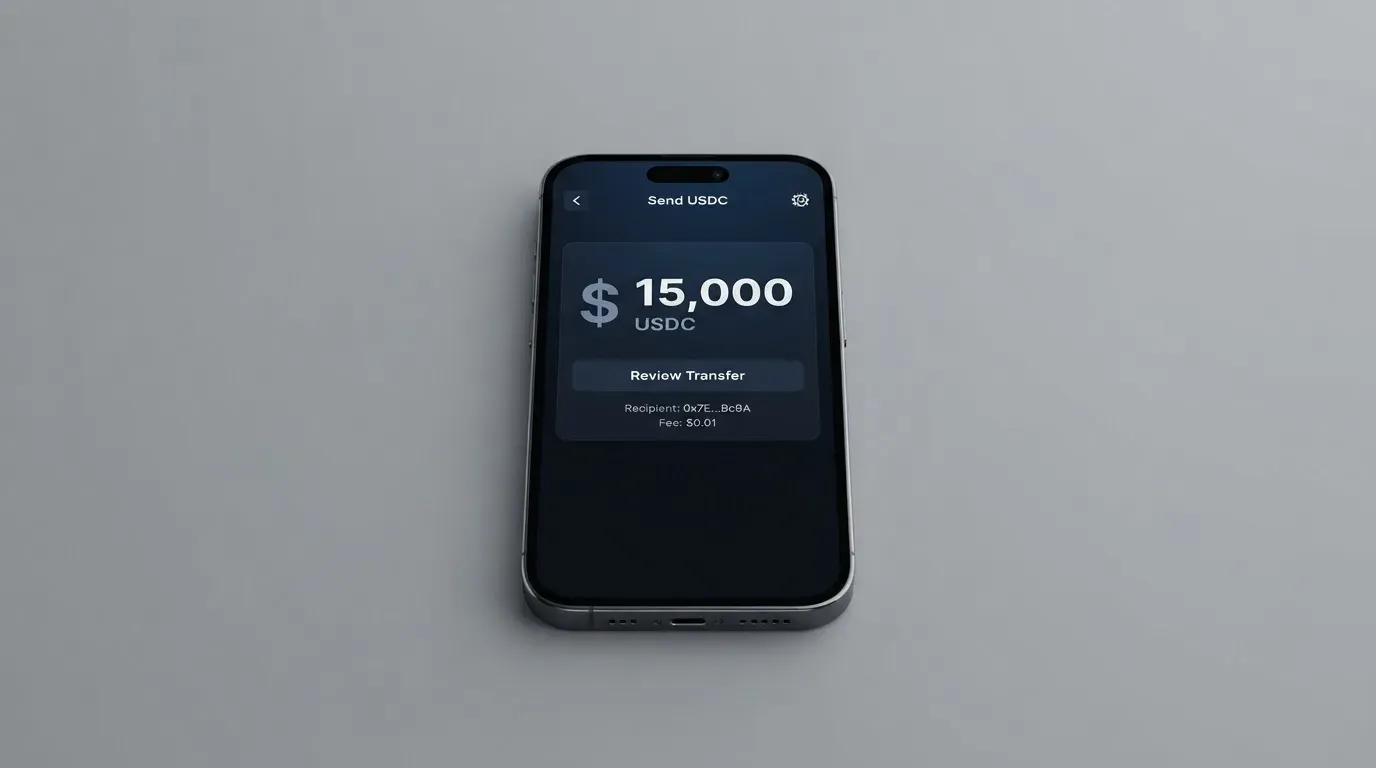
How you top up, in plain steps: you send one of the supported coins to Moon, it converts into the card’s dollar balance, and the card spends that balance. The transfer has to go on the right network, and this is where people most often lose money, so a word of warning. Blockchain transfers are irreversible. A deposit sent on a network Moon does not support, or to an address belonging to a different network, can be lost or need manual support recovery with no guarantee. Match the network exactly.
The choice between USDT TRC-20 and USDC ERC-20 is worth thirty seconds of thought because they behave differently under the hood. USDT TRC-20 rides the Tron network, where fees are paid via internal bandwidth and energy resources, often burning TRX — generally among the cheapest ways to move value. USDC ERC-20 rides Ethereum, where gas is paid only in ETH; a wallet holding USDC but no ETH cannot send it. Circle lists USDC as natively supported on 38 networks as of 16 September 2026, including Ethereum, Solana, Base, Polygon PoS, Avalanche, Arbitrum and Stellar, but note that Circle stopped supporting USDC on Tron in February 2024, so “USDC over TRC20” is not a native option — USDT over TRC-20 is. Choose the asset whose network you can actually afford to pay on.
Two things about funding are not stated and you should ask about: who pays the deposit and network fees, and whether you can add money by fiat (by bank transfer or card) rather than crypto. If fiat on-ramp matters to you — for instance if you want to load small amounts without moving crypto — that is a question for Moon before you commit, not after.
Withdrawals work in the other direction: refunds are paid in Bitcoin, minus network and partner fees. So money that comes back to you arrives as BTC, not dollars, and the amount you receive is less than the refund. Account closure terms are not stated.
Paying with it every day
Virtual and ready instantly is the headline, and for online spending it is a genuine advantage over waiting for plastic. But the everyday-use score is 3 out of 10, and the reason is the wallets.
Unofficial sources quoting Moon’s terms say Apple Pay, Google Pay and Samsung Pay are not currently supported, described as “on the way”. That is a significant gap in 2026. It means no tapping your phone, no adding the card to a mobile wallet — you are typing card details into checkout forms, or handing over the card. Many people will find that limiting; if your daily life is contactless payments, this card does not fit yet.
Where you can use it: at merchants that accept Visa online, and there are blocked merchants — the terms acknowledge them without listing them, which is its own frustration. Two structural things make some declines likely regardless of your balance. Merchants can look up your card’s BIN and see which country and institution issued it, and some apply extra scrutiny when the issuer country differs from your billing address — so a card that looks “foreign” can be declined for reasons that have nothing to do with you. Address verification, which compares the numeric parts of your billing address with issuer records, is mainly offered in the US, Canada and the UK and is generally unavailable for foreign-issued cards, another source of declines. Some merchants decline prepaid cards specifically because the BIN reveals the card type.
Two smaller notes. The app itself and any ratings are not something I could verify, so I am not going to characterise the software. Rewards are not stated. And a declined authorisation can leave a hold on your funds that stays for several days, typically up to seven — so a single failed attempt at a shop can tie up money that appears to have vanished.
What can go wrong
This is the section where Moon earns its low overall mark, so I have tried to be specific rather than ominous.
The issuer is not named. This is the finding that should inform everything else. Unofficial sources quoting Moon’s terms give Moon LLC as the entity behind it, and the pages I read do not publish the legal entity, registration, issuer bank, or licences. The card is issued by partner financial institutions under a Visa licence. Visa itself does not issue crypto cards to consumers; it licenses issuers and can suspend a programme. So behind Moon there is a bank or e-money institution you cannot name from the public pages. If you need to know who holds your funds, this card cannot tell you. That is not automatically disqualifying — plenty of legitimate programmes issue through partners — but it is a fact you should hold consciously, not discover later.
User reports of frozen money. The Trustpilot picture, read on 2026-10-21, is a 2.5 TrustScore from 276 reviews, 79 of them in the last 12 months, split 47% five-star and 44% one-star. That bimodality is itself informative: people either have no problems or have serious ones. The complaint themes, all from user reports rather than confirmed findings: frozen or restricted accounts with funds withheld (January to August 2026); refunds delayed or tied to KYC verification (December 2025 to September 2026); outages and cancelled cards (December 2025, January 2026); and unresponsive support (November 2025 to May 2026). Users also report the platform being offline and cards cancelled on 3–6 December 2025 and in January 2026. I found no official shutdown notice — but I also found no official explanation of those outages. Support channels and hours are not given.
The claims that need reading carefully. Moon states it “is not a custodial service”. Understand what that does and does not mean for your card balance. Control of crypto belongs to whoever holds the private key or seed phrase; in a custodial wallet the provider holds the credentials, so you must trust the provider completely. The card itself functions on stored, pre-loaded balance — you convert or top up a balance and the card spends only that. And note the broader record: custodial platforms have failed before, at Mt. Gox (about US$350 million reported stolen, 2011–2014), Coincheck (about US$400 million, 2018) and Ronin Network (US$625 million, 2022). Holding funds with a custodian carries counterparty and hack risk. Self-custody-linked cards keep funds in your own wallet until the moment of payment, but then you carry sole responsibility for key loss, phishing, and clipboard-hijacking malware that swaps copied addresses. Neither model is free of a failure mode; they are different failure modes.
Sanctions and country rules are not yours to interpret. Nationality is recorded and screened separately from residence, because sanctions screening is often applied to citizenship and country of birth as well as country of address. Tether says it disables tokens in wallets on the OFAC sanctions list and has frozen funds tied to illicit activity, so stablecoins are not censorship-proof. Moon’s own terms prohibit sanctioned regions. If your country of citizenship is sanctioned, no amount of card functionality is available to you, and I am not going to suggest otherwise. Read the terms for your own situation.
Programmes can close. A card programme is not permanent in a way your own bank account is. Visa terminated its global agreements with FTX on 13 November 2022 and the FTX US debit card was wound down; WaveCrest, a Visa issuer that supplied crypto card brands, was suspended by Visa in Europe in 2018, closing all its Visa programmes. Closures typically mean a notice period, then spending and loading stop, then users are asked to withdraw remaining balances. If you are using Moon, keep only what you need there.
On taxes, get your own advice. I am not qualified to advise on your tax position and this page will not try to. What is generally true and worth knowing: the IRS treats digital assets as property, so exchanging them for goods, services or dollars generally produces a taxable gain or loss, measured in local fiat currency at fair market value on the transaction date. Each card payment funded from crypto may therefore be a separate taxable disposal. Your country may treat this differently. Talk to a professional about your own circumstances.
What to take instead
None of these is a recommendation to switch — different cards suit different people — but a fair review names the alternatives you might be comparing Moon to. All three below also come with thin public detail, which is worth noting about this category in general.
| Card | Score | Reach | Card type | Fees stated | Top-up |
|---|---|---|---|---|---|
| Moon | 5.6 / 10 | Over 130 countries (unofficial) | Visa, virtual; Moon X reloadable, Moon 1X single-load | Moon X 1% ($1 min); Moon 1X none | BTC, Lightning, USDT TRC-20, USDC ERC-20, ETH |
| Cardex | 5.6 / 10 | 200+ countries; no country list or exclusions | Debit crypto card on VERVE, Visa, Mastercard, UnionPay; virtual and physical; Naira-focused | No fee percentage stated; “AI-Powered Conversion Rate” picks the best rate at spend | USDT, USDC, BTC; networks not stated |
| CardFlow | 4.9 / 10 | Aimed at Nigeria; no country list | Virtual USD Mastercard, created in about 3 minutes | Card creation free; other fees not stated | Bitcoin, USDT, ETH, or Naira bank transfer |
| HyperCard | 4.7 / 10 | App Store says works in “more than 176 countries” (acceptance, not eligibility) | Prepaid; network not stated on App Store page; USD or EUR balance | No fees listed on pages read | USDT, BTC, ETH; networks not stated |
A few honest comparisons. Cardex matches Moon’s score and offers a physical card option and a four-network choice, but its App Store listing is Naira-focused and no fee percentage is stated, so you cannot compare its cost to Moon’s. CardFlow is built for Nigeria and tells you plainly that creating a virtual card is free, but says nothing about transaction fees. HyperCard lists no fees at all on the pages I could read — which sounds attractive and should make you ask rather than celebrate, because a card with no visible fees usually has fees elsewhere.
The category itself has a structure you should understand. A card payment involves several parties: the network (Visa or Mastercard) routes messages and sets rules, the issuer (a bank or e-money institution licensed under the network’s licence) holds the card programme, and the crypto brand is often only a programme manager or front-end that markets the card. Moon appears to sit in that third role. In the EU, an electronic money institution can issue e-money, payment cards and e-wallets but cannot lend, and MiCA — the EU’s markets-in-crypto-assets regulation, whose provisions on stablecoins applied from 30 June 2024 and whose CASP rules from 30 December 2024 — requires e-money tokens to be issued only by a credit institution or an EMI, with a grandfathering period until 1 July 2026. A card is regulated separately as a payment service, so a crypto card often depends on two licences. None of that tells you Moon’s position, because Moon’s licences are not published on the pages I read. ESMA maintains an interim register of authorised CASPs; checking there is a concrete step you can take.
One structural advantage of the pre-loaded model: because the card spends only a stored balance, it cannot overdraw in the way a credit card can. Whether Moon’s overdraw fee of $25 ever applies is something I could not determine (per unofficial sources).
Who I would recommend it to
I would recommend Moon to someone in this specific situation: you already hold BTC, USDT, USDC, or ETH; you need to make small-to-medium payments in dollars online; you would rather not wait for a physical card; and you are willing to load modest amounts, test the process, and keep an eye on the balance so the expiry fee never catches you. For that person, Moon is a reasonable tool with a decent spread of top-up coins and no FX fee.
I would not recommend it — or would recommend thinking hard first — if any of these apply to you:
- You need money available in an emergency and cannot tolerate the account being frozen. The reviews describe exactly that, and a 2.5 TrustScore is not noise to be explained away.
- You plan to hold a balance long-term. The three-year validity and the fee on unused balance at expiry work against you.
- You rely on contactless or mobile wallets. Apple Pay, Google Pay and Samsung Pay are not currently supported, which for many people is most of the card’s usefulness gone.
- You need to know which institution holds your money. Moon’s public pages do not say, and if that matters to you, the absence is disqualifying rather than merely inconvenient.
- You are in a sanctioned or restricted country or hold citizenship of one. The rules here are not negotiable and I am not going to explore the edges of them.
- You make many small purchases. On Moon X the $1.00 minimum fee means small payments cost more in percentage than large ones; Moon 1X exists for this reason.
My actual advice, if you decide to try it: start with the smallest useful load, pay with it once end to end, and confirm that a refund arrives before you rely on it. Keep your own record of deposits and their networks. Those three steps cost you almost nothing and they tell you more in a week than any review, including this one.
Frequently asked questions
What is the Moon card?
Moon is a Visa crypto card that lets you load funds from cryptocurrency and spend them as dollars online. There are two products: Moon X, a reloadable card linked to a Moon Credit balance, and Moon 1X, a single-load card aimed at US merchants. Cards are virtual and available instantly, and Moon X cards are valid three years from purchase. Whether a physical card is offered is not stated.
How does the Moon card work?
You load the card from crypto, it converts into a stored dollar balance, and the card spends that balance. Because it works on a pre-loaded balance, it can only spend what you have put in — the model is closer to a prepaid card than to a debit card linked to a bank account. Moon says it does not charge FX or foreign transaction fees, and the cards are loaded in USD.
How much does Moon cost?
On Moon X, the first card is free and additional cards cost $2.99, with a 1% transaction fee subject to a $1.00 minimum. Moon 1X costs $1.49 per card and charges no transaction fee. No monthly fee is stated. Because of that $1.00 minimum, Moon X’s 1% fee costs proportionally more on small purchases — a $3 payment still incurs $1.00 in fees.
What coins can I use to top up Moon?
Moon accepts BTC, Lightning, USDT TRC-20, USDC ERC-20, and ETH, which is one of the broader lists in this category and the reason top-up options score 8 out of 10. Be careful with networks: ERC-20 transfers are paid in ETH, so a wallet holding USDC with no ETH cannot send it, and blockchain transfers are irreversible if sent on the wrong network.
Is Moon a bank, and who owns it?
No, not as far as the public pages show. Unofficial sources quoting Moon’s terms name Moon LLC as the starting data, but the legal entity, registration, issuer bank and licences are not published on the pages I read. The card is issued by partner financial institutions under a Visa licence. That means there is a regulated issuer somewhere behind the brand that the public record I could check does not identify.
Is Moon card safe and can I trust it?
Treat it as low-trust and load accordingly. Moon states it is not a custodial service, but the issuer is undisclosed, and on Trustpilot it has a 2.5 score from 276 reviews, with users reporting frozen accounts, withheld funds, refunds tied to ID verification, outages, and unresponsive support. These are user reports, not confirmed findings — but a pattern that consistent deserves respect.
Does Moon require KYC, and can I use it in my country?
Signup is described as email and password with email 2FA, no published document list, 18+, and Moon reserving the right to request proof of eligibility — so document checks are possible even if none are required up front. Unofficial sources say Moon X covers over 130 countries, but there is no public country list, not all products are available everywhere, and sanctioned regions are prohibited. Eligibility for your specific country is something only Moon can confirm.
Can I add Moon to Apple Pay or use it at ATMs?
Not right now, per unofficial sources quoting Moon’s terms — Apple Pay, Google Pay and Samsung Pay are all described as not currently supported and “on the way”. That means typing card details at checkout rather than tapping a phone. ATM availability and terms are not stated at all. If contactless payment or cash withdrawal is central to how you would use a card, this is a significant limitation.
How do I withdraw money or get a refund from Moon?
Refunds are paid back in Bitcoin, minus network and partner fees, so a refunded purchase returns to you as BTC rather than dollars and you receive slightly less than the original amount. Balance left unused when a Moon X card expires at three years is charged as a fee. Account closure terms are not stated. There is no separate withdrawal process described beyond refunds.
Is Moon card worth it?
For small, quick online dollar payments funded from crypto you already hold, it can be worth it — the top-up options are broad, the first Moon X card is free, and no FX fee is charged. For anything else, the undisclosed issuer, the frozen-account reports, the missing mobile wallets, the fee on expired balance, and the $17.50 dispute fee (per unofficial sources) make it a card to test carefully with small amounts rather than to depend on.
Choosing a virtual card – cryptocardadvisor
Content created by the «cryptocardadvisor» team